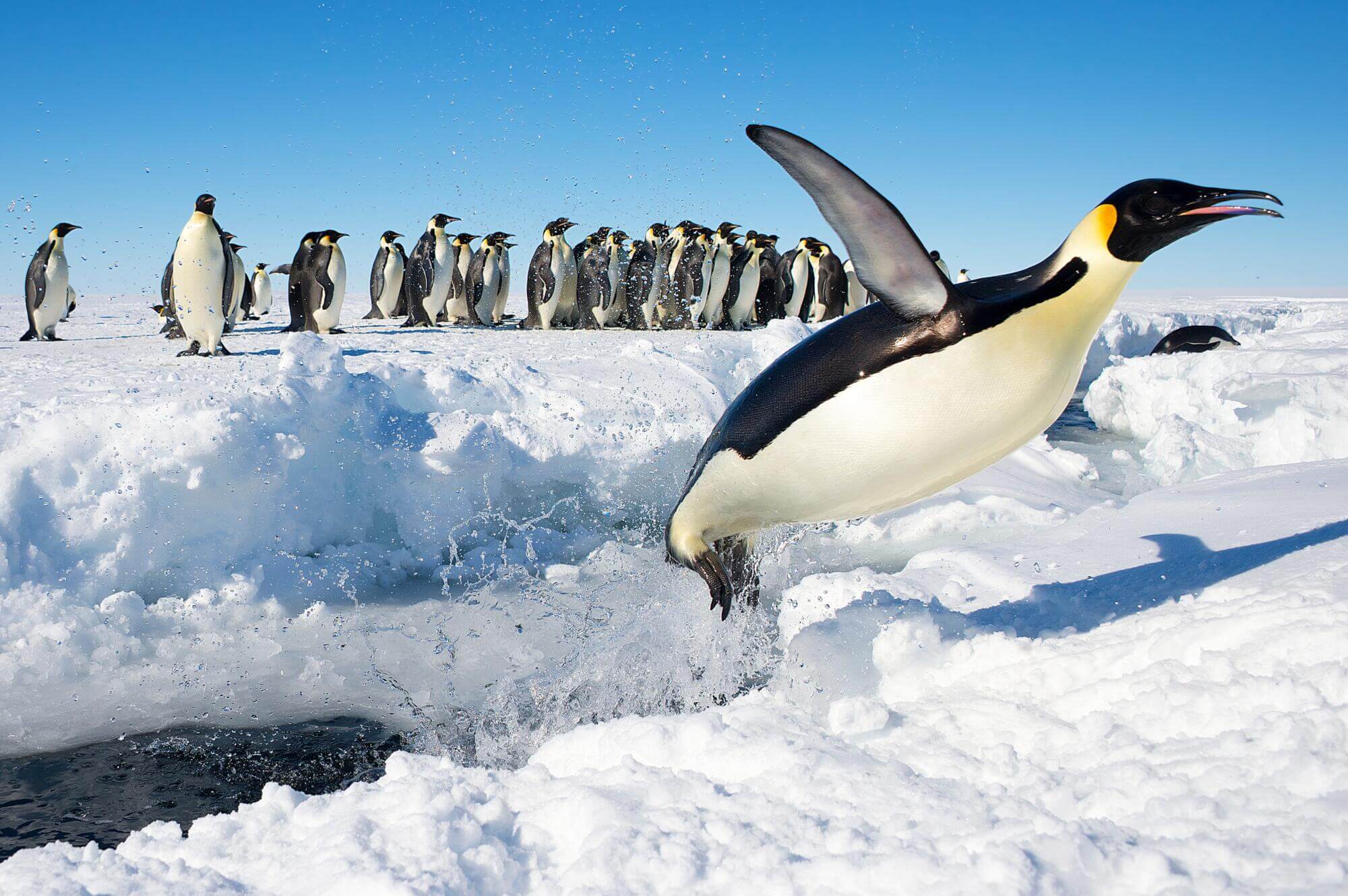

Emperor penguins are renowned for their extraordinary social behavior and cooperative spirit. During the harsh Antarctic winters, they form vast colonies, huddling together for warmth and survival.
Their intricate courtship rituals and dedication to raising their chicks showcase a remarkable social bond. These flightless birds are the largest of all penguin species and have mastered survival in one of the harshest environments on Earth.
Appearance
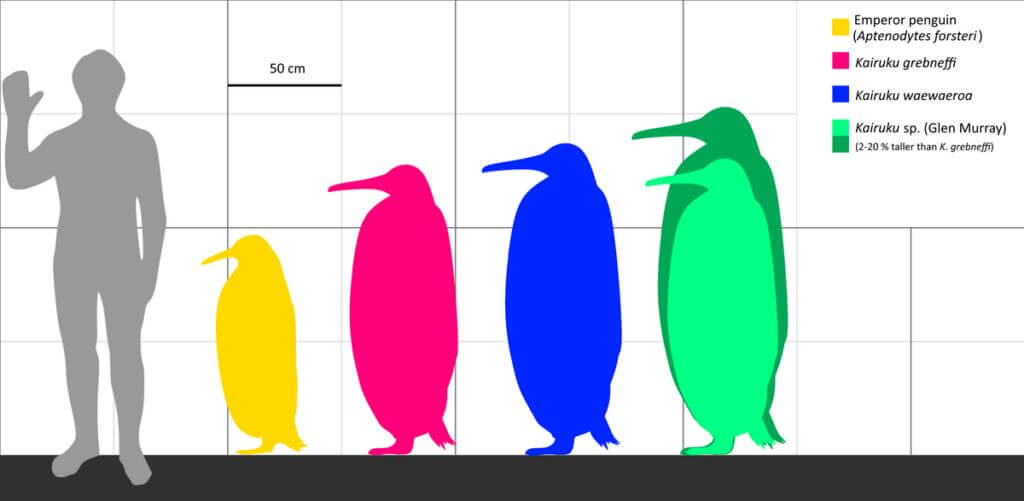
The emperor penguin (Aptenodytes forsteri) is the tallest and heaviest of all living penguin species, reaching a height of up to 4 feet (1.2 meters) and weighing as much as 90 pounds (40 kg).

They have a black and white coloration, dark black head and back, and a white belly. Their wings are flippers adapted for swimming rather than flying, and their feet are webbed and perfect for propelling them through the water. They also have a distinctive yellow-gold patch of feathers on the side of their head, which extends down their neck, and a black beak.
A thick layer of densely packed feathers and blubber provides exceptional insulation against the Antarctic winter, and their strong, hooked beak is ideal for catching fish and krill. Their feet are adapted to the icy conditions with strong claws for gripping the ice.
Did you know…
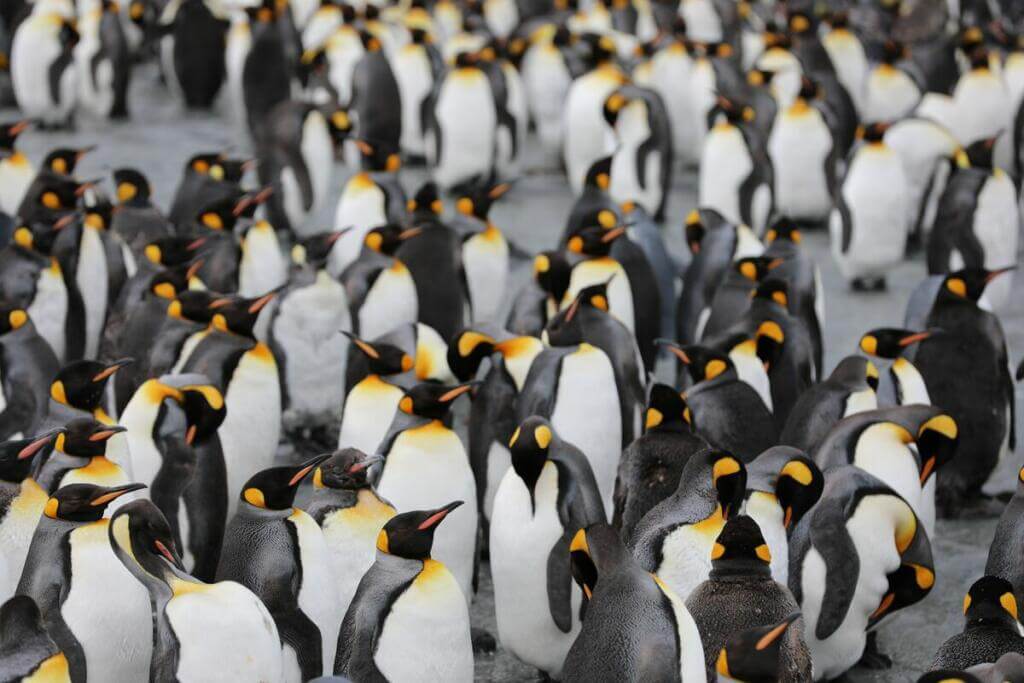
During the winter breeding season, which lasts from June to August, emperor penguins huddle together in large groups to keep warm. They take turns standing in the middle of the group, rotating to the outer edges to allow others to take their place and benefit from the warmth of the group.
Habitat
Emperor penguins inhabit the Antarctic, the southernmost continent on Earth.
They breed and raise their chicks on the sea ice and along the coastline of the continent. Notably, the emperor penguin is the only species that breeds on the Antarctic continent rather than on the surrounding islands. The northernmost area where these penguins are known to breed is Snow Hill Island.
The habitat of these creatures is one of the harshest and most extreme environments on the planet. Temperatures in Antarctica can drop as low as -60°C (-76°F), and wind speeds can reach up to 200 kilometers per hour.
Diet
Emperor penguins are also known for their impressive swimming abilities. They can dive to depths of over 500 meters (1,640 feet) and stay underwater for up to 22 minutes, allowing them to catch fish, squid, and krill for food.
The emperor penguin is a carnivorous species, feeding mainly on fish, squid, and krill. These animals are found in the cold waters around Antarctica, and the penguins have adapted to hunting in these conditions.
When hunting for food, emperor penguins swim together in groups, which can be as large as several hundred individuals. This behavior is known as “rafting” and helps the penguins conserve energy while searching for prey. The penguins take turns swimming to the surface to breathe while the others continue to dive for food.
Emperor penguins also have a unique method of feeding their chicks. After returning from a hunting trip, the parents regurgitate food for their young. This allows the chicks to receive the nutrients they need to grow and develop.
Reproduction
Emperor penguins are the only penguin species that breed on the sea ice. After mating, the female emperor penguin lays a single egg and transfers it to the male to keep warm while she goes to sea to feed.
The male then incubates the egg by holding it on his feet, keeping it warm with a special brood patch on his belly. This process can take up to 75 days in a row, during which time the male does not eat and must endure harsh conditions.

Threats
Emperor penguins will be pushed towards extinction by the climate crisis. Rising global temperatures are causing a dramatic decline in sea ice. As the ice melts earlier and forms later each year, the breeding season is shortened, and suitable habitat shrinks, leaving colonies vulnerable. This disruption extends to the food chain, impacting the availability of krill and fish, the penguins’ primary sustenance.
Overfishing of krill and fish directly competes with penguins for food, leading to starvation and reduced breeding success. Pollution, in the form of oil spills, plastic debris, and chemical contaminants, further degrades their environment and compromises their health.
Natural predators have also been a part of the emperor penguin’s world. Leopard seals are a constant threat to adults in the water, while skuas and giant petrels relentlessly target eggs and chicks. Occasionally, killer whales and sharks may also prey on these flightless birds.
6 Interesting Facts about the Emperor Penguin
- Emperor penguins can dive to depths of over 500 meters and stay underwater for up to 22 minutes, allowing them to catch their prey.
- To keep their eggs and chicks warm, they use a special brood pouch located on their feet.
- After hatching, their chicks are cared for by both parents, who take turns feeding and caring for the chick while the other hunts for food.
- Emperor penguins have a unique vocalization that they use to locate their mates and chicks in large colonies.
- The emperor penguin has no natural predators on land but is preyed upon by leopard seals and orcas in the water.
- Emperor penguins have been featured in several popular films, including “March of the Penguins” and “Happy Feet.”
FAQs
Are emperor penguins friendly?
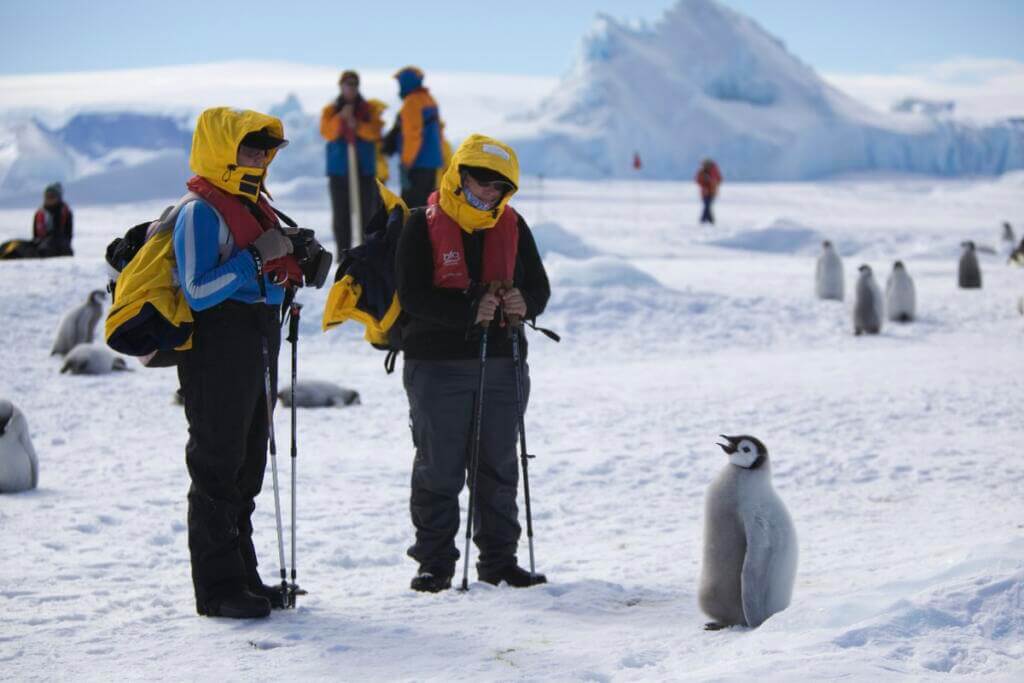
Emperor penguins are wild animals and should be treated with caution and respect. While they are not known to be aggressive towards humans, it is important to remember that they are wild animals and should not be approached or disturbed in their natural habitat.
How many emperor penguins are left?
The population of emperor penguins is difficult to estimate accurately, but current research suggests that there may be around 600,000 individuals. However, this estimate is based on limited data, and further research is needed to better understand the population size and trends of this species.
Do penguins mate for life?
Yes, many species of penguins, including the emperor penguin, are known to mate for life. Once a pair of penguins form a bond, they will typically stay together for the duration of their breeding lives, which can last for several years.
How tall are emperor penguins?
Emperor penguins are the tallest penguin species, with adults typically standing between 3.7 to 4 feet (1.1 to 1.2 meters) tall. They are also one of the heaviest penguin species, with adults weighing between 60 to 90 pounds (27 to 41 kg).
Can emperor penguins be kept in captivity?
Yes, emperor penguins can technically be kept in captivity, but it is incredibly challenging due to their highly specialized needs. Replicating their natural Antarctic environment requires immense resources, including extremely cold temperatures, deep diving pools, and a consistent supply of their natural diet.


