

The letter ‘Y’ is a category dominated by vibrant yellows and youthful transformations. This group is home to the lightning-fast Yellowfin Tuna, a powerhouse of the open ocean, and the dazzling Yellow Tang, a living jewel of the coral reef. It also features the hardy Yellow Perch of North American lakes and the Yellowtail Snapper, a prized catch for anglers.
This article is a guide that explores the bright, bold, and sometimes surprisingly camouflaged fish that start with Y.
Common Fish Names That Start With Y
Let’s explore a few popular fish with common names starting with Y.
Yellowfin Tuna (Thunnus albacares)
Habitat: Pelagic (open ocean) in tropical and subtropical waters worldwide.
Size: Can grow up to 7 feet long and weigh over 400 pounds.
Conservation Status: Least Concern (LC) by the IUCN, thanks to effective fishery management.

The Yellowfin Tuna is a magnificent predator, renowned for its incredible speed and strength. Its name comes from its most striking features: bright yellow second dorsal and anal fins, as well as the small yellow finlets that run down its back towards the tail. Its body is a perfect example of hydrodynamic design, shaped like a muscular torpedo to minimize drag and allow for explosive acceleration when hunting schools of smaller fish, squid, and crustaceans.
Like other large tuna, the Yellowfin is partially warm-blooded, possessing a specialized circulatory system that allows it to maintain a body temperature higher than the surrounding water. This adaptation fuels its powerful muscles, giving it the endurance needed for long-distance migrations across entire oceans. They are often found schooling with other tuna species and are a globally important commercial fish, prized for their high-quality meat used in everything from sashimi to canned tuna.
Yellow Tang (Zebrasoma flavescens)
Habitat: Coral reefs in the Pacific Ocean, most famously around the Hawaiian Islands.
Size: Typically grows up to 8 inches long.
Conservation Status: Least Concern (LC) by the IUCN, though populations are monitored due to high demand for the aquarium trade.

The Yellow Tang is one of the most iconic and popular saltwater aquarium fish in the world. Its fame comes from its stunning, uniform, and intensely vibrant yellow coloration, which stands out dramatically against the backdrop of a coral reef. This bright color serves as a signal to other tangs and is used in social displays. As a member of the surgeonfish family, it possesses a hidden defensive weapon.
At the base of its tail is a small, razor-sharp spine, like a surgeon’s scalpel, which can flick outwards to defend itself from predators or to spar with rivals. The Yellow Tang is a crucial algae grazer, using its small, protrusible mouth to constantly pick at algae growing on rocks and corals. This feeding behavior plays a vital role in the health of the reef by preventing algae from overgrowing and smothering the coral.
Yellow Perch (Perca flavescens)
Habitat: Freshwater lakes, ponds, and slow-moving rivers in North America.
Size: Typically 6 to 10 inches long.
Conservation Status: Least Concern (LC) by the IUCN.

The Yellow Perch is a beloved North American sport fish, easily recognized by its golden yellow to brassy green body marked by 6 to 8 dark, vertical bars. This pattern provides excellent camouflage among the shadows of underwater vegetation. They are social fish that often travel in schools, a behavior that offers protection from larger predators like walleye and northern pike.
As a voracious predator in its own right, the Yellow Perch has a large mouth for its size and feeds on a wide variety of prey, including insects, crustaceans, and smaller fish. They are most active during the day and are known for their aggressive bites, making them a popular target for anglers of all skill levels. They are also a crucial part of the food web, serving as a primary food source for many larger game fish.
Scientific Fish Names That Start With Y
In this section, we’ll explore a popular genus with a scientific name starting with W.
Yssichromis
Habitat: Formerly widespread in the freshwater of Lake Victoria, Africa.
Size: Small cichlids, typically 3 to 5 inches long.
Conservation Status: Many species in this genus are Vulnerable (V) or possibly Extinct in the Wild.
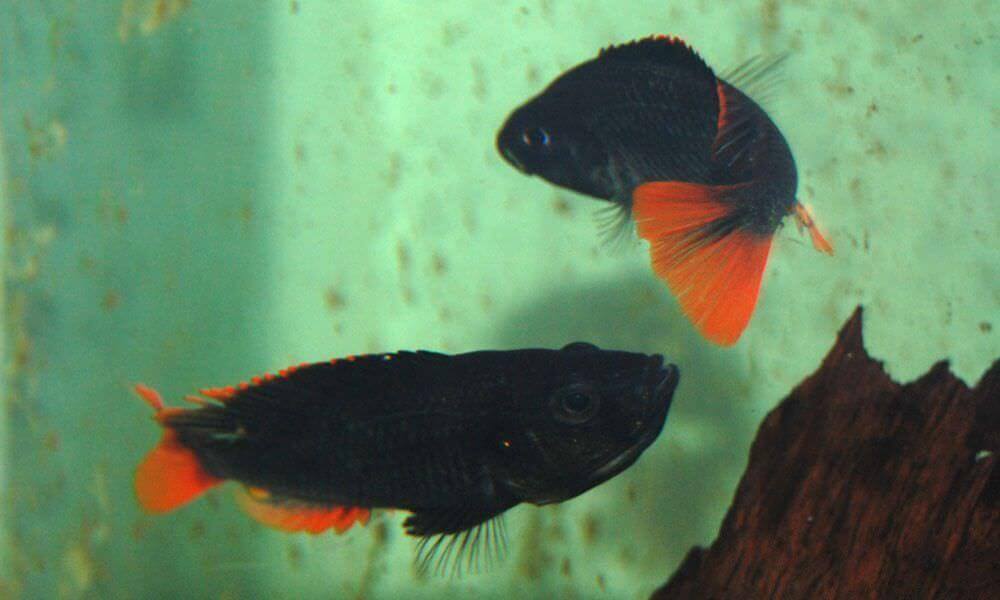
The genus Yssichromis represents a tragic and important story in ecology. These small cichlids were part of the incredible adaptive radiation in Lake Victoria, where hundreds of species evolved to fill particular ecological niches. Many Yssichromis species were specialized zooplanktivores, feeding on tiny crustaceans in the open water. Their name is derived from a combination of Greek words, but their true significance lies in their fate.
Most scientists today no longer consider Yssichromis to be a valid genus. The species once placed in it have been moved back into the larger genus, Haplochromis. The fish once called Yssichromis laparogramma is now correctly known as Haplochromis laparogramma.
The introduction of the invasive Nile Perch into Lake Victoria led to a catastrophic decline in native cichlid populations, and the Yssichromis genus was hit particularly hard. Many of these species have not been seen in decades and are feared to be extinct. They serve as a powerful symbol of the devastating impact that invasive species can have on a unique and finely balanced ecosystem. Like many African cichlids, they were maternal mouthbrooders, a parenting strategy that was no match for the new, massive predator in their lake.
Yarrell’s Blenny (Chirolophis ascanii)
Habitat: Cold, rocky coastal waters and kelp forests of the North Atlantic Ocean.
Size: A small fish, typically growing up to 10 inches long.
Conservation Status: Least Concern (LC) by the IUCN.
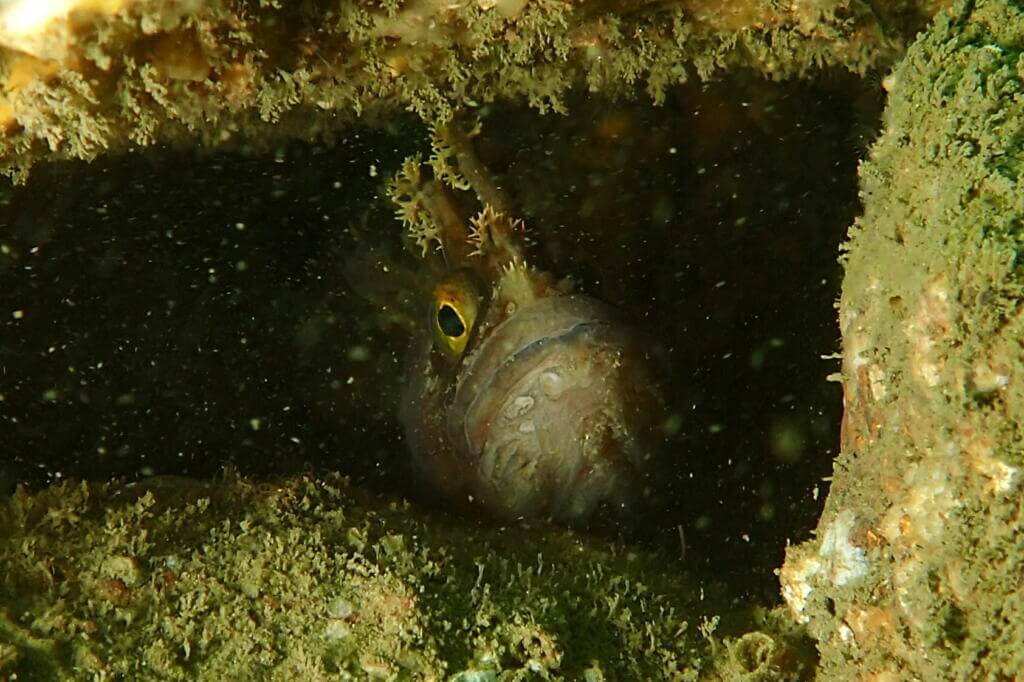
Yarrell’s Blenny is a fascinating coldwater fish named in honor of the prominent 19th-century British naturalist, William Yarrell. Its most defining feature is the large, fleshy, feather-like cirri that grow on top of its head, resembling a chaotic tuft of hair or a small bush. This elaborate headgear provides excellent camouflage, allowing the blenny to blend in perfectly with the seaweed and hydroids of its rocky environment.
As a reclusive bottom dweller, it spends most of its time hiding in crevices or under rocks. It is a sit-and-wait predator, using its cryptic appearance to ambush small crustaceans and other invertebrates that pass by. Like many blennies, it has a long, continuous dorsal fin and uses its pectoral fins to prop itself up on the seafloor. This fish is a perfect example of how even a small, obscure species can evolve highly specialized and effective survival tools.
Other Fish Species That Start with Y
- Yellow Bass (Morone mississippiensis)
- Yellow Bullhead (Ameiurus natalis)
- Yellow Soapfish (Diploprion bifasciatum)
- Yellow Weaver (Trachinus draco)
- Yellowback Fusilier (Caesio teres)
- Yellowbanded Perch (Acanthopagrus australis)
- Yellow-edged Moray (Gymnothorax flavimarginatus)
- Yellow-eye Mullet (Aldrichetta forsteri)
- Yellowfin Croaker (Umbrina roncador)
- Yellowfin Grouper (Mycteroperca venenosa)
- Yellowfin Pike (Dinolestes lewini)
- Yellowfin Surgeonfish (Acanthurus xanthopterus)
- Yellowhead Jawfish (Opistognathus aurifrons)
- Yellow Jack (Carangoides bartholomaei)
- Yellow King Piranha (Serrasalmus ternetzi)
- Yellow Lab (Labidochromis caeruleus)
- Yellow Weaver (Parapercis gilliesii)
- Yellowmargin Triggerfish (Pseudobalistes flavimarginatus)
- Yellow Regal Peacock Cichlid (Aulonocara baenschi)
- Yellowtail Amberjack (Seriola lalandi)
- Yellowtail Barracuda (Sphyraena flavicauda)
- Yellowtail Clownfish (Amphiprion clarkii)
- Yellowtail Snapper (Ocyurus chrysurus)
- Yucatan Molly (Poecilia velifera)
- Yarra (Pygmy Perch)
FAQs
Why are so many different fish yellow?
The color yellow serves several different purposes for fish. For species like the Yellow Tang living on a vibrant coral reef, its bright color can be part of a complex social signal or a warning to rivals. For other fish, like the Yellow Perch, its golden-yellow hue provides excellent camouflage against the sandy, sun-dappled bottoms of lakes and rivers.
How do fish names reflect a specific location?
A fish’s name can often be a direct link to its native habitat. The Yucatan Molly is named for the Yucatan Peninsula in Mexico where it is found. The genus Yssichromis is forever linked to Lake Victoria in Africa, the only place in the world it ever existed, making its name a symbol of that unique ecosystem.
Can a fish’s color indicate its health or mood?
Yes, absolutely. Many fish, including the Yellow Tang, can dramatically change the intensity of their color based on their stress level or health. A vibrant, bright yellow tang is typically healthy and comfortable, while one that appears pale or washed out may be stressed, sick, or frightened.
What does it mean for a fish to be a “keystone species”?
A keystone species is an organism that disproportionately affects its environment relative to its abundance. For example, a top predator like the Yellowfin Tuna is a keystone species because it controls the populations of many other fish, and its removal could cause a cascade of negative effects throughout the entire open ocean food web.


