

Tunas are a diverse group of large, predatory fish that play a significant role in marine ecosystems and global seafood markets. Renowned for their streamlined bodies and powerful swimming abilities, tuna species inhabit tropical and temperate oceans worldwide.
Their flavorful and nutrient-rich flesh has made them a popular culinary choice, appearing in various dishes across cultures. This article will explore the biology, culinary uses, and sustainability considerations surrounding tuna.
Among the notable types of tuna is the Atlantic bluefin tuna. Known for its impressive size, it inhabits various parts of the world’s oceans, with a significant presence in the Eastern Atlantic and Mediterranean Sea. Yellowfin tuna is another well-known species, thriving in tropical and subtropical oceans globally. The Atlantic bigeye tuna is recognized for its remarkable migration patterns, traversing thousands of miles during its annual spawning journeys.
Appearance
Tuna range in appearance based on the species. Some are very small, growing to around 1.6 feet in length (the bullet tuna), while others are far larger, like the Atlantic bluefin tuna that grows to over 15 feet and over 1,500 pounds.

There are several different groupings of tuna fish that one might find in their research. The primary groups, those that are said to consist of the “true” tuna fish, are the bluefin and yellowfin groups.
The bluefin group includes these species:
- Albacore tuna
- Southern bluefin tuna
- Bigeye tuna
- Pacific bluefin tuna
- Atlantic bluefin tuna

While the Yellowfin group includes:
- Blackfin tuna
- Longtail tuna
- Yellowfin tuna
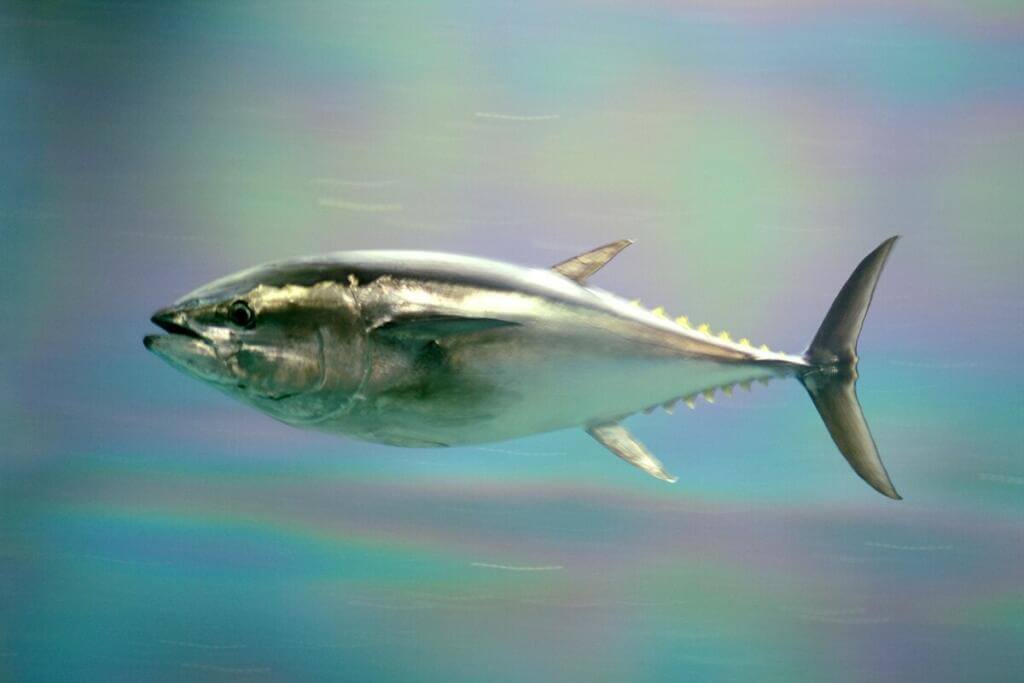
Generally, the tuna is a sleek-looking fish that can move very quickly through the water. Seven to ten small fins run along their backs to their tails. Their tail fins are crescent-shaped with a blue dorsal side and a whiteish underside for better camouflage in the water.

Amazingly, some tuna fish are incredibly fast swimmers. This includes the yellowfin tuna, which can reach speeds of up to 47 mph. They have exceptionally long pectoral fins, which are nearly half the length of their bodies. The edge of the tail fin is white.
Tuna have a unique countercurrent heat exchange system in their muscles. Warm blood leaving the muscles transfers heat to cool blood returning from the gills, keeping their muscles warmer for enhanced swimming performance and endurance.
Habitat
TunaIt lives in tropical and warm temperate waters in the Atlantic Ocean, Indian Ocean, and Pacific Ocean, and more. They can also be found in lakes, wetlands, streams, and the open ocean. They prefer the open ocean rather than spending too much time near the shore. But they are found near coastlines as well.
They are a temperate (cooler water) species but spawn in warmer tropical waters. Juveniles prefer warmer surface waters, and adults like cooler, deeper waters
Some tuna are well-known for swimming impressive distances during migration. For example, some species swim between the Gulf of Mexico to Europe to feed.
Diet
The eight true tuna species are known for their carnivorous diets. They prefer to hunt and eat smaller fish, squid, crustaceans like crabs and lobsters, and invertebrates.
Some other species of tuna are known to eat bigeye tuna (because of their relatively smaller size). They only grow to be around 5.5 feet in length (only half of the largest species).

Reproduction
Tuna generally only spawn once a year, usually swimming vast distances to reach their preferred breeding ground. For example, Atlantic bluefin tuna swim all the way to the Gulf of Mexico while others travel to the Mediterranean Sea.
Bigeye tuna usually live to be around nine years old and release millions of eggs when they spawn.
Tuna fish release eggs near the surface of the water, with external fertilization taking place. During one spawning, a female tuna can release as many as 2.5 million eggs. They lay up to 10 million years per year.
Once born, tuna develop quickly and migrate to their preferred feeding territory.
Threats
One of the biggest threats that species of tuna face is overfishing. The fish is highly prized around the world and is fished throughout the world’s oceans. Some species, like the southern bluefin tuna, may become extinct in the near future.
Individual fish can sell for thousands of dollars if they are large enough. Additionally, some species of tuna are hunted as game fish. This mostly includes the largest species.

For example, the endangered Atlantic bluefin tuna has declined by more than 50% in the last decade in the East Atlantic and even more in the Western Atlantic.
Most tuna fish are apex predators due to their size, but that doesn’t mean that they are without equal in the world’s oceans. They are commonly hunted by larger fish, sharks, and sometimes orcas and pilot whales. Seabirds and large fish are also known to prey on juvenile tuna fish. But, as they age, their predators grow fewer.
6 More Amazing Facts about Tuna Fish
- The fish is incredibly commercially important.
- Bluefin tuna are endangered due to overfishing.
- Some tuna fish migrate huge distances during a single year.
- Tuna fish is an incredibly healthy meat that’s eaten around the world.
- Due to the popularity of tuna fishing, some species are considered to be endangered.
- Southern Bluefin is buttery, smooth, and has a melt-in-your-mouth tender feel because it is marbled with fat.
FAQs
What is special about tuna fish?
The tuna fish can grow to impressive lengths, up to ten or more feet, and weigh more than 1,000 pounds. The fish are also very fast swimmers, a result of their streamlined bodies. They’re also known for migrating incredible distances during spawning season.
Is tuna fish healthy to eat?
Tuna is included on menus in restaurants around the world and is generally considered healthy to eat. It is low-fat and high in protein. Plus, the fat tuna does have of the healthy variety.
How long do tuna fish live?
Tuna fish can live to be around 26 years old. But, it’s more common for the fish to live around 15 years (this number increases if one only considers fish kept in captivity).
What is tuna fish famous for?
Tuna fish are famous for their large, fast-moving bodies and their migration patterns. Their speed is also quite notable. They have been known to swim more than 40 miles an hour.
Do sharks eat tunas?
Yes, some species of sharks do prey on tuna (as do other large predators like orcas). The shark species that eat tuna include mako sharks and tiger sharks.


