
In the vast and diverse world of marine life, two species often mistaken for each other are the sea lion and the seal. Despite their similar appearances and shared habitats, these creatures possess unique characteristics that set them apart in the animal kingdom.
This article will embark on an intriguing comparison between these two marine mammals, unraveling their differences in physical attributes, behavior, and lifestyle.
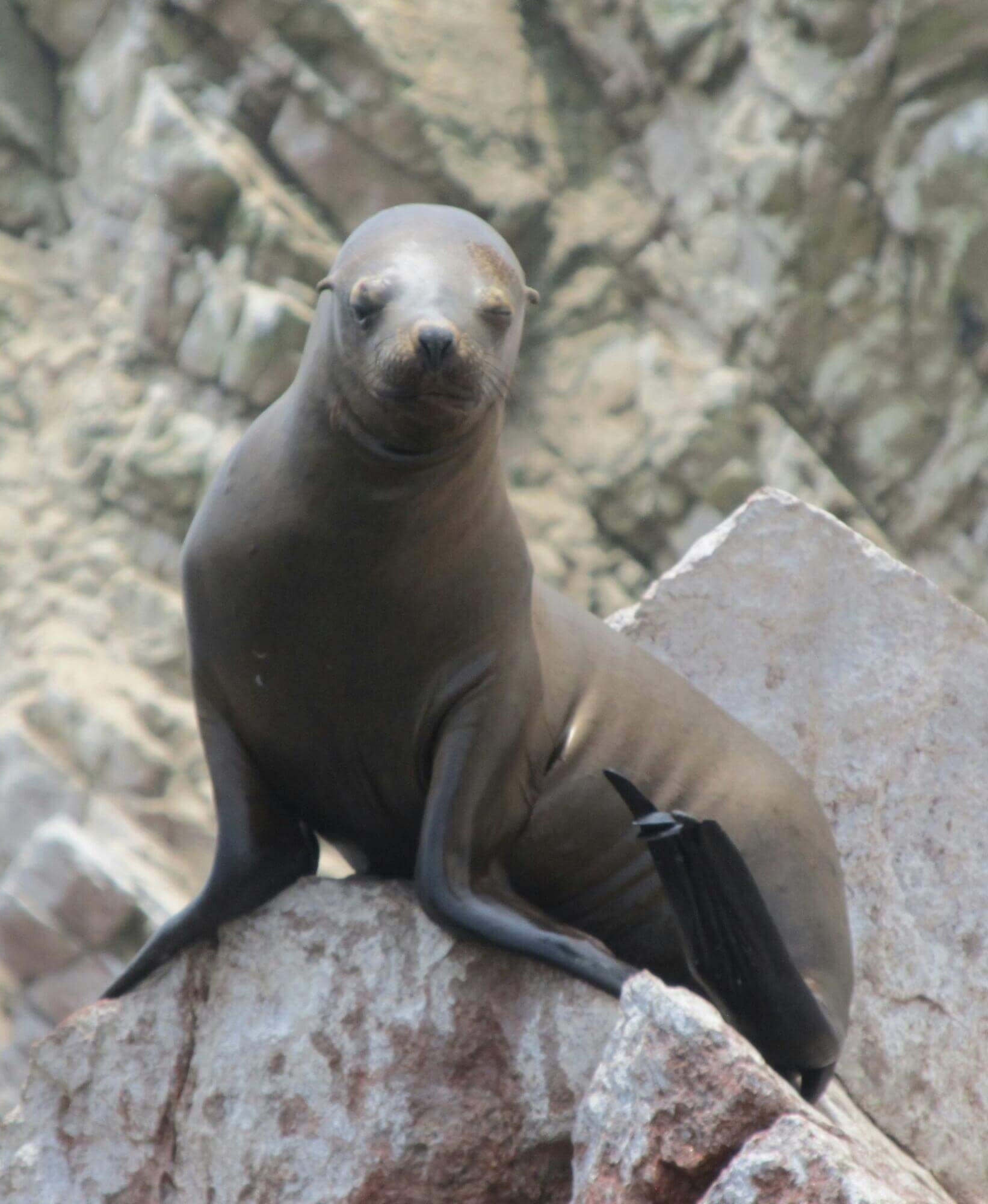
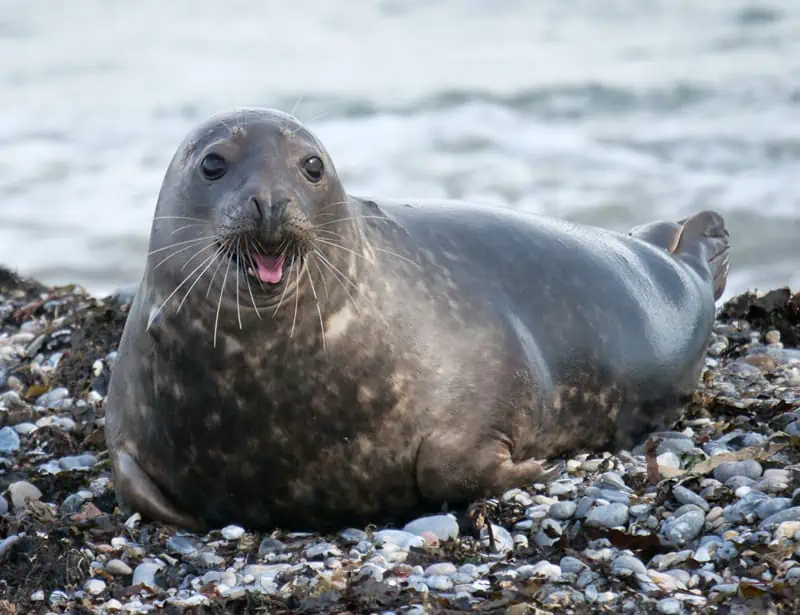
Image Credits: Anibal Paradisi (left) karlheinz_eckhardt Eckhardt (right)
Sea Lion vs. Seal: Main Differences
Here are some of the main differences between a sea lion and a seal:
Appearance: Sea lions have large flippers and small flaps for their outer ears. Seals have much smaller flippers and no external ear flaps/external ears at all. Sea lions can walk on land, using their large flippers, whereas seals wiggle on their belly to move on land.
Size: Seal lions weigh in at 220-2,200 lb, whereas seals weigh in from 99 -7,100 lb, depending on the species.
Habitat: While sea lions typically inhabit coastlines in subarctic to tropical waters and favor rocky and sandy beaches, seals have a broader range of habitats, from coastal waters and floating ice to the harsh conditions of the Antarctic ice.
Diet: Sea lions primarily feed on a diet of fish and squid, while seals’ diet varies more widely, including fish, squid, shellfish, and in some cases, penguins and other seabirds.
Behavior: Sea lions spend more time on land and gather in large groups called ‘herds’ or ‘rafts’ on coastlines. Seals are more solitary animals, spending the majority of their time in the water, coming onto land to mate.
We’ll explore these differences and interesting facts about each marine animal in more detail.
Who Would Win?
Sea lions, with their strong, large flippers and ability to walk on all fours, have great mobility on land. Seals, on the other hand, are generally more solitary and quieter than sea lions. They have smaller flippers and move on land by wriggling on their bellies.
In terms of size, some species of seals like the elephant seal significantly outweigh sea lions, giving them a potential advantage in a physical confrontation. However, the agile and social nature of sea lions could tip the scales in their favor in other scenarios.
It’s important to note that these animals typically avoid conflict and each species excels in its way depending on the environment and situation.
Determining a “winner” between sea lions and seals is challenging due to their different adaptations and behaviors. In a land-based confrontation, a sea lion might have the upper hand due to its ability to move more swiftly with its strong flippers. However, in an aquatic setting, a seal’s streamlined body and excellent diving abilities could give it an advantage.
Sea Lion
Sea lions are a type of pinniped. They are part of the Otariidae family along with fur seals and are also considered seals. They are related to both seals and walruses but are distinct.
On average, sea lions weigh around 660 lb and grow to around 8 ft long. The females are smaller, around 220 lb, and 6 ft long.
The Steller’s sea lion is the largest. It can weigh up to 2,200 pounds, notably lighter than the heaviest seal species, the male southern elephant seal. Adult male sea lions are usually larger than females.
Sea lions are known for their robust and streamlined bodies, which are well-adapted for their aquatic lifestyle. Most of the species are dark brown to black. The pubs are generally dark brown as well. Their coats change colors as they age, becoming lighter.
California sea lions have a very doglike appearance, with a snout very similar to that of a Labrador retriever.

They have a layer of blubber under their skin for insulation against cold water.
Species
The sea lions have six extants and one extinct species (the Japanese sea lion) which disappeared in the mid-20th century due to overhunting.
The currently existing species of sea lions are:
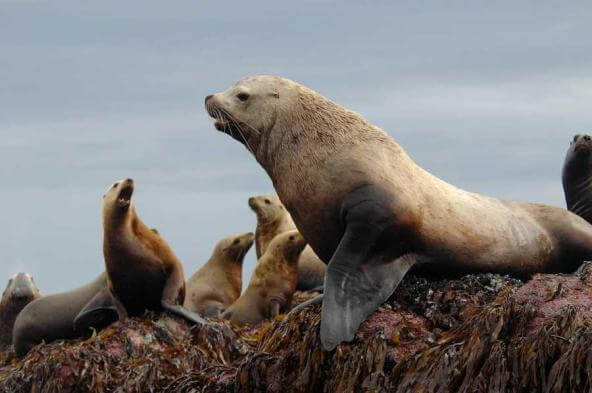
- Steller Sea Lion (Eumetopias jubatus): The largest of the sea lion species, the Steller sea lion is found in the northern Pacific Ocean. Males weigh up to 2,500 pounds. They are known for their loud, roaring sounds and light tan color.
- Australian Sea Lion (Neophoca cinerea): Found along the coasts of Western and South Australia, these sea lions are known for their unique breeding cycle called “pupping,” which occurs every 17.6 months. They have a dark brown coat and males can weigh up to 660 pounds.

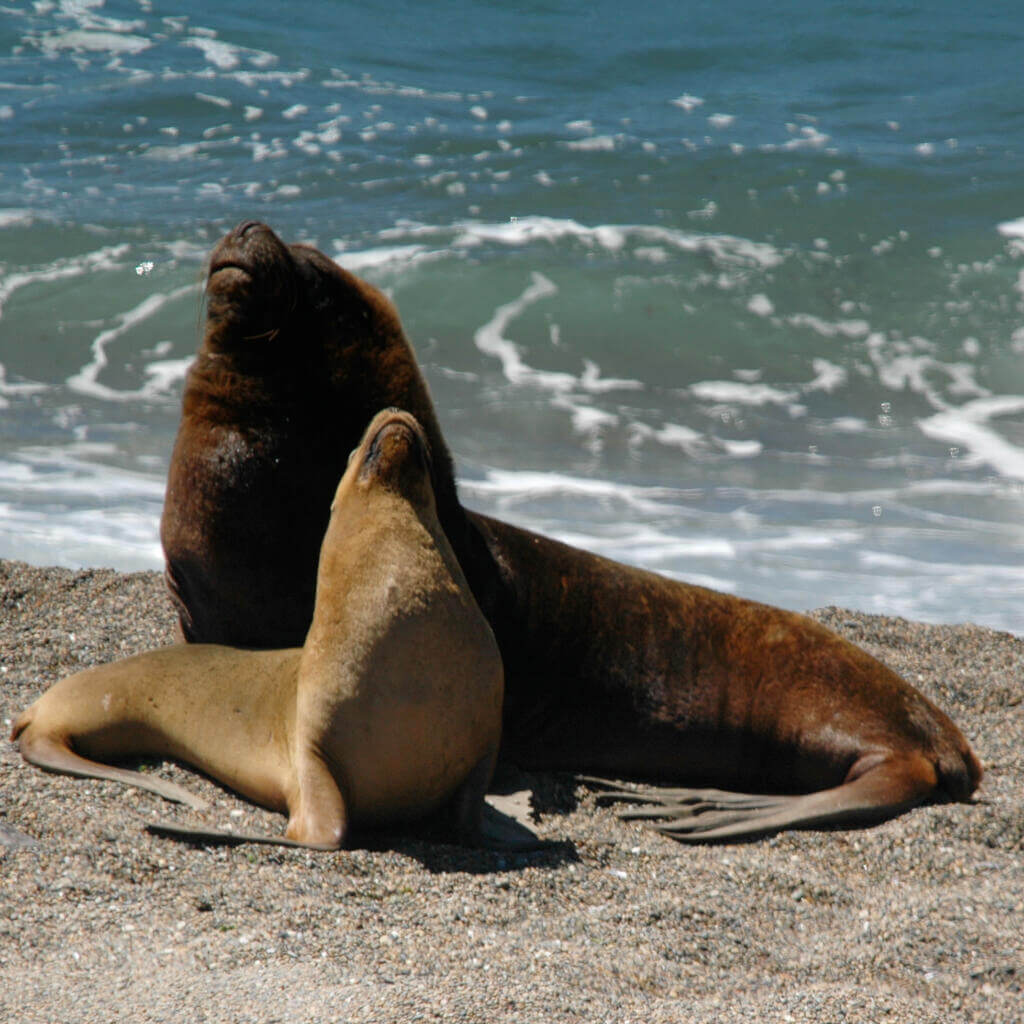
- South American Sea Lion (Otaria flavescens): These sea lions inhabit the coasts of Chile, Peru, Uruguay, Argentina, and southern Brazil. They are characterized by their large size, with males weighing up to 770 pounds, and their distinctive mane, which gives them a lion-like appearance.
- New Zealand Sea Lion (Phocarctos hookeri): Also known as Hooker’s sea lion, this species is one of the most endangered sea lions in the world. They are found mainly in the subantarctic Auckland and Campbell Islands of New Zealand.
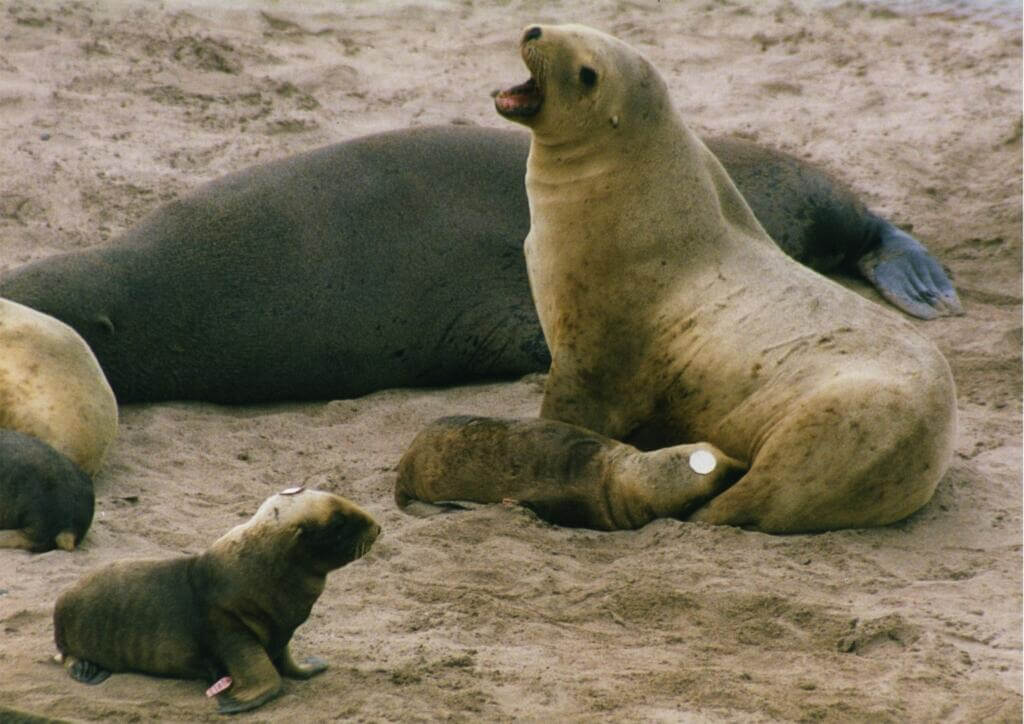
- California Sea Lion (Zalophus californianus): Known for their intelligence and playful nature, California sea lions are a common sight along the Pacific coast of North America. They are smaller than other sea lions, with males weighing up to 860 pounds.
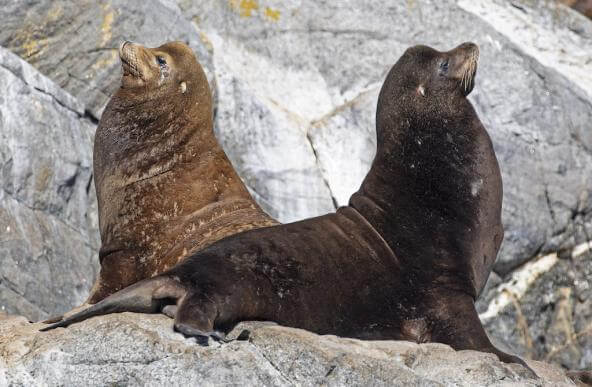
- Galapagos Sea Lion (Zalophus wollebaeki): Endemic to the Galapagos Islands, these sea lions are the smallest sea lion species. They are highly social animals and often seen basking in the sun on the islands’ rocky shores.
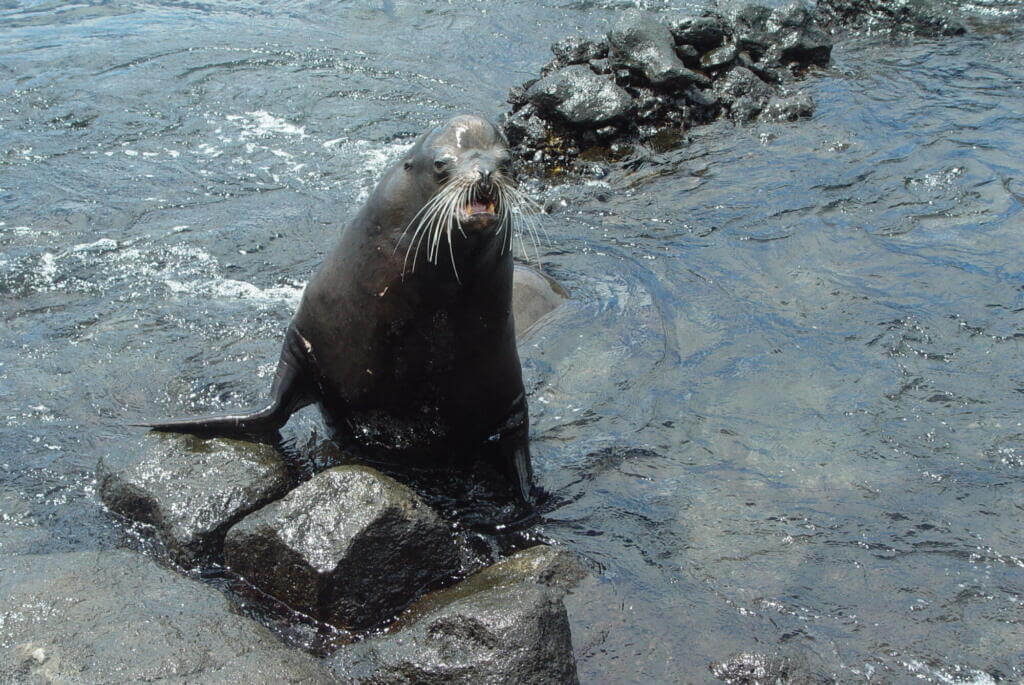
Habitat
Sea lions are predominantly found in the Pacific Ocean, with a major population spread across the west coast of North America, extending from Alaska to Mexico.

They are also found along the coasts of South America, New Zealand, and Australia. Notably, the Galapagos Sea Lion resides exclusively around the Galapagos Islands.
Diet
Sea lions eat around 5-8% of their body weight. This is usually around 15 to 35 lb. They are skilled hunters, mostly due to the incredible speeds they can move through the water.
Sea lions generally eat species including fish, herring, salmon, and sardines. They’ve also been seen eating squid and octopus. There are over 50 species that sea lions might choose to prey on. They have 34-38 teeth in their mouths, which they can easily use to catch their game.

Reproduction
Male sea lions fast during their mating period, losing a great deal of their weight. They refuse to leave their territories, worried they might lose out on a mating opportunity. They breed on the same section of the beach every year.
The females come into heat about three weeks after giving birth and also initiate courtship. They move into submissive postures, signaling to the males that they are ready to mate. They usually only breed once a season. When the female is done mating, they bite the male’s neck.
Threats
Sea lions face several threats that are impacting their populations. One of the primary threats is overfishing, which reduces their food supply and forces them to travel further and expend more energy to find food.
They are also vulnerable to pollution, particularly oil spills, which can damage their sensitive skin and eyes, and contaminate their food sources. Additionally, sea lions are often unintentionally caught in fishing nets and gear, leading to injuries or death. Climate change is another concern, as rising sea temperatures and changing ocean currents can affect the distribution of their prey.
Of the species of sea lions, the Australian sea lion, the Galápagos sea lion, and the New Zealand sea lion are listed as endangered by the IUCN. Sea lions live between twenty and thirty years.
Seal
Seals belong to a group of animals known as “pinnipeds” which also include Walruses and Sea lions. They belong to several different families, including Odobenidae, Otariidae, and Phocidae.
They have ear holes but lack an external ear flap. They have small front flippers that are thinly webbed with a claw on each small toe. In the water, seals swim easily, moving their rear flippers back and forth, similar to how a fish uses its caudal fin (tail) to propel itself through the water.
In general, seals are quiet. When they vocalize, it’s with soft grunts, growls, or hisses. Many are less social than sea lion species, especially in the water, but seals can be found on land together to avoid predators, rest, mate, and nurse their pups.
The Phocidae family contains the earless seals, or ‘true seals’.

Seals can range in size from a small 3 ft 3 into 16 ft in length. Weight-wise, they can vary from 99 lb up to 7,100 lb. The southern elephant seal male is on the heavy end of the spectrum and is the heaviest and largest member of its order. The Baikal seal is on the other end of the scale, weighing in at around 100 pounds.
These animals have a thick layer of fat, also known as blubber, on their bodies in order to insulate them from the cold.
They propel themselves with front limbs, in comparison to walruses which use their back legs. Their senses are quite strong, with well-developed hearing and sight on land and at sea.

There are approximately 33 species of seals worldwide, ranging from the frigid Arctic and Antarctic regions to tropical climates. Some well-known species include the Harbor Seal, Grey Seal, Harp Seal, and Leopard Seal.
Each species boasts unique characteristics and adaptations suited to their specific environments. For instance, the Leopard Seal, native to Antarctica, is known for its predatory prowess and diverse diet that includes other seals and penguins. On the other hand, the Harbor Seal, found across the Northern Hemisphere’s coastal waters, is smaller and feeds primarily on fish and invertebrates.
Despite their differences, all seal species share common traits such as a streamlined body, lack of external ear flaps, and the ability to stay underwater for extended periods, making them exceptional divers and swimmers.
Habitat
Seals have a more widespread geographical distribution. They inhabit both coastal waters and open ocean, spanning the Arctic and Antarctic regions as well as tropical waters.
Harbor seals are common in the Northern Hemisphere, populating areas along the U.S. west coast, the Atlantic coast of Europe, and parts of Asia. The Weddell seal, one of the most southerly distributed of all mammals, is found throughout the Antarctic continent. Other species like the Hawaiian monk seal are found in tropical regions, demonstrating the remarkable adaptability of this group of marine mammals.
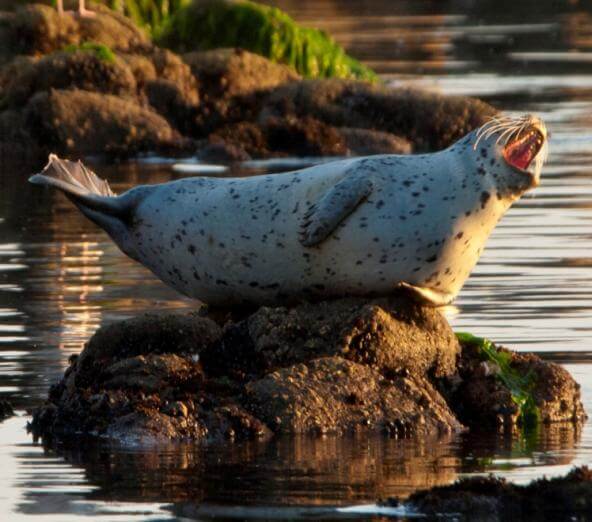
The harbor seal (Phoca vitulina) is the most commonly seen marine mammal in
the Salish Sea and can be found throughout the region year round.
Diet
Sea lions have a diverse diet that primarily consists of fish and squid. Their preferred prey varies among species and regions, but can include anchovies, herring, salmon, and rockfish. They are also known to consume octopus and, occasionally, smaller sharks. Sea lions are skilled hunters, often working together in groups to herd their prey.
They use their sharp teeth to catch food, but unlike some other marine mammals, they don’t chew their food; instead, they either swallow it whole or tear it into large chunks.
Despite their voracious appetites, sea lions have to be cautious of predators while hunting, as they themselves form part of the diet for larger marine creatures such as killer whales and great white sharks.

Reproduction
The male seal becomes sexually mature between three and seven years of age and around 165 pounds. The female is usually in the same age range but around 110 pounds.
Mating behavior begins with the males – this is unlike sea lions, where the female initiates copulation through submissive behavior. The male chases the female, bites her flippers and neck, in an attempt to constrain her, and initiates mating. The female may respond by growling and waving her flippers. Copulation takes place in the water. Usually, the male seal will mate with more than one female in a season.
Threats
Seals face similar threats, including overfishing and entanglement in fishing gear. Pollution is a significant issue, with both chemical pollutants and plastic debris posing risks.
Many seals live in polar regions, so they are particularly vulnerable to the effects of climate change. Melting ice can lead to habitat loss for species like the harp seal, which rely on ice to rest and give birth. In some regions, seals are also hunted for their fur, meat, and oil, adding to the pressures they face.
Ocean Insights: Hear From Our Experts

By Hamna Faizan
Marine Life Researcher and Lecturer, with an MSc in Zoology
As a marine biologist, the comparison between seals and sea lions presents an opportunity to highlight the importance of biodiversity and conservation. While they may seem similar at first glance, their unique adaptations and behaviors underscore the richness of our marine ecosystems. For instance, did you know that, unlike seals, sea lions use their large flippers to 'walk' on land, often gathering in large, noisy colonies? This makes them more visible and charismatic, but also more vulnerable to human disturbances. On the other hand, the more aquatically adapted seals, with their ability to dive deep and stay underwater for extended periods, face increasing threats from fishing nets and changes in their prey due to climate change. These differences illustrate why conservation strategies must be tailored to the specific needs and challenges of each species. It's a fascinating reminder of the complexity of nature and the importance of protecting our oceans' inhabitants.
FAQs
Can sea lions hurt humans?
While sea lions are not typically aggressive towards humans, they can pose a threat if they feel threatened or provoked. Sea lions have sharp teeth and strong jaws that can inflict serious injuries. Instances of sea lions biting humans are rare but can occur, especially if the animals are being fed or harassed by people.
How fast can seals and sea lions swim?
Sea lions can reach speeds up to 25-30 miles per hour (40-48 kilometers per hour) when they need to escape predators or chase prey. Seals are generally a bit slower, with an average speed around 12-20 miles per hour (19-32 kilometers per hour), although some species like the Dall’s porpoise, which is often mistaken for a seal, can reach speeds up to 55 miles per hour (88 kilometers per hour).
Which is faster, the seal or the sea lion?
The sea lion can move at around 25-30 miles per hour in the water, while seals are slower, moving at around 14-23 miles per hour.
How long can seals and sea lions stay underwater?
On average, sea lions can stay underwater for about 10 to 20 minutes at a time and dive up to 600 feet deep. Some species of seals, however, are known to dive deeper and stay submerged longer. For instance, the Weddell seal, one of the most extraordinary divers, can remain underwater for more than an hour and dive to depths of over 2,000 feet.
How long do seals and sea lions live?
Both seals and sea lions live between 20-30 years.


