

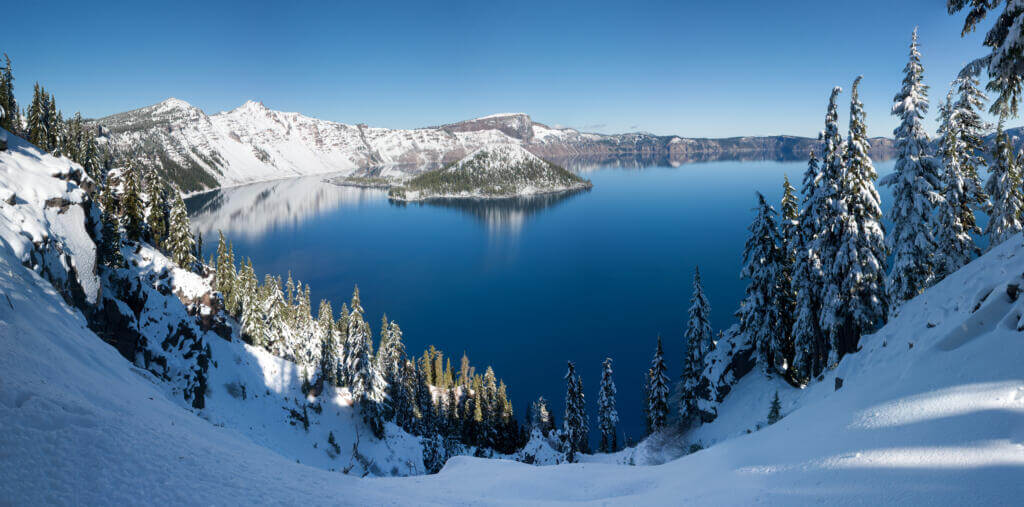
Crater Lake is located in the Cascade Mountains of Oregon. It is the deepest lake in the United States with a maximum depth of 1,943 feet (592 meters). It formed approximately 7,700 years ago after the eruption and collapse of Mount Mazama, a once towering volcano. This event created a large caldera that filled with water over time.
The lake is known for its deep blue color and exceptional water clarity, a result of its high elevation and lack of inlets, which prevent pollutants from entering. Sunlight penetrates deep into the lake, creating the characteristic blue hue and allowing for underwater visibility that often exceeds 100 feet.
The lake supports a variety of plant and animal life, both within its depths and in the surrounding old-growth forests. The unique conditions of the lake have led to the evolution of endemic species like the Mazama newt, found nowhere else on Earth.
While it may appear isolated, Crater Lake is connected to the broader water system in several ways. Precipitation that falls within the lake’s watershed eventually makes its way into regional rivers and streams, highlighting the importance of protecting the lake’s water quality from potential contamination.
This article explores the ecological importance of Crater Lake, the biodiversity, its threats and the conservation efforts used to preserve this unique environment.
Ecological Importance
- Water Purity: As a closed-basin lake, Crater Lake receives no inflow from rivers or streams. Its water comes solely from precipitation and snowmelt, resulting in exceptional purity and clarity.
- Volcanic Landscape: The lake’s volcanic origins have created a unique landscape that supports specialized plant and animal communities adapted to the challenging conditions.
- Scientific Research: Crater Lake serves as a natural laboratory for scientists studying volcanic processes, limnology, and climate change. Its pristine environment provides valuable insights into ecological processes and the impacts of human activities.
Biodiversity
The shores of Crater Lake showcase diverse flora ranging from subalpine forests of whitebark pine and mountain hemlock at higher elevations to hardy shrubs and wildflowers that cling to the cliffs along the lake’s rim. The iconic “Phantom Ship” rock formation, adorned with trees, highlights the resilience of plant life in this challenging environment.
Fauna includes iconic species like black bears, mule deer, and a variety of birds, including bald eagles, Canada jays, and Clark’s nutcrackers. The lake supports populations of introduced fish, including rainbow trout and kokanee salmon, which provide recreational fishing opportunities, as well as phytoplankton and zooplankton.
Fish Diversity
The fish diversity in Crater Lake is limited due to its unique characteristics. The lake’s cold, deep waters and lack of inlets or outlets create a challenging environment for most aquatic life. However, two non-native fish species, rainbow trout and kokanee salmon, were introduced in the late 19th and early 20th centuries and have thrived in the lake. These species are now popular targets for recreational fishing.
Endangered Species
While Crater Lake National Park is not home to any federally listed endangered species, the Mazama newt, a species endemic to the lake, is a species of concern. The introduction of non-native Signal crayfish has led to competition for food and predation, raising concerns about the newt’s long-term survival.
Threats
Crater Lake faces several environmental threats despite its protected location. These include climate change impacts like rising temperatures and altered precipitation, invasive species disrupting the food web, and air pollution affecting water quality and visibility.

Climate Change
Warmer waters can disrupt the lake’s thermal stratification, impacting nutrient cycling and oxygen distribution, which can affect the entire food web. Changes in precipitation, particularly reduced snowfall, can lead to lower water levels, potentially harming shoreline habitats. Increased evaporation further exacerbates this issue and can alter water chemistry. These changes can also affect species distribution and abundance, disrupting ecological interactions.
Invasive Species
The Signal crayfish, introduced in the 20th century, has disrupted the food web by preying on native species and competing for resources. This has led to a decline in the Mazama newt population, a species unique to Crater Lake. Introduced fish, like rainbow trout and kokanee salmon, also compete with native organisms and may prey on newts.
Air Pollution
Pollutants like nitrogen oxides and particulate matter can travel long distances, impacting water quality and visibility. Nitrogen deposition can act as a fertilizer, potentially increasing algae growth and reducing water clarity. This pollution can also create haze, obscuring the scenic views and affecting plant growth.
Other Threats
In addition to the threats mentioned above, Crater Lake also faces challenges stemming from human activities and natural events. These include:
- Visitor Impact: Increased visitation can lead to issues such as trail erosion, litter, and disturbance to wildlife. Erosion can damage trails and impact water quality as sediment washes into the lake. Visitors can also disturb wildlife by approaching animals too closely or straying from designated trails, which can disrupt their natural behaviors and habitats.
- Natural Disasters: Wildfires, earthquakes, and volcanic activity pose potential threats to the park’s infrastructure and natural resources. Wildfires can cause significant damage to forests, impacting wildlife habitat and potentially affecting water quality through increased erosion and ash deposition. Earthquakes, though less frequent, could damage park infrastructure and potentially trigger landslides that impact the lake.
Conservation
The National Park Service and its partners are actively engaged in conservation efforts to protect Crater Lake’s unique ecosystem and preserve its natural beauty for future generations. These efforts include:

- Monitoring and Research: Ongoing monitoring programs collect valuable data on key indicators such as water clarity, nutrient levels, and species abundance. Research studies help to understand the lake’s complex ecosystem and identify potential threats. Scientists conduct research on a variety of topics, including the impacts of invasive species, the effects of climate change, and the dynamics of the lake’s food web.
- Visitor Education and Management: Educational programs and visitor guidelines aim to minimize visitor impact and promote responsible recreation within the park. Park rangers provide informative talks and guided walks that educate visitors about the park’s ecosystem and the importance of “Leave No Trace” principles. These principles encourage visitors to pack out all trash, stay on designated trails, and respect wildlife.
- Restoration Projects: Restoration projects address issues such as trail erosion, habitat degradation, and the control of invasive species. For example, the park actively works to restore damaged trails by stabilizing slopes, improving drainage, and using native plants to revegetate eroded areas. These efforts help to protect water quality and ensure visitor safety while preserving the natural beauty of the park
Human Impact & Sustainable Tourism
Crater Lake National Park actively promotes sustainable tourism practices to minimize the environmental impact of visitors while still allowing them to experience the lake’s beauty. Development within the park is carefully managed to preserve the natural resources and scenic values, limiting the impact on the landscape. The park also encourages the use of public transportation, such as shuttle services and trolley tours, to reduce traffic congestion and vehicle emissions within the park. By providing educational programs about the park’s ecology and history, Crater Lake National Park fosters a sense of stewardship among its visitors, encouraging them to protect this unique environment.
Connection to Broader Water Systems
While Crater Lake appears isolated, with no visible connections to other bodies of water, it is linked to the broader regional water system. The lake’s watershed plays a crucial role in this connection. Precipitation that falls within the watershed, primarily in the form of snow, nourishes the lake and eventually contributes to the regional water system through groundwater flow and seepage. This means that pollutants entering Crater Lake, whether through atmospheric deposition or runoff from the surrounding area, can potentially impact water resources beyond the park’s boundaries.
Furthermore, evaporation from the lake’s surface contributes to local weather patterns and the regional water cycle. The lake also receives atmospheric inputs, including pollutants transported long distances by air currents.
Historical Significance
Crater Lake holds significant cultural and historical value. For centuries, Native American tribes, including the Klamath and Modoc, have revered the lake as a sacred place. The lake’s geological history, including the dramatic eruption of Mount Mazama, provides valuable insights into volcanic processes and the forces that shape our planet.
Lakeside Communities
While there are no permanent communities located directly on the shores of Crater Lake, the surrounding region is home to several small towns and villages that rely on the park for tourism and recreation opportunities. These communities play an important role in supporting conservation efforts and promoting sustainable tourism practices.
What is Special About Crater Lake
Crater Lake is a truly special and unforgettable destination for nature enthusiasts, outdoor adventurers, and anyone seeking to be immersed in the wonders of the natural world. Here are three key points that highlight what makes Crater Lake so special.
- Spectacular Natural Beauty: Crater Lake’s stunning and intense blue color, crystal-clear waters, and dramatic surrounding cliffs create an unparalleled visual spectacle. Its breathtaking beauty has earned it a reputation as one of the most visually captivating natural wonders in the United States.
- Geological Significance: The lake’s origin as a result of a volcanic caldera collapse adds a unique geological dimension to its allure. This geological history is fascinating and contributes to the lake’s depth and purity, making it a distinctive feature of the landscape.
- Unique Recreational Opportunities: Crater Lake offers various outdoor activities catering to different interests and seasons. From summer hikes along the rim and boat tours to Wizard Island, to winter adventures like snowshoeing and cross-country skiing, the park provides diverse opportunities for exploration and adventure.
- Serene and Pristine Environment: The limited development and remote location of Crater Lake National Park create a serene and pristine environment. The park’s untouched landscapes and isolation allow visitors to connect with nature on a deeper level, providing a peaceful and rejuvenating experience.
Facts about Crater Lake
- The lake has no inflowing rivers or streams and is primarily fed by rainwater and snowmelt.
- Crater Lake has been designated as an International Dark Sky Park, offering excellent stargazing opportunities.
- The caldera has two smaller lakes: Wizard Island’s Crater Lake and Phantom Ship, a rock formation resembling a ghostly sailing ship.
- Crater Lake is part of the Cascade Range, a volcanic mountain range that stretches from northern California to British Columbia, Canada.
- The Pacific Crest Trail, a famous long-distance hiking trail, passes through Crater Lake National Park, attracting hikers and outdoor enthusiasts.
FAQs
Is it OK to swim in Crater Lake?
Swimming in Crater Lake is generally not recommended due to its cold water temperatures, high elevation, lack of designated swimming areas, and potential environmental impact.
How was the depth of Crater Lake first measured?
The depth of Crater Lake was first measured in 1886 by a team led by Captain Clarence Dutton. They painstakingly brought a half-ton survey boat, the Cleetwood, to the lake. Lacking modern technology like sonar readings, they used a piece of pipe with a weighted line to measure the depth of the lake at 168 different points. Their dedication and ingenuity revealed a maximum depth remarkably close to the precise measurements taken later with advanced technology.
How was Crater Lake formed?
Crater Lake was formed by the collapse of the volcanic Mount Mazama around 7,700 years ago, creating a caldera that gradually filled with rainwater and snowmelt to become the deepest and bluest lake we see today.
Where is Crater Lake located?
Crater Lake is located in Crater Lake National Park in southern Oregon, United State, positioned between the cities of Klamath Falls to the south and Bend to the northeast. It is situated within the caldera of Mount Mazama in the Cascade Range.
What led to the discovery of Crater Lake?
The discovery of Crater Lake in 1853 was a result of the explorations of gold prospectors John Wesley Hillman, Henry Klippel, and Isaac Skeeters. While searching for gold, they stumbled upon the lake on June 12th, initially naming it Deep Blue Lake.


