

The letter ‘U’ reveals a world of fish that have evolved remarkable and highly specific tools to dominate their unique corners of the aquatic world. This category is home to the Unicornfish, a reef dweller with a mysterious horn; the Uaru, an Amazonian cichlid that feeds its young from its own skin; and the Upside-down Catfish, which has perfected the art of living life inverted.
Read on to explore more about the unusual and unforgettable fish that start with U.
Common Fish Names That Start With U
In this section, we will explore some of the popular species with common names starting with U.
Unicornfish (Genus Naso)
Habitat: Coral reefs throughout the tropical Indo-Pacific region.
Size: Typically 1 to 2 feet in length.
Conservation Status: Most species are listed as Least Concern (LC).

The Unicornfish earns its mythical name from its most famous feature: a prominent, horn-like appendage that projects from its forehead, between its eyes. While the exact purpose of this horn is still debated, it is thought to be used in courtship displays or for competition among males. As a member of the surgeonfish family, it also possesses a second, more dangerous weapon: a pair of incredibly sharp, scalpel-like spines at the base of its tail that can be flicked outwards to defend against predators.
Unlike many of their reef-dwelling relatives that graze on algae, many Unicornfish species are planktivores, forming schools in the open water to feed on zooplankton. They are also known for their ability to rapidly change color, shifting from dark to light shades in an instant, depending on their mood, environment, or to signal other fish. This combination of a unique horn, hidden weapons, and dynamic color makes them a truly remarkable sight on the reef.
Uaru Chichlid (Uaru amphiacanthoides)
Habitat: Warm, acidic blackwater tributaries of the Amazon River Basin.
Size: Can grow up to 10-12 inches in length.
Conservation Status: Not formally evaluated, but common in the aquarium trade.
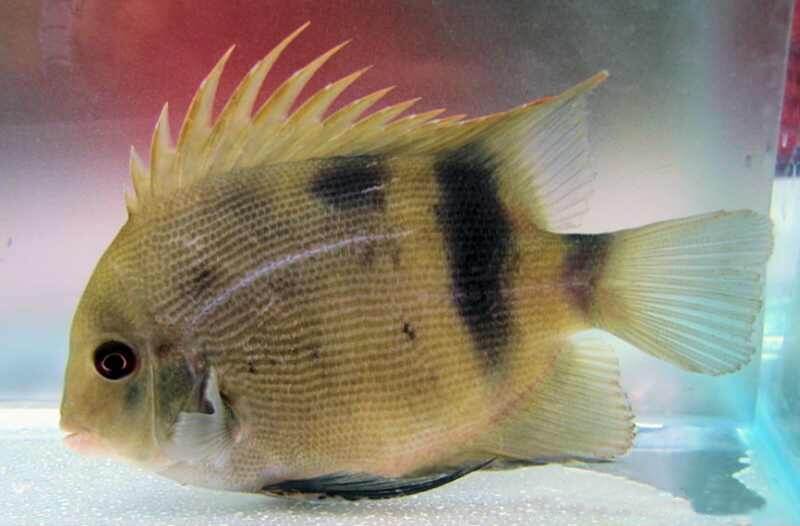
Often called the “Triangle Cichlid” due to its tall, compressed body shape, the Uaru is known as a gentle giant in the cichlid world. Its most remarkable trait is its advanced parental care. Like its close relative, the Discus, Uaru parents produce a nutritious, protein rich mucus secretion on their skin. The newly hatched fry will feed directly off this “body slime” for the first few weeks of their life, a behavior that demonstrates a powerful bond and commitment to their young.
As a dedicated herbivore, the Uaru spends much of its time grazing on aquatic plants, fruits, and other vegetable matter. They are highly social fish that form strong pair bonds and are best kept in groups, where they establish a clear social hierarchy. Their appearance also undergoes a dramatic change; juveniles have a mottled, almost camouflaged pattern, which fades into the more uniform, dark coloration of the adult, often with a large dark spot on their side.
Upside-Down Catfish (Synodontis nigriventris)
Habitat: Slow-moving rivers and streams of the Congo River Basin in Africa.
Size: Small, typically growing up to 4 inches long.
Conservation Status: Least Concern (LC) by the IUCN.

The Upsidedown Catfish is a true aquatic oddity, famous for its unique habit of spending the vast majority of its life swimming and resting in a completely inverted posture. This bizarre behavior is a specialized feeding adaptation, allowing the fish to easily graze on algae and find insect larvae on the underside of logs and floating leaves. This lifestyle is so ingrained that even its coloration is reversed.
To provide camouflage from predators below, it has reversed countershading, with a dark, mottled belly and a lighter-colored back, the opposite of almost every other fish. Like other Synodontis catfish, it is well protected, possessing a strong, armored head and sharp, locking spines in its dorsal and pectoral fins that it can extend for defense. As a social and primarily nocturnal fish, it is a fascinating and popular choice for aquarists who appreciate unique behaviors.
Scientific Fish Names That Start With U
Let’s explore some of the popular species with scientific names starting with U.
Uranoscopus (Stargazers)
Habitat: Sandy and muddy bottoms of shallow and deep marine waters worldwide.
Size: Typically 8 to 18 inches long.
Conservation Status: Most species are listed as Least Concern (LC).

The genus name Uranoscopus literally means “sky gazer,” a perfect description for this bizarre ambush predator. Its most notable features are its large, upward-facing eyes and a huge, vertical mouth, all positioned on the top of a flattened head. This anatomy allows it to bury itself completely in the sand with only its eyes showing, waiting patiently for an unsuspecting fish or crustacean to swim overhead.
The Stargazer possesses a formidable arsenal of weapons. Many species have two large, venomous spines located just behind their gills, which can deliver a painful sting. Furthermore, some species have specialized organs behind their eyes that can generate a significant electric shock to stun prey and deter predators. This combination of perfect camouflage, a lightning-fast ambush strike, venom, and electricity makes it one of the most effective hunters of the seafloor.
Umbra (Mudminnows)
Habitat: Slow-moving, heavily vegetated, low-oxygen waters like swamps and ditches in North America and Europe.
Size: Small, typically 4 to 6 inches in length.
Conservation Status: Most species are listed as Least Concern (LC).
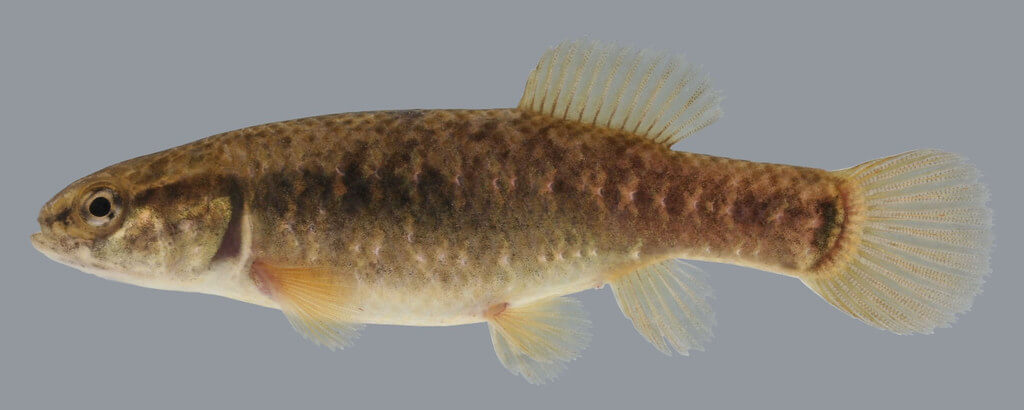
The genus Umbra, which contains the Mudminnows, is a group of fish defined by their incredible hardiness. Their name, meaning “shadow,” refers to their dark coloration and preference for murky, shaded habitats. Their most important adaptation is the ability to breathe atmospheric air. They use their swim bladder as a primitive lung, allowing them to survive in stagnant, low-oxygen swamps and ditches where most other fish would perish.
This resilience extends to their behavior. When faced with drought or extreme cold, they can burrow into the soft mud to escape the harsh conditions. They are stealthy ambush predators, using their dark coloration to hide in dense vegetation before lunging at small invertebrates and fish larvae. Their ability to survive where other fish cannot makes them a crucial part of their unique ecosystems.
Upeneus (Goatfish)
Habitat: Sandy and muddy bottoms near coral reefs in tropical oceans worldwide.
Size: Typically 6 to 12 inches long.
Conservation Status: Most species are listed as Least Concern (LC).
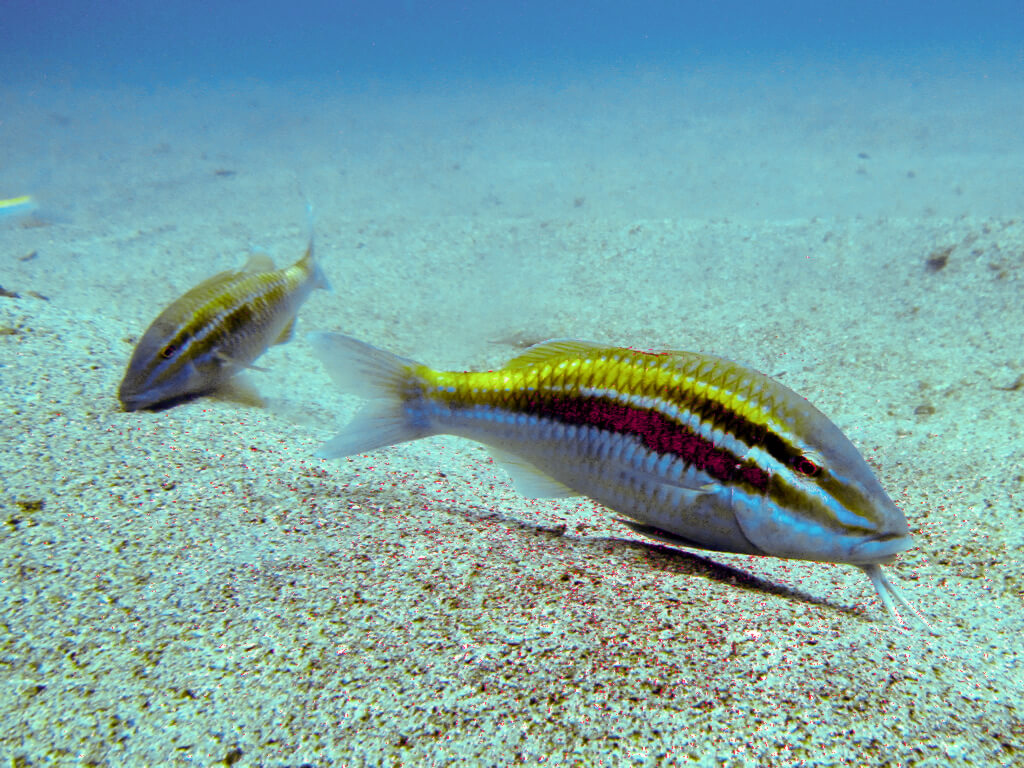
The genus Upeneus is a major group within the family known as Goatfish. Their name comes from their most distinctive feature: a pair of long, whisker-like barbels located on their chin. These barbels are not for show; they are highly mobile and packed with chemosensory cells, which the fish uses to probe, touch, and effectively “taste” the sand as it forages for food.
This unique feeding strategy makes them a key player on the reef. As a Goatfish digs through the sand searching for worms and crustaceans, it is often followed by a posse of other fish, like wrasses and jacks. These opportunistic followers wait for the goatfish to uncover or scare out small creatures that they can then snatch for themselves. This interaction, centered around the goatfish’s remarkable barbels, is a classic sight in sandy reef environments.
Other Fish Species That Start with U
- U-mark Sandperch
- Uganda Nothobranch
- Umbrella Cichlid
- Umbrina milliae
- Undulated Moray
- Underjaw Kingfish
- Ukrainian Brook Lamprey
- Upland Bully
- Usumacinta Sea Catfish
- Utah Sucker
FAQs
Why are there so few fish names that start with the letter U?
The letter ‘U’ is one of the less common starting letters in the English language, which explains the scarcity of common names. It is also relatively uncommon in the classical Latin and Greek languages used for scientific classification, making genera that start with ‘U’ rare in all fields of biology, including the study of fish.
What is the fish that starts with U in sushi?
The most common fish starting with “U” in sushi is Unagi, which refers to freshwater eel. It is a traditional Japanese delicacy, usually grilled with a sweet soy-based sauce and served over rice or inside sushi rolls, making it a flavorful and popular choice.


