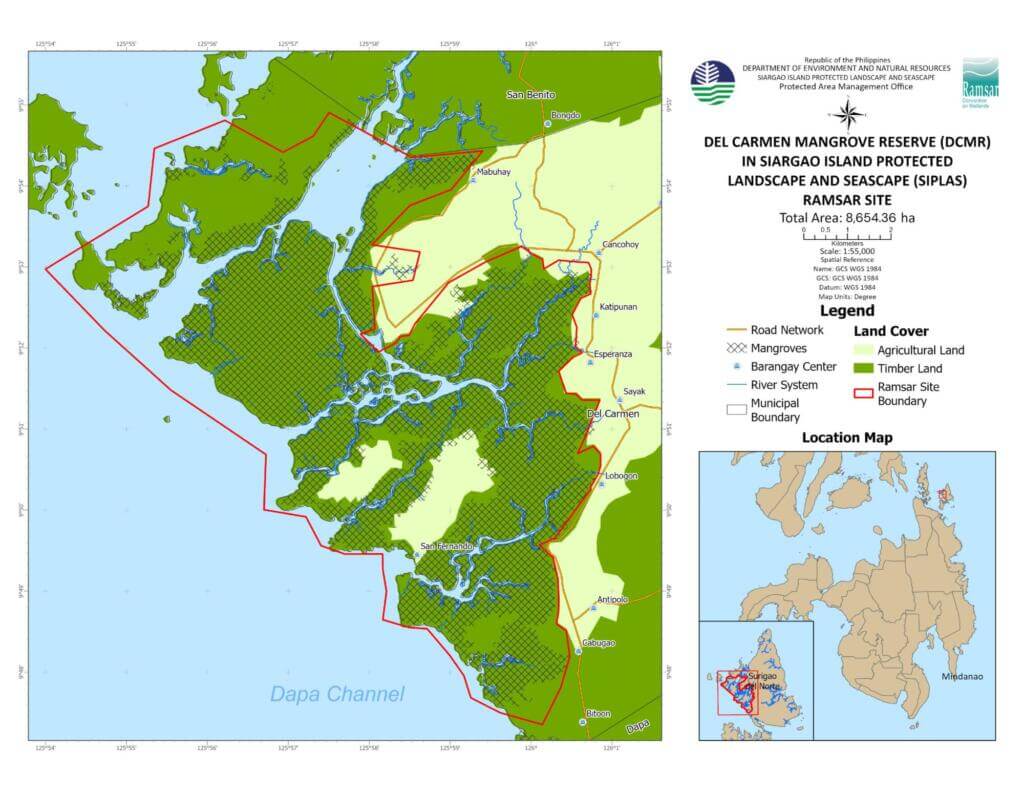
Del Carmen Mangrove Reserve lies on the western coast of Siargao Island and is the largest continuous mangrove forest in the Philippines. Covering 4,871 hectares and stretching 27 kilometers along the coastline, it is a globally significant wetland recognized as the 10th UN Ramsar Site.
This vast green expanse shields coastal communities from storms, shelters rare wildlife, and locks away huge amounts of carbon — making it one of the country’s most important natural defenses against global warming. Its conservation success, recognized with the First Prize in the Best Mangrove Awards – Para El Mar in Quezon City, cements its status as a national model for mangrove protection.
Ecological Importance
The Del Carmen Mangrove Reserve is more than a scenic landscape — it is an interconnected system that supports life both above and below the water. Its value spans multiple dimensions, from buffering Siargao’s shores against storms to storing vast amounts of carbon and nurturing a wealth of wildlife. The sections below explore the key roles this ecosystem plays in maintaining environmental balance and community well-being.
Coastal Protection
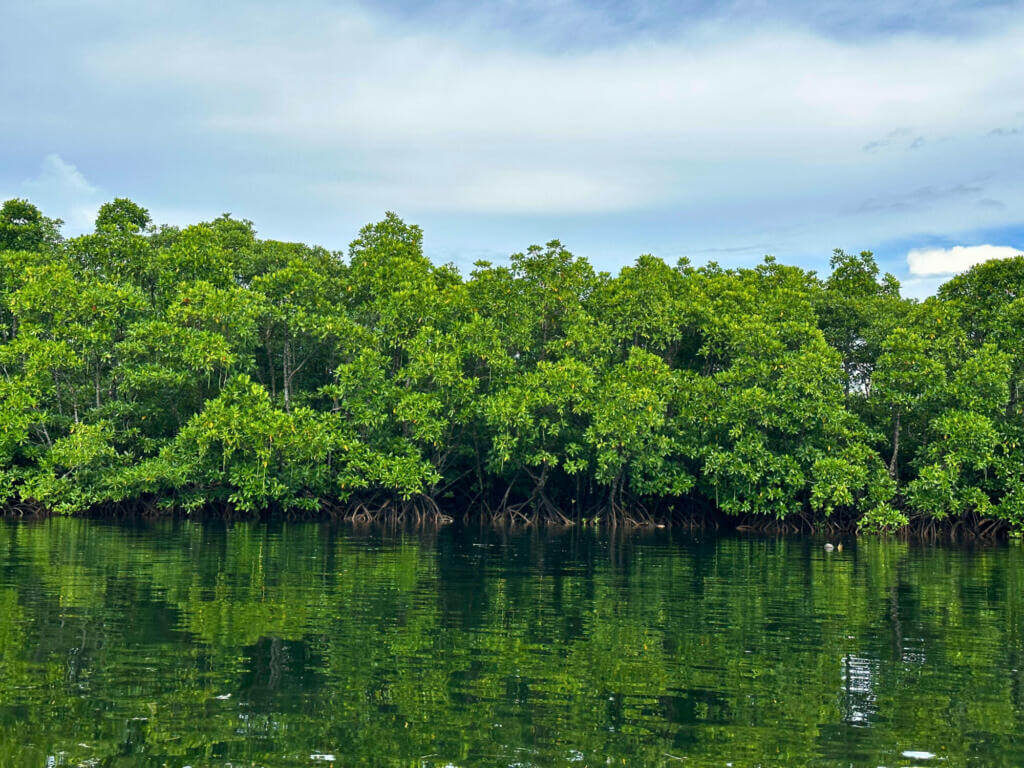
Mangroves are uniquely adapted to thrive in the harsh intertidal zone, where freshwater meets saltwater. Their dense, interlocking root systems of Del Carmen’s mangroves act as a natural barrier against erosion, storm surges, and even tsunamis. By dissipating wave energy, they protect inland communities and infrastructure, a role that is becoming increasingly vital as climate change intensifies extreme weather.
Did You Know?
Mangrove forests can reduce wave energy by up to 66% within the first 100 meters of forest, making them one of the most effective natural coastal defenses in the world.
Biodiversity Hotspot
The reserve is home to 62 species of vascular plants, including 27 species of true mangroves such as Rhizophora apiculata, Rhizophora mucronata, Sonneratia alba, Avicennia marina, Bruguiera gymnorrhiza, Ceriops decandra, and Xylocarpus granatum.
The Del Carmen Mangrove Reserve is home to 245 animal species, including fish, crabs, shrimp, migratory birds, and at least 12 terrestrial mammal species. Among its remarkable wildlife are:
- The vulnerable Philippine duck (Anas luzonica)
- Philippine flying lemur
- Various bat species
- Common palm civets
- Long-tailed macaques
- The Southern rufous hornbill (Buceros mindanensis)
- Three threatened species of sea turtles

Did You Know?
The Del Carmen Mangrove Reserve shelters more true mangrove species than most entire countries, making it one of the richest mangrove habitats in Southeast Asia.
Blue Carbon Storage
As a blue carbon ecosystem, Del Carmen’s mangroves are exceptionally efficient at capturing and storing carbon up to 10 times more per hectare than tropical rainforests. This phenomenon makes it a critical ally in climate change mitigation.
Unique Adaptations & Habitat
The reserve is a complex network of tidal rivers, estuaries, and intertidal zones, the perfect environment for mangroves to thrive. The habitat is characterized by soft, oxygen-poor mud, high salinity, and daily tidal flooding.
Mangroves here have evolved remarkable survival strategies:
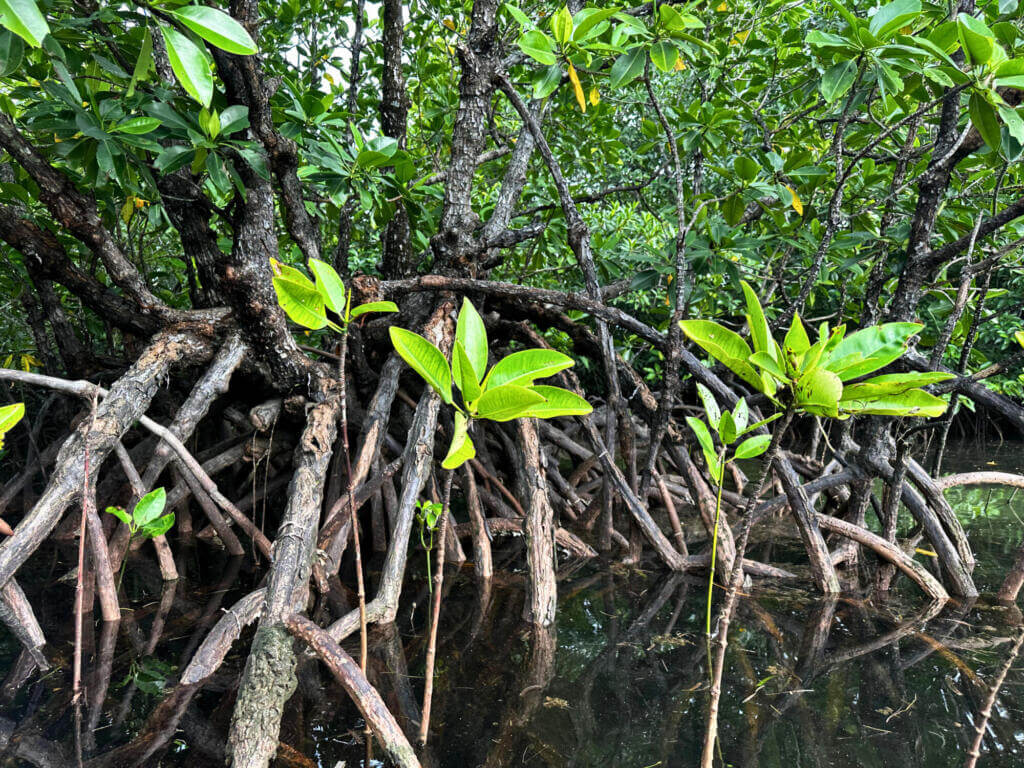
- Prop roots and stilt roots (e.g., Rhizophora species) provide stability in shifting mud.
- Pneumatophores (breathing roots of Sonneratia and Avicennia) allow gas exchange in waterlogged soils.
- Seeds germinate while still attached to the parent tree, forming floating propagules that can drift for months before rooting.
Nursery Role
The forest varies in height, with mature trees reaching impressive stature and forming a dense canopy that shades the water below. These sheltered waters act as nurseries for commercially important marine species and also serve as breeding grounds for king crabs and a species of saltwater crocodile.
Threats
Despite its ecological value, the Del Carmen Mangrove Reserve faces ongoing threats:
- Illegal cutting for timber, charcoal, and firewood.
- Historical conversion of mangrove areas into fishponds and shrimp farms.
- Pollution from agricultural runoff, domestic waste, and sewage.
- Climate change impacts, including sea-level rise and stronger typhoons.
- Unregulated tourism leads to wildlife disturbance and waste issues.
Conservation and Community Action
Beyond its ecological value, the reserve supports the livelihoods of over 900 residents and attracts thousands of visitors each year, offering fishing, aquaculture, recreation, and tourism opportunities.
The people of Del Carmen also celebrate and support their mangroves through annual events such as the Bakhaw (Mangrove) Festival and the Siargao International Marathon, which raise awareness and funds for restoration efforts.
The reserve is also part of the Siargao Island Protected Landscape and Seascape (SIPLAS) under the National Integrated Protected Areas System (NIPAS) Act. This legal framework ensures that the mangroves are recognized as a nationally important ecosystem and receive formal protection from destructive activities.
On the ground, conservation is driven by a combination of reforestation programs, regular ecological monitoring, and strict enforcement of environmental laws. These efforts help restore degraded areas, track the health of the mangrove ecosystem, and deter illegal logging, poaching, and other harmful practices.
A key strength of Del Carmen’s conservation model is the active involvement of indigenous groups, such as the Mamanwa, and local community members. Their traditional knowledge, combined with modern conservation science, has been instrumental in protecting and managing the mangroves effectively.

Ecotourism plays a central role in sustaining these efforts. Guided boat tours through the mangrove channels not only provide visitors with an immersive experience but also generate alternative livelihoods for the locals, reducing reliance on resource-extractive activities.
Del Carmen’s success is also built on strong partnerships with academic institutions, national agencies, and non-governmental organizations (NGOs) like DENR and LGU. These collaborations bring in technical expertise, research support, and funding that strengthen both conservation strategies and community development.
Visiting Del Carmen Responsibly
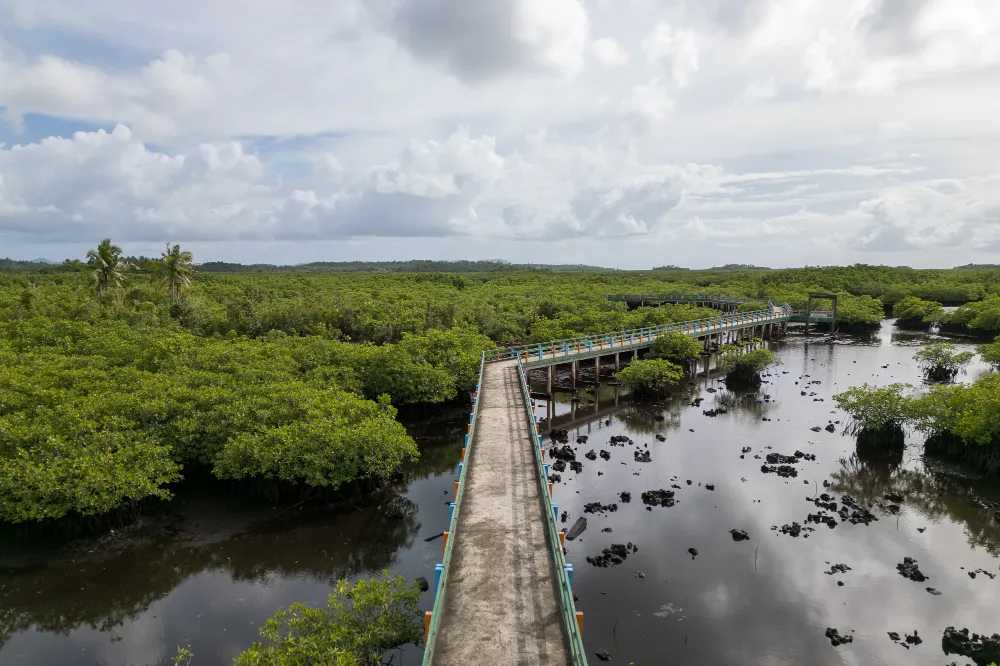
Visitors to the Del Carmen Mangrove Reserve can immerse themselves in its beauty by strolling along the 1.8‑kilometer mangrove boardwalk, which winds through lush greenery and leads to the SIPLAS view deck for panoramic views of the forest and waterways.
Kayaks and paddleboards are also available for rent if you’d like to explore independently — but be aware that the maze of mangrove channels is vast, and currents can be deceptively strong. Stick to the main routes recommended by local guides to avoid getting lost.
The reserve is home to a species of saltwater crocodile, but sightings are rare and attacks are virtually unheard of. Guides are familiar with local wildlife patterns and will steer you toward safe areas, so you don’t need to worry about any unwanted run-ins.
As you explore, it’s important to follow respectful wildlife viewing practices. Observe wildlife quietly from a distance without disturbing the natural behavior. To help protect this fragile ecosystem, visitors are encouraged to follow “leave no trace” principles: avoid swimming in sensitive areas, never litter, and refrain from feeding wildlife.
By experiencing Del Carmen with care, you contribute to the preservation of one of the Philippines’ most important natural treasures.
Ocean Insights: Hear From Our Experts

By Hamna Faizan
Marine Life Researcher and Lecturer, with an MSc in Zoology
I believe the Del Carmen Mangrove Reserve is more than a local treasure. It's a national model and a global benchmark for mangrove conservation. It proves that when science‑based management is paired with strong community leadership, conservation can thrive, biodiversity can flourish, and climate resilience can be strengthened. Del Carmen shows the world that local action can deliver benefits that reach far beyond its shores.
FAQ’s
Can you swim in the mangrove forest?
Generally, swimming directly within the dense mangrove forest channels is not recommended or typically allowed for visitors. While the waters are clean, the muddy substrate, dense root systems, and presence of various marine life (like crabs and fish) make it unsuitable for recreational swimming. The focus is on observation and appreciation of the unique ecosystem.
What is the significance of Del Carmen being a Ramsar Site?
Being declared a UN Ramsar Site signifies that the Del Carmen Mangrove Forest Reserve is recognized internationally as a wetland of international importance, particularly as waterfowl habitat. This designation highlights its ecological value, encourages its wise use, and can open doors for international support and collaboration in its conservation and management.
What is the best way to experience the Del Carmen Mangrove Reserve?
The most popular and recommended way to experience the reserve is through guided boat tours. These tours navigate the labyrinthine channels, allowing visitors to get up close with the mangrove ecosystem, observe wildlife, and learn about the conservation efforts from local guides.
When is the best time of year to visit the mangroves?
The dry season (March to May) offers the calmest waters and sunniest weather for boat tours. Bird migration periods (October–November and February–March) are ideal for spotting seasonal visitors. Early mornings generally provide the best wildlife viewing conditions year-round.
Is fishing allowed in the mangrove reserve?
Fishing is permitted only in designated areas and for local subsistence purposes. Commercial and destructive fishing methods, such as blast or cyanide fishing, are strictly prohibited to protect breeding grounds and maintain ecosystem balance.


