Cero mackerel, also known as Cero, pintado, kingfish, cerite, or painted mackerel, is a sleek and slender fish species that belongs to the Scombridae family. It is commonly found in the western Atlantic Ocean, particularly in the Gulf of Mexico and the Caribbean Sea.
This ray-finned bony fish is known for its distinctive appearance and fast and aggressive nature. It has a series of yellow streaks running along the sides, distinguishing it from other mackerel species. Its meat is also highly valued for its rich flavor and firm texture, making it a popular ingredient in various culinary dishes.
In recent years, numerous viable efforts have been made to promote sustainable fishing practices and raise awareness about preserving cero mackerel populations.
Appearance
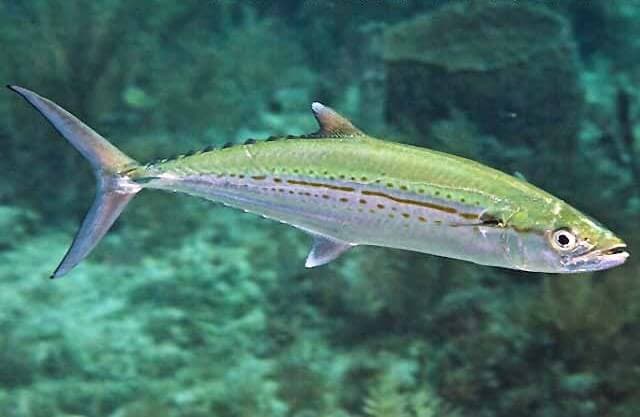
The cero mackerel’s body is elongated and slightly compressed, with a pointed head and a forked tail. The upper body is blue-green, while the lower body is often silvery-white. The silvery sides are marked with a series of bronze stripes, which can appear more or less prominent depending on the fish’s level of excitement.
The blush green coloration of the cero back helps it blend in with the surrounding water, making it less visible to potential predators.
Its lateral line is a prominent feature, running along the length of its body from the gill cover to the caudal peduncle near the anal fin. The pectoral fin is relatively short and pointed, helping the fish maintain balance and navigate the water.
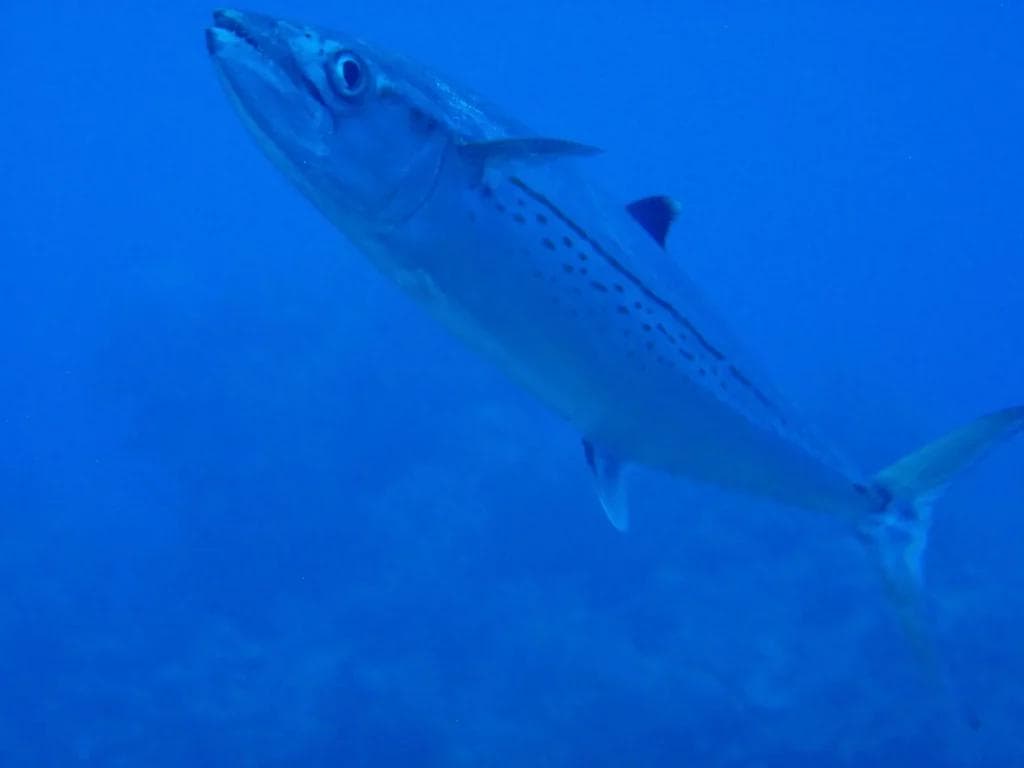
The dorsal fin of the cero mackerel is dark in color, while the other fins are lighter. They have a pointed snout with a large mouth filled with sharp teeth.
The small scales are smooth to the touch and help to reduce drag as the fish swims through the water. So, this fish species is similar in color and appearance to the Atlantic Spanish mackerel. It’s the longitudinal stripe that sets it apart.
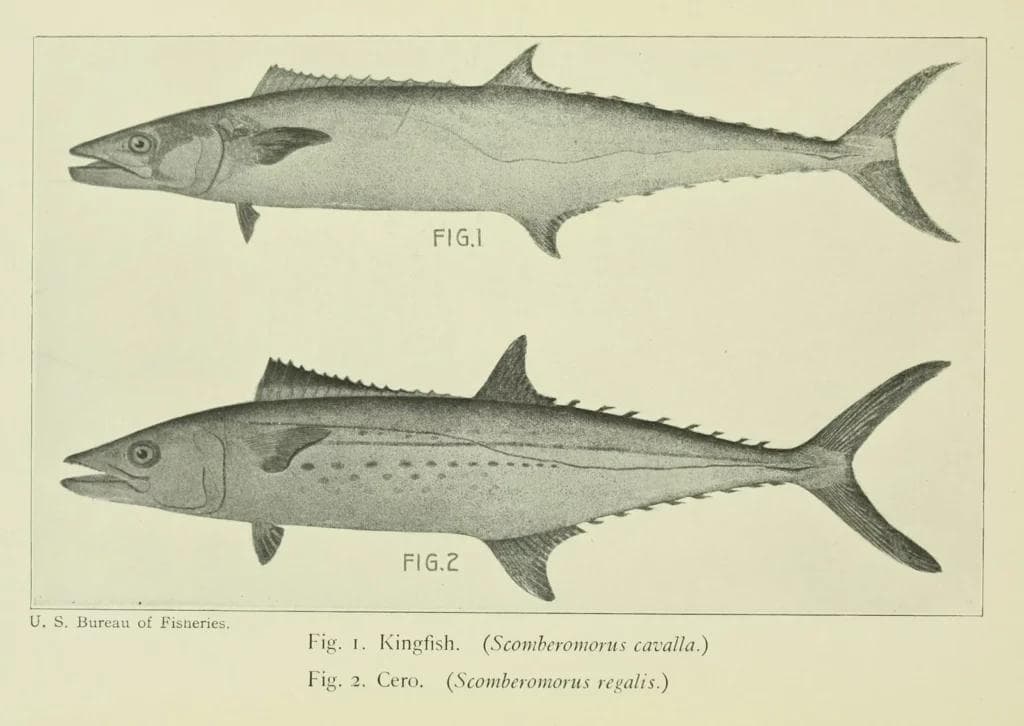
Unlike the Kingfish, or King Mackerel, the Cero mackerel features a slim, torpedo-shaped body adorned with yellow to orange spots and dashes along their sides. King mackerel have a sleek, silvery appearance without distinct spots. King mackerel typically grow larger, reaching lengths up to 72 inches and weights up to 100 pounds, compared to the smaller cero mackerel.
Habitat
Cero mackerel is found in the western Atlantic Ocean, from North Carolina to Brazil. They are typically found in coastal waters, where they prefer to swim in schools ranging from 20 to 100 feet.

South Florida waters are home to a significant population of cero, which swim along reefs and ledges, where they hunt for small fish and squid. In the West Indies, they are a popular target for recreational and commercial fishermen alike.
Cero mackerel is also commonly found around coral reefs and rocky structures, and they are known to be active both during the day and at night.
Diet
Cero mackerel is a predatory fish that has a row of small teeth in its mouth. It uses these features to feed on smaller fish, squid, and shrimp.
This mackerel hunts in schools, using their speed and agility to catch their prey quickly. They are also known to follow schools of baitfish, attacking them from below and causing them to scatter.
Anglers often use small fish, such as sardines or anchovies, as bait when targeting cero. They hunt in small groups, using their speed and agility to corner and capture their prey.
Reproduction
Cero mackerel spawn in the warm waters during spring and summer, with peak spawning in May and June. During this time, males and females will form large spawning aggregations in shallow water near reefs or other underwater structures.
They reproduce through a process known as broadcast spawning, where females release their eggs and males release their sperm into the water simultaneously for external fertilization. After spawning, they typically disperse and return to deeper water.
The eggs float freely in the ocean until they hatch, after which the larvae grow into juvenile and adult fish.
Threats
Its population is stable. The International Union for Conservation of Nature ranks it as the Least Concern. However, like all marine species, it is vulnerable to overfishing and other threats due to coastal development and pollution.
Anglers often use a wire leader to prevent the fish’s sharp teeth from cutting through the fishing line. Common lures used to catch include shiny spoons, small jigs, and feathered hooks.
Climate change disrupts their migration patterns, while pollution and an imbalance in predator-prey relationships further endanger their populations.
Overall, it is important to manage the fishing of cero mackerel sustainably and to protect their habitats to ensure their continued survival.
7 Fantastic Facts About Cero Mackerel
- Cero mackerel is popular among recreational anglers for its exciting fighting ability and delicious flesh.
- Females produce up to a few million eggs in a single spawning season, one of the highest rates among mackerel species.
- They are typically found in depths between 20 and 100 feet, although they can occasionally be found in deeper water.
- Unique for their ability to be swift swimmers, they can reach speeds of up to 50 mph (80 kph).
- The anterior third of the first dorsal fin is marked with a distinctive dark blotch, which can help to identify the species.
- The Florida Keys are a popular destination for sports fishermen seeking to catch cero as these waters provide an ideal habitat for the species.
- The firm, pinkish flesh of this mackerel is highly prized for its sashimi and sushi-grade quality.
FAQs
Do Cero Mackerel migrate or have specific habitat preferences?
Cero Mackerel undertakes seasonal migrations influenced by water temperature. During the warmer months, they venture northward along the Atlantic coast, seeking the comfort of warmer waters. As winter sets in, they embark on a southward journey back to tropical and subtropical regions. They can be found cruising through open water and nearshore zones in their relentless pursuit of food.
Is cero mackerel the same as king mackerel?
Cero mackerel and king mackerel are two different species of mackerel. While they share some similarities, including their torpedo-shaped bodies and predatory feeding habits, they differ in appearance, habitat, and behavior. Cero is typically smaller than king mackerel. It is found throughout the western Atlantic Ocean. King mackerel, on the other hand, is found in warm waters throughout the Atlantic Ocean.
Is cero mackerel poisonous?
Cero mackerel is a type of fish commonly caught for food and is safe to eat. However, as with any fish, there is a risk of consuming harmful substances such as mercury or other environmental pollutants if the fish has been caught in contaminated waters. So, if you have any concerns about the safety of consuming cero mackerel or any other fish, it is best to consult with a healthcare professional in your area.
How do you catch cero mackerel?
Cero mackerel are popular game fish and can be caught using various techniques. You can use trolling, casting, chumming, or fly fishing.
When targeting cero mackerel, it is important to use appropriate gear, such as medium to heavy spinning or casting rods and reels with strong braided or monofilament lines. Additionally, anglers should be aware of local fishing regulations and size and bag limits for cero mackerel.
Can Cero Mackerel change color or have any unique adaptations?
Cero Mackerel doesn’t change color dramatically. However, they’re known for their speed and agility, reaching burst speeds over 40 mph. Their excellent eyesight and sensitive lateral line system help them detect prey in various water conditions. They also benefit from schooling behavior, which aids in finding food, confusing predators, and reproducing.