

The Oceanic Whitetip Shark is a top predator and an aggressive pelagic species of shark found in open waters of warm tropical and subtropical regions around the world. It is scientifically known as Carcharhinus longimanus and is easily identified by the unique white tips of its fins.
These remarkable sharks are known for their speed and agility in the water. They are also considered one of the most dangerous species of shark. They have been known to attack humans and often follow ships or gather around floating objects.
Despite their reputation as fearsome predators, this shark’s population is declining at an alarming rate. As a result, the International Union for Conservation of Nature (IUCN) lists it as a critically endangered species.
Appearance
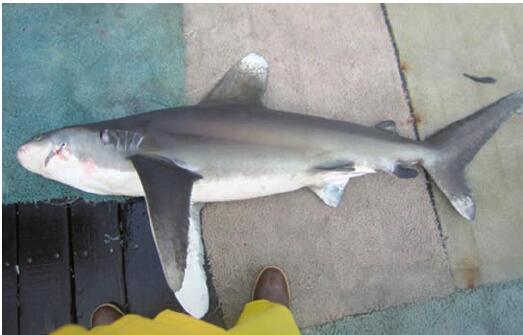
The most striking feature of the oceanic whitetip sharks is the presence of white markings on their fins, which give them their name. Their first dorsal fin is rounded, and their pectoral fins are paddle-shaped and long. The first dorsal fin is very large with a rounded tip, originating just in front of the free rear tips of the pectoral fins and slender. Their anal fin is pointed with a crescent shape.
Depending on the geographical location, their upper body may be dark grey, brown, or bronze in color, while the underside is usually white.
Further, these sharks have an elongated, fusiform body with a round snout and large, round eyes. Their mouths are filled with strong jaws and sharp teeth, perfectly adapted to hunting and consuming prey. Their eyes provide excellent vision in low-light conditions, allowing them to thrive in deeper waters.

Another notable feature of these sharks is their sheer size. These magnificent creatures can grow up to lengths of 4 meters and weigh up to 330 kilograms, making them one of the largest predators in the ocean.
Like other sharks, they have specialized sensory organs called “ampullae of Lorenzini” that detect weak electrical fields emitted by living organisms, aiding in prey detection.
Did you know…
Oceanic whitetips are renowned for their close association with pilot fish. pilot fish clean parasites from the shark’s skin and serve as a warning system for the shark. These smaller fish often swim alongside or in front of the shark, gaining protection from predators and potentially benefiting from scraps left behind by the shark’s meals. This symbiotic relationship is a fascinating example of interspecies cooperation in the marine environment.
Habitat
Although the oceanic whitetip sharks are widely distributed across the world’s oceans, they are commonly found in temperate and tropical waters.
They are found in the Atlantic Ocean between Cape Lopez, Ghana and northwest to Cape Three Point in the western region of Ghana. They also travel east of the Atlantic Ocean to the Mediterranean during the winter season. Whitetips are also found in the Indo-Pacific region, which includes the Red Sea, East Africa to Hawaii, Tahiti, Samoa, and the Tuamotu Islands.

Oceanic whitetip sharks inhabit the open ocean and often prefer to swim in the upper layers of the ocean’s surface. They are also known to swim at various depths and can dive to great depths of more than 500 meters.
This species is also highly migratory, making long-distance journeys from one ocean basin to another. Their migrations are usually influenced by prey availability, water temperature, and search for suitable mating grounds. Individuals have been tracked, traveling as much as 2,800 kilometers.
Diet
Oceanic whitetip sharks are apex predators with powerful jaws and sharp, serrated teeth. They are well known for their opportunistic feeding behavior, meaning they consume whatever prey is available.
They primarily prey on bony fishes, cephalopods, and other animals, such as tuna, rays, mackerel, squid, octopus, crustaceans, marlin, sea birds, sea turtles, and even sharks. However, their diet heavily depends on the availability of prey in their habitat.
Due to their opportunistic behavior, these sharks accidentally ingest trash, such as plastics, cans, and fishing debris, which is detrimental to their health.
Although they are solitary animals, they often hunt in packs to increase their efficiency in capturing prey.
Moreover, the oceanic whitetip sharks are also scavengers. They have been observed to take advantage of an easy meal by feeding on dead whales or other large marine mammals. They also follow ships to take advantage of the food scraps they leave behind.
Reproduction
The average life span of the oceanic whitetip sharks is between 25-30 years. These sharks reach sexual maturity relatively late, usually at about 7 to 10 years of age.
Once they reach this stage, they exhibit a long reproductive lifespan, extending up to 30 years. However, it is worth noting that they have low reproductive rates, with females only giving birth after two to three years.
Mating occurs seasonally, usually during the early summer when food is plentiful. During their mating season, males aggressively pursue females, often biting them to initiate mating.
This species typically reproduces through viviparity, where the embryos are nourished through the umbilical cord until they are ready to be born. Their gestation period is said to last for about 9 to 12 months.

Once the embryos are fully developed, a female oceanic whitetip shark gives birth to litters of up to 14 live pups, with an average number of pups to be 6. These pups are usually about 2.5 feet in length. They are fully independent from birth and remain near their mother briefly before setting off on their own.
Threats
Historically, in the 70s, the oceanic whitetip shark was listed as one of the most abundant shark species. As of today, this species has declined by approximately 98%.In 2000, the oceanic whitetip shark was given a conservation status by the IUCN as near threatened. In 2006, it was listed as vulnerable. Then, in 2019, the IUCN added it to the red list of critically endangered species and the status is the same in the recently updated list in 2024.
This rapid decline in their numbers has majorly resulted from overfishing. These sharks are often caught in large numbers as bycatch, especially in commercial tuna fishing.
They are usually not directly targeted by fisheries. However, instead of releasing them, they are retained mainly for their fins, which are highly priced for making shark fin soup, a Chinese delicacy. Its skin is used for making leather, while its liver is harvested for oil trade.
In addition to overfishing, climate change poses a significant threat to oceanic whitetip sharks. Factors such as ocean acidification, rising ocean temperatures, and changes in water currents negatively impact their survival and reproductive rates. Also, climate change alters the distribution and abundance of their preferred prey, thus affecting their feeding patterns.
The conservation status of this shark has been a major concern. This is because oceanic whitetip sharks are slow-growing and have low reproductive rates. This makes it difficult for their populations to recover from the high levels of fishing pressure.
Many countries have imposed fishing restrictions and bans on the capture and trade of oceanic whitetip sharks and their fins. These regulations aim to reduce overfishing and prevent the decline of their populations.
Also, creating marine protected areas plays a crucial role in safeguarding their habitats. These protected areas provide safe spaces for the oceanic whitetip sharks to reproduce, feed, and recover from the fishing pressures.
5 Interesting Facts About the Oceanic Whitetip Shark
- Their large, distinct fins are highly valued in the international shark fin trade.
- This large shark is aggressive and often follows ships to take advantage of food scraps left behind.
- There are recorded cases in which potential attacks may have been averted by quick action on the part of divers who have struck the sharks on the snout to dissuade curiosity.
- They often get caught unintentionally in longlines and purse seine fisheries targeting tuna and other commercial fish species.
- They possess transparent eyelids that close over their eyes during feeding or attacks, offering eye protection.
FAQs
Is it safe to swim with oceanic whitetip sharks?
Due to safety concerns, swimming with oceanic whitetip sharks is not recommended. These sharks are known to be very curious and aggressive and have been documented to attack humans. Therefore, it is best to admire them from a safe distance and enjoy their beauty without putting yourself at risk.
What is the difference between a blacktip shark and an oceanic whitetip shark?
The blacktip shark and the oceanic whitetip shark are both members of the Carcharhinidae family. The blacktip shark is typically smaller than the oceanic whitetip and is easily distinguished by the blacktips on its fins. The oceanic whitetip is larger and is easily recognizable by its white-tipped fins. Further, blacktip sharks inhabit coastal and brackish habitats. Oceanic whitetip sharks, on the other hand, are pelagic species inhabiting the open ocean.
Can oceanic whitetip sharks be kept in aquariums?
Oceanic whitetip sharks inhabit the deep waters of open seas and are highly migratory, requiring vast space. They also have a highly specialized diet, which would be challenging to provide in captivity. Therefore, keeping them in captivity would be cruel and impractical.
Do oceanic whitetip sharks consume humans?
While the oceanic whitetip sharks have been known to attack humans, they are not considered man-eaters as they do not actively hunt humans. In the incidences where humans get attacked, it is especially when these sharks mistake them for prey or when they feel threatened.


