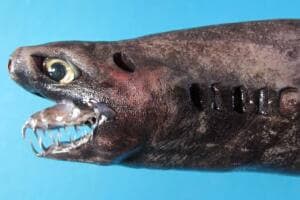
Requiem sharks, also known as Carcharhinidae, are a family of sharks known for their large size and predatory behavior. Carcharhinids are characterized by their nictitating membranes (a protective third eyelid), two dorsal fins, an anal fin, and five gill slits. They are typically found in temperate and tropical waters, from shallow coastal waters to the open ocean, and are known for their diverse sizes and behaviors, ranging from small species to large, predatory ones.
There are around 51 species of small to large sharks that are members of the family. Sharks in this family are usually gray to brown and include the tiger shark, the lemon shark, the blue shark, the dusky shark, the sandbar shark, and the bull shark.
They play an essential role in marine ecosystems, as apex predators help control other marine animals’ populations. In this article, we look closer at the biology and behavior of these giant sea animals, highlighting their unique characteristics and ecological importance.
Appearance
Requiem sharks are known for their large size, with many species growing up to 5.5 meters (18 ft) in length.
They have sharp, blade-like teeth; torpedo-shaped bodies; two dorsal fins; an anal fin; five-gill slits; and nictitating eyelids. Their first dorsal fin is placed in front of their pelvic fins.
Their skin is covered in small, sharp scales called dermal denticles. Their sharp teeth may reach a length of 8 cm, triangular with serrated edges, and are replaced throughout their lifetime.

A pair of long and narrow pectoral fins are typically present in all the members of the family. There can be slight variations between species. For example, some species may have broader or narrower fins depending on their specific habitat and hunting strategies.
A large and powerful caudal fin is characteristic of all requiem sharks. It is heterocercal, meaning the upper lobe is significantly larger than the lower lobe. This asymmetrical shape provides powerful thrust, propelling these sharks through the water with speed and agility.
The skin of the requiem shark is usually gray or brown and is covered in small, sharp scales called dermal denticles. A single dorsal fin and an anal fin is present. They have a nictitating membrane, a transparent eyelid that can be closed to protect their eyes.
Known Species of Requiem Sharks
Some of the most recognizable or unique species of requiem shark include:
- Tiger Shark (Galeocerdo cuvier): Known for its distinctive stripes, the tiger shark is one of the largest requiem sharks and is considered a near-threatened species. It has a reputation for being a “garbage eater,” consuming a wide range of prey including fish, seals, birds, and even license plates.
- Bull Shark (Carcharhinus leucas): Famous for their unique ability to thrive in both salt and freshwater, bull sharks are robust with a short blunt snout, often found in shallow coastal waters and even up rivers.
- Blacktip Shark (Carcharhinus limbatus): Easily identifiable by the black tips on its fins, especially on the dorsal fin, this species is often seen close to shore in tropical and subtropical waters around the world.
- Lemon Shark (Negaprion brevirostris): Distinguished by its yellow-brown skin which gives it camouflage in sandy coastal waters, lemon sharks are known for their social behavior and often stay in groups.
- Night Shark (Carcharhinus signatus): Found in deep waters of the Atlantic, known for its large eyes adapted to low-light conditions, making it an efficient predator in the dark.
- Whitenose Shark (Nasolamia velox): A lesser-known species characterized by its distinctive white snout, primarily found in the Eastern Pacific waters.
- Daggernose Shark (Isogomphodon oxyrhynchus): Known for its extremely elongated, dagger-like snout, this species is found in shallow coastal waters of the Atlantic and is critically endangered.
- Galapagos Shark (Carcharhinus galapagensis): Common around oceanic islands like the Galapagos, known for its bold behavior and tendency to investigate human activity.
- Blacknose Shark (Carcharhinus acronotus): A small species found in the Western Atlantic and Gulf of Mexico, identifiable by a dark blotch on its snout.
- Smalltail Shark (Carcharhinus porosus): Inhabits tropical and subtropical waters in the western Atlantic and is known for its relatively small size.
- Pondicherry Shark (Carcharhinus hemiodon): An extremely rare species, possibly extinct, once found in the coastal waters of India and Southeast Asia.
- Borneo Shark (Carcharhinus borneensis): A critically endangered species, known only from a few specimens off Borneo’s coast.
Habitat
It depends on the species, but requiem sharks are found in many marine environments, from shallow coastal waters to the open ocean. They are commonly found in warm tropical and subtropical waters, but some species also inhabit colder waters. Some of them can be found in coastal wetlands and near the mouths of rivers.

The fine tooth shark, for example, is found in the western Atlantic Ocean from North Carolina south to Cuba and southern Brazil. It is also found in the Gulf of Mexico.
The bull shark is found in tropical to subtropical coastal waters around the world. It is also found in river systems and some freshwater lakes.
Many species of requiem shark inhabit coral reefs, mangrove swamps, and seagrass beds. However, since some species are migratory, they typically move to different areas depending on the time of year.

Diet
Requiem sharks have a diverse diet. Most are voracious predators and feed on other fishes, including sharks and rays; squids, octopuses, lobsters, turtles, marine mammals, sea birds, and in some cases garbage and debris.
Some species, such as the bull shark, are known to be opportunistic feeders and will eat almost anything they can find.
They are also known to eat smaller sharks and rays. Moreover, adult ones can swallow large prey whole and have a powerful jaw that allows them to crush the shells of crustaceans.
Reproduction
The family has different species that use various methods to reproduce.
Some species are oviparous, meaning they lay eggs that hatch outside the mother’s body. Other species are ovoviviparous. In other words, their eggs develop and hatch inside the mother’s uterus. Better still, there are viviparous species that give birth to live young ones.
Requiem sharks have a low reproductive rate, as females only give birth to several pups simultaneously.
However, what is interesting about this animal’s reproduction is that the females attract the males by releasing a chemical into the ocean. Once the male comes across this substance, he knows they are ready to mate.
Typical mating times for these sharks are around spring to autumn.

Threats
Requiem sharks face several threats, including overfishing, habitat deterioration, and pollution. They are also targeted for international trade and sport fishing, and their fins are highly valued for shark fin soup.
Additionally, these sharks are often caught as bycatch in fishing gear intended for other species.
Climate change also poses a threat to their survival. The worsening threat of climate change also impacts coastal habitats, such as coral reef ecosystems, that species like the grey reef shark depend on, causing catastrophic population reductions.
The conservation status of these sharks ranges from least concern to vulnerable according to the IUCN Red List.
7 More Facts About Requiem Sharks
- Requiem Sharks possess special pores called ampullae of Lorenzini, which allow them to detect the faint electrical fields generated by the muscle contractions of their prey.
- They can detect tiny amounts of blood and other substances in the water from miles away, helping them locate food and navigate vast distances.
- They help regulate prey populations and ensure the health of coral reefs and other vital habitats.
- Requiem Sharks can lose thousands of teeth throughout their lifetime, but new ones are always growing in to take their place.
- Many Requiem Sharks undertake incredible migrations, often covering thousands of miles across entire oceans.
- Requiem Sharks have a long and fascinating evolutionary history. Fossil evidence suggests that their ancestors swam the oceans over 150 million years ago, making them older than the dinosaurs!
FAQs
Why are they called requiem sharks?
The common name “requiem” is believed to have been given to them because of their reputation as powerful and efficient predators, evoking a sense of fear and danger. The word “requiem” is associated with a funeral mass for the dead, and it could be because of their hunting behavior and the potential danger they pose to humans.
How do requiem sharks regulate body temperature?
Unlike most fish, which are cold-blooded and rely on the surrounding water to control their body temperature, certain Requiem Sharks, like the Salmon Shark and the Porbeagle, have a special adaptation. They possess a network of blood vessels called a “rete mirabile” (Latin for “wonderful net”). This network acts like a heat exchanger, allowing them to conserve heat generated by their muscles and keep their core body temperature warmer than the surrounding water.
Is a bull shark a requiem shark?
Yes, the bull shark (Carcharhinus leucas) is a species of requiem shark. It belongs to the family Carcharhinidae, which is also known as the requiem shark family. The bull shark is known for its large size, with adults reaching lengths of up to 3.5 meters (11.5 feet) and can weigh up to 635 kg (1,400 lbs). They are known for their aggressive behavior and are considered one of the most dangerous sharks to humans.
Are requiem sharks fish?
Yes, requiem sharks are fish. They belong to the class Chondrichthyes, which includes all species of fish.
Requiem sharks, like all sharks, are cold-blooded, have a cartilaginous skeleton, and have five to seven-gill slits on the sides of their head. They also have a unique respiratory system, which allows them to extract oxygen from water more efficiently than bony fish.