

Clownfish and Angelfish are two invaluable members of coral reef ecosystems and coastal waters that have captured the imagination of divers, snorkelers, and aquarium enthusiasts worldwide. Despite their similarities, they possess distinct characteristics and beauty.
In this article, we will unravel their intriguing traits and significance in marine ecosystems.


Left Image Credit: TheDS, Daniel Seibert; Right Image Credit: Visa Kopu, Roxeteer
Main Differences Between Clown vs Angelfish
- Appearance: Clownfish are small-sized fish known for their vibrant orange coloration with bold white stripes outlined in black. Some species may exhibit different color variations, like black and white or yellow hues. Angelfish are larger and have a more disc-shaped body. They come in a variety of dazzling colors, often featuring shades of blue, yellow, and orange, with intricate patterns that change as they mature.
- Size: Clownfish are relatively small, with most individuals reaching lengths of 7 to 10 centimeters (2.7 to 3.9 inches). On the other hand, Angelfish are larger than Clownfish, ranging from 10 to 30 centimeters (3.9 to 11.8 inches) in length, with some species growing up to 40 centimeters (15.7 inches).
- Behavior: Clownfish are known for their playful and territorial behavior. They have a unique symbiotic relationship with sea anemones, which protect them from predators. Angelfish are graceful swimmers with elegant movements. They are known for their curious nature, exploring the coral reefs and rocky outcrops they inhabit.
- Habitat: Clownfish are found in warm waters of the Indo-Pacific region, particularly in coral reefs and sheltered coastal waters. They form a symbiotic relationship with sea anemones, dwelling amidst their stinging tentacles. Angelfish inhabit tropical and subtropical regions, residing in coral-rich waters of the Indo-Pacific and Atlantic Oceans. They prefer to dwell near coral reefs and rocky outcrops, finding shelter and abundant food sources in these environments.
Clownfish
Clownfish (Amphiprioninae) are among the most captivating and beloved saltwater fish species, enchanting both young and old with their vibrant colors and playful behaviors. These small-sized fish, also known as anemonefish, are renowned for their striking orange hue adorned with bold white stripes outlined in black.
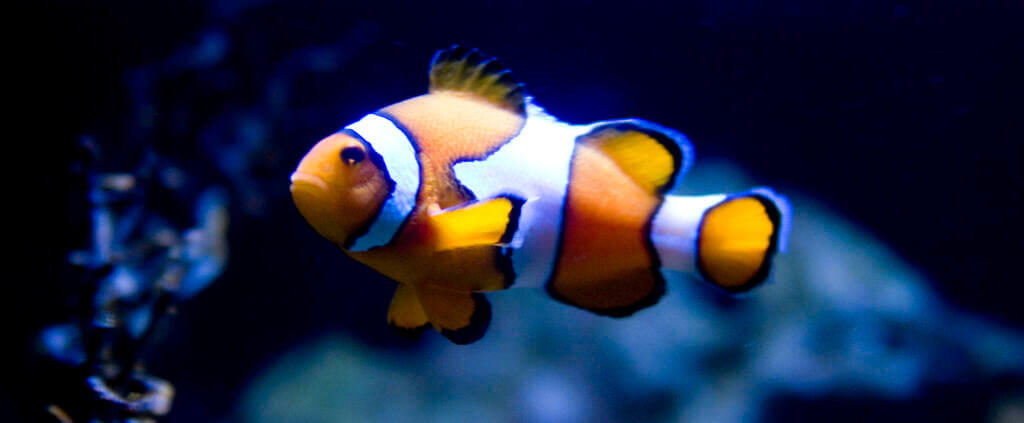
Clownfish, also known as anemonefish, are renowned for their striking orange hue adorned with bold white stripes outlined in black. There are several types of clownfish, including the common clownfish (Amphiprion ocellaris), true percula clownfish (Amphiprion percula), maroon clownfish (Premnas biaculeatus), and saddleback clownfish (Amphiprion polymnus), each characterized by distinct coloration and patterns.
Appearance
Known for their flamboyant appearance, Clownfish (Amphiprioninae) are small-sized fish with vibrant colors and bold patterns. They sport a distinctive bright orange hue with bold white stripes outlined in black, which beautifully contrasts against their dark eyes.
Moreover, Clownfish exhibit sexual dimorphism, with females being slightly larger and more dominant than males. Interestingly, some species of Clownfish, such as the popular Ocellaris Clownfish, may display different color variations, like a striking black-and-white combination or a stunning yellow hue.
Size
Clownfish are relatively small in size, with most individuals reaching lengths of 7 to 10 centimeters (2.7 to 3.9 inches). Due to their compact size, they are well-suited for reef environments and are often found dwelling amidst the protective tentacles of sea anemones.
Reproduction
Clownfish have an intriguing reproductive strategy, forming monogamous pairs within a group of fish living amidst sea anemones.
Interestingly, Clownfish are protandrous hermaphrodites, which means they can change their sex during their lifetime.
When a dominant female Clownfish dies, the largest and most dominant male transforms into a female, assuming the role of the new matriarch within the group.
Clownfish lay adhesive eggs on a flat surface near their sea anemone host, where the male guards and tends to them until they hatch, usually within a week.
Diet
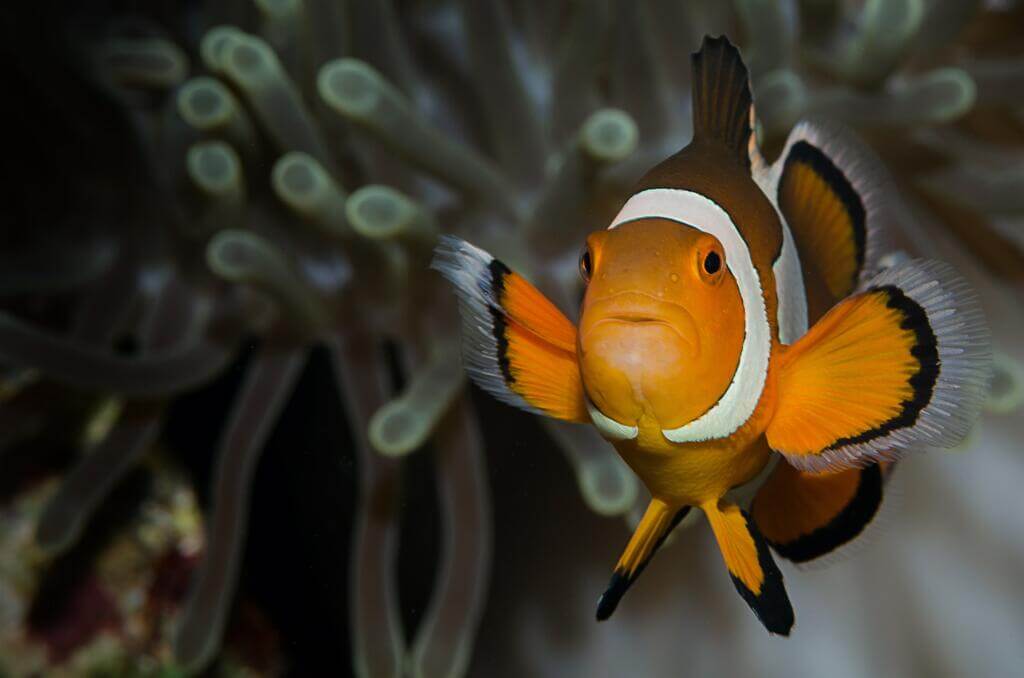
Clownfish are omnivorous and exhibit unique feeding behaviors. They primarily consume a diet of algae and zooplankton, but in captivity, they readily accept various prepared foods, including flakes, pellets, varied live foods, and frozen foods like brine shrimp and mysis shrimp.
Clownfish are known to find a host among anemones, forming a symbiotic relationship where they gain protection and the anemone benefits from their food scraps. This feeding behavior not only sustains the clownfish but also contributes to the health of their aquatic environment.
Habitat
Clownfish are predominantly found in the warm waters of the Indo-Pacific region, particularly in coral reefs and sheltered coastal waters.
They have a unique symbiotic relationship with sea anemones, where they find protection and refuge amidst the stinging tentacles of their host.
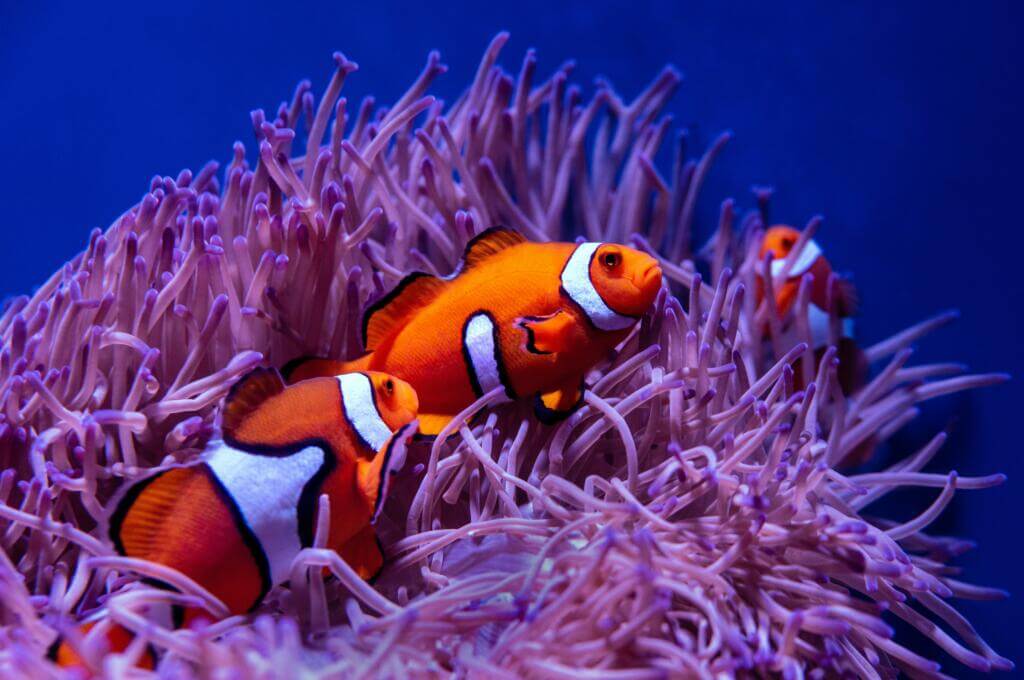
The Clownfish and sea anemone share a mutualistic bond, as the Clownfish benefit from protection, and they provide food scraps for the anemone.
Clownfish thrive in captivity when provided with a suitable aquarium environment and water conditions, including live rock, proper water parameters, and compatible tank mates (such as dartfish, wrasses, blennies, corals, tangs, gobies, pygmy angelfish. Ideal water measurements include a temperature of 75-85 degrees Fahrenheit (about 24-30 degrees Celcius), specific gravity of 1.020 to 1.026, and pH of 7.8-8.4.
Threats
Clownfish face numerous threats in their underwater habitat, with climate change, habitat destruction, and pollution being significant concerns. Climate change-induced coral bleaching threatens the survival of both Clownfish and their symbiotic sea anemones. Indiscriminate fishing practices and the aquarium trade can also negatively impact Clownfish populations if not managed sustainably.
Angelfish
Angelfish (Pomacanthidae family) are a regal and captivating presence in the tropical waters of the world’s coral reefs. With their striking colors and graceful movements, these elegant fish have captured the hearts of divers and aquarium enthusiasts alike.
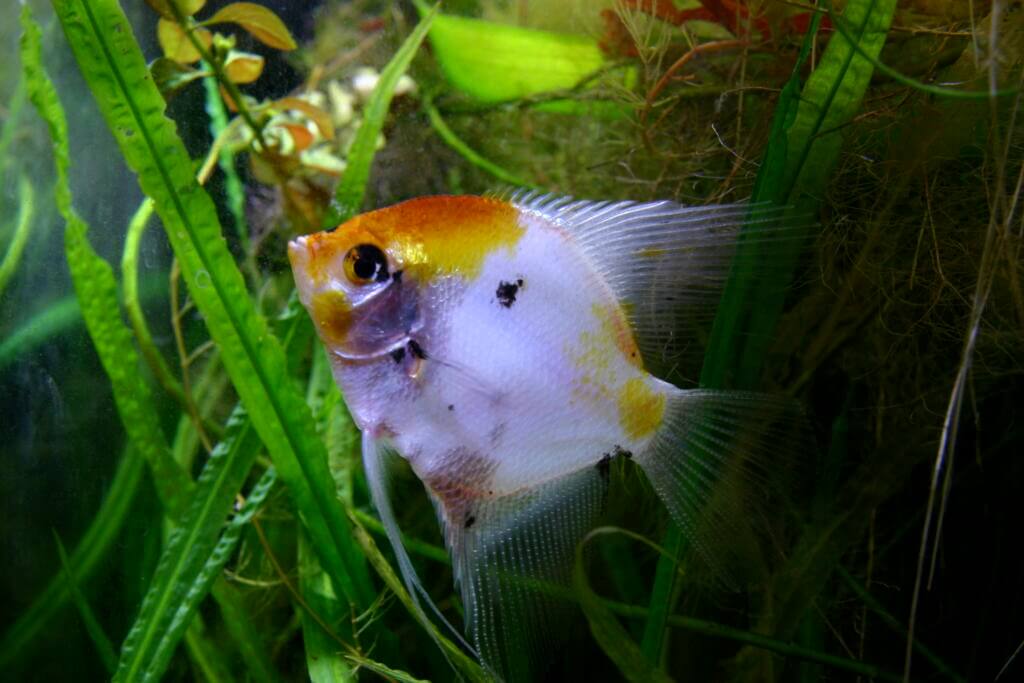
Angelfish come in various dazzling shades, boasting intricate patterns that change as they mature. Angelfish can also thrive in captivity with a spacious aquarium, proper water conditions, and a balanced diet. Recreating their natural habitat and providing enough hiding spots to ensure their well-being and vibrant colors is important.
Appearance
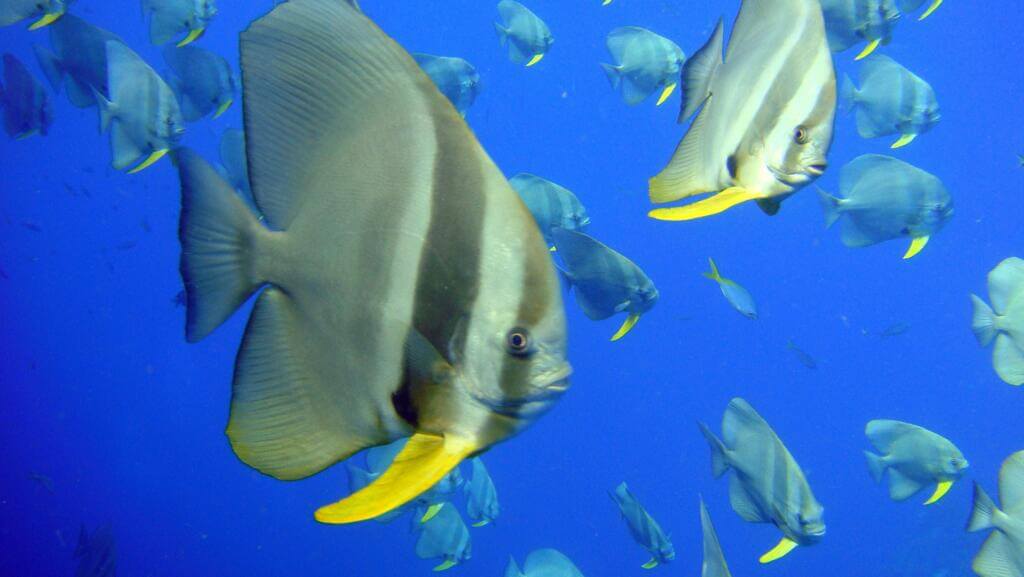
Angelfish are equally eye-catching with their regal appearance and dazzling colors. These elegant fish boast a disc-shaped body adorned with mesmerizing patterns and vibrant shades. While some species exhibit a mesmerizing mix of blue, yellow, and orange, others shimmer with dazzling blue and silver scales.
Angelfish’s dorsal and anal fins often extend gracefully, adding to their majestic allure. As juvenile Angelfish grow, their coloration and patterns change dramatically, showcasing the remarkable transformation they undergo as they mature into adulthood.
Size
Angelfish can grow larger than Clownfish, with most species ranging from 10 to 30 centimeters (3.9 to 11.8 inches) in length. Some species, like the majestic Emperor Angelfish, can reach lengths of up to 40 centimeters (15.7 inches). Their size allows them to explore and navigate larger reef systems and coastal waters.
Reproduction
Angelfish engage in external fertilization during spawning events, where females release eggs into the water column, and males release sperm to fertilize them. These eggs are often released at dusk or dawn, and after hatching, the tiny larvae drift in the water currents until they mature into juvenile Angelfish. During their early stages, juvenile Angelfish rely on plankton for nourishment before transitioning to an omnivorous diet as they grow.
Diet
Angelfish are known for their striking appearance and graceful swimming style. Regarding feeding behavior, they are considered omnivores, displaying a versatile diet.
In the wild, their diet consists of small crustaceans, insects, other invertebrates, algae, and plant matter. In captivity, a well-balanced diet includes high-quality fish flakes, pellets, and live or frozen foods such as brine shrimp, bloodworms, and daphnia. A varied diet is crucial to meeting their nutritional needs and promoting their overall health and vibrant coloration.
Habitat
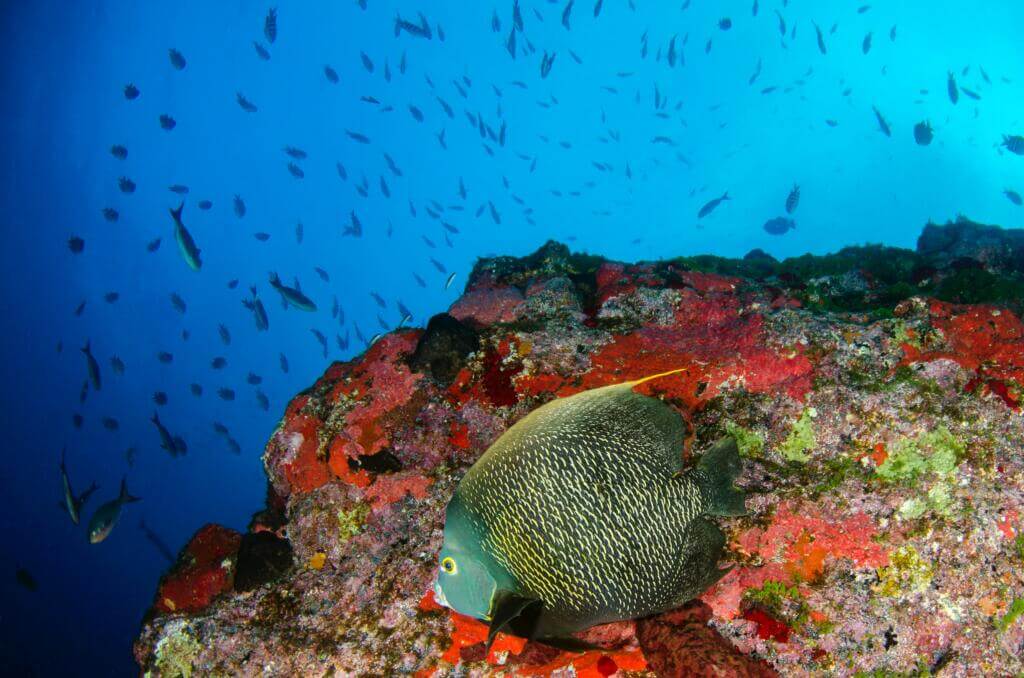
Angelfish inhabit tropical and subtropical regions, with many species residing in the coral-rich waters of the Indo-Pacific and the Atlantic Ocean.
They prefer to dwell near coral reefs and rocky outcrops, where they find shelter and abundant food sources. Their graceful and agile swimming skills make them well-adapted to coral reefs’ complex and intricate structure.
Threats
Like Clownfish, Angelfish also face habitat degradation and coral reef destruction due to climate change and human activities. Overfishing and unsustainable harvesting for the aquarium trade can also deplete Angelfish populations, particularly in regions lacking local regulations. Additionally, marine pollution and habitat destruction can affect their food sources and nesting areas, posing a significant threat to their survival.
FAQs
Can clownfish live with angelfish?
In general, keeping clownfish and angelfish together in the same tank is not recommended, as they have different temperaments and space requirements. Angelfish can be more aggressive and may harass smaller clownfish, leading to stress and potential conflict.
What fish get along well with clownfish?
Several fish species can make good tankmates for clownfish, including certain damselfish, gobies, blennies, royal gramma, and some wrasses. It’s important to research each species’ specific compatibility and behavior before adding them to the same tank to ensure a harmonious and stress-free environment.
What fish can clownfish not live with?
Where does a clownfish live?
Clownfish are commonly found living in the warm waters of the Pacific and Indian Oceans, particularly in and around coral reefs and shallow coastal areas.
What is the best clownfish for beginners?
The Ocellaris Clownfish (Amphiprion ocellaris) is often considered the best clownfish species for beginners. It’s hardy, relatively easy to care for, and adapts well to aquarium life.


