

Lionfish and stonefish are two intriguing and often misunderstood species that inhabit the world’s oceans. Both belong to the family of venomous fish, but they possess distinct characteristics and behaviors that set them apart. While lionfish are known for their vibrant colors and graceful movements, stonefish are masters of camouflage and concealment.


Left Image Credit: Alain Feulvarch; Right Image Credit: Sage
Main Differences Between Lion Fish vs Stonefish
- Appearance and Camouflage: Lionfish are known for their striking appearance, characterized by long, flowing fins and vivid stripes or patterns that vary by species. These patterns are not meant for camouflage but serve as a warning to potential predators. Stonefish, on the other hand, are masters of disguise, blending seamlessly into their surroundings thanks to their mottled, textured appearance resembling rocks or coral. Their ability to mimic their environment makes them incredibly difficult to spot.
- Venomous Spines: Lionfish possess venomous dorsal, pelvic, and anal spines. These spines contain venom that can cause intense pain, swelling, and other symptoms if stepped on or brushed against. Stonefish have venomous spines along their dorsal fin rays. When disturbed, they can raise their spines, injecting venom into anything that comes into contact with them.
- Feeding Behavior: Lionfish are active predators, using their pectoral fins to herd small fish and crustaceans into a position where they can strike and consume their prey. Stonefish are ambush predators, relying on their excellent camouflage to lie in wait for unsuspecting prey to swim by. They can rapidly open their large mouths to engulf prey that ventures too close.
- Habitat and Distribution: Lionfish are commonly found in warm waters of the Indo-Pacific region, the Red Sea, and the Caribbean. They often inhabit reefs, wrecks, and rocky areas. Stonefish are typically found in the shallow coastal waters of the Indo-Pacific region, including the Indian and Pacific Oceans. They prefer sandy or muddy substrates where they can blend in with the environment.
- Behavior and Interaction: Lionfish are relatively active swimmers and may be encountered while swimming or diving. They tend to exhibit less aggressive behavior towards humans. Stonefish are more sedentary and tend to remain in one location, relying on their camouflage for protection. They are more likely to be stepped on accidentally, leading to envenomation.
Lion Fish
Graceful and captivating, the lionfish (Pterois species) is a sight to behold in the warm waters of the Indo-Pacific, Atlantic Ocean, and the Caribbean Sea. Its vibrant colors and flowing fins, reminiscent of a lion’s mane, have named it “lionfish.” However, beneath this alluring exterior lies a formidable predator armed with venomous dorsal, anal, and pelvic spines that act as a potent defense against threats.

Physical Appearance
The lionfish is a visually striking marine predator with a captivating physical appearance. Its body is adorned with vibrant red, orange, and white stripes, creating a visually stunning contrast against its dark background.
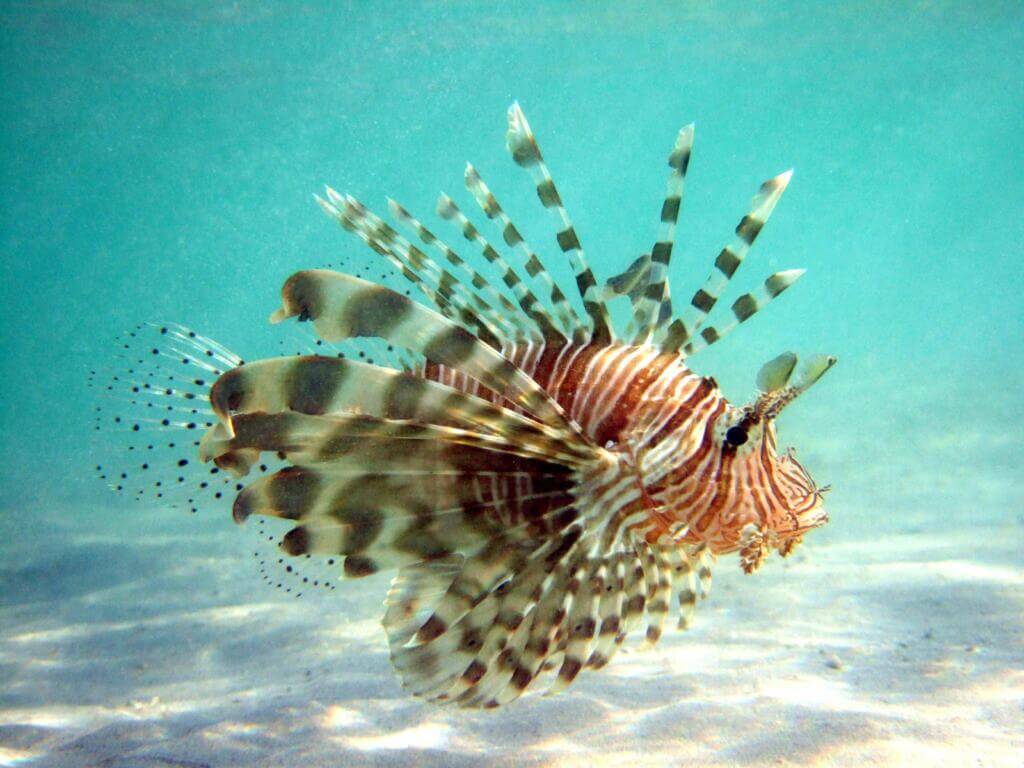
Long, flowing pectoral and dorsal fins extend gracefully, resembling a lion’s majestic mane, lending the species its name. The lionfish’s mesmerizing coloration serves as a warning to potential threats, cautioning of its venomous nature. Its beauty and grace belie its formidable and dangerous attributes, making it an intriguing and captivating sight in the underwater world.
Size
Lionfish typically range in size from about 12 to 38 centimeters (5 to 15 inches) in length, with some larger individuals reaching up to 45 centimeters (18 inches). The size of a lionfish can vary depending on the species and the environment in which it resides. Despite their relatively modest size, these visually striking marine predators possess venomous spines that potently defend against potential threats, making them formidable adversaries in their underwater habitats.
Diet and Feeding Behavior
Lionfish are carnivorous predators known for their voracious appetite. However, they feed on small fish, crustaceans, and occasionally shrimp. Lionfish are highly skilled ambush hunters, using their distinctive pectoral fins to herd and corral prey into a corner.

Once their prey is within striking distance, lionfish rapidly extend their large mouths and vacuum-like jaws, creating a sudden burst of suction that sucks the prey into their mouths. The venomous spines on their dorsal fins also capture prey as they immobilize and subdue struggling prey.
Habitat
Lionfish are native to the warm waters of the Indo-Pacific region, where they inhabit coral reefs, rocky outcrops, and coastal mangrove areas. Within their native range, they are found in a wide range of depths, from shallow waters near the shore to deeper reefs and drop-offs. However, due to their introduction as an invasive species in the Atlantic Ocean, including the Caribbean and Gulf of Mexico, lionfish can now be found in a broader range of habitats in these regions. They are highly adaptable and have demonstrated the ability to thrive in various environments, making them a concern for local marine ecosystems as they disrupt the balance of native species and prey on various marine life.
Reproduction
The reproduction of lionfish involves a unique and fascinating process. As oviparous fish, the female lionfish releases eggs into the water column during spawning events, which are then fertilized by the male’s sperm. These buoyant, transparent eggs drift freely in the open ocean, exposed to various currents. After hatching, the tiny larval lionfish, called fry, spend several weeks in the planktonic stage, drifting and feeding on small organisms.
During this vulnerable period, they are at the mercy of ocean currents, which disperse them across vast distances. Once they reach a suitable reef or rocky habitat, they settle and undergo metamorphosis into juvenile lionfish. As they grow and mature, they assume their adult coloration and embark on their predatory journey, continuing the cycle of life and perpetuating their species. The unique reproductive strategy of lionfish contributes to their widespread distribution and successful colonization of new areas, contributing to their status as an invasive species in certain regions.
Threats
The lionfish pose a significant threat to marine ecosystems, particularly in areas where they have been introduced as invasive species. With no natural predators in these regions, lionfish populations have exploded, wreaking havoc on local marine life and coral reefs. Their voracious appetite for small fish and crustaceans disrupts the delicate balance of the food chain, leading to declines in native fish populations.
Moreover, their venomous glands at the base of the spines make them formidable predators, capable of outcompeting and preying on a wide range of marine species. The rapid spread of lionfish in the Atlantic Ocean, including the Caribbean and Gulf of Mexico, has raised concerns among conservationists and marine experts, prompting various control measures and awareness campaigns to mitigate their impact and protect native biodiversity.
Stonefish
Beneath the tranquil waters of the Indo-Pacific lies a creature that perfectly embodies the art of camouflage and deadly precision – the stonefish (Synanceia species). With an appearance that mimics rocks and coral, this elusive and venomous fish has earned the title of “master of disguise.” Unassuming in size but potent in danger, the stonefish possesses venomous spines that make it one of the most venomous fish in the world.

Appearance
The stonefish’s remarkable appearance has earned it the title of “master of camouflage.” Covered in algae and often resembling a rough rock or a piece of coral, the stonefish effortlessly blends into its surroundings, rendering it virtually invisible to predators and unsuspecting prey.
Its body is compact, reaching around 30 centimeters (12 inches), with a flattened and rough texture that mimics the surrounding seabed. This uncanny ability to mimic its environment allows the stonefish to lie in wait, poised for ambush hunting. Despite its unassuming appearance, the stonefish conceals a potent and dangerous defense mechanism in its venomous spines, making it one of the most perilous creatures lurking beneath the waves.
Size
Stonefish are relatively small creatures, typically reaching lengths of around 30 centimeters (12 inches). Their compact size is well-suited for their ambush hunting strategy and allows them to blend in with their rocky and coral reef habitats seamlessly. While they may not be among the largest marine species, their unassuming size belies their formidable nature.
Diet and Feed Behavior
Stonefish are stealthy ambush predators with a highly specialized diet and feeding behavior. Camouflaged among the seabed, they patiently wait for unsuspecting prey to come close.

When an opportunity arises, stonefish rapidly open their large mouths and create a vacuum, sucking in small fish and crustaceans that venture too close. This lightning-fast strike ensures their prey is engulfed before it realizes the danger, allowing the stonefish to capture its meal swiftly.
Reproduction
As oviparous fish, stonefish engage in a unique reproductive process. During spawning events, female stonefish release adhesive eggs into the water, which adhere to the substrate, providing protection for the developing embryos. Once the eggs hatch, the tiny larvae drift into the water column, at the mercy of ocean currents. This planktonic stage lasts for several weeks, during which the young stonefish feed on small organisms to sustain their growth.
As they mature, they eventually settle in suitable rocky habitats or coral reefs. Metamorphosing into miniature versions of the adults, complete with venomous spines, the juvenile stonefish begin their journey as masters of camouflage, blending seamlessly into their surroundings and preparing to continue their life cycle as formidable predators of the ocean depths.
Habitat
Stonefish are primarily found in the warm waters of the Indo-Pacific region, where they inhabit a variety of coastal and shallow marine environments. Their preferred habitats include rocky shorelines, coral reefs, estuaries, and intertidal zones.
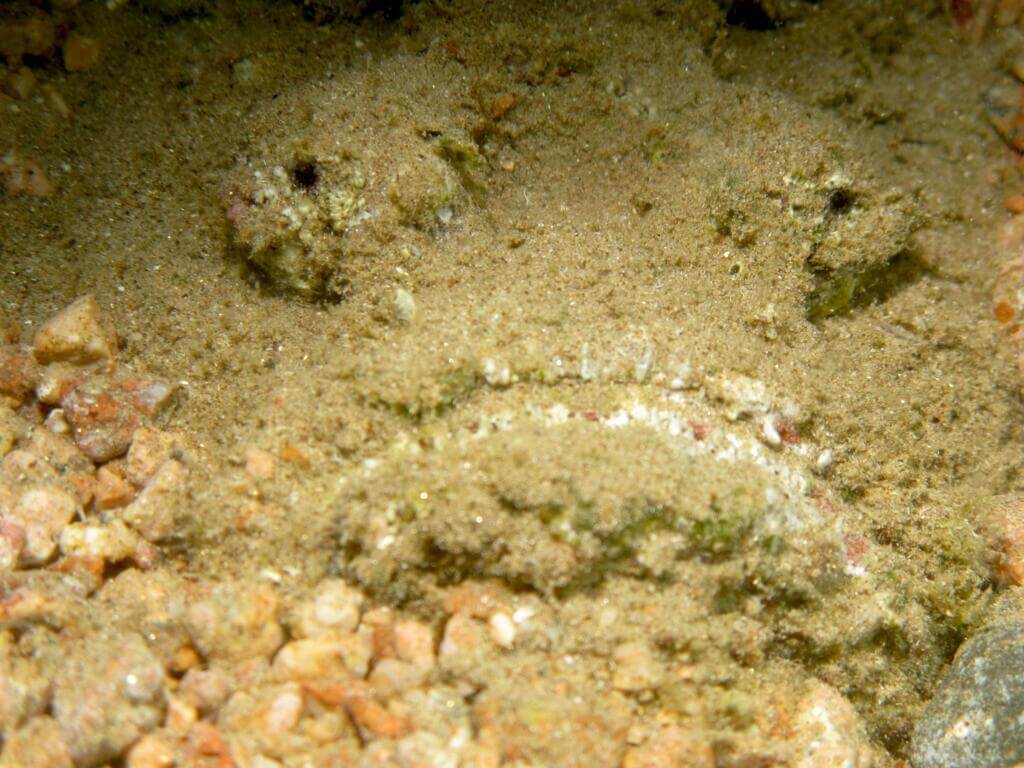
Their choice and affinity for well-camouflaged habitats enhance their survival and hunting success, and their presence as elusive and dangerous creatures adds to the allure and intrigue surrounding these masters of disguise.
Threats
The stonefish poses a significant threat to humans and other marine life due to its potent venomous defense. Its dorsal fin is lined with sharp, venomous spines that contain a powerful mix of toxins, making a stonefish sting an excruciatingly painful experience. In severe cases, a sting can lead to tissue necrosis and even life-threatening complications if not treated promptly.
The stonefish’s exceptional camouflage and ability to hide in plain sight make it particularly dangerous, as unsuspecting swimmers, snorkelers, and divers may inadvertently come into contact with these deadly creatures. Additionally, the stonefish’s presence in coastal and reef habitats can disrupt the balance of marine ecosystems, especially when they are introduced as invasive species in non-native waters.
FAQs
What is the most venomous fish in the world?
The stonefish is widely considered to be the most venomous fish in the world, delivering a potent venom through its sharp dorsal spines that can potentially be fatal if not treated promptly.
Are lionfish and stonefish the same?
No, lionfish and stonefish are not the same. They are two different species of fish with distinct characteristics.
Is lionfish venom lethal?
The lionfish venom is not typically lethal to humans. However, it can cause intense pain and headaches, puncture wounds, shortness of breath, swelling, nausea, vomiting, tissue necrosis, diarrhea, and other symptoms.
Can lionfish venom kill you?
While fatalities are rare, it can cause serious discomfort, pain, and potentially severe allergic reactions. In rare cases, if a person has a severe allergic reaction or an underlying health condition, a lionfish sting could potentially lead to more serious complications.
Are lionfish venomous to humans?
Yes, lionfish are venomous to humans. They have venomous spines on their fins that can deliver a painful sting if they come into contact with a person.
What are the symptoms of a lionfish sting?
Lionfish venom contains proteins and compounds that can cause intense pain, Abdominal cramps, weakness, swelling, seizures, pulmonary edema, Erythema, and other symptoms. While lionfish stings are rarely fatal, they can lead to significant discomfort and should be treated promptly.
Is there a cure for lionfish venom?
There is no specific “cure” for lionfish venom, but steps can be taken, such as an antivenom or tetanus booster, to treat the symptoms and alleviate the effects of a lionfish sting.
Where do stonefish live?
Stonefish are typically found in the warm coastal waters of the Indo-Pacific region, including the Indian Ocean and the western Pacific Ocean. They are commonly found in shallow waters near coral reefs, rocky coastlines, and sandy or muddy seabeds.


