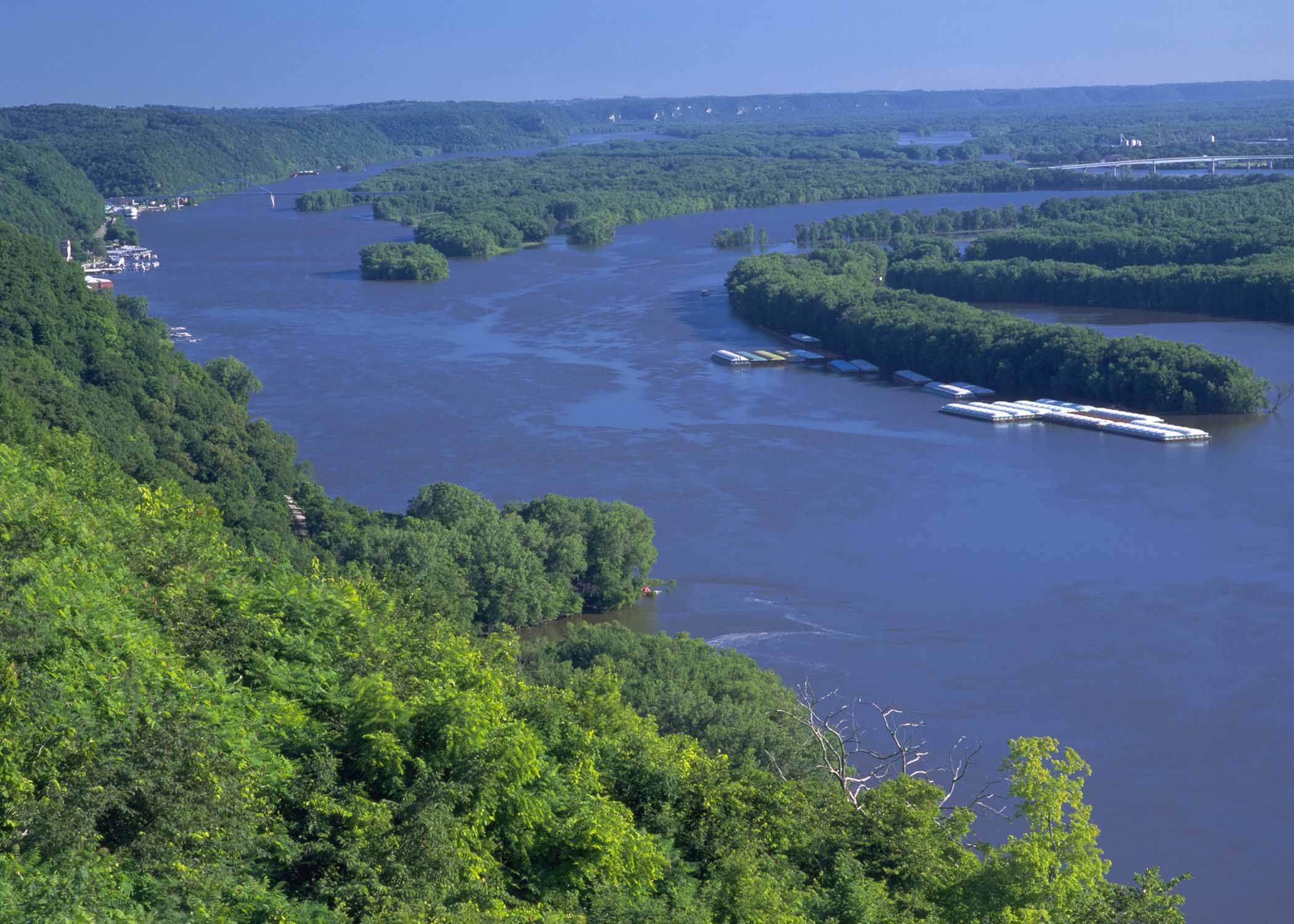

The United States is a land of diverse landscapes, from towering mountains and vast plains to fertile valleys and lush wetlands. Flowing through these landscapes are some of the world’s most impressive rivers, shaping the land, sustaining life, and connecting communities. In this article, we’ll embark on a journey down the five longest rivers in the USA, exploring their unique characteristics, ecological importance, and the roles they’ve played in shaping American history and culture.
Missouri River
Runs Through: Montana, North Dakota, South Dakota, Nebraska, Iowa, Kansas, and Missouri
Length: 2,540 miles (4,088 km)

Known as the “Big Muddy,” the Missouri River is the longest river in North America, flowing 2,540 miles from its source in the Rocky Mountains to its confluence with the Mississippi River at St. Louis, Missouri. Native American tribes relied on the river for transportation, food, and water supply for thousands of years. The Lewis and Clark Expedition famously explored the Missouri River in the early 1800s, opening up the American West to exploration and settlement. The river also played a key role in the fur trade and the westward expansion of the United States.
Its waters and floodplains provide habitat for numerous fish species such as Paddlefish, Drum, Sauger, Walleye, Northern Pike, Channel Catfish, and Carp. Its banks are lined with cottonwood forests, grasslands, and wetlands that support a variety of birds, mammals, and reptiles. The river is an important migratory route for birds, and its watershed includes several national wildlife refuges where White-Tailed Deer and Pheasant are common.
Mississippi River
Runs Through: Alberta, Saskatchewan, Minnesota, Wisconsin, Iowa, Illinois, Missouri, Kentucky, Tennessee, Arkansas, Mississippi, and Louisiana
Length: 2,350 miles (3,782 km)

The Mississippi River is arguably the most iconic and important waterway in the United States. Flowing from its headwaters in Lake Itasca, Minnesota, all the way to the Mississippi River Delta in the Gulf of Mexico. From Native American canoes to steamboats and modern barges, the river has facilitated the movement of goods and people, fueling economic growth and connecting communities. The Mississippi River has witnessed pivotal moments in American history. From early exploration and settlement to the Civil War and the Industrial Revolution, the river has been a silent observer and a powerful force in shaping the nation’s destiny.
The river supports over 260 species of fish, including Catfish, Bass, and Paddlefish. Its banks are lined with lush forests of cypress and tupelo trees, as well as wetlands that provide habitat for American Alligators, River Otters, and numerous frog species. The skies above the Mississippi are filled with migratory birds, such as Ducks, Geese, and Songbirds, that rely on the river’s corridor for their journeys. The river’s delta is a critical nursery for many species, including Shrimp, Crabs, and Oysters, and plays a vital role in the health of the Gulf of Mexico.
Yukon River
Runs Through: Alaska
Length: 1,980 miles (3,187 km) in the US

The Yukon River is a major North American river, flowing through Alaska and Canada. Its headwaters lie in the Coast Mountains of Yukon Territory in British Columbia, Canada, and it eventually empties into the Bering Sea at the Yukon-Kuskokwim Delta in Alaska. The Yukon River has been an important resource for indigenous peoples for centuries, providing food, water, and transportation. The river also played a key role in the Klondike Gold Rush. Today, the river faces challenges from climate change and industrial development.
The US portion stretches 1,980 miles, making it the third-longest river in the United States. The river is known for its diverse landscapes, ranging from rugged mountains and boreal forests to vast wetlands and tundra. These ecosystems are home to a variety of wildlife, including Chinook Salmon, Grizzly Bears, Gray Wolves, and migratory birds like the Arctic Tern and Sandhill Crane.
Rio Grande River
Runs Through: Colorado, New Mexico, Texas
Length: 1,885 miles (3,034 km)

The Rio Grande is a vital river of the American Southwest. It flows from the Colorado Rockies to the Gulf of Mexico, forming a natural border between the United States and Mexico. The Rio Grande has played a central role in the history and culture of the border region for centuries. It has been a source of life and conflict, shaping the identities of the communities that live along the banks of the river’s length, from the Indigenous peoples who first inhabited the region to the modern cities that rely on its waters today.
The Rio Grande supports a variety of ecosystems, including riparian forests, wetlands, and desert scrublands. These habitats provide homes for species such as the Rio Grande Silvery Minnow and the endangered Ocelot. Numerous migratory birds, like the Yellow-Billed Cuckoo and the Sandhill Crane, also depend on these habitats. Unfortunately, the Rio Grande faces significant challenges due to water diversion, pollution, and climate change.
Arkansas River
Runs Through: Colorado, Kansas, Oklahoma, and Arkansas
Length: 1,460 miles (2,350 km)

The Arkansas River is a major tributary of the Mississippi River. Its headwaters arise high in the Rocky Mountains of Colorado, eventually joining the Mississippi River in southeastern Arkansas. It is the fifth-longest river in the country and a vital resource for the Midwest. It serves as a major transportation corridor for barges, supports agriculture through irrigation, and provides water for industry and cities. Its historical significance dates back to early exploration by Spanish and French explorers, and the river played a key role in westward expansion and the development of the Midwest.
The Arkansas River’s ecology varies dramatically along its length. The upper reaches, characterized by cold, swift-flowing water, support a variety of Trout species. As the river descends onto the plains, the water warms and slows, becoming home to fish like Channel Catfish, Flathead Catfish, and Smallmouth Bass. The river’s floodplain encompasses diverse habitats, including wetlands, riparian forests, and sand prairies, which provide crucial habitat for migratory birds, such as Ducks, Geese, and Bald Eagles, as well as mammals like White-Tailed Deer, Beaver, and River Otter. The Arkansas River Shiner, a federally threatened species, also relies on the river’s waters for survival.


