
Freshwater fish, though often overshadowed by their marine counterparts, hold a vital place in the world’s ecosystems. Despite occupying only 1% of aquatic habitat, these diverse species represent over half of all known fish species. However, a staggering 25% of them are currently at risk of extinction, facing a barrage of threats including habitat destruction, pollution, climate change, and overfishing.
This article explores the 11 most rare freshwater species, their freshwater environments, and the challenges they face.
Devils Hole Pupfish
Habitat: A single, tiny geothermal pool known as Devils Hole, located in the Mojave Desert of Nevada, USA.
Cause of Rarity: Limited habitat and water level fluctuations due to groundwater pumping and human activity.

The Devils Hole Pupfish (Cyprinodon diabolis) is a critically endangered species of fish found exclusively in the Devils Hole geothermal pool in the Mojave Desert of Nevada, USA. Measuring just shy of an inch in length, this tiny fish is known for its iridescent blue and green coloration.
Adapted to survive in the extreme conditions of its unique habitat, the Devils Hole Pupfish faces numerous challenges, primarily due to its limited range and sensitivity to temperature and water quality changes.
The Devils Hole Pupfish population, residing in the world’s smallest vertebrate habitat, has rebounded to a 25-year high of 191 individuals, offering hope for its survival.
Conasauga Logperch
Habitat: Typically includes deep gravel runs or pools with small stones and sandy bottoms in small to medium rivers in Tennessee and Georgia, USA.
Cause of Rarity: Its limited range and ongoing habitat degradation due to human activities.
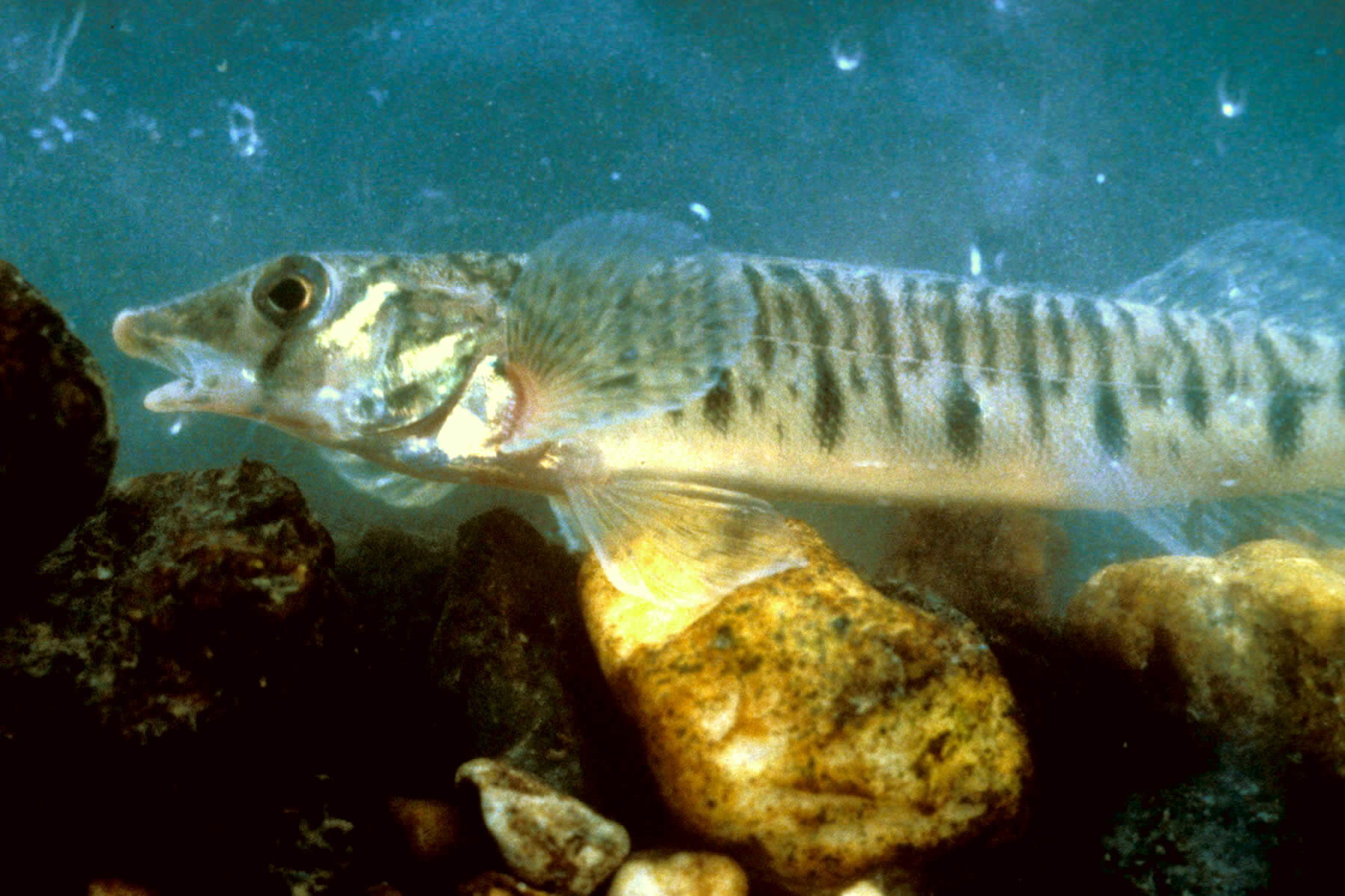
The Conasauga Logperch (Percina jenkinsi) is a critically endangered fish species found only in a small area of the Conasauga and Jacks Rivers in Tennessee and Georgia. Its population is estimated to be less than 200 adults and is potentially declining due to habitat degradation and threats such as siltation, agricultural and urban runoff, and the potential for catastrophic events like chemical spills.
The species is highly vulnerable to extinction due to its limited range and susceptibility to both human-induced and natural threats.
Ropefish
Habitat: Slow-moving or stagnant freshwater environments, such as swamps, marshes, and slow-moving rivers in West and Central Africa.
Cause of Rarity: Threats include habitat destruction and alteration due to human activities and the international aquarium trade.

The Ropefish (Erpetoichthys calabaricus), also known as the Reedfish or Snakefish, is an eel-like fish with a unique rope-like pattern along its body. They are adapted to survive in harsh conditions. It can breathe both in water and air, tolerating low-oxygen environments and even surviving out of water for up to 8 hours, thanks to a specialized lung-like organ.
They are currently listed as Near Threatened due to habitat loss and degradation from oil palm plantations, wetland drainage, and deforestation. Additionally, they are part of the aquarium trade, which can further impact their populations.
Finescale Splitfin
Habitat: Clear, rocky streams with moderate to swift currents in Jalisco, Mexico.
Cause of Rarity: Primarily caused by habitat loss and degradation, competition with introduced species, and severe droughts.

The Finescale Splitfin (Allodontichthys polylepis) is a critically endangered fish endemic to the Mexican state of Jalisco. This bottom-dwelling fish prefers clear streams and creeks with rocky riffles and abundant green algae.
This rare freshwater species historically inhabited two subpopulations, one in the Arroyo Potrero Grande and another in the Río de las Bolas and its tributary Arroyo Dávalos. The Arroyo Potrero Grande subpopulation is likely extinct, while the Río de las Bolas subpopulation remains critically small.
The species faces threats from climate change-induced droughts, competition from introduced species, and habitat loss and degradation caused by deforestation and agriculture.
Alabama Sturgeon
Habitat: Large coastal plain rivers in the Mobile Basin, primarily the lower Alabama River, with a preference for sandy substrates.
Cause of Rarity: Extensive habitat loss and alteration due to dams and navigation projects, compounded by historical overfishing.

The Alabama Sturgeon (Scaphirhynchus suttkusi), is a critically endangered freshwater fish native to the Mobile River basin of Alabama and Mississippi, USA.
This ancient fish, with its slender, elongated body, once thrived across 1,600 kilometers of river systems. However, due to habitat loss caused by damming and navigation-related development, overfishing, and water quality degradation, its range has tragically dwindled to a mere 216 kilometers of the lower Alabama River.
Despite protection under the Endangered Species Act, the Alabama Sturgeon faces a perilous future due to irreversible habitat alterations, making its recovery an urgent conservation challenge.
Giant Freshwater Whipray
Habitat: Freshwater rivers, estuaries, and inshore marine habitats, often favoring sandy or silty bottoms in southeast Asia.
Cause of Rarity: Attributed to overfishing and extensive habitat degradation throughout its range.
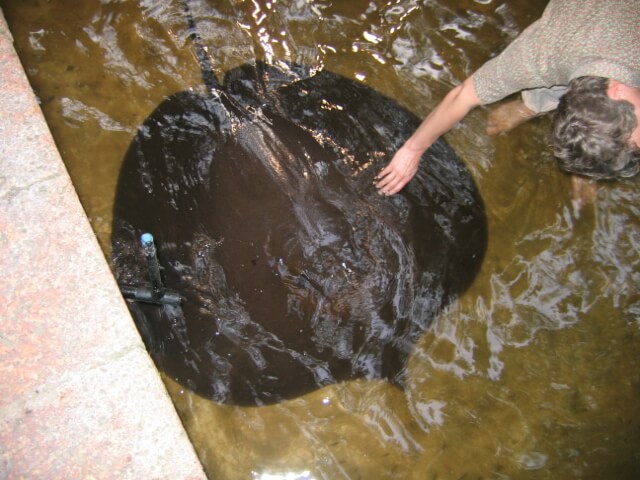
The Giant Freshwater Whipray (Urogymnus polylepis) is a large, endangered ray endemic to Southeast Asia with a patchy distribution. It faces significant threats from overfishing, both targeted and bycatch, as well as extensive habitat degradation due to pollution, damming, and land clearing.
This species is found in various habitats, including freshwater rivers and estuaries, making it particularly vulnerable to human activities impacting these environments. It is estimated that the population has declined 50-79% over the past three generations. The Giant Freshwater Whipray receives full legal protection in Indonesia, while protected zones and community reserves in other areas may offer limited protection.
Damba Mipentina
Habitat: Turbid, shallow floodplain lakes and small rivers in northwestern Madagascar.
Cause of Rarity: Factors such as overfishing, habitat destruction, and the introduction of invasive species have led to drastic delinces in numbers.
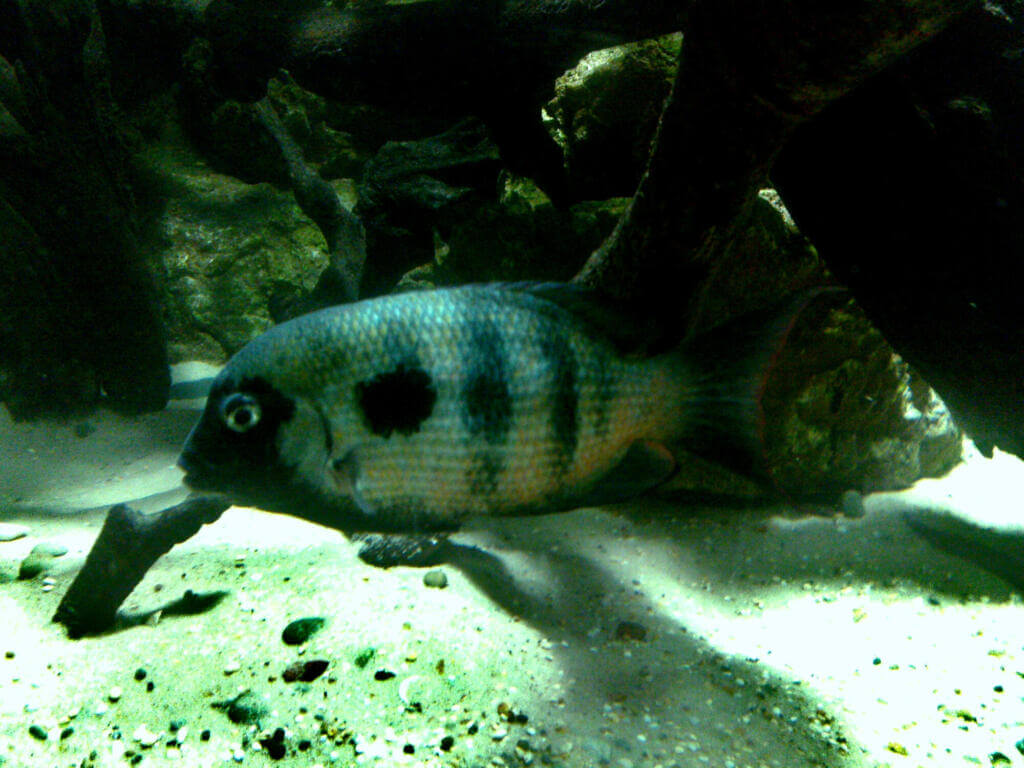
Damba Mipentina (Paretroplus maculatus) is a critically endangered cichlid fish endemic to northwestern Madagascar. Its populations have drastically declined due to severe fishing pressure, habitat destruction, and the introduction of invasive species, particularly the Asian Snakehead.
Formerly found in the Betsiboka and Mahajamba River Basins, recent surveys have failed to find specimens in many of its former habitats, highlighting its precarious situation. Despite some protection within Ankarafantsika National Park, the lake habitat is severely degraded and no individuals of this rare freshwater species were found.
Diamond Darter
Habitat: clean, flowing rivers with sandy or gravelly bottoms, often inhabiting riffles and pools in the Elk River, West Virginia, USA.
Cause of Rarity: extensive habitat loss and degradation due to human activities such as coal mining, pollution, and river impoundment.
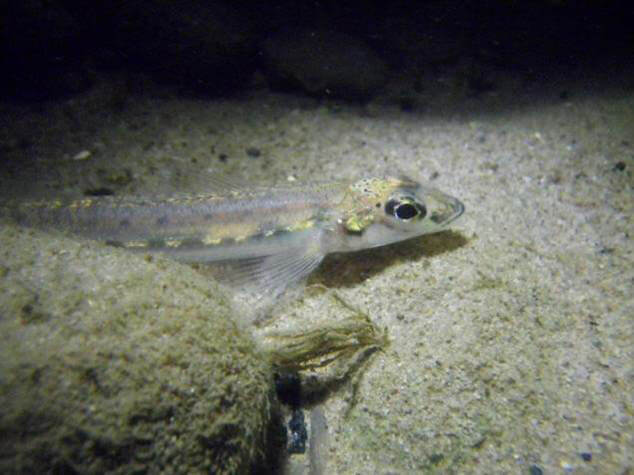
The Diamond Darter (Crystallaria cincotta) is a critically endangered fish species with a severely limited range, existing only in a small portion of the Elk River in West Virginia.
Only 19 individuals collected in the past 30 years. This rare freshwater fish species has been extirpated from most of its historical range due to habitat loss and degradation, primarily caused by human activities such as coal mining, oil and gas development, and inadequate wastewater treatment.
Additionally, river impoundments have further fragmented and isolated its habitat. The Diamond Darter is particularly susceptible to genetic inbreeding, catastrophic events, and the impacts of invasive species.
Chinese Paddlefish
Habitat: clean, flowing rivers with sandy or gravelly bottoms, often inhabiting riffles and pools in the Elk River, West Virginia, USA.
Cause of Rarity: extensive habitat loss and degradation due to human activities such as coal mining, pollution, and river impoundment.

The Chinese Paddlefish, often referred to as the “Yangtze River Swordfish,” was one of the largest freshwater fish in the world, capable of reaching lengths over 7 meters. Known for its long, sword-like snout, this species was once abundant in the Yangtze River basin but has been declared functionally extinct due to habitat destruction, overfishing, and the inability to access critical spawning grounds following the construction of the Three Gorges Dam. Despite efforts to locate surviving individuals, no confirmed sightings have been reported since 2003.
Zebra Shovelnose Catfish
Habitat: clean, flowing rivers with sandy or gravelly bottoms, often inhabiting riffles and pools in the Elk River, West Virginia, USA.
Cause of Rarity: extensive habitat loss and degradation due to human activities such as coal mining, pollution, and river impoundment.
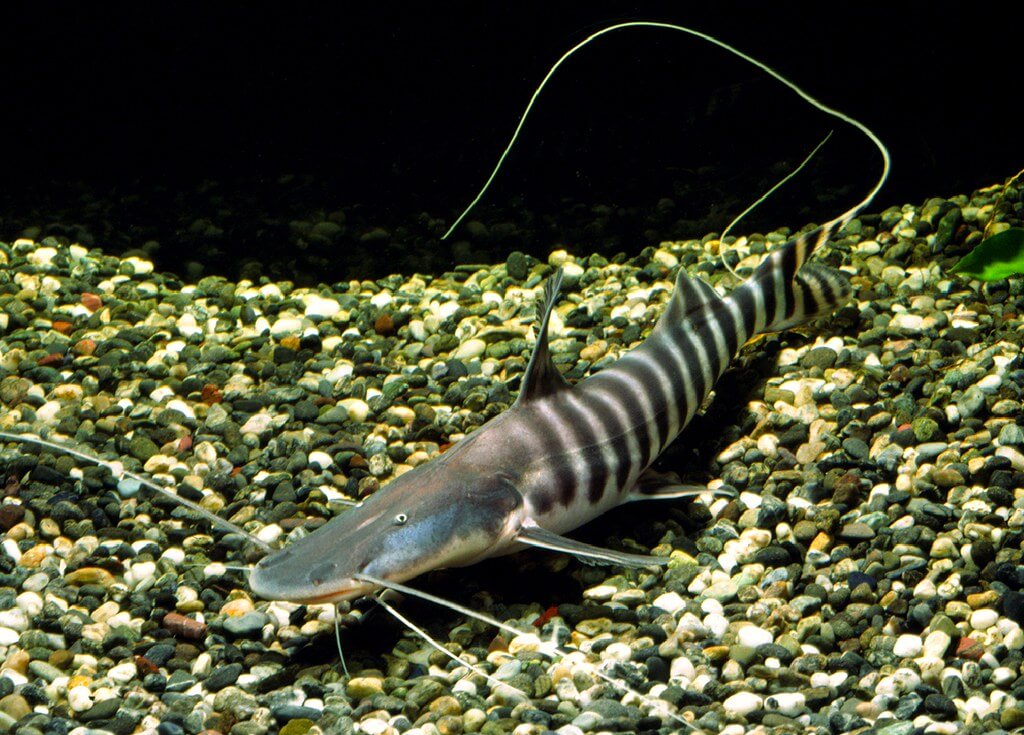
The Zebra Shovelnose Catfish is a striking species characterized by its elongated body and distinct black-and-white striped pattern, resembling the appearance of a zebra.
This species inhabits slow-moving waters in the Amazon basin, where it feeds on small fish and invertebrates. Although not critically endangered, the species faces threats from habitat loss due to deforestation, mining activities, and the damming of rivers, which disrupt their natural habitat.
Imperial Flower Loach
Habitat: clean, flowing rivers with sandy or gravelly bottoms, often inhabiting riffles and pools in the Elk River, West Virginia, USA.
Cause of Rarity: extensive habitat loss and degradation due to human activities such as coal mining, pollution, and river impoundment.
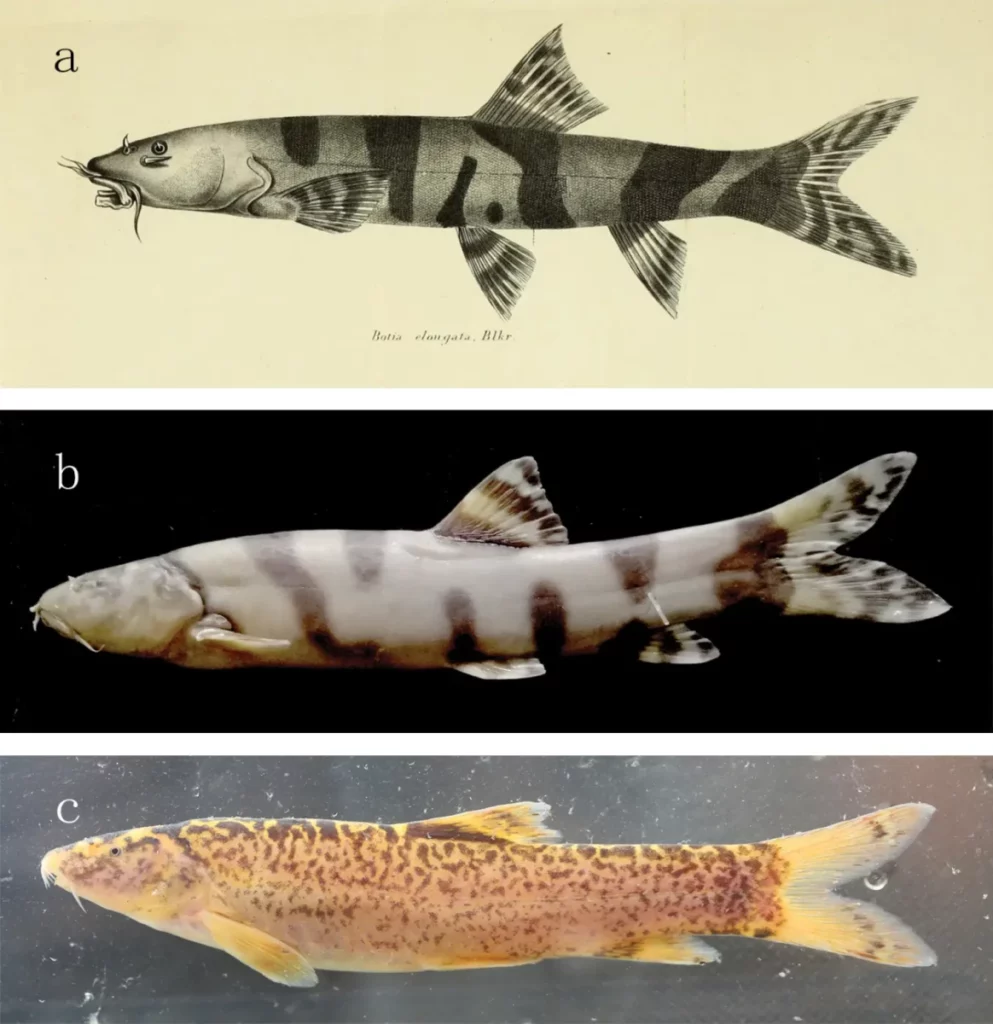
The Imperial Flower Loach is an elusive and beautiful species known for its bright yellow and black coloration and elongated body. Found in the upper reaches of the Yangtze River, this species prefers clear, fast-moving waters where it hunts small aquatic invertebrates.
However, like many species in the Yangtze, the Imperial Flower Loach is at risk due to habitat destruction, water pollution, and dam construction, which have significantly reduced its population.
Zebra Pleco
Habitat: clean, flowing rivers with sandy or gravelly bottoms, often inhabiting riffles and pools in the Elk River, West Virginia, USA.
Cause of Rarity: extensive habitat loss and degradation due to human activities such as coal mining, pollution, and river impoundment.
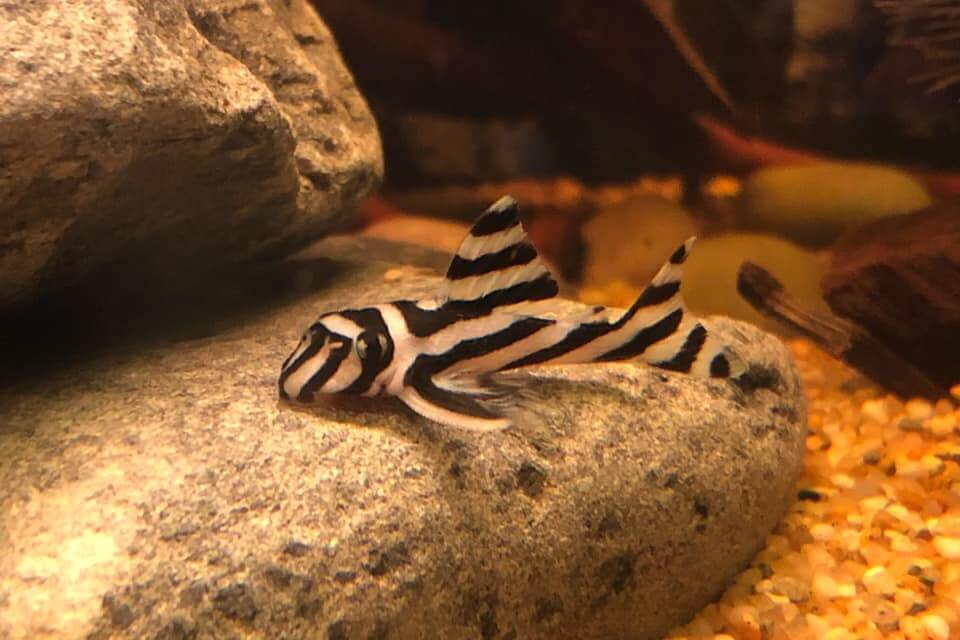
The Zebra Pleco, known for its bold black-and-white striped pattern, is a highly sought-after species in the aquarium trade. Native to Brazil’s Xingu River, this bottom-dwelling fish thrives in fast-flowing waters with plenty of rock cover.
Unfortunately, its popularity has led to overcollection, and the construction of the Belo Monte Dam has further endangered the species by altering its natural habitat, leaving it critically endangered in the wild.
Ocean Insights: Hear From Our Experts

By Dr. Rabiah Ryklief
Principal Scientist and Lecturer of Marine Science, with a PhD in Zoology
Climate change poses a serious and growing threat to freshwater fish populations worldwide. The shifting climate impacts these species through decreasing water levels, rising sea levels, and changing seasonal patterns. These effects compound other existing threats like pollution, dams, overfishing, and invasive species, significantly increasing the risk of extinction for many freshwater fish. A prime example is the large-toothed Lake Turkana robber, an economically important species in Kenya, which has been reclassified as Vulnerable by the International Union for Conservation of Nature (IUCN)due to the combined impacts of overfishing, climate-driven habitat degradation, and dams reducing freshwater inflow to the lake. Protecting freshwater ecosystems and maintaining their health is essential for conserving freshwater fish diversity and ensuring food security and livelihoods for billions of people.
FAQs
What are freshwater fish?
Freshwater fish primarily inhabit freshwater ecosystems, such as rivers, lakes, ponds, and streams, instead of saltwater or marine environments. These fish are adapted to live and thrive in freshwater with lower salinity level.
What is the rarest freshwater fish is the US?
The rarest freshwater fish in the United States is the Devil’s Hole Pupfish (Cyprinodon diabolis). This tiny fish is found exclusively in one location, Devil’s Hole, a geothermal pool in Death Valley National Park, Nevada.
What is the most exotic freshwater fish?
Although subjective, the most exotic freshwater fish is often called the Discus fish (Symphysodon species). This freshwater fish species is known for its vibrant colors, intricate patterns, and elegant appearance, making it a highly sought-after species for aquarium enthusiasts.


