

Simply put on a mask and stick your head under the water to see some of the brightest and most vibrant colors the natural world offers.
Coral reefs are, without a doubt, one of the most fascinating ocean species, with their unique adaptations, shapes, and array of colors that seem nearly impossible.
Coral color comes primarily from its unique symbiotic relationship with plankton, its immediate habitat, specific pigments, and various environmental factors.
Not only are these unique invertebrates a cluster of colorful fun to look at, but their specific colors could hold a deeper importance.
Below, we explore coral color and how the color of coral could be used to further the survival of each species.
What Color Is Coral?
Corals come in a wide range of colors and are largely influenced by zooxanthellae plankton and their corresponding pigments.
Depending on the environment, light intensity, and depth, corals can be found in various shades, leaving a seemingly endless variety of underwater colors.

That said, corals are mostly found in shades of:
- Brown
- Green
- Yellow
- Red
- Orange
- Blue
- Purple.
Corals are also known to exhibit fluorescent colors under certain conditions or when particular pigments are present.
These fluorescent colors often appear in shades of cyan, green, yellow, and red.
How Do Corals Get Their Colors?
If you have taken some time learning about coral, you will be aware that they take part in an intricate symbiotic relationship with an algae known as zooxanthellae.
These microscopic algae are responsible not only for the photosynthesis that provides the coral with food but also for the radiant colors that can be found across coral reefs.
Zooxanthellae are plants and, therefore, undergo photosynthesis with the help of chlorophyll.
Chlorophyll is a green pigment found in plants that is used in the process of photosynthesis. It is this protein that gives plants their green color.
As the zooxanthellae live deep in the tissue of the coral polyps, the coral appears to have a green to brown color.
All corals contain this green-brown color; however, different types of zooxanthellae contain different pigment proteins, which, therefore, provide a larger display of colors throughout coral habitats.
Factors Affecting Coral Color
As mentioned above, coral color is directly related to their zooxanthellae; however, various factors could influence the color, shade, and brightness of a coral.
Species
If you have spent any notable time peeping around coral reefs, you may have noticed how different coral species appear in different colors.
This is because although all corals rely on their symbiotic algae, the strain of zooxanthellae that is attracted to a specific coral differs from the species of the coral. However, both hard and soft corals can come in a variety of color shades.
Pigments
As with different species of anything, we expect there to be differences, and this is no different with zooxanthellae.
Among different strains of the algae, different pigments can be found. In some cases, these are strain-specific, while in others, they are produced according to habitat (such as depth) or other environmental factors.
These pigments are known as chromoproteins and are found in 24 variations.

Similarly, some zooxanthellae have fluorescent pigments (they absorb one color and reflect another).
There are more than 85 florescent pigments produced by zooxanthellae, for reasons that are not entirely understood.
Habitat
Light intensity, water temperature, nutrient availability, and general water quality can have significant effects on coral color.
Zooxanthellae are extremely sensitive to their environment, and when light intensity becomes too great or insufficient, they may produce a brighter or a more dull shade.
Similarly, different zooxanthellae thrive in different water temperatures and at different depths.
This creates a difference in coral color as we move through the zones of the ocean.
Environmental Stressors
Environmental stressors such as a rapid change in sea temperature, a rise or fall in sea level, pollution levels, and change in water salinity can all affect the sensitive zooxanthellae and, therefore, the color of their coral.
When stress levels become too high, coral can expel their algae, leaving only their white calcium carbonate skeletons behind.
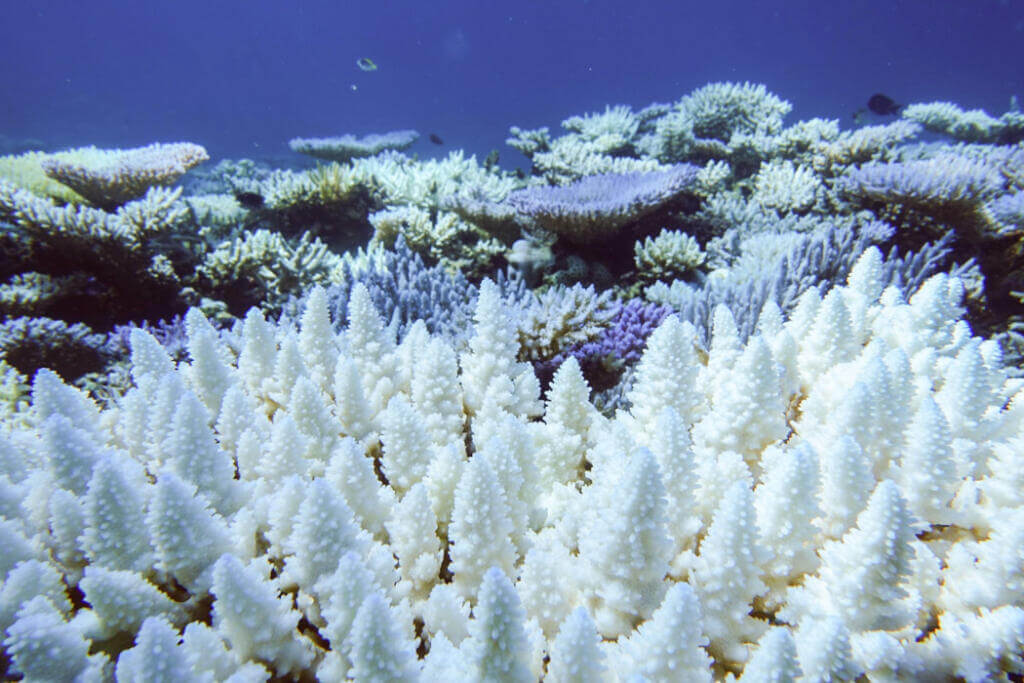
This process is known as coral bleaching, as large reef areas can appear white during this phenomenon.
Coral bleaching is a natural process, but if the algae does not quickly return to coral, neither will their color. This will eventually end up fatal to the coral.
Today, coral bleaching is one of the greatest challenges that we are facing in the ocean and sustainable coral farming efforts are trying to restore coral populations back to health.
Fluorescent Coral
Although we believe that coral color is related to photosynthesis and light intensity, scientists lack a full understanding of how these colors are used and affect the reef.
This understanding becomes even less when we begin exploring the world of fluorescent coral.
Fluorescent colors are common in coral species and have previously been believed to aid in photosynthesis to filter harmful radiation or to reduce light intensity.
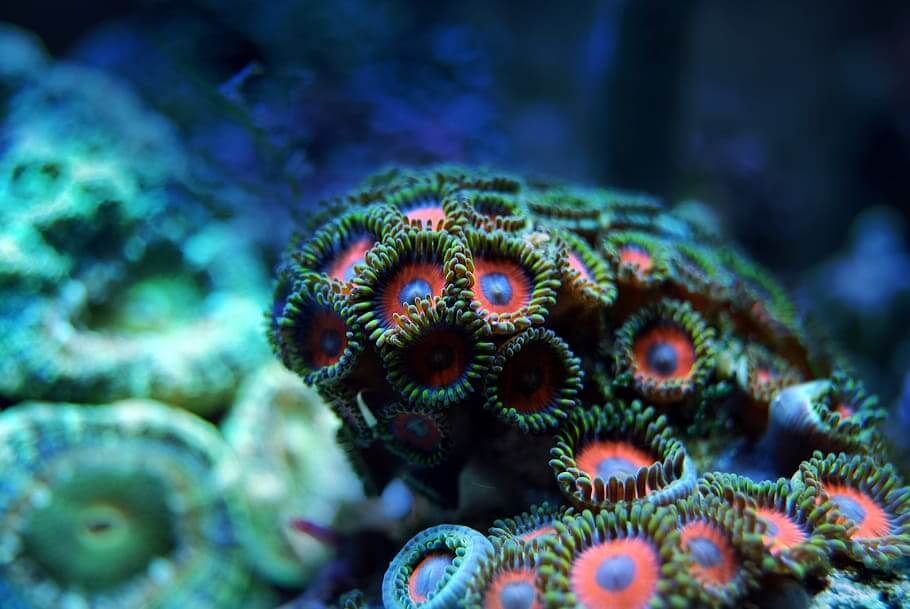
Although this is likely true, some studies suggest that the fluorescent color in corals has an alternative purpose.
Evidence suggests that plankton may be able to perceive fluorescent colors under the mesophotic light environment, suggesting that not only can they see the fluorescent colors, but are attracted to them.
It was found that plankton displayed the behavior of moving toward fluorescent objects in preference to non-fluorescent colors.
This would suggest that the bright fluorescent colors of coral could be used as an aid to attract prey.
FAQs
Can coral colors change?
Yes, coral colors can change based on environmental factors. Optimal conditions may enhance vibrancy, while stressors like high temperatures or pollution can lead to bleaching, causing corals to lose their color.
How does coral color contribute to biodiversity?
The variety of colors among different coral species contributes to the overall biodiversity of coral reefs. The vibrant colors also attract marine life, making coral reefs ecologically rich ecosystems.
How does coral color relate to other marine life?
The vibrant colors of corals attract a variety of fish and marine organisms, providing essential habitats for shelter, breeding, and feeding. Coral reefs, with their diverse colors, support a complex and interconnected marine ecosystem.
Can human activities impact coral color?
Yes, human activities like climate change, pollution, and overfishing can negatively impact coral health, affecting their color. Conservation efforts are crucial to preserving the vibrant and diverse ecosystems of coral reefs.


