
As we dive below the ocean’s surface, we are greeted by a mysterious world governed by intricate connections that form a vibrant and biodiverse ecosystem.
Among these tightly woven ecosystems, we find coral reefs.
While coral reefs are known for their astonishing biodiversity, they depend on a fascinating microscopic organism known as zooxanthella for feeding and providing them with their vibrant colors.
In this article, we will delve deeper into the world of zooxanthellae, exploring their biology, habitat, lifecycle, diet, significance to coral, and more.
Description and Appearance
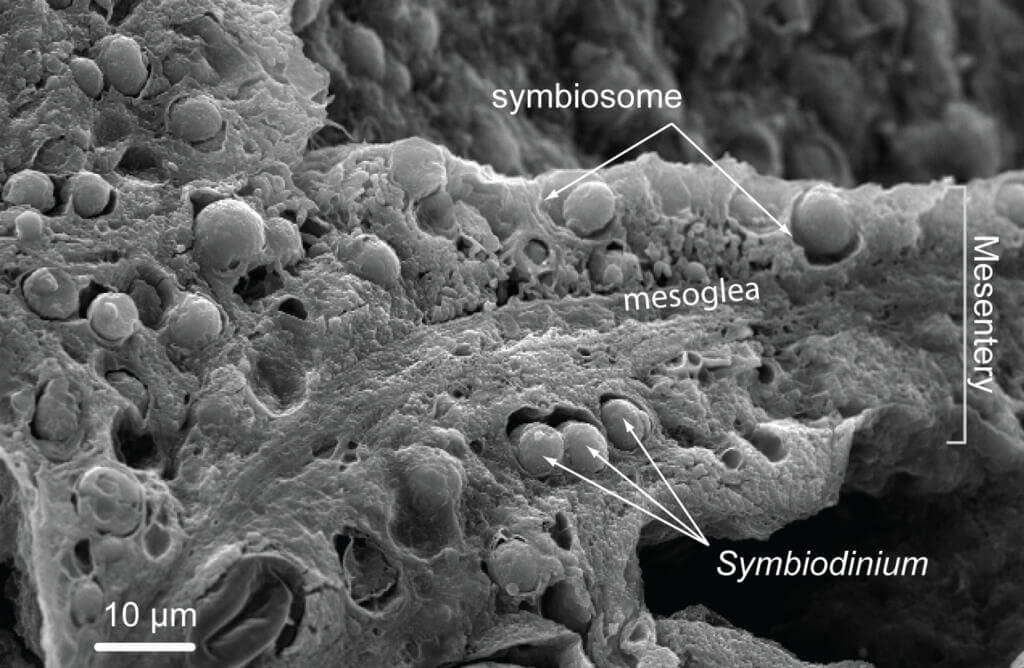
Zooxanthellae, often referred to simply as “zoox,” are single-celled algae known as dinoflagellates.
These microscopic organisms belong to the family Symbiodiniaceae and are vital components of coral reef ecosystems.
The name “zooxanthellae” is derived from Greek and translates to “animal” (zoo) and “yellow” (xanthellae), referring to their golden-brown pigmentation.

They are often oval or ellipsoidal in shape, measuring only a few micrometers in diameter. Their appearance can vary depending on the specific species and environmental conditions, but their distinct golden-brown hue is a common feature.
This color comes from the algae’s photosynthetic pigments, such as chlorophyll, which allows them to harness energy from the sun and, in turn, provide energy to their host coral.
Although zooxanthellae are microscopic, a pin prick compared to the rest of the reef, these tiny microorganisms play a crucial (and overweighted) role in the vitality and health of coral reef systems.
Habitat and Range
Zooxanthellae thrive in warm, shallow waters in tropical and subtropical regions worldwide.
Within these regions, they find homes within the tissues of various marine organisms, including reef-building corals, sea anemones, jellyfish, and other invertebrates.
As zooxanthellae are photosynthesizing organisms, they require habitats that are well-lit with sunlight.
Because of this, zoox tend to be found in areas abundant with sunlight, usually spanning from the coastline through the neritic zone.
The depth of their range can vary but depends mostly on sunlight availability and water temperature. In some regions where water is warm and clear, zooxanthellae can be found all the way to the end of the neritic zone at depths of 200 meters or more.
In short, wherever you find coral, you will find zooxanthellae. Or rather, wherever zooxanthellae are present, a coral polyp has the potential to grow.
Reproduction and Lifecycle
Not much is known about the reproduction of zooxanthellae; however, it is believed that they primarily reproduce asexually through binary fission, where a single cell divides into two identical daughter cells.
That said, these algae may be capable of reproducing sexually under certain conditions.

When zoox find a suitable habitat, they settle within the coral tissue and begin photosynthesizing.
At this stage, the true symbiosis begins. The coral provides a home for the algae, and in return, the algae provides nutrients to its host.
For the most part, not much is known about the life cycle of zooxanthellae, but it’s clear that it’s closely intertwined with their hosts, particularly that of corals.
Diet and Behavior
Part of what makes zooxanthellae so special is their means of harnessing sunlight and transforming it into usable compounds such as sugars.
It is this process of photosynthesis that allows the algae to provide their host coral with the nutrients, such as amino acids and proteins, that the coral needs to flourish.
Unlike us, zooxanthellae and other photosynthetic organisms “breathe” in carbon dioxide and expel oxygen as a waste product.
The coral then uses this “waste” oxygen, and similarly to us, when the coral expells its waste products from cellular respiration, it releases carbon dioxide, which is then recycled by the symbiotic zoox.
The relationship between these two organisms is delicate and intricate. One relies on the other to reach its full potential.
Threats and Defenses
It has become well known that coral is extremely sensitive to temperature change, which has become evident in this era of climate change.
Temperature changes in the ocean (usually related to global warming) have been closely related to mass coral bleaching events, but it’s interestingly not the coral that’s so sensitive, but rather their zooxanthellae.
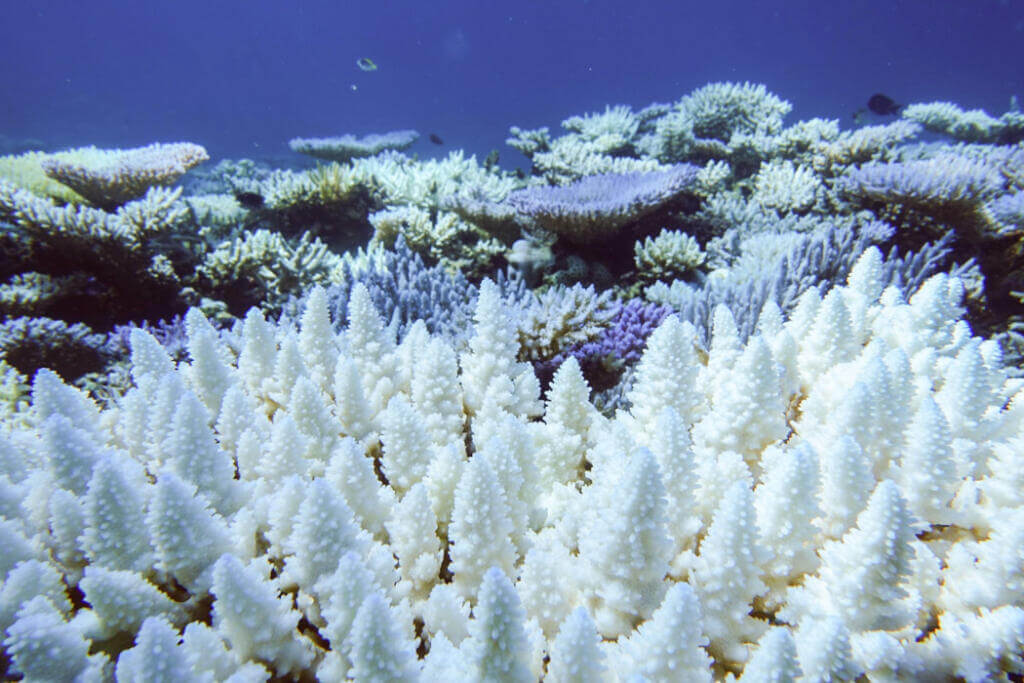
When this sensitive algae is exposed to environmental stress, often related to rising or falling seawater temperatures, it is expelled by its host coral.
According to the WWF, “as little as 2 degrees Fahrenheit – can cause coral to drive out algae.” However, this isn’t the only stressor that agitates the algae.
High light intensity and pollutants such as chemical runoff and sewage can send the zoox into a reactive state. When stressed, zooxanthellae produce a reactive oxygen species (ROS), which is toxic to the host coral.
Although it’s not entirely certain what makes them toxic, some studies suggest that the ROS expel chemicals such as hydrogen peroxide.
To ensure its survival, the coral expels the reactive algae but loses its color and primary energy source.
Symbiotic Importance of Zooxanthellae With Coral
As mentioned above, this unique algae provides essential nutrients to the coral, but when you understand its energy level, the algae’s importance becomes more evident.
Some species of coral get up to 90% of their required energy from their partner algae.

Furthermore, it is the algae responsible for the coral’s vibrant color, attracting fish and microorganisms on which the coral feeds.
Without the zooxanthellae and its symbiotic relationship, coral goes into a dormant state, where it turns white. Although the expulsion of zooxanthellae is a natural occurrence, they face a path of no return when they are left in this nutrient-starved state for a prolonged period.
Despite being microscopic, the role of zooxanthellae is one that supports the entire ocean ecosystem. Without these two symbionts, the seas would be a much dimmer place.
FAQs
Can zooxanthellae survive independently?
Zooxanthellae can survive for short periods on their own but depend on a host organism for protection and access to light. They lack the mobility and protective structures needed to survive independently.
How does coral bleaching affect zooxanthellae?
Coral bleaching occurs when stressed corals expel their zooxanthellae, leading to a loss of color and energy. Without zooxanthellae, corals become more susceptible to disease, which enhances the chance of fatality.
Are zooxanthellae found only in corals?
Although corals are the most well-known hosts of zooxanthellae and potentially have the most intricate relationship, these algae can also inhabit other invertebrates, such as anemones and certain species of jellyfish.
Do zooxanthellae have any predators?
Some organisms, such as nudibranchs, foraminifera, and parrotfish, feed on zooxanthellae; however, this is relatively low and doesn’t widely affect the algae population.


