
Close your eyes for a moment, sit back, and imagine what swimming in the freshest, cleanest, most vibrant river water must feel like. Imagine water so clear that it would make a crystal blush with embarrassment. This is the experience of the Rainbow River.
A hot spot for tourism and a biodiverse masterpiece, this river is a cornerstone in the ecology of Florida, but overuse and disregard for sustainable practices mean it’s not all sunshine and rainbows after all.
Let’s take a trip down the river and see what this spring has to offer and what we can do to maintain its beauty.
Geography
The Rainbow River finds its origin in what is now the Rainbow Springs State Park, which is located approximately 6 miles north of Dunnellon, Florida, in the United States.

The Rainbow Springs are one of the largest springs in the world and have an average discharge rate of more than 400 million gallons per day.
River Course
The Rainbow River in Marion County starts in the town of Dunnellon at Rainbow Springs and travels 5.7 miles before joining the Withlacoochee River. The Withlacoochee River ultimately discharges into the Gulf of Mexico on the border of Citrus and Levy counties.
The Rainbow and Withlacoochee rivers receive fresh water from Rainbow Springs, which has the fourth-largest flow of any spring in Florida. Encircling the headsprings is the Rainbow Springs State Park, where guests can swim in the azure water or use a kayak or tube to explore the remainder of the river. From 1934 until 1973, the Headsprings property served as a private tourist destination with glass bottom boats and a monorail that went through the tree canopy.
Historical Significance
Rainbow Springs gained popularity in the late 1880s when rock phosphate was discovered, attracting many to the area. After the mines were exhausted, the land transformed into a tourist attraction, drawing visitors with its crystal-clear waters and lush, jungle-like atmosphere. By the 1960s, during Florida’s golden age of tourism, Rainbow Springs was a hotspot for those seeking waterfalls, wildlife, and the state’s tropical appeal. However, the tourist attraction closed in 1973, and in 1990, the state of Florida purchased the land, now managed and protected by the Florida Park Service as Rainbow Springs State Park.
Visitors can explore the natural oak hammock, enjoy the walkways, or paddle along the river. The springs are accessible not only through the state park but also via KP Hole Park, where tube and paddle rentals are available. It’s essential to recognize the rich history of the area before visiting.
Dunnellon resident Dwight Porter once remarked, “The bluff overlooking the Rainbow River that is now K.P. Hole Park has always been the premier location along the banks of the river. The folks at county and city levels could have never envisioned the amount of usage and the profit derived from the tubing industry today.“Florida Hikes provides up-to-date, detailed information to help plan a visit to Rainbow River and its surrounding attractions.
Ecosystem
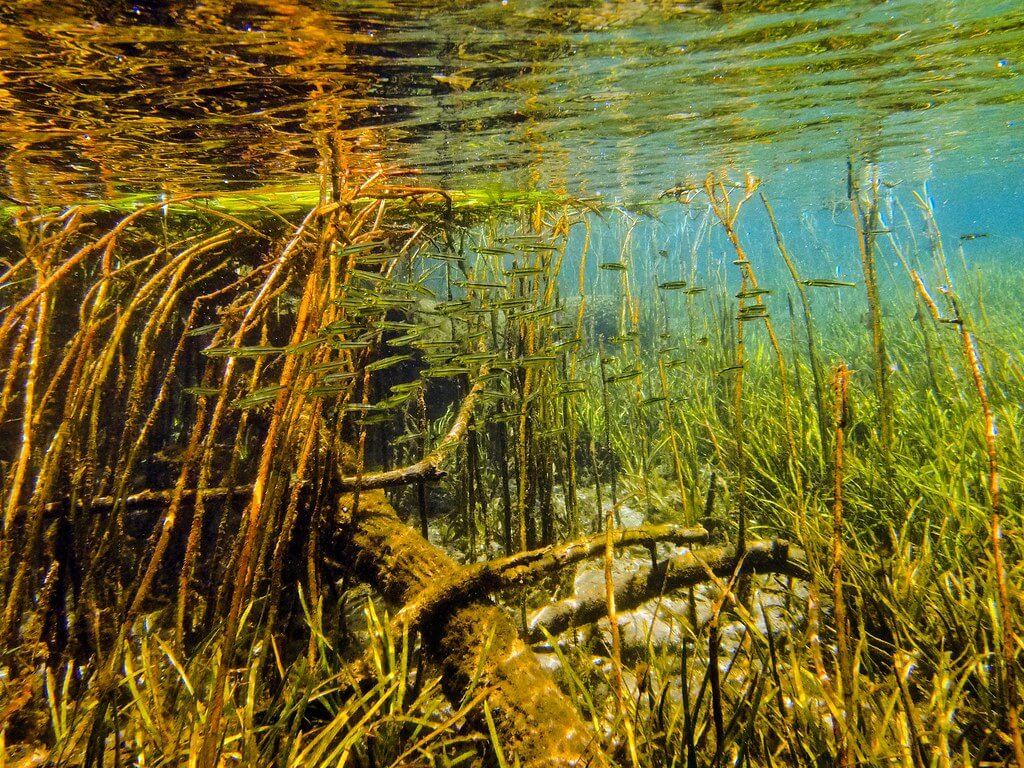
Rainbow Springs, along with its river, is a biodiverse hotspot with submerged aquatic vegetation that provides protection and resources for a variety of fish, mammals, waterfowl, reptiles, and amphibians.
Thanks to the constantly flowing springs that are filtered through underground movement, the Rainbow River is home to some of the cleanest water on the planet. This has allowed sunlight to penetrate deep through the water’s surface and support aquatic life at the river’s depths.
The river has a year-round temperature of 72°F (22°C). This warm, clear water makes a unique living environment that helps species such as the West Indian Manatee thrive during colder months.
Animal and Plant Life Found in Rainbow River
The Rainbow River supports a rich and diverse ecosystem. Here are some key plants and animals found there:
Plants
Submerged Aquatic Vegetation: The river’s clear, warm water allows for abundant submerged plants, such as
- Strap-leaf sagittaria and eelgrass, which are two predominant types.
- Hydrilla and southern naiad are other common aquatic plants.
These plants provide food and habitat for various aquatic species.
Animals
Fish:
- Plenty of fish Largemouth bass, sunfish, largenose gar, and Atlantic needlefish are commonly spotted.
Reptiles:
- Turtles like the Suwannee cooter and loggerhead musk turtles are often found.
- American alligators are also present.
Birds:
- Wood storks, little blue herons, tricolored herons, bald eagles, anhingas, and belted kingfishers are frequently observed.
- Swallow-tailed kites, wood ducks, and osprey are other notable bird species.
“A MAN OF WISDOM DELIGHTS IN WATER” ~ CONFUCIUS
Tourism & Park Activities
The Rainbow River, particularly its source at the Rainbow Springs, has long been a popular tourist destination. With the takeover of the Florida State Park, the eco-tourism and nature adventures have become ever more exciting.
Trails and pathways trace the river’s course, making it simple for tourists to explore the picturesque topography. As you walk along, you will be able to marvel the presence of decorative gardens, man-made waterfalls, and rolling hills, which serve as a vivid reminder of the springs’ history, marking the time when the area was utilized for mining.
The river’s swim area, furthermore, surrounded by magnolias and azaleas, is a heaven for swimmers and nature enthusiasts alike.

If you’re looking to take the family, guests (or just yourself) on an adventure full of excitement and nature-filled activities, then the Rainbow River most likely has everything you are looking for. The park does not have an entrance fee and closes when the capacity is full.
Some of the many possible activities for you to experience on the Rainbow River include:
Kayaking and canoeing
Rent a canoe or a kayak and journey out onto the gorgeous waters of one of the top recreational water sports destinations in Florida.
SCUBA diving and snorkeling
Snorkeling the headsprings of the Rainbow River is a favorite activity but is only allowed in the buoyed swimming area. However, it is allowed from the campground or from boats once you are outside of the headsprings. Please be aware that state law requires dive flags for all snorkelers.
Hiking and adventuring along nature trails
Rainbow Springs State Park offers leisurely strolls through shady gardens laced with azaleas, oaks and magnolias. The walkways pass by three man-made waterfalls and a native plant garden. A nature trail winds back behind the gardens through natural oak hammocks and sandhill communities. This trail offers both river and phosphate pit overlooks and is approximately 2.5 miles long from the Visitors’ Center.
Birdwatching and wildlife viewing
Throughout the park, on all of the nature trails, and along the river, there are many wonderful birding opportunities. A brand new park birding list has been created.
Picnicking and relaxing on the river bank
Picnic tables, pavilions, and grills are available for visitor use on a first come, first served basis.
A fun and unique activity to the area is an outdoor game, similar to a high-tech treasure hunt, which involves the use of GPS devices, where players use coordinates to locate hidden caches. It’s definitely worth giving it a go!
Park Amenities
The Rainbow River area is equipped with amenities like grills, pavilions, and a parking area, making it ideal for family picnics and outdoor games.
A quick Google search of the area will yield a plethora of tour companies, guest houses, and rental sites where you can schedule a tour or activities for your time in the park.
The campground and visitor center offer amenities like guest services, lifeguards, restrooms, a cafe, and a gift shop, enhancing the experience for all visitors.
Conscious Tourism
Even though the state park protects the springs, it is still our duty to use caution when venturing into the outdoors and to always consider sustainability and conservation.
Following park guidelines and rules is essential to maintaining the natural beauty of the spring and its river, not only for us but for our children and all the generations that will follow.
For safety reasons and to protect the natural environment, state law and park guidelines must be strictly followed. Visitors are encouraged to view the privacy policy of the park to understand regulations for visitor use, including areas where pets are allowed.
Environmental Threats
The Rainbow River is fairly well preserved, thanks to the protection of the state park; however, just like most ecological spots on Earth, it is under threat by several environmental pressures.
Invasive species threaten the diverse aquatic preserve, while phosphate pit overlooks reveal the area’s mining past.
Habitat destruction, climate change, and pollution further play a part in the slow degradation of the river, but it’s through human activities and recreation that the river sees its most damage.
Unsustainable tourism practices, such as overcrowding, irresponsible boating, overfishing, and trampling of sensitive habitats, along with excessive human disturbances to the wildlife, have caused a loss in biodiversity and are slowly driving animal life further from the springs.
Conservation Efforts
Although the upper portion of the Rainbow River features some of the clearest water and healthiest submerged aquatic vegetation, it faces significant challenges due to one of the highest nitrate levels among the Springs Coast systems. Excessive nutrients have led to the overgrowth of harmful Hydrilla and Lyngbya algae in the lower stretches, which can diminish water clarity and cause extreme fluctuations in dissolved oxygen. Low concentrations of dissolved oxygen can be harmful to aquatic insects, amphibians, and fish.
To address these concerns, conservation efforts are underway to preserve the Rainbow River and Rainbow Springs, which were designated as an Aquatic Preserve in 1986 and recognized as an Outstanding Florida Waterway in 1987. These efforts aim to maintain the river as a Marion County treasure and ensure its long-term ecological health. The unique habitat of the Rainbow River requires ongoing conservation actions, including
The unique habitat of the Rainbow River requires ongoing conservation actions, including:
- Water quality monitoring: As water purity is a key factor in this ecosystem, proper water management is needed. Tests are routinely conducted to assess the PH, nutrient levels, temperature, and various other water quality parameters.
- Waste management: Providing recycling and waste disposal facilities, along with the encouragement for visitors to remain responsible for their trash, has helped reduce waste and pollution making its way into the river’s ecosystem.
- Environmentally friendly tourism activities: Although human interaction often impacts the natural wildlife, measures such as speed limits for boats, no-wake zones, and ensuring proper SCUBA diving and snorkeling practices are monitored to reduce human disturbance where possible. This also includes monitoring of fishing in order to maintain sustainable fishing practices.
- Limiting foot traffic: The state park has implemented a capacity limit to the springs. This has lessened foot traffic, which prevents hordes of people from pushing out the natural life and allowing it to settle and persist in the area.
- Visitor education: Possibly the most important conservation effort is the education of the visitors that visit the springs. When visitors understand the importance of the ecology of the river and how each moving piece, no matter how small, is as important as the next, they are more inclined to tread lightly as they adventure through the park
By being mindful of what we do and through teaching sustainable practices to those who don’t know, we can slowly begin to make a difference.
Rainbow River Rules
- Alcohol is strictly prohibited.
- Coolers may be inspected upon entry.
- Disposable containers such as cans, plastic, glass, foam, or paper are not allowed; only reusable containers are permitted.
- Littering is forbidden.
- Divers and snorkelers must display a “diver-down” flag while in the water.
- The entire Rainbow River is a designated “Idle Speed/No Wake” zone.
- The main springs are protected areas where motorized vessels, anchoring, diving, and fishing are not allowed beyond the marker buoy.
- Exiting the Rainbow River anywhere other than the Tuber’s Exit (also known as Blue Run of Dunnellon Park, off Pennsylvania Avenue) is considered trespassing, and violators may face arrest.
Pollution in Rainbow River Impacts the Ocean
The Rainbow River eventually joins the Withlacoochee River, which then discharges into the Gulf of Mexico. Pollutants from the Rainbow River can flow downstream and impact marine ecosystems in the Gulf.
Nutrient Pollution:
The excessive nitrate levels in the Rainbow River are leading to overgrowths of harmful algae (like Hydrilla and Lyngbya). This algal bloom reduces oxygen levels in the water, which is harmful to aquatic life. When such nutrient pollution reaches the Gulf of Mexico, it can contribute to larger issues like dead zones, where oxygen depletion makes it hard for marine life to survive.
Human Activity
Overcrowding, irresponsible boating, and waste mismanagement are significant contributors to pollution in the Rainbow River. These pollutants, including plastics and debris, can flow into the Gulf, harming marine animals like fish, turtles, and birds.
Consequences of Pollution on Marine Life
Biodiversity Loss: The articles emphasize that pollution affects biodiversity in the river. Species like West Indian manatees, fish, and birds depend on the river’s ecosystem. If pollution from the river reaches the ocean, it threatens marine life, including sensitive species that are crucial for healthy marine environments.
In summary, pollution in the Rainbow River, particularly nutrient runoff and human waste, can significantly impact the ocean by contributing to nutrient pollution, algal blooms, and the degradation of marine habitats in the Gulf of Mexico.
FAQs
How deep is the Rainbow River?
The average depth of the Rainbow River is 10 feet to 18 feet and reaches a maximum depth of 25 feet.
What is the best time of year to visit the Rainbow River?
When you visit the river will depend on what your goals are for your trip. The water temperature stays warm year-round (around 72°F ), which means it’s great for both summer and winter. If you want to spot some manatees, then winter is your time, but if you’re looking to do some kayaking, tubing, or other water sports, warmer months, such as spring and summer, are the best option.
Are there alligators in the Rainbow River?
Although alligators are fairly common in Florida, they are very rare in the Rainbow River. This is mostly due to the clear water (not a favorite of our dinosaur friends).
Is it free to visit the Rainbow River?
If you are going to visit the Rainbow River, it is technically free, but if you want to head to the Rainbow Springs or any section of the river that’s inside the state park, you should expect to pay a fee. The price of entry varies from season to season, so it’s best to check with the park before heading out.


