
The island of Tenerife, situated in the Canary Islands archipelago, offers a diverse range of marine life encounters. Its waters are inhabited by various species, including the Short-Finned Pilot Whale, the Common Dolphin, and the Angelshark. This article will explore ten marine animals that can be found in the waters surrounding Tenerife, highlighting their unique characteristics.
Green Sea Turtle
Interesting fact: Green Sea Turtles are the largest type of hard-shelled turtles

The Green Turtle, named for the greenish hue of its cartilage and fat (not its shell!), thrives in the tropical and subtropical waters around Tenerife and the Canary Islands. These incredible creatures, the sole members of the genus Chelonia, migrate vast distances between their feeding grounds and nesting sites. While they use beaches for laying their eggs, they spend most of their lives in the ocean, particularly in lush seagrass meadows.
Common Stingray
Interesting fact: Common Stingrays have a long spine (tail) that is venomous at the end
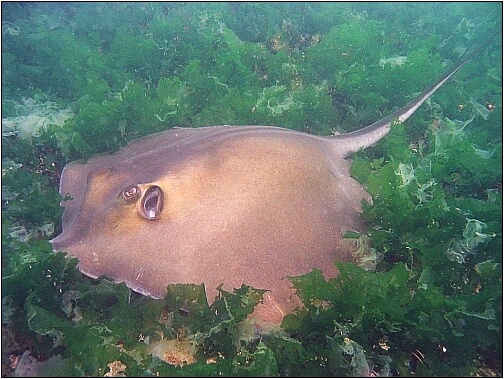
The Common Stingray is another interesting marine creature one might see in the waters around Tenerife. They are common in coastal tropical and subtropical waters but are becoming progressively more threatened by overfishing and climate change. They are flat, grey/brown, and have broad bodies. Their mouths are located on the ventral, or bottom, side and have modified placoid scales for teeth.
Lizard Fish
Interesting fact: Lizard fish have mottled patterns that perfectly mimic the seabed

Lizard Fish are aptly named for their somewhat lizard-like heads. These small, slender fish are typically grey, with a mottled pattern of white and black splotches that extends onto their heads. This camouflage allows them to blend seamlessly into the sandy seafloor of their tropical and subtropical coastal habitats. Don’t be fooled by their small size, though. Lizard Fish are equipped with numerous sharp teeth, some even located on their tongues.
Angelshark
Interesting fact: Angelsharks are one of the few sharks that can breathe without having to swim

Tenerife’s waters offer a rare glimpse of the critically endangered Angelshark, a unique shark with a flattened body resembling a ray. Once common throughout the Northeast Atlantic, these creatures have been decimated by industrial fishing practices, with the Canary Islands now serving as one of their last strongholds. They camouflage themselves in the seabed by day and become more active at night, sometimes even congregating in large groups.
Byrde’s Whale
Interesting fact: Bryde’s whale is known as the ‘tropical whale’ as they do not live in cold waters
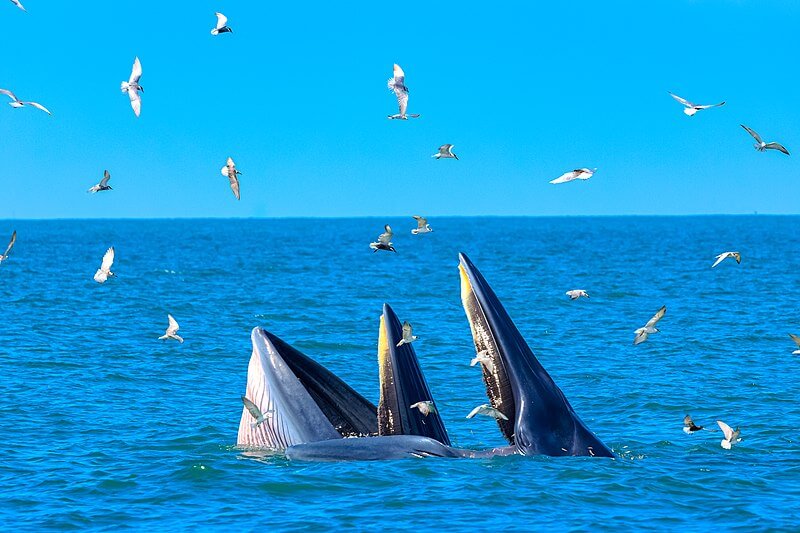
Tenerife’s waters offer a unique opportunity to witness Bryde’s Whales, a type of baleen whale that can reach up to 49 feet long (15 m). These gentle giants, identifiable by their two blowholes and rows of baleen plates, are often spotted during whale watching excursions in the Teno-Rasca Marine Protected Area. These whales feed near the surface, joining forces with dolphins and seabirds in a competition for food.
Common Dolphin
Interesting fact: Common dolphins were the first dolphins to be described by Aristotle and Pliny the Elder
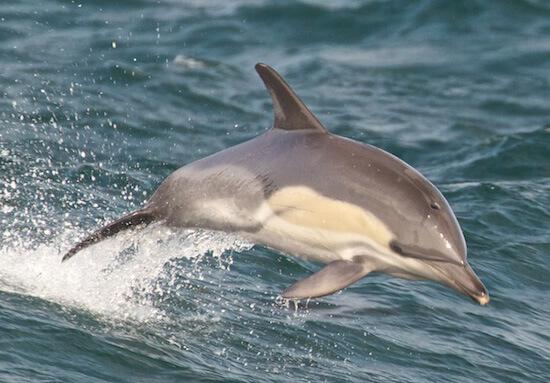
The waters around Tenerife offer a fantastic opportunity to encounter the playful Common Dolphin. They are easily identified by their dark backs, light bellies, and distinctive hourglass patterns. As the only member of the genus Delphinus, they prefer areas with strong currents and can travel incredible distances, often in pursuit of schools of fish like herring, sardines, and anchovies. Highly social animals, Common Dolphins are rarely seen alone, demonstrating their cooperative nature as they travel and hunt together.
Parrotfish
Interesting fact: Parrotfish have a bird-like beak to help scrap off algae from hard surfaces like rocks

Parrotfish are a diverse group of around 90 species found in the Indo-Pacific region, including the waters around Tenerife and the Canary Islands. These fish are commonly associated with coral reefs and are known for their vibrant colors, which change throughout their life cycle. Parrotfish range in size from a few inches to several feet long. Their name comes from their tightly packed teeth, which form a beak-like structure on the outer surface of their jaws.
Short-Finned Pilot Whale
Interesting fact: Short-Finned Pilot Whales form pods of between 25-50 individuals
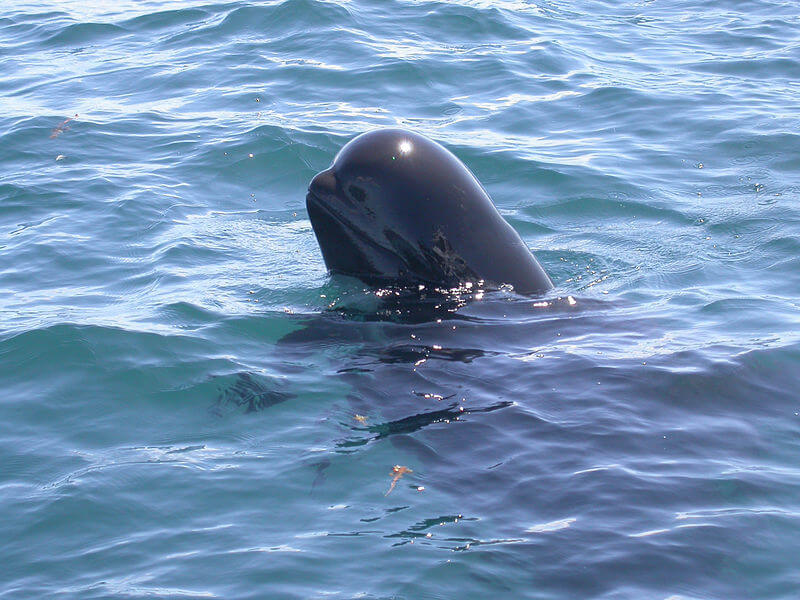
The Canary Islands, and particularly Tenerife, offer a unique opportunity to encounter the Short-finned Pilot Whale. These social creatures, with their distinctive stocky build and bulbous heads, are actually dolphins closely related to killer whales! Tenerife boasts one of the few resident pilot whale populations in the world, with over 400 individuals identified in its southern waters. Known for their playful behavior, these speedy swimmers hold the record for swimming speed at depth, reaching up to 9 meters per second.
Basking Shark
Interesting fact: Basking sharks are the second largest fish in the ocean

The Basking Shark is the second-largest living shark after the Whale Shark. These gentle giants, reaching lengths of up to 26 feet, are often spotted in the temperate waters around Tenerife. Their grey-brown, mottled skin and distinctively large mouths make them easily recognizable. As filter feeders, they glide through the water with their mouths wide open, straining plankton and small organisms through specialized gill rakers. Their name comes from their tendency to swim near the surface, seemingly basking in the sunlight.
Common Smooth-Hound Shark
Interesting fact: Common Smooth-Hound Sharks are viviparous meaning they give birth to live young

The waters around Tenerife are home to the Common Smooth-Hound shark, a slender species often found near the surface. This grey-brown shark, with its lighter underside, is sadly listed as “Endangered” by the IUCN. In the Canary Islands, known locally as “cazón,” it has a long history of being fished and consumed in the region. While not currently protected, there are concerns about the sustainability of its fishery due to the overall decline of coastal fish populations in the Canary Islands.
Hammerhead Shark
Interesting fact: The shape of the Hammerhead Shark’s head improves vision, helping them to catch fast-moving prey
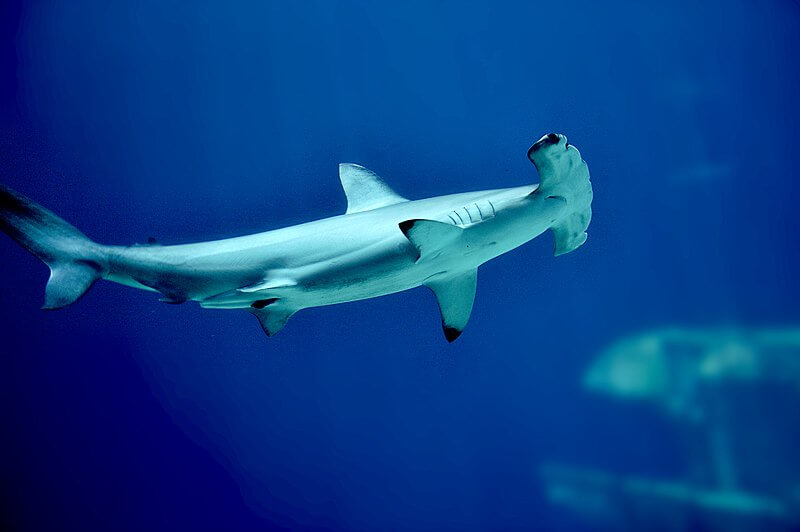
With their distinctively shaped heads, Hammerhead Sharks are a captivating sight in the waters around the Canary Islands. These sharks, belonging to the family Sphyrnidae, are often found along coastlines and continental shelves. While they often gather in schools during the day, they become solitary hunters at night, seeking out their prey in the depths.
Ocean Insights: Hear From Our Experts

By Dr. Rabiah Ryklief
Principal Scientist and Lecturer of Marine Science, with a PhD in Zoology
Tenerife has published the first citizen's guide to climate change in the Canary Islands, aiming to raise awareness and encourage action. The guide highlights that while residents are largely aware of climate change, the islands, especially Tenerife and Gran Canaria, contribute significantly to global emissions due to their reliance on fossil fuels and a tourism industry that consumes resources beyond the islands' sustainable capacity. By providing practical advice on energy conservation, sustainable transport, and responsible consumption, the guide empowers citizens to make informed choices and contribute to a more sustainable future for Tenerife.
FAQs
Are there any sharks in Tenerife?
Yes, there are a few types of sharks around Tenerife. These include the basking shark, hammerhead shark and the angelshark.
Can you dive in Tenerife?
Tenerife, located on the Atlantic Ocean, is a fantastic diving destination with numerous dive sites along the coast. Tourists can encounter different species like the colorful Blue-fin Damselfish and the Emerald Wrasse while exploring the underwater world. Many dive sites are accessible from the shore or in shallower waters, making it ideal for beginners and snorkelers. For experienced divers, Tenerife offers deeper sites with impressive lava rock formations.
Which cetaceans are found in Tenerife?
Tenerife’s waters are a haven for cetaceans, with resident species like bottlenose dolphins and Tropical Calderon whales frequently encountered. Sporadic visitors include spotted, rough-toothed, and striped dolphins, Bryde’s whales, grey Calderon whales, and sperm whales. Seasonally, short-snouted common dolphins, fin whales, northern minke whales, and false killer whales migrate through the area. Though rare, Tenerife also hosts Zifio de Blainville, Cuvier’s beaked whale, Gervais beaked whales, pygmy sperm whales, Fraser’s dolphins, blue whales, humpback whales, minke whales, and orcas.


