

In the cold, crushing depths of the ocean lives the anglerfish, a creature as fascinating as it is fearsome. There are more than 200 species of anglerfish distributed throughout the world. But, primarily, they live in the depths of the Atlantic and Antarctic oceans.
They are generally small fish, with males rarely growing larger than one foot in length and females sometimes reaching 3.3 feet long.
Read on to learn more about the captivating world of the anglerfish, where beauty and terror intertwine in the most unexpected ways.
Appearance
The anglerfish belonging to the order lophiiformes is one of the easiest fish to recognize. This is mostly because the fish is commonly featured in underwater documentaries and depictions of deep-sea fish. These fish are normally dark brown to grey and have large heads and mouths with sharp, see-through teeth.
The skin is typically loose and flabby, sometimes covered in small spines or fleshy projections called cirri. Males are smaller, usually less than a foot long and females can reach 3.3 feet in length.

Anglerfish have a unique way of breathing. They extract oxygen from water that flows over their gills, but because they live in the deep sea where oxygen levels are low, they have evolved to have large gill surfaces and blood vessels.
As an adaptation to the darkness of their environment, female anglerfish possess a modified dorsal spine extending outward like a fishing pole. The tip of this spine harbors a bioluminescent lure, luring prey closer in the vast, lightless depths.
The light produced by the anglerfish’s lure can be blue, green, or yellow, depending on the species and the type of bacteria living inside the lure.
Depending on the species, anglerfish may have additional dorsal fins along their backs. These are typically smaller and less prominent than the modified lure-bearing spine. Pectoral fins, located on the sides of the body, are often large and fan-like in many anglerfish.

Species
Anglerfish are divided into four groups: batfish, goosefish, frogfish, and deep-sea angler. Each group has unique adaptations that allow them to thrive in their respective environments.
1. Batfish

- Batfish are flattened, bottom-dwelling anglerfish with a triangular body shape, often resembling a walking bat.
- They use their modified pectoral fins to “walk” across the ocean floor rather than swim, making them slow, deliberate movers.
- These fish are typically found in tropical and subtropical waters and often inhabit sandy or muddy bottoms.
2. Goosefish
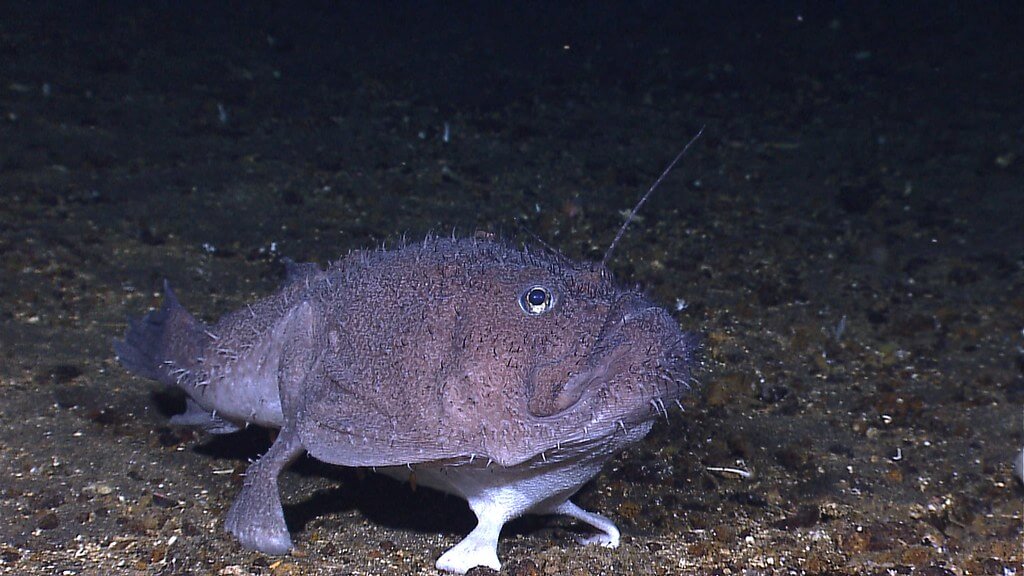
- Goosefish are large, bottom-dwelling anglerfish known for their wide, flat bodies and enormous mouths.
- They are powerful ambush predators that lie camouflaged on the seafloor, waiting for prey to swim close before striking with incredible speed.
- Found in both deep and shallow waters, goosefish are commercially significant in some regions, where they are also called monkfish.
3. Frogfish
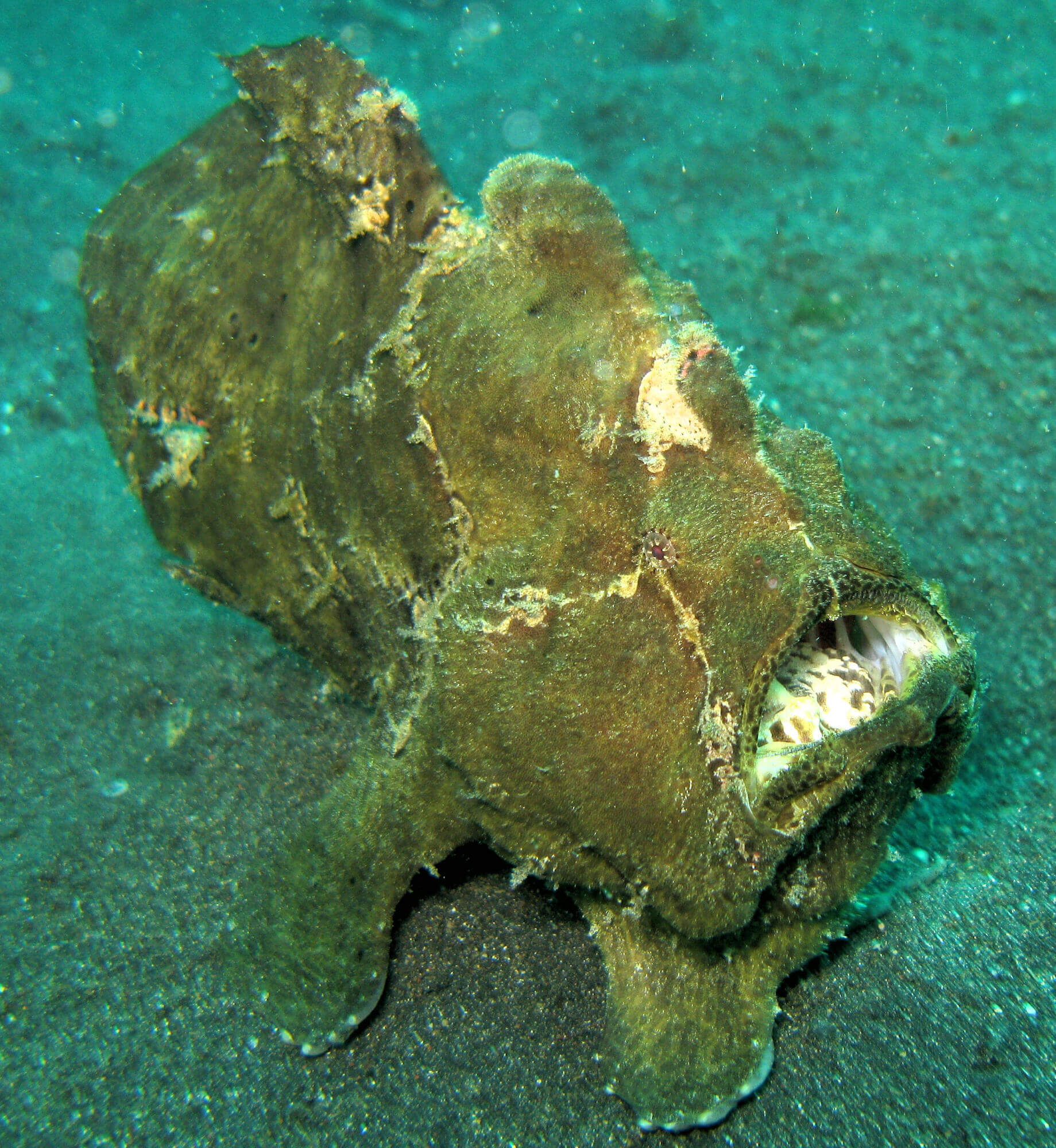
- Frogfish are small, stocky anglerfish with textured, camouflaged bodies that mimic their surroundings, such as coral or sponges.
- They use a specialized lure (illicium) on their heads to attract prey, then strike with lightning-fast precision.
- Frogfish are primarily found in shallow tropical and subtropical waters and are often popular in marine aquariums due to their unusual appearance.
4. Deep-Sea Anglerfish
- Deep-sea anglerfish are perhaps the most famous group, known for their bioluminescent lures that glow in the darkness of the ocean’s abyss.
- Unlike other anglerfish, deep-sea varieties lack pelvic fins and have a less-developed swimming ability, which makes them feeble swimmers. Instead of actively pursuing prey, they rely on their lure to attract fish in the dark.
- They inhabit depths of up to 3,000 meters (10,000 feet), where food is scarce and survival requires patience and adaptation.
Each group of anglerfish has evolved specific adaptations—whether it’s the ability to “walk” on the ocean floor, camouflage, or emit light—that allow them to dominate their niche in the marine ecosystem. These differences highlight the incredible diversity within the anglerfish family.
Habitat
These fish are found around the world. There are about 320 species of anglerfish, some are benthic, meaning that they live near the ocean floor, in the deep sea, while others are pelagic and live farther away from the ocean floor.
Mainly, these fish live in the depths of the Atlantic and Antarctic Oceans, up to around a mile below the surface. It can also be found in the coastal waters of Europe and in more shallow, tropical environments.

Diet
Anglerfish eat live and dead prey that sink to the seafloor, such as squid, turtles, and more. They are not picky eaters, but all anglerfish are carnivores. They will usually eat whatever they come upon. The female, in particular, is capable of eating larger prey. Other prey include shrimp, fish, snails, and crustaceans.
When males reach adulthood, their digestive systems no longer work. Once the males latch on to females (described in the reproductive section below), they are dependent on the female’s food intact to survive. Whatever nutrition she takes in is transferred to the male.
Anglerfish can expand their jaw and stomach, allowing them to eat more than twice their size. They’re also capable of storing food for a prolonged period of time. This is quite beneficial, considering that, at times, prey can be rare.
Reproduction
These interesting fish employ an unusual mating method.
Young, free-swimming tiny males encounter a female and latch onto her with their sharp teeth. Over time, the male physically fuses with the female, connecting to her skin and bloodstream. It loses his eyes and all his internal organs except the testes. A female will carry six or more males on her body.
The female releases her eggs into the deep water column, and the male immediately releases his sperm, which locate and fertilize the eggs.
Threats
Anglerfish are threatened on several different fronts. One species, in particular, is listed by the ICES as “outside safe biological limits” due to human causes and climate change.
Some anglerfish are of commercial interest everywhere, from Western Europe to East Asia. The tail of the fish (of the genus Lophius) is known as monkfish or goosefish, according to All the Sea. The liver is known as animo in Japan and Korea and is considered a delicacy.

The fish’s meat is also sometimes included in other dishes as well. But, it is not a fish that commercial fishermen around the world commonly seek. The deep sea anglerfish faces very few to no threats from human beings.
6 More Facts About Anglerfish
- The anglerfish’s lure isn’t just a light; it can wiggle and flash in different patterns, like a tiny disco ball, to attract curious prey.
- The glowing lure of the anglerfish is filled with bacteria that produce light through a chemical reaction.
- Female anglerfish can carry six times more eggs than other fish their size.
- The teeth of an anglerfish are shaped like fangs and are angled inward. This makes it nearly impossible for their prey to escape once caught.
- The liver of an anglerfish takes up a large part of its body and plays a crucial role in maintaining buoyancy.
- The anglerfish’s skin is so dark and rough that it often looks like rock or coral, helping it blend into its surroundings.
- In some species of anglerfish, the females can be up to 60 times larger than the males.
FAQs
Do anglerfish bite humans?
Angler fish do not bite humans. They are too small, and they live deep within the ocean. This means that encounters between humans and these fish are very rare.
Do anglerfish live in coral reefs?
Some species live in coral reefs, while others live at remarkable depths, up to a mile beneath the ocean surface. Like most marine creatures, anglerfish tend to congregate where there is the most prey. This is difficult for the species that live a considerable distance underwater where there is little prey.
How long does an anglerfish live?
Female anglerfish usually live longer than males. Females live around twenty-five years, while males live for around twenty-one years.
Can anglerfish be pets?
Some varieties of anglerfish are fine to keep as pets. These are the species that live in shallower waters. But they do have to be kept in saltwater tanks.


