

The Batfish, also known as Ogcocephalid Anglerfish, is one creature inhabiting our oceans that stands out with its peculiar appearance and fascinating behavior. There are about 60 recognized species of Batfish. They are also commonly called deep-sea batfishes, handfishes, and seabats. These intriguing creatures are found in tropical and subtropical oceans worldwide, often lurking in the depths waiting for their next meal.
Physical Appearance
The Batfish is an unusual fish characterized by its peculiar physical features. There are several species of Batfish, each with its distinct appearance, but they all share certain common characteristics:
- Flat bodies and boxy heads: Batfish have bodies that are flattened from top to bottom, similar to a ray. Their bodies are often described as disc-like or triangular with large box-shaped heads. Some species have an elongated, upturned snout that adds to their unusual appearance.
- Hard and lumpy skin: Batfish have skin that is covered in hard lumps, spines, or tubercles, which can vary in size and shape. Some species have scales that form armor-like plates. They often have muted colors, such as brown, grey, or tan, which help them blend in with the seafloor. However, some Batfish species are brightly colored like red and orange.
- Limb-like fins: Batfish have pectoral and pelvic fins that are modified and thickened, resembling limbs. These fins are used for walking on the seabed as Batfish are poor swimmers.
Most Batfishes are relatively small, typically growing up to 36 cm (14 inches) in length, although some species can reach 50 cm (20 inches).
Batfish Species
Batfishes belong to the family Ogcocephalidae. Some of the known species of batfish include:
- Red-lipped Batfish (Ogcocephalus darwini): Found around the Galapagos Islands, this species is famous for its bright red lips and ability to “walk” on the ocean floor using its pectoral fins.

- Polka-dot Batfish (Ogcocephalus radiatus): Commonly found in the western Atlantic, including areas from North Carolina to the Gulf of Mexico, characterized by its spotted appearance.
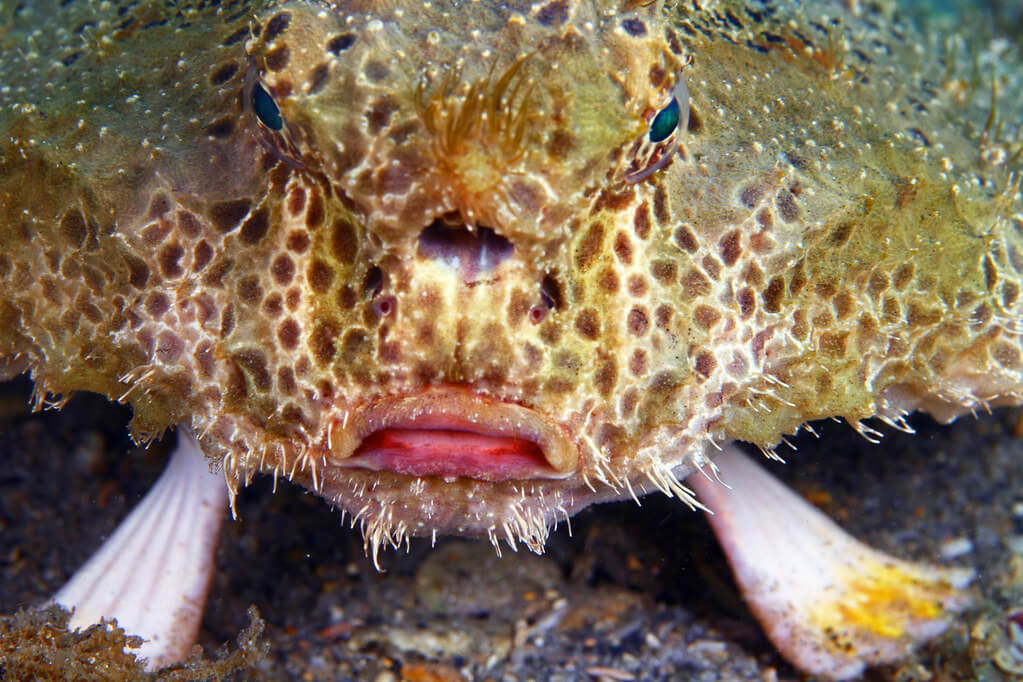
- Starry handfish (Halieutaea stellata): Found in both the Atlantic and Pacific Oceans, it is known for its star-like spots covering its body.
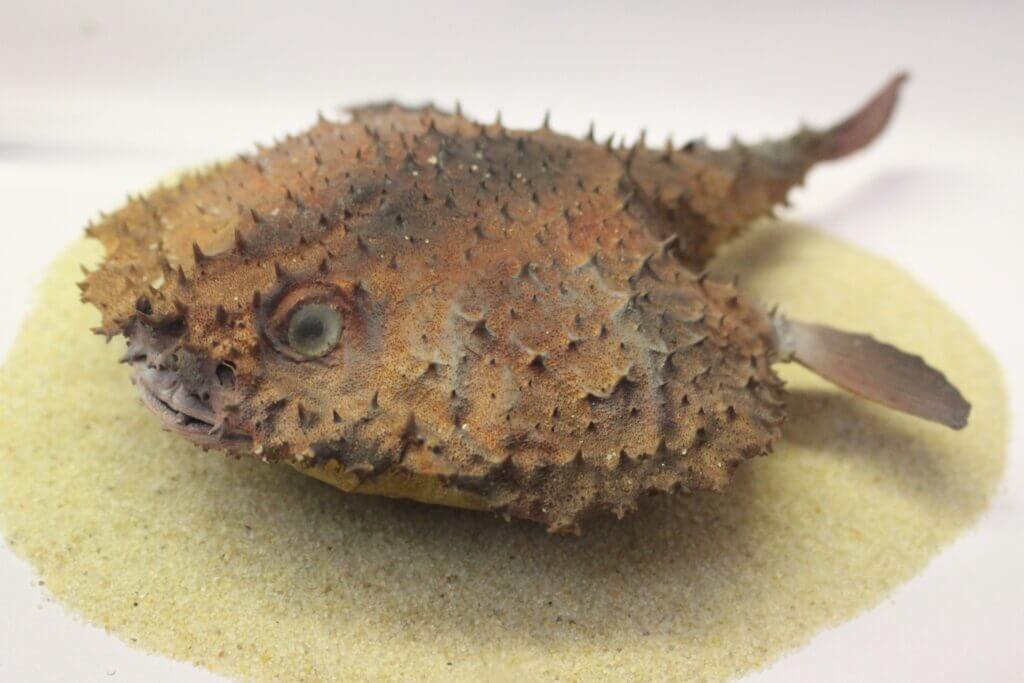
- Longnose Batfish (Ogcocephalus corniger): This species inhabits the western Atlantic Ocean and is noted for its elongated snout.
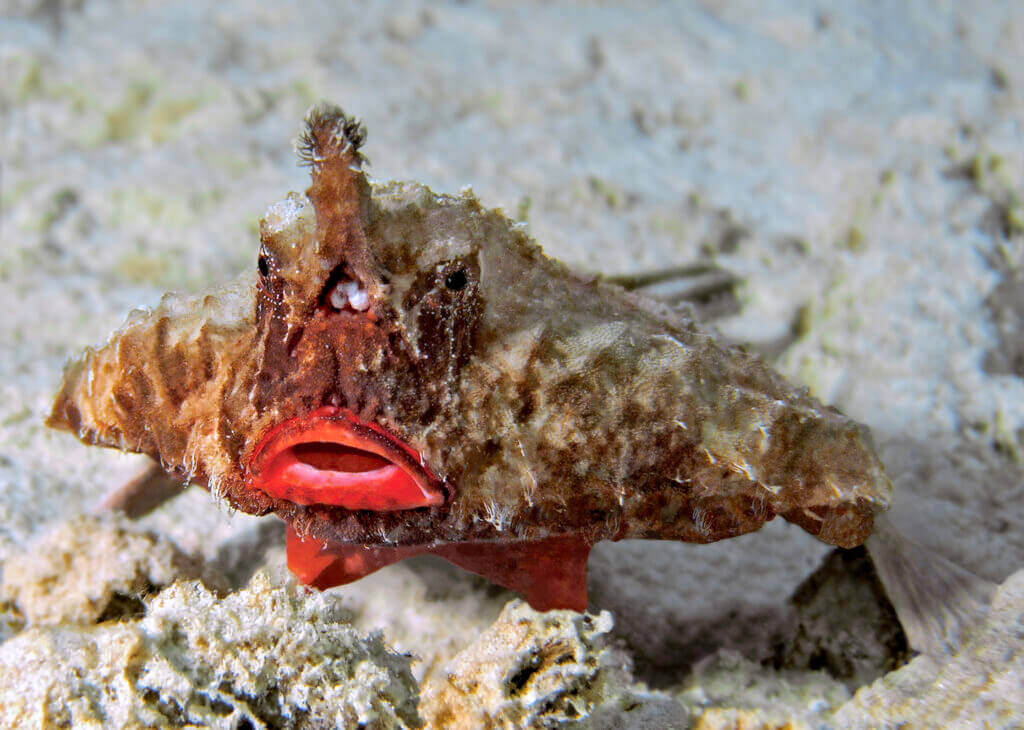
- Roughback Batfish (Ogcocephalus parvus): Often found along the coast of the Atlantic Ocean, from North Carolina, US, to Brazil.
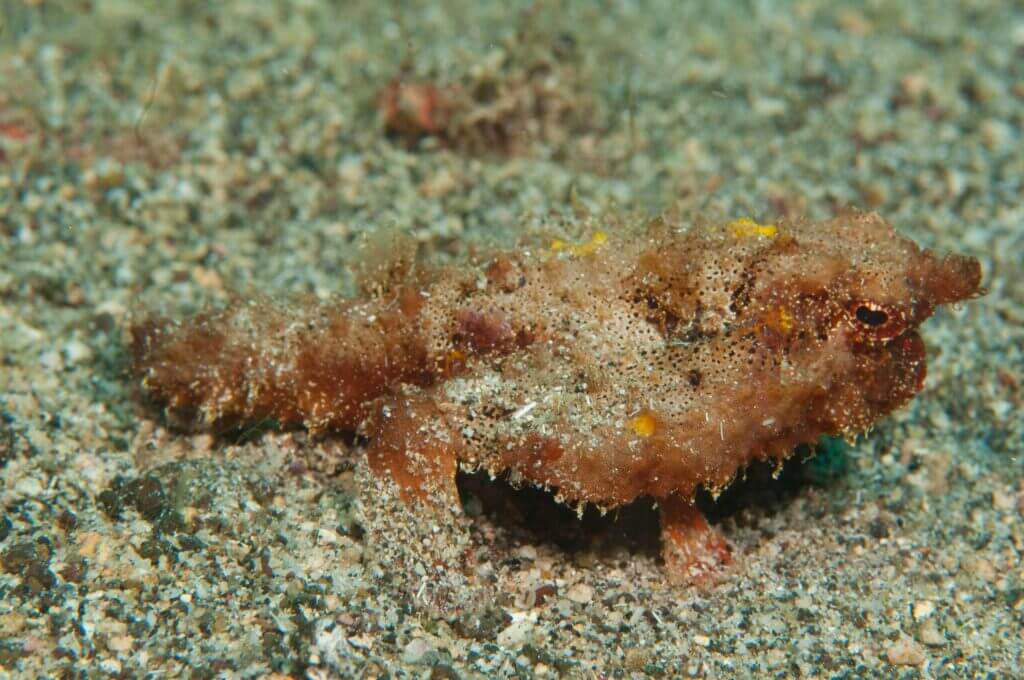
- Shortnose Batfish (Ogcocephalus nasutus): Typically found in the Western Atlantic and the Caribbean.

Habitat
Batfish are primarily found in tropical and subtropical waters, inhabiting the Indian, Pacific, and Western Atlantic Oceans.
Batfish distribution spans from shallow coastal waters to depths of up to 4,000 meters, with the majority of species residing on the outer continental shelf and continental slope.
Some species, however, venture into shallower waters and have even been found in river estuaries. The Batfish is a bottom-dweller, preferring to dwell on the seafloor, where they use their unique morphology to crawl along the substrate and blend in with their surroundings.
Diet and Feeding Behavior
The Batfish has a versatile and opportunistic feeding behavior, which plays a crucial role in its survival within its underwater habitat.
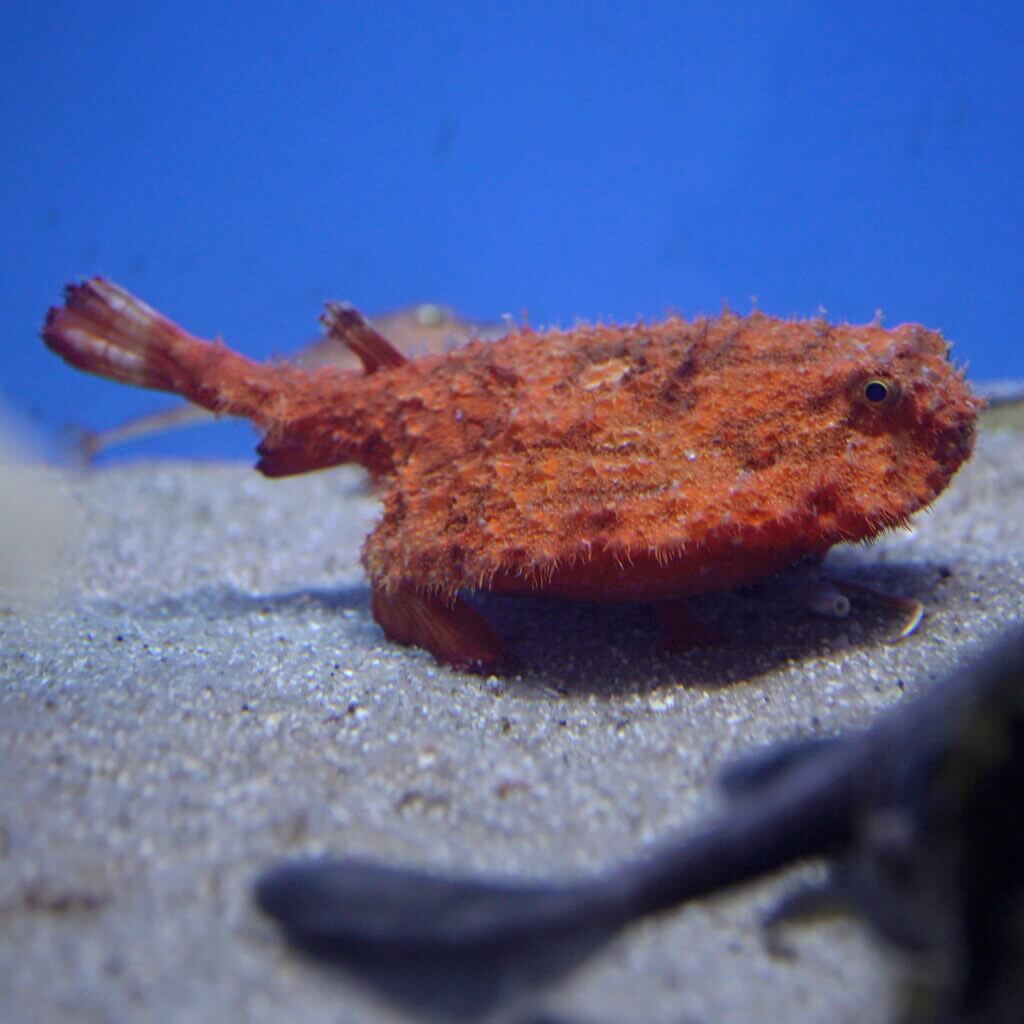
Batfish prey on small fish and invertebrates, including crustaceans such as crabs and shrimp, and polychaete worms.
They employ a unique feeding strategy, using a chemical lure secreted from their esca (a modified dorsal fin ray) to attract unsuspecting prey.
Instead of actively hunting, Batfish often lie in wait on the seafloor. They camouflage their appearance and patiently waiting for their next meal to be drawn in by the irresistible scent of their lure. Once prey is close enough, the Batfish strikes with a lightning-fast gulp, engulfing their meal whole.
Reproduction
Relatively little is known about Batfish reproduction compared to other fish species. It is believed that Batfish do not guard their eggs after spawning. Batfish larvae and postlarvae are thought to be pelagic, meaning they drift freely in the open ocean.
The specific details of their mating rituals and spawning behavior remain largely a mystery, as much of their life cycle takes place in the deep sea, making direct observation challenging. Further research is needed to shed light on the reproductive habits of these enigmatic creatures.
Threats and Conservation
While specific threats to Batfish conservation are not extensively documented, they likely face similar challenges as other deep-sea species. Deep-sea trawling, a fishing method that involves dragging nets across the seafloor, poses a significant threat to their habitat, as it can destroy fragile ecosystems and disrupt Batfish populations. Additionally, Batfish may be susceptible to bycatch, the accidental capture of non-target species in fishing gear.
As with many deep-sea organisms, the lack of research and data on Batfish populations makes it difficult to assess their conservation status accurately and develop effective conservation strategies.
More Facts About the Batfish
- They use a unique chemical lure to attract prey, rather than the bioluminescent lures of some other anglerfish.
- They are not targeted by fisheries but are occasionally kept in aquariums.
- Their modified fins allow them to “walk” on the seafloor rather than swim efficiently.
- Batfish have no known predators.
- They belong to the anglerfish family, known for their unique luring mechanisms.
FAQs
Is a Batfish an Anglerfish?
The Batfish is a type of Anglerfish. Like other Anglerfish, they have a unique “fishing pole” apparatus, called an illicium, tipped with a fleshy bait to lure prey. However, unlike other Anglerfish, the Batfish’s illicium can be retracted into a recess when not in use.
Why do Red-lipped Batfish have red lips?
The exact reason why Red-lipped Batfish have red lips is still unknown. There are a few hypotheses, including attract potential mates during spawning season or to help individuals identify others of their own species in the vastness of the ocean.
Are Batfish rare?
Batfish are not considered rare. They are common bottom-dwelling species found near the coastal shelf. They are often caught as bycatch in shrimp trawling nets due to the bottom-dragging nature of these fishing methods.
Can Batfish swim?
Batfish can swim, but they are not strong swimmers. They prefer to use their modified pectoral and pelvic fins, which resemble legs, to walk along the seafloor. However, they are capable of swimming if needed, though it may appear awkward and inefficient.
Do Batfish have scales?
While Batfish do not have typical fish scales, their bodies are covered in modified scales called tubercles. These tubercles can vary in appearance, from small wart-like bumps to large, bony plates. In some species, like the Polka-dot Batfish, these tubercles may function as a form of skin protection in the absence of traditional scales. Other species, like the Red-lipped Batfish, have bony scales on their underside and a tail covered in small thorns.


