One of the most unusual-looking fish that live in the extreme depths of the oceans is the Viperfish. The Viperfish is any fish species in the family Stomiidae and genus Chauliodus. Within this family, there are various types of deep-sea fish including its relative, the Dragonfish.
Because of the extreme depth of their habitat, there is little that is known about the Viperfish. However, it is only natural that this monstrous-looking deep ocean fish has a range of adaptations that make it a formidable occupant of the ocean’s depths.
Appearance
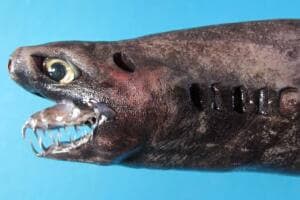
A Viperfish has an elongated body, which can grow up to 30 centimeters in length. Their hinged lower jaws and needle-like teeth only add to their striking appearance. The teeth are so gigantic to the point that they don’t fit in their mouths. The lower jaw has to extend to accommodate the teeth outside of the mouth.
In fact, their name is derived from the long fangs protruding from their lower and upper jaws. This adaptation is used during their hunt to grip their prey firmly and allows them to swallow larger prey seamlessly.

Another notable characteristic is the bioluminescent organs along their sides and belly. This helps to attract and direct unsuspecting prey towards their mouths. They also use their bioluminescence to avoid predators through counter-illumination. To do this, Viperfish essentially match the light patterns in the waters around them.
Unlike other fish, they do not have a swim bladder. Instead, Viperfish use the acidic glycosaminoglycans in their gelatinous tissue as a buoyancy mechanism. Viperfish also do not have any scales, instead covered by a thick, transparent slime.
Other Members of the Genus Chauliodus
The genus Chauliodus includes several species of viperfish, which are known for their predatory behavior and distinctive appearance characterized by large teeth and bioluminescent organs. Some of the notable members of this genus include:
- Chauliodus sloani – Sloan’s viperfish, the most commonly known species.
- Chauliodus danae – Dana viperfish.
- Chauliodus macouni – Pacific viperfish.
- Chauliodus pammelas – A lesser-known species with limited distribution.
Habitat
Viperfish occur worldwide in tropical and temperate waters within the mesopelagic and bathypelagic zones, ranging from depths of 200 meters (656 feet) to well over 1,000 meters (3,280 feet) below the ocean’s surface.

The maximum depth at which Viperfish can be found depends on the temperature of the water, with their natural adaptations enabling them to survive in temperatures of 12°C – 15°C.
These deep-sea predators have been observed in high densities within submarine calderas like the Kurose Hole, which boasts the world’s highest-known concentration of Viperfish.
Diet
Viperfish are voracious nocturnal eaters, feeding on a range of prey that dare cross their path. Depending on the species, Viperfish consume deep-sea organisms such as:
- Crustaceans
- Copepods
- Shrimp
- Krill
- Other fish like bristlemouths and lanternfish
The Viperfish are fearsome predators with an extremely quick, sharp strike that instantly captures and devours any meal that comes close. This relatively small animal has a low basal metabolic rate and doesn’t need to feed every night.
Adaptations for Deep-Sea Life
Survival in deep, dark, cold waters can only be achieved through some specialized adaptations. The Viperfish uses adaptations to thrive in unfavorable conditions.
- Hinged Skull: The hinge of their skull allows them to open their jaws upward and suck in the prey. In this way, the large prey cannot escape them. They also have large stomachs, allowing them to consume and store large quantities of food when available.
- Shock Absorber: The Viperfish uses the elastic joint connecting the head to the first vertebra as an adaptation mechanism to avoid sudden pressures as they transition through various depths. This functions as a cushion, shielding their vulnerable internal organs.
- Bioluminescence: A characteristic feature of these creatures is their bioluminescent photophores, a light-producing organ, which helps them attract prey and potential mates, and to avoid predators.
- Fang-Like Teeth: The unusually large teeth of the Viperfish extend to help them during hunting and to grab hold of its prey.

Reproduction
Viperfish traverse unexplored areas of the ocean, even by humans. Research surveys rarely capture specimens like mature adults, and deep-sea fish reproductive habits of the Viperfish in general is understudied. Scientists assume that Viperfish are external spawners similar to Dragonfish in which the female releases eggs into the water for fertilization by males. Once eggs reach maturity, they hatch into large numbers of young larvae that are about 6 millimeters (a quarter of an inch) in size.
The discovery of two Chauliodus macouni eggs in the Columbia River, Oregon, suggests a potentially extended incubation period for Viperfish eggs. These eggs were likely carried far from their origin by strong Pacific currents.
Threats
While Viperfish are not specifically targeted by commercial fisheries, they can become entangled in catches of deep water trawlers as bycatch. Several species are affected by this incidental capture, but the lack of data makes it impossible to determine if this is causing population declines or impacting their overall conservation status.
Viperfish are prey to some species of dolphins and sharks.

Facts About Viperfish
- They live mainly in the mesopelagic and bathypelagic zones, where there is very little or no daylight.
- They have bioluminescent organs for attracting prey and avoiding predators.
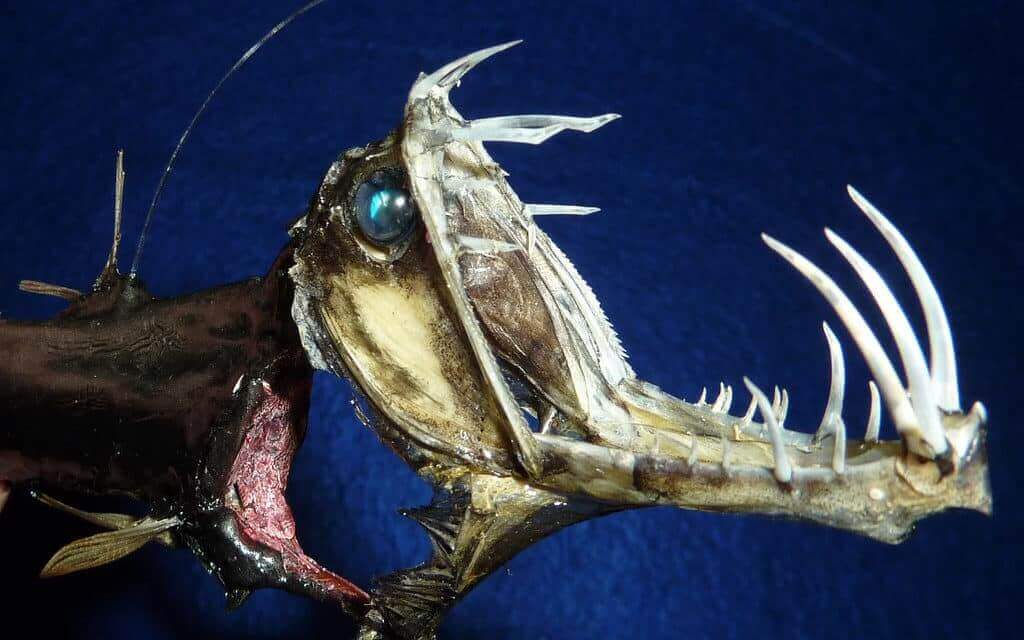
- The Viperfish is named after its long, fang-like teeth, similar to the fangs of snakes and vipers.
- They can be found in high densities in submarine calderas.
- Viperfish have special gas-filled swim bladders, which allow it to maintain buoyancy at various depth ranges.
FAQs
Are Viperfish aggressive?
Because of the extreme depths of their habitats, Viperfish hardly come in contact with humans. It is uncertain whether they are aggressive or not.
How do Viperfish defend themselves?
Viperfish aren’t known for defensive tactics, but rather for their offensive adaptations that make them one of the fiercest predators of the deep. They possess sharp teeth that they use to impale prey by swimming at high speeds. Additionally, the first vertebra behind their head acts as a shock absorber, protecting their brain during these high-impact attacks.
How big do Viperfish get?
Typically, the Viperfish grows up to a length of between 12 and 24 inches (30-60 cm), but can very occasionally attain over 24 inches (60 cm).
Are Viperfish nocturnal?
Viperfish are primarily nocturnal. Both Pacific Viperfish and Sloane’s Viperfish exhibit vertical migration patterns. These Viperfish typically ascend to shallower surface waters at night to feed, some individuals may remain in the ocean’s depths if they have recently eaten. This behavior demonstrates their nocturnal feeding habits and adaptability in the deep-sea environment.