

Spanning the narrow Palk Strait between India and Sri Lanka, Adam’s Bridge has long fascinated historians, scientists, and explorers. Also known as Rama’s Bridge or Rama Setu, this unique geological formation has created a long-lasting debate about its true origin.
Whether the sand bridge was created through a long natural process, or by ancient engineering tactics in the name of love, it is no less marveling to see and holds both historical and modern-day cultural, environmental, and economic significance.
Adam’s Bridge: The World’s Largest Tombolo
Adam’s Bridge is a chain of limestone shoals stretching over 30 miles (48 kilometers) between the southern coast of India and the northern coast of Sri Lanka.
This “bridge” comprises a series of sandbanks, islets, and reefs that have built up over thousands of years through various processes occurring in the Palk Strait.
Geographic evidence shows that this tombolo once connected the two land masses; however, this is no longer the case.
This once bridge is now a chain of coral islands and shoals darted across the stretch between India’s Pamban Island and Sri Lanka’s Mannar Island.

This geographical feature is classified as a Tombolo, as it connects an island to the mainland.
Although time and weather conditions have eroded much of the sandbar, it was once possible to walk across the sandbar and travel between Sri Lanka and India.
That said, rising sea levels and erosion have made navigation through this former land connection and its surroundings a challenge for the maritime industry.
How Was Adam’s Bridge Formed?
The formation of Adam’s Bridge has been a long-lasting debate between scholars and historians and continues to create controversy.
The Science Perspective
From a purely scientific side, geologists attribute the origin of the bridge to a combination of natural processes, some of which would include sediment deposition, wave action, changing sea levels, ocean currents, and storms that have pushed sediment along the coastline.
Cultural Beliefs
That said, religious and cultural beliefs hold a very different take on the origin of Adam’s Bridge, which is without a doubt more exciting than the usually natural process that leads to tombolos.
According to Hindu belief and, the Adam’s Bridge is a divine creation by Lord Rama and his army of vanaras (monkey warriors, or forest-dwelling people).
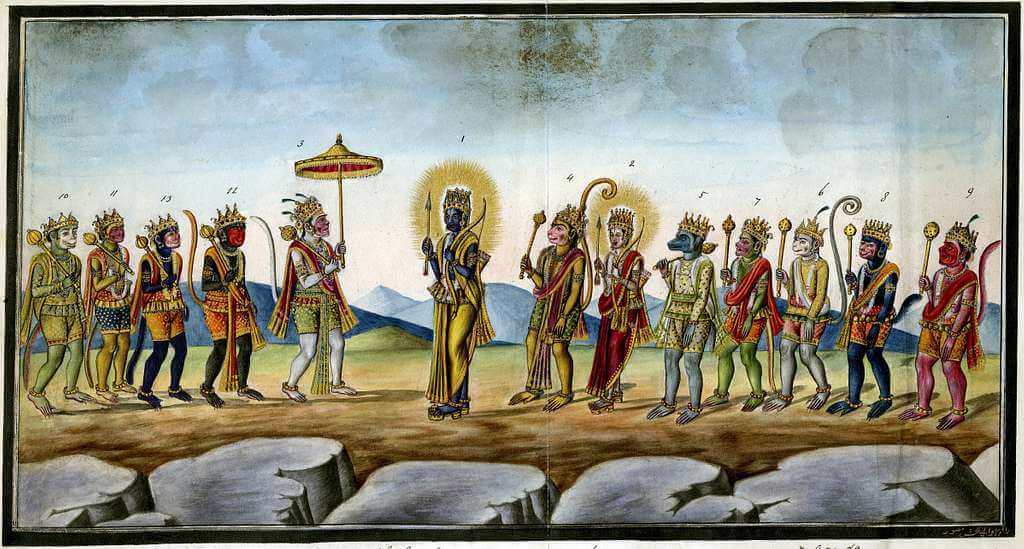
According to Hindu mythology, the epic Ramayana, the wife of the god Rama, was kidnapped and held on the island of Lanka (now known as Sri Lanka) by the demon king Ravana (the multi-headed rakshasa king of Lanka).
To rescue his wife, Sita, it is said that Rama and his vanarian army brought thousands of stones to the shoreline of India, where they were placed in the ocean, forming the bridge that connects Sri Lanka to mainland India.
Historical Significance
Throughout history, Adam’s Bridge has served as a cultural link between India and Sri Lanka.
Through various historical writings, both religious and cultural, as well as scholarly based, we can find recordings of a land connection between Sri Lanka and India.

This connection served as an essential bridge for those wishing to trade, migrate, or share cultural beliefs and understandings.
Through the colonial era, the tombolo became a strategic landmark for those navigating through the straight.
Through time, Adam’s Bridge has been documented by both explorers and cartographers as a key structure.
Economical Significance
The historical significance of Adam’s Bridge has changed greatly over time. This is mostly due to rising sea levels and erosion that have left the once walkable bridge into patches of shoals, small islands, and narrow sand banks.
When the Bridge could be used to move between the two landmasses, it was used for the trade of spices, cloth, and other valuable resources.
Today, with spotted islands leaving navigation of the area difficult, its economic value has changed.
It is argued that the development of infrastructure and a shipping canal through the bridge could enhance connectivity between India and Sri Lanka. This, in turn, could facilitate trade, tourism, and greater integration between the two cultures.
That said, there are various environmental concerns surrounding the development of the area.
Furthermore, navigational hazards and high production costs have kept any development at bay.
As it stands, Adam’s Bridge has little to no economic value apart from mild tourism and scientific research.
Environmental Significance
Nestled in the Adam’s Brdige Marine National Park, the reefs, shoals, and sandbanks that make up Adam’s Brdige are teeming with life and biodiversity.
The shallow waters surrounding the bridge serve as breeding grounds for marine life, including fish, crustaceans, and sea turtles.
Large areas of healthy sea grass have also brought with them a dugong population, which can be found grazing on the shallow banks of the tombolo.
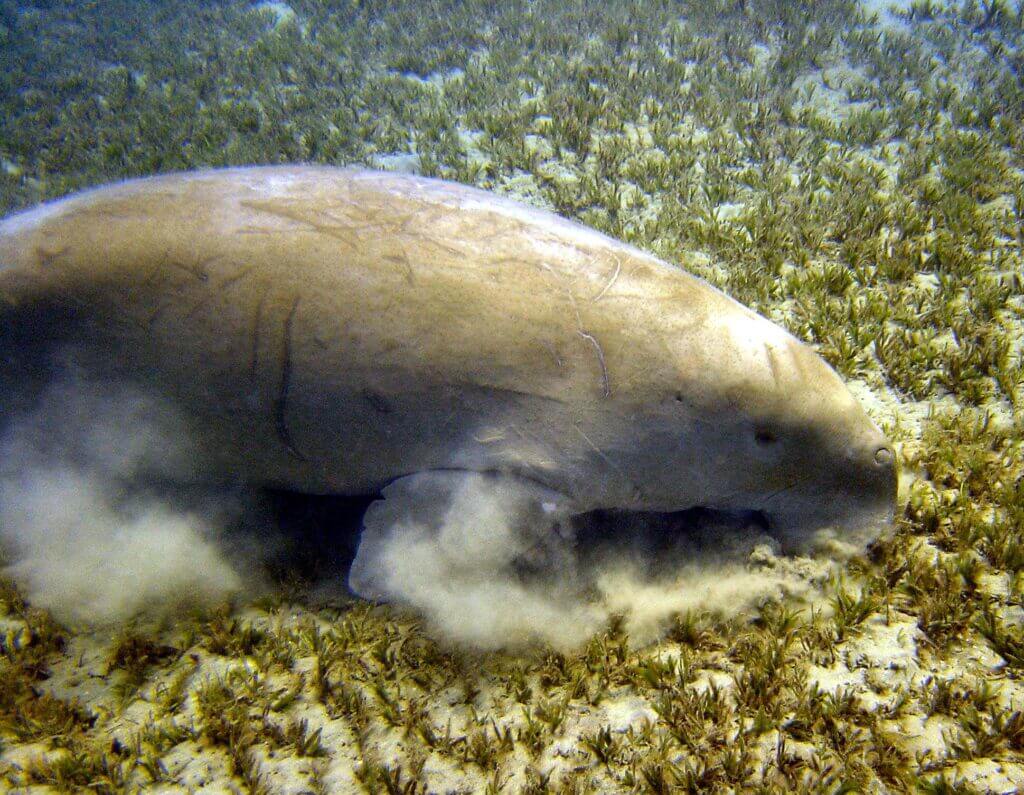
Mangroves and coral reefs, both of which are known to be highly biodiverse, can also be found thriving in the area.
Apart from the marine life, many migratory birds can be found nesting on the sand banks and islands, safe from the predators of the mainland.
Although the area is rich in biodiversity, proposed development projects and dredging activities pose risks to the fragile ecosystem, endangering biodiversity and disrupting ecological processes.
Threats and Conservation
Despite its natural beauty and cultural significance, Adam’s Bridge faces numerous threats from human activities and environmental degradation. Pollution, habitat destruction, overfishing, and climate change pose immediate challenges to the health and resilience of the marine ecosystem surrounding the bridge.
Governments, conservation organizations, and local communities continuously take measures such as creating marine protected areas, encouraging sustainable fishing practices, implementing pollution control measures, and educating the population in order to preserve the natural beauty and ecological importance of the region.
FAQs
Is Adam’s Bridge open to tourists?
Yes, Adam’s Bridge is open to tourists. Visitors can explore the surrounding areas by boat or engage in recreational activities such as snorkeling, diving, and birdwatching, although access may be subject to local regulations and restrictions.
Has Adam’s Bridge been affected by natural disasters?
Adam’s Bridge, like other coastal areas, is susceptible to natural disasters such as cyclones, tsunamis, and coastal erosion. These events can, and have altered the landscape, reshaped the coastline, and impacted the stability of the bridge’s sandbanks and shoals.
Where did the name Adam’s Bridge come from?
The term “Adam’s Bridge” was derived from the name of British naval officer and explorer Captain Robert Adams, who provided detailed accounts of the geographical features in the region during his voyages in the early 19th century. That said, some believe that it was in Sri Lanka that the Biblical Adam landed when he fell from the Garden of Eden, where he then used the Adam’s Bridge to cross to India.
What role does Adam’s Bridge play in regional geopolitics?
Adam’s Bridge has been a subject of interest and contention in regional geopolitics, with discussions about its potential strategic significance for maritime trade and security. The proximity of the bridge to major shipping lanes and naval routes adds to its geopolitical significance in the Indian Ocean region.


