
Coontail, scientifically known as Ceratophyllum demersum and commonly known as hornwort, is a captivating aquatic plant that thrives in freshwater habitats worldwide. Its name aptly reflects its appearance, as its dense, whorled leaves create a bushy form reminiscent of a raccoon’s tail.
This submerged plant lacks true roots, and instead anchors itself to the substrate with modified leaves or simply floating freely. It helps to maintain healthy oxygen levels in the water. Coontail’s adaptability allows it to inhabit various freshwater environments, including ponds, lakes, streams, and even ditches.
Read on to learn more about this vital component of aquatic ecosystems which contributes to water oxygenation through photosynthesis, and helps maintain overall ecosystem health.
Appearance
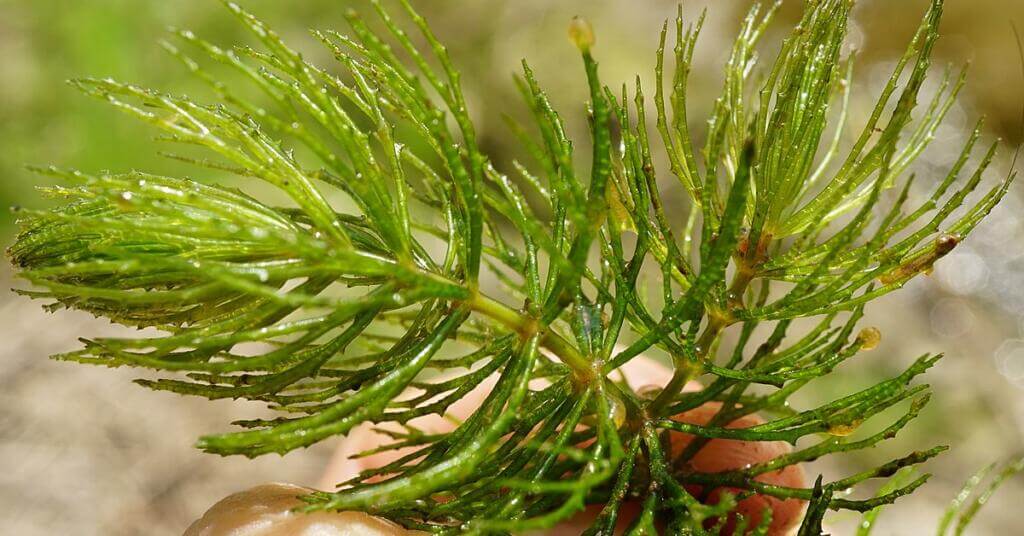
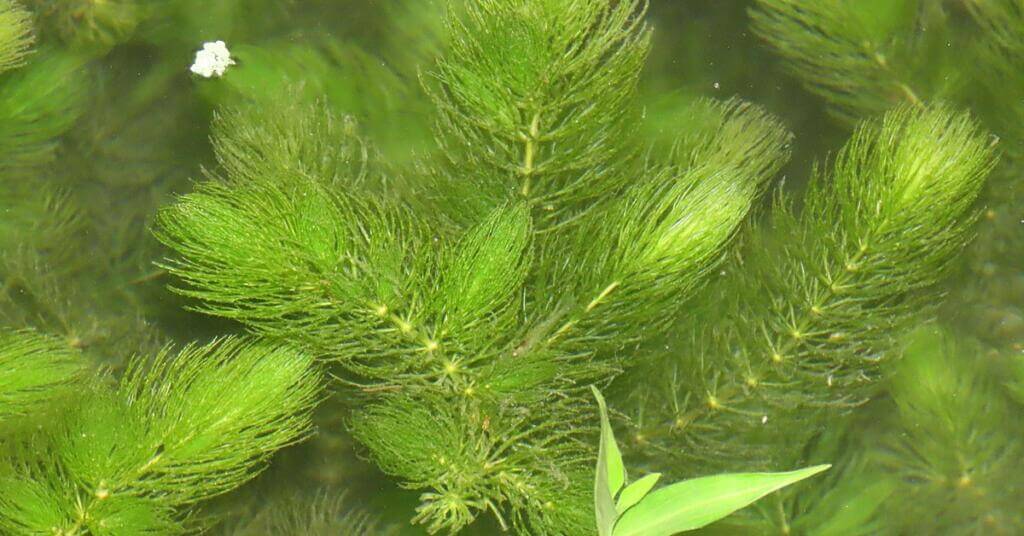
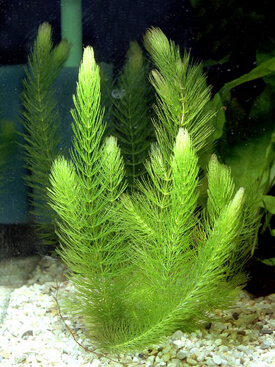
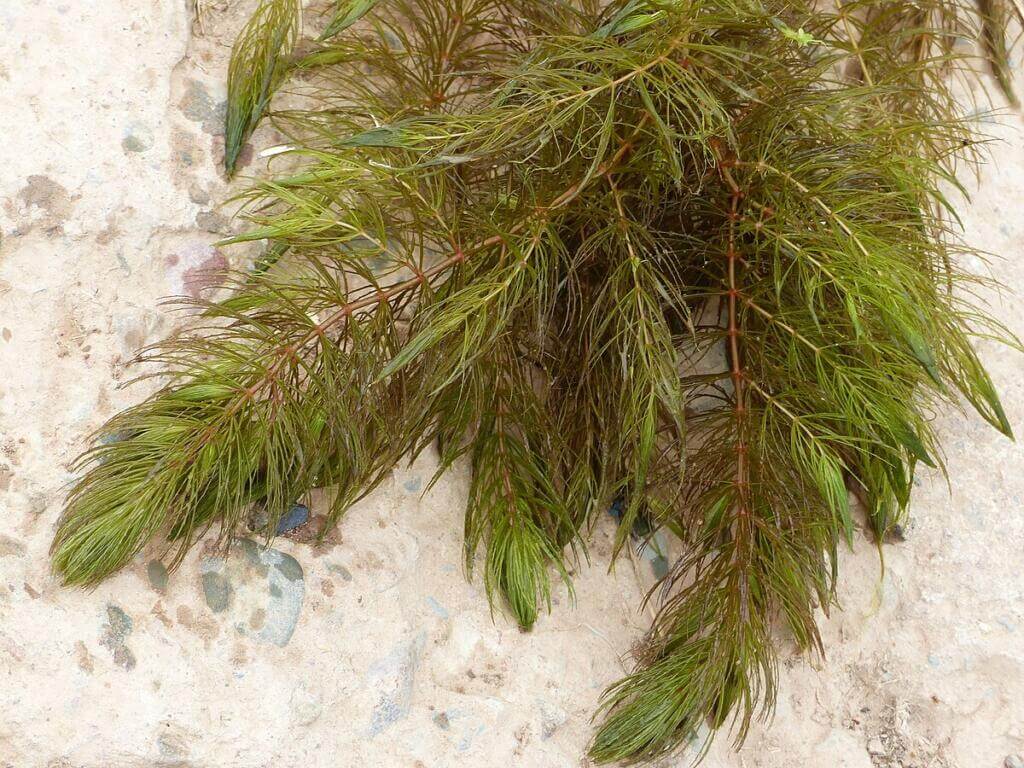
Coontail forms dense, tangled masses beneath the water’s surface. Its dark green leaves, fan-shaped and feathery, exhibit tiny teeth along their midribs. Arranged in whorls of five or more along the stem, with many forks and small teeth along the edge or midrib giving the plant a rough feel. The leaves can reach lengths of one to two inches, creating a resemblance to a raccoon’s tail. This characteristic lends the plant its common name, “raccoon tail” or “Christmas tree.”
Coontail’s delicate, feathery branches weave an intricate underwater landscape. These submerged thickets provide a vital habitat for various aquatic organisms. Fish and invertebrates seek refuge within its intricate structure, using it as a hiding place and contributing to the overall biodiversity of aquatic ecosystems.
Lacking true roots, coontail relies on thread-like structures called rhizoids to anchor itself to the substrate. These rhizoids primarily serve as anchors, as nutrient absorption occurs directly through the plant’s stems and leaves. The plant’s vibrant green color stems from chlorophyll, the pigment essential for photosynthesis.
Habitat
This adaptable aquatic plant thrives in various freshwater habitats, showcasing its remarkable resilience. It can be found floating on the surface and is capable of forming dense colonies covering large areas of water.
This submerged dweller is commonly found in lakes, pond water, slow-moving streams, and other freshwater ecosystems at depths up to 6 meters (20 feet). Its preference for standing or slow-flowing water allows it to create dense underwater mats, forming a vital component of the aquatic realm.
Water currents, waterfowl, and human activities disperse plant fragments to new areas.
Coontails are found in marshes and wetlands with shallow, slow-moving water. The plant’s buoyant nature allows it to adjust to changes in water levels, ensuring its persistence in fluctuating wetland habitats.
While adaptable to various habitats, coontail demonstrates an aversion to fast-flowing waters and environments with strong currents. The plant’s preference for calmer waters is reflected in its growth patterns, where it forms dense colonies in areas conducive to its relatively gentle and flexible nature.
Diet
Coontail has a unique nutrient acquisition strategy. Instead of relying on roots to draw sustenance from the soil, it absorbs essential nutrients and minerals directly from the water through its stems and leaves.
This remarkable adaptation allows coontail to flourish in a variety of aquatic environments, even those with nutrient-poor substrates. The plant’s diet consists primarily of nitrogen, phosphorus, potassium, and other trace elements dissolved in the water.
These nutrients originate from various sources, including decaying organic matter, fish waste, and in some cases, runoff from surrounding land. Additionally, photosynthesis, converting sunlight into energy, plays a vital role in the coontail’s survival.
Reproduction
Coontail exhibits remarkable adaptability and resilience in aquatic environments through its diverse reproductive strategies. As a monoecious plant, it produces both male and female flowers on the same individual, enabling both cross-pollination and self-pollination.
Sexual reproduction begins with the development of small, inconspicuous flowers along the stems. Male flowers release pollen into the water, which has the potential to reach female flowers for fertilization. Upon successful fertilization, seeds develop within protective structures.
Asexual reproduction plays a prominent role in coontail propagation. The plant can reproduce through fragmentation, where detached portions of the stem take root and develop into new plants. This method facilitates rapid colonization and growth, particularly in favorable conditions.
Coontail’s ability to employ both sexual and asexual reproduction strategies contributes to its success as a prolific and adaptable aquatic plant, ensuring its continued presence in various freshwater habitats.
Threats
Despite its resilience and adaptability, coontail faces various threats that can jeopardize its growth and the health of its aquatic ecosystems. Competition from invasive aquatic plants that outcompete native vegetation poses a significant challenge.
Additionally, alterations in water quality, such as increased nutrient levels or pollution, can negatively impact coontail populations. Human activities, including shoreline development, dredging, and habitat alteration, directly destroy the aquatic environments where coontail thrives. Climate change, with its associated changes in temperature and precipitation patterns, can further influence the distribution and growth of aquatic plants.
While coontail is occasionally utilized in aquariums or water gardens, overharvesting without sustainable management practices can deplete natural populations.
8 More Great Facts About Coontail
- It faces challenges from herbicide use and habitat destruction, requiring cosea pennnservation efforts for its preservation.
- It produces chemicals that suppress the growth of several types of microscopic plants.
- This species, under the name of hornwort, is a popular aquatic plant sold in pet stores.
- Coontail vegetation is consumed by ducks and other waterfowl, making it a part of their wildlife diet.
- Its flexible and soft nature allows the coontail to sway gently in water currents.
- In winter, coontail may form resting buds that sink to the lake or pond bottom, allowing it to survive harsh conditions.
- They are found on every continent except Antarctica.
- Coontail has been used in traditional medicine practices in certain cultures
FAQ’s
Is coontail invasive?
Yes, it is invasive in some areas. It’s native to North America but has been introduced to other parts of the world. With its fast growth, it can outcompete other, native plants.
Is coontail good for a pond?
It can be beneficial for ponds in moderation. It provides shelter for fish and invertebrates, helps oxygenate the water, and absorbs nutrients. However, excessive growth can lead to problems like reduced water flow and sunlight penetration.
How to get rid of coontail in a pond?
Controlling coontail overgrowth in a pond requires a thoughtful approach. Manual removal by physically removing portions of the plant can offer temporary chemical control. Aquatic herbicides can also effectively kill them. As a biological control method, introducing grass carp (a type of fish) can help manage coontail.
What eats a coon tail?
Ducks, geese, and other waterfowl consume coontail vegetation as part of their diet. Additionally, some aquatic invertebrates (insects) may feed on the plant.


