

Living in the deep ocean are exciting and unusual creatures, including the Giant Tube Worm (Riftia pachyptila), also known as the Giant Beardworm. Giant Tube Worms were unknown until the discovery of the strange hydrothermal vent ecosystem in 1977.
Despite the extreme pressures and temperatures, lack of sunlight, and presence of toxic minerals that characterized the ecosystem, marine life such as the Giant Tube Worm was found thriving due to their unique adaptations.
Appearance
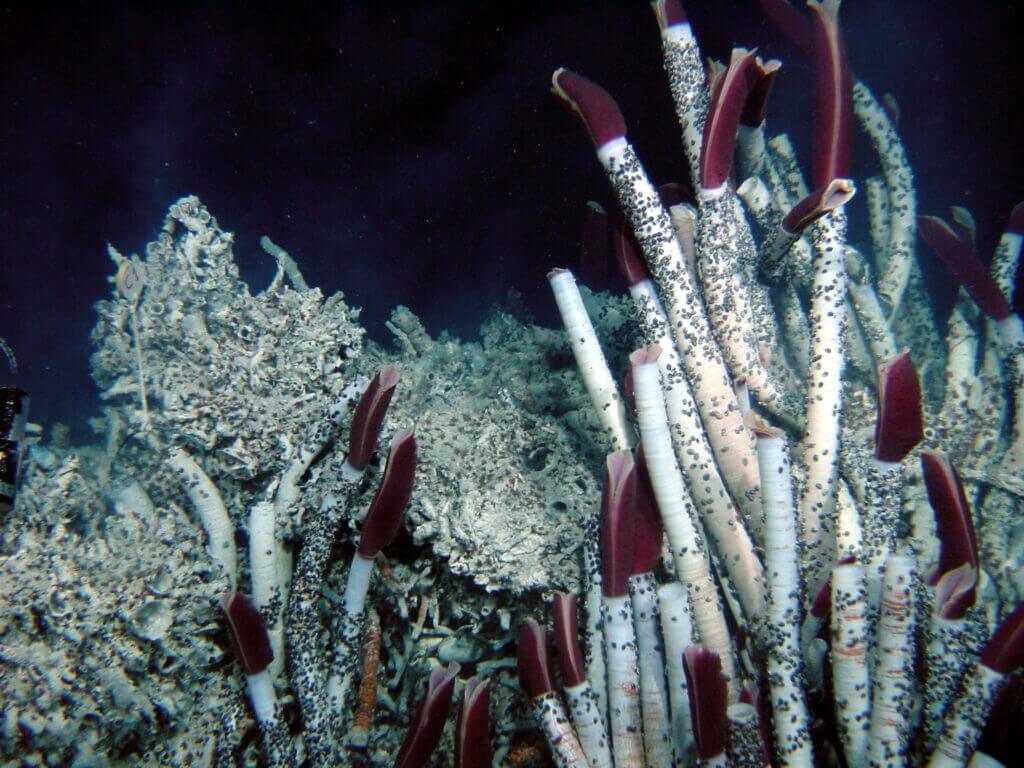
The Giant Tube Worm is a stationary creature characterized by an outer tough shell made from chitin. This casing serves as a protection against predators.

The body of this tube is colorless, except for its top region (branchial plume), which is red due to the presence of hemoglobin inside its shell serving as a storage for oxygen.
The branchial plume is a specialized organ that serves as a conduit by which the worm receives nutrients. These organisms have no mouth and no digestive tract and so depend on bacteria living inside of them for food.
The Giant Tube Worm grows up to measure almost 10 feet in length.
Habitat
The Giant Tube Worm lives on the seafloor of the Pacific Ocean around the hydrothermal vents. This is perhaps the harshest environment that exists on this planet. These hydrothermal vents are a result of the rifting of tectonic plates along the ocean floor, which leads to fractures that develop in the earth’s crust.
The temperature around these vents are very high and can reach up to 700° Fahrenheit. The pressure at these ocean depths is very high and few organisms can approach this area and not get burned or compressed.
Their tough, protective tubes shield them from the intense heat and pressure of the vent environment, while their ability to quickly retract their delicate gills helps them avoid predation. This unique combination of adaptations allows Giant Tube Worms to flourish in one of Earth’s most inhospitable habitats.
Diet
Giant Tube Worms are one of the few organisms that are sustained by a remarkable source of nutrition. This organism relies on bacteria feeding using a process known as chemosynthesis.

Symbiotic Relationships
While the Giant Tube Worm relies on bacteria for nutrients, the bacteria also depend on the tube worm for an abode to secure them from predators and assimilation of the nutrients. This is an example of a type of symbiosis known as mutualism.

Giant Tube Worms lack a traditional digestive system, they rely on a symbiotic relationship with sulfur-oxidizing bacteria housed in their trophosome. These bacteria convert the toxic chemicals spewing from the vents into a source of energy, providing the worms with sustenance. Additionally, their bright red plume is specialized for absorbing hydrogen sulfide and oxygen from the surrounding water, which the bacteria then use for chemosynthesis.
Reproduction and Life Cycle
Giant Tube Worms exhibit a fascinating reproductive strategy adapted to their deep-sea environment. These sessile creatures reproduce sexually, with males releasing sperm into the water, which is then drawn into the females’ tubes through water currents.
Fertilization occurs internally, and the females release fertilized eggs into the water. These eggs develop into free-swimming larvae known as trochophores, which drift with the currents until they encounter a suitable hydrothermal vent. Once settled, the larvae undergo a metamorphosis, developing their symbiotic bacteria and growing into adult tube worms.

Threats
Giant Tube Worms, despite their impressive size and robust tubes, are not without threats in their deep-sea habitat. Vent crabs are opportunistic predators of hydrothermal vents and pose a significant risk to the worms’ exposed gills. These crabs can damage or consume the delicate plumes, hindering the worms’ ability to obtain essential nutrients.
The ephemeral nature of hydrothermal vents themselves presents a constant threat. Changes in volcanic activity can lead to the cessation of hot water flow, causing entire colonies of tube worms to perish. While the Giant Tube Worms’ larvae are adept at colonizing new vents, the unpredictable nature of these geological events can lead to widespread mortality and population fluctuations.
Facts About Giant Tube Worms
- The discovery of Giant Tube Worms in the 1970s revolutionized our understanding of deep-sea life.
- Giant Tube Worms lack a mouth, gut, and anus, relying solely on internal bacteria for sustenance.
- Giant Tube Worms are a keystone species in hydrothermal vent ecosystems.
- The bacteria living inside the worms are so abundant that they make up more than half of the Giant Tube Worm’s total weight.
- Giant Tube Worms are an important subject of research for scientists studying the origins of life and extreme environments.
FAQs
Are Giant Tube Worms bioluminescent?
While Giant Tube Worms are not bioluminescent, another deep-sea creature, the Parchment Tubeworm (Chaetopterus), emits light through a slimy bioluminescent mucus released into the seawater.
What do Giant Tube Worms eat?
Giant tube worms do not eat; they instead rely on bacteria for their nutrients. These bacteria assimilate inorganic compounds from the hydrothermal vents and, through chemosynthesis, convert them into useful nutrients.
How do Giant Tube Worms survive at hydrothermal vents?
Giant Tube Worms thrive on the power of symbiotic relationships, where they rely on bacteria for nutrients, and the bacteria, in turn, depend on them for the assimilation of the nutrients.
What are the unique adaptations of Giant Tube Worms?
Their unique adaptations include lacking a digestive system, possessing hemoglobin that binds oxygen and hydrogen sulfide, and having retractable gills for protection. These remarkable creatures exhibit the fastest growth rate among marine invertebrates and play a vital role in the hydrothermal vent ecosystem.


