
Orca and the great white shark are magnificent creatures, each a master of its domain, embodying the raw power and elegance of the marine world.
Great white sharks are solitary hunters. Their torpedo-shaped bodies, armed with rows of razor-sharp teeth, are perfectly adapted for ambush and pursuit. Orcas, on the other hand, also known as killer whales, are brilliant and social marine mammals. Hunting in coordinated pods, they employ sophisticated strategies and communication to overwhelm prey, from seals and sea lions to even larger whales.
Continue reading to explore more about these apex predators.


Image credit: Gerald Schombs via Unsplash (left), Iewek Gnos on Unsplash (right)
Great White Shark vs. Orca: Main Differences
Here are the main differences between the great white shark and the orca:
Appearance: Great white sharks have a crescent fin and sharp-jagged teeth on show, with a grey and white coloring. Orcas are black and white, with a large dorsal fin. Their bodies are tapered to help them swim through the water at speed, unlike the great white shark.
Size: Great white sharks range from 15-16 ft and up to 2,450 lb, whereas orcas are 19-26 ft in length and up to 9000 lb in weight.
Habitat: Great white sharks prefer to live in warmer waters around coastal areas, but they exist in all major oceans too. Orcas exist in all water ecosystems and can adapt to most ocean temperatures (some orcas have been spotted in the North and South Pole waters).
Diet: The diet of great white sharks is predominantly sea lions and fish, whereas orcas’ diet consists of large prey like large seals, dolphins, and fish.
Lifespan: Great white sharks can live to as long as 70 years, whilst orcas live to around 30-40 years.
We’ll explore these differences and interesting facts about marine animals below.
Who Would Win?
While both orcas and great white sharks occupy the top of the food chain, their paths rarely cross. Yet, when they do, the encounter can be a clash of titans, a testament to the raw power and primal instincts that shape the underwater world.
Orcas’ remarkable intelligence and coordinated hunting strategies within their pods provide a significant edge over the solitary great white. Their superior size and strength would enable them to overpower the shark, inflicting more substantial damage. Additionally, orcas’ echolocation abilities would allow them to detect and potentially evade the shark’s stealthy approach.
However, the great white’s mastery of ambush and stealth cannot be underestimated. Its streamlined body and cryptic coloration facilitate undetected approaches, while its powerful bursts of speed and razor-sharp teeth make it a formidable ambush predator. The shark’s keen senses, including its ability to detect electrical fields and vibrations, enhance its prey detection capabilities. Additionally, the great white’s agility and maneuverability could allow it to evade the orca’s attacks and potentially inflict bites.
The size and number of individuals involved, the environmental conditions, and the element of surprise all play crucial roles. While the orca’s advantages position it as the likely victor, the great white’s ambush prowess and agility make it a formidable opponent that should not be underestimated.
Great White Shark
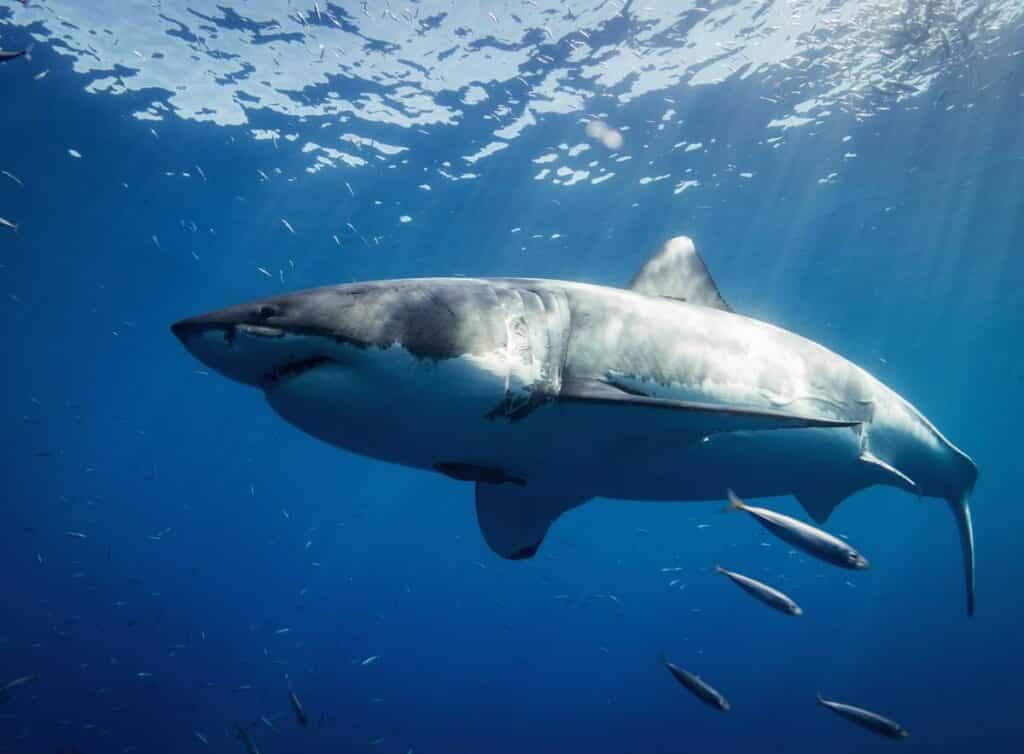
Great white sharks are a large species of mackerel shark. They can be found in oceans around the world. The largest individuals have been documented as up to 30 feet in length and up to 5,000 pounds, but most are smaller. Great white sharks have no known natural predators except for the orca. This large whale has been known to prey on sharks of various sizes. Historical evidence even indicates that orcas may have played a role in driving the megalodon to extinction.
Great white sharks are the largest predatory fish, the females are usually larger, sometimes reaching 2,450 lb or 1,110kg. They are also between 15-16ft or 5.6-4.9 meters. They are usually quite bulky-looking and have sometimes been cited as the scariest-looking shark. They have a conical snout and large fins.
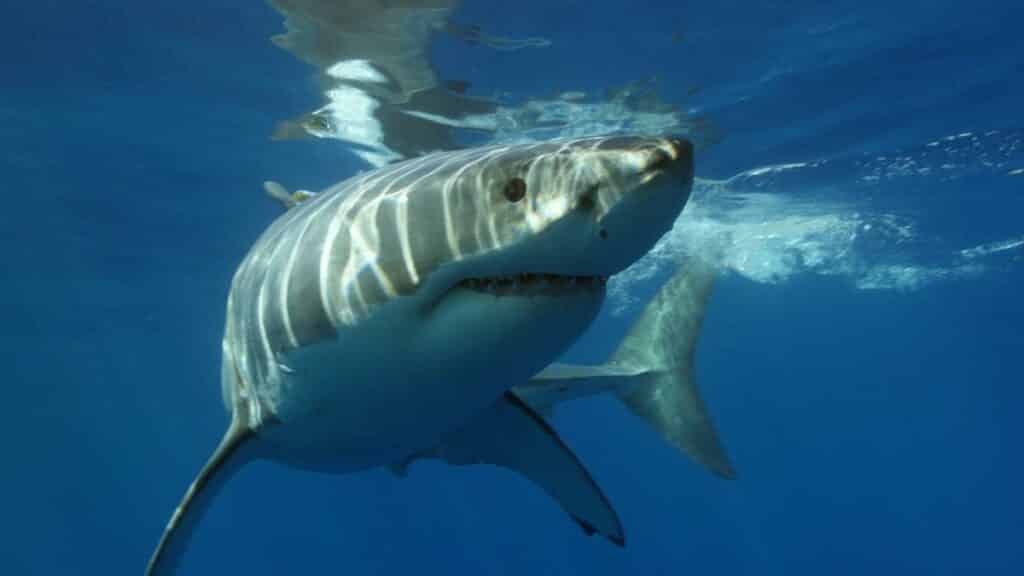
Their streamlined shape minimizes drag and enhances lift during swimming. Their tails are crescent-shaped, and their bellies are white. This is a common feature of large ocean animals that helps them hide from predators below them.
The lighter side blends in with the light coming through the surface of the water, while a darker topside helps them hide from predators above looking down into the ocean’s depths.
Habitat
These sharks live in the waters of all major oceans. The majority live around the coasts of the United States (in the northeast and west), Japan, Chile, Oceania, and South Africa. The latter is host to one of the largest populations of great white sharks around Dyer Island.
They prefer temperatures between 12 and 24 °C (54 and 75 °F).
Many of these populations are threatened, such as that in the northeastern area of the United States. The sharks were nearly driven to extinction in this area due to over-fishing. But, populations have rebounded to a degree in the area.
Diet
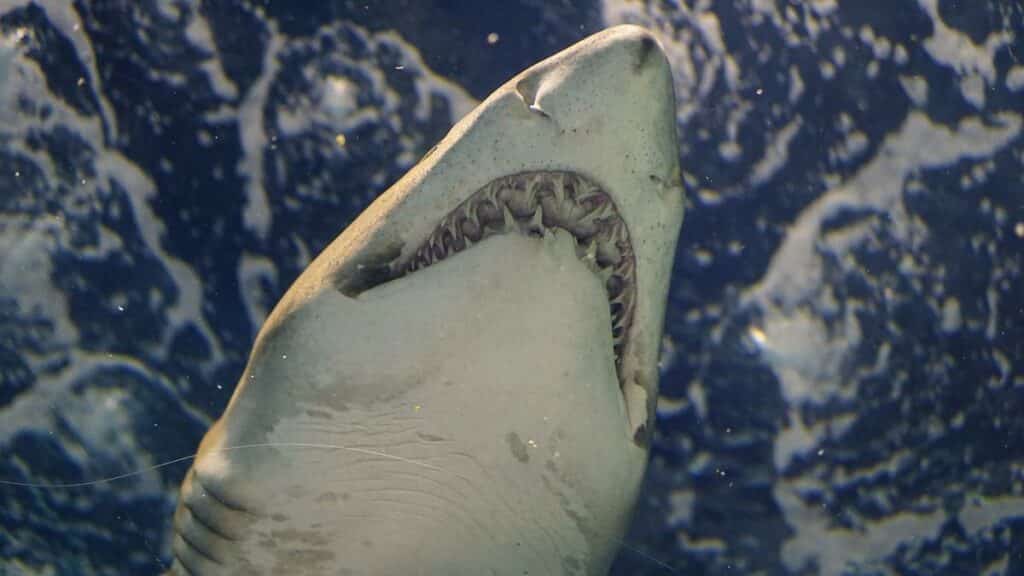
Great white sharks are incredibly adept hunters. They can move at a speed of up to 21 mph or 33 kph and have an impressive row of around 300 serrated teeth. Like orcas, they have strong jaws and incredibly biting power.
As films like Jaws would have one belief, great white sharks don’t prey on human beings. They generally eat sea lions, fish, and sometimes smaller species of sharks.
While orcas usually hunt sharks in coordinated pods, a recent observation documented a remarkable exception. A single orca successfully hunted a great white shark in a remarkably efficient manner, completing the entire process within two minutes. This observation challenges the typical understanding of orca hunting behavior.
Reproduction
Like many other ocean animals, great white sharks have a somewhat elusive mating process. But, it’s believed to be similar to the other types of fertilization used by sharks. The fertilized eggs are kept inside the female’s body, and the litter consists of two to ten “pups,” or baby sharks.
The gestation period is around one year, and when born, great white sharks are around one meter or 3.3 feet in length.
Great white sharks can live to be as old as 70. But, this appears to be on the upper end of the spectrum. It takes male sharks twenty-six years to reach maturity, while it takes females thirty-three years.
Threats
Great white sharks also face a range of threats primarily driven by human actions. Overfishing, both targeted and as bycatch in commercial fisheries, has resulted in significant population declines. The cruel practice of finning, driven by the demand for shark fins, leaves sharks to die a slow and agonizing death.
They are sensitive to one particular toxin, polychlorinated biphenyls. It can accumulate in their blubber, something that is highly dangerous, especially when food is scarce, and the whale metabolizes its blubber for energy.
The IUCN lists great white sharks as “vulnerable” due to illegal human fishing and practices such as by-catch. Shark fin soup, a delicacy in some parts of the world, is one of the prime motivators for fishermen. In other instances, sharks get caught in fishing nets meant to protect beaches.
Habitat loss due to coastal development and pollution degrades crucial shark nursery grounds and disrupts their natural behavior. Climate change, with its alterations in ocean currents and prey availability, impacts shark distribution and survival.
Additionally, negative public perception, often fueled by misconceptions and fear, hinders conservation efforts and can lead to persecution.
Orca
Orcas are black and white, toothed whales that are part of the oceanic dolphin family. There are believed to be three to five subspecies, or species, of orcas. The main three are described below.
- Resident: the most common type of orca. They live in the Pacific Northeast and eat fish and squid. They live in complex pods or groups, and the females have a rounded dorsal fin with a sharp corner. These orcas travel along the coast of British Columbia and Washington. If an orca is spotted in this area, it is likely a resident orca.
- Transient: these orcas feed on marine mammals and travel in smaller groups than offshore orcas, usually only two and six per pod. Transient orcas live along the coast, with sightings in Alaska and California.
- Offshore: the offshore population of orcas lived in the Pacific Northeast and was identified in the late 1980s. They are differentiated due to their large scarred dorsal fins and are encouraged along Vancouver Island.
They have a patch of grey behind the dorsal fin, known as a saddle.
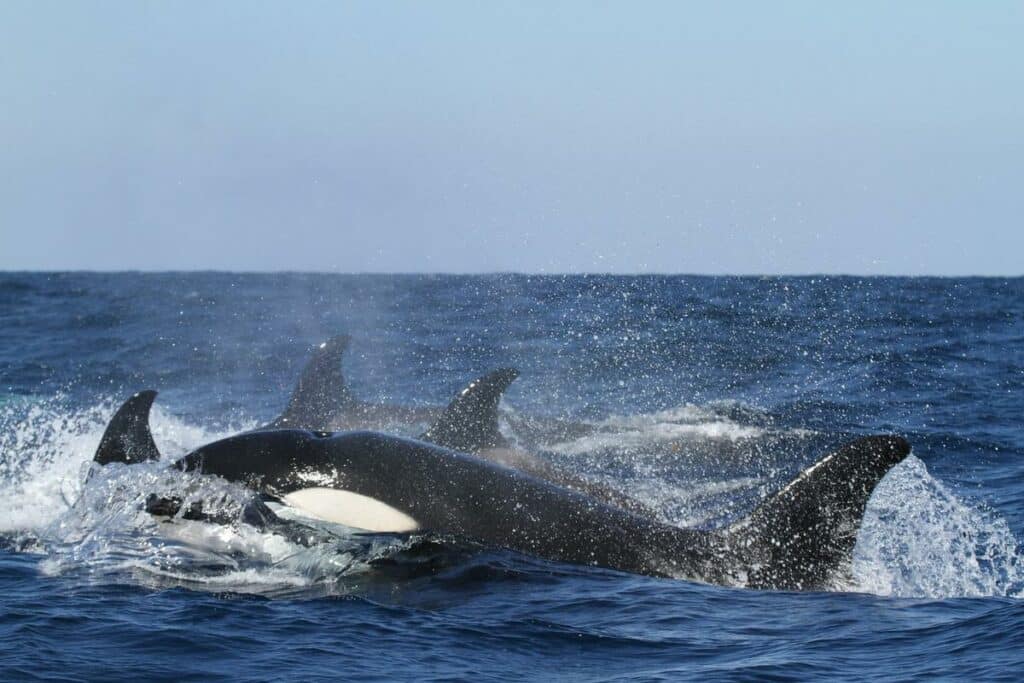
Their bodies are tapered, allowing them to swim quickly through the water like great white sharks. Orcas, despite their status as “killers,” are not a threat to human beings.
Their pectoral fin is large, rounded, and paddle-like, and size provides significant surface area, contributing to maneuverability and stability.

Male orcas can weigh between 8,000 and 12,000 pounds (3,630 to 5,443 kilograms), significantly greater than the male great white sharks.
Habitat
Orcas are widely distributed, more so than any other marine mammal. They live in the coastal areas surrounding most countries and can adapt to any climate.
They can be found around the equator and in the waters of the North and South Pole.
The highest density of whales, scientists believe, is located around the Norwegian coast, along with the Aleutian Islands, the Gulf of Alaska, and off the coast of Antarctica. Other common areas where the whales are spotted around off British Columbia, Washington, Oregon, Iceland, and the Faroe Islands.
Diet
Orcas have a diverse diet. Some orcas only eat fish while others hunt, which led to their name, “killer whale.” They prey on cetaceans, like larger seals, as well as other dolphins. Orcas have also been known to attack larger whales, like baleen whales.
Orcas sometimes beach themselves to catch seals on land. They jump out of the water, land on the ice or shore, latch onto their prey and drag it back into the water.

Reproduction
A female orca gives birth to one offspring every three to ten years. It is partly due to this slow period of reproduction that the species is having trouble repopulating.
Female orcas mature at around ten years old and reach the height of their fertility around twenty. Their gestation period is around seventeen months, and once born, the calf nurses for several times an hour for days until the child is weaned.
In most cases, the bond between juvenile and mother will eventually weaken, and the young orca will go its way, but in some pods, the juvenile may stay with the pod it was born into its entire life.
Orcas are one of the only animals that undergo menopause and still live for a period after they’re no longer able to have children.
Also of interest is the fact that males are mature at the age of fifteen but don’t reproduce for several more years. They live shorter lives than females do, around 30-60 in comparison to 50-100.
Threats
Orcas face a multitude of threats stemming from human activities. Habitat loss and degradation caused by coastal development, pollution, and overfishing disrupt their natural environment and reduce prey availability.
Today, orcas are considered threatened by the IUCN.
Entanglement in fishing gear poses a significant risk of injury, drowning, or starvation. Noise pollution from various sources, including shipping, military activities, and seismic surveys, interferes with orca communication and hunting abilities.
Chemical contamination through their diet leads to the accumulation of toxins, impacting their health and reproductive success.
Finally, climate change, with its shifting ocean temperatures and prey distribution patterns, poses a long-term threat to orca populations.
Ocean Insights: Hear From Our Experts

By Hamna Faizan
Marine Life Researcher and Lecturer, with an MSc in Zoology
FAQs
What are orcas afraid of?
The only real predators that orcas have to fear are human beings. They have, by far, done the most damage to orca populations around the world. Conservation efforts must prioritize addressing these multifaceted human impacts to ensure the continued existence of these remarkable marine mammals.
What makes orcas so intelligent and social?
Orcas possess highly developed brains with a large neocortex, the area responsible for complex cognitive functions like social behavior, communication, and problem-solving. Their tight-knit social structures within matrilineal pods foster cooperation, learning, and cultural transmission. Their intricate vocalizations, including clicks, whistles, and pulsed calls, facilitate communication and coordination within the pod.
How do great white sharks’ keen senses aid in hunting?
Great white sharks possess an array of acute senses that enhance their hunting abilities. Their electroreception, the ability to detect electrical fields emitted by living organisms, allows them to locate prey even in murky water or low-light conditions. Additionally, their keen sense of smell and ability to sense vibrations in the water further refine their prey detection capabilities.
What is the significance of cultural diversity among orca populations?
The presence of distinct cultural traits in different orca populations highlights their cognitive complexity and capacity for social learning. Specialized hunting techniques, unique vocal dialects, and specific social behaviors are passed down through generations within pods. This cultural diversity reflects their ability to adapt and thrive in diverse marine environments.
Describe the great white shark’s remarkable healing abilities.
Great white sharks exhibit impressive healing capabilities, recovering from significant injuries at an accelerated rate. This resilience is crucial for survival in the harsh marine environment, where encounters with other sharks or prey can result in wounds. Their rapid healing contributes to their overall hardiness and adaptability.


