
Turtles and Tortoises are remarkable organisms that are sometimes grouped together owing to their similar traits, such as their hard shells and categorization as reptiles. Yet, while these two species of animals share certain similarities, they also have substantial differences in their habitat, feeding and behavior.
We will explore the main distinctions between Turtles vs Tortoises and discover more about these unique animals below.
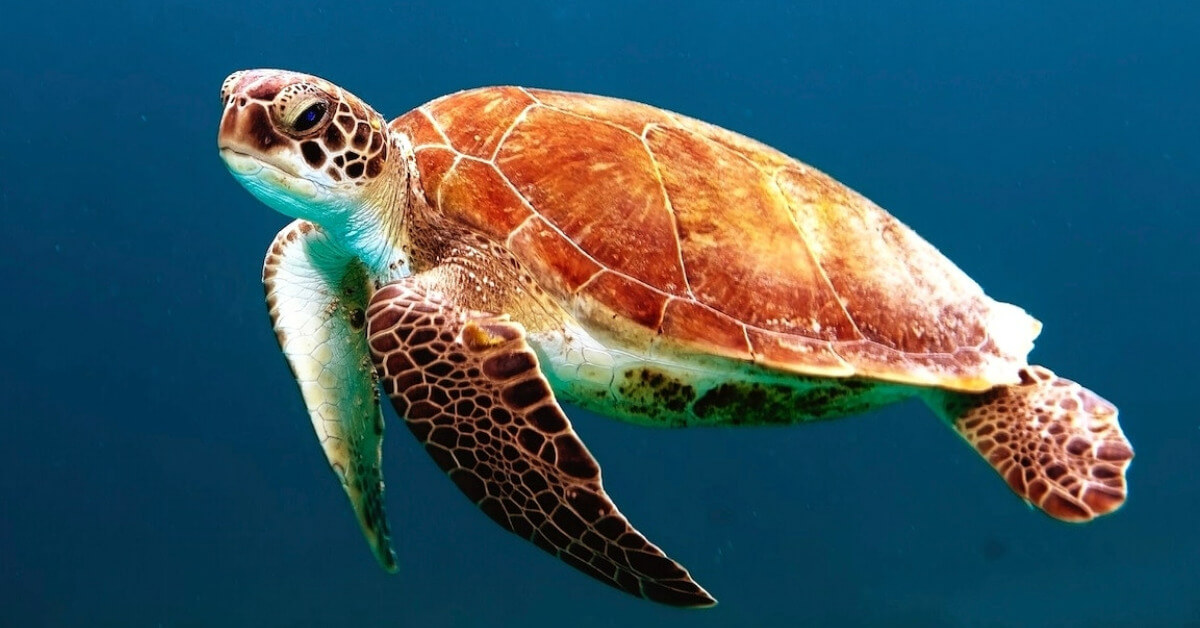
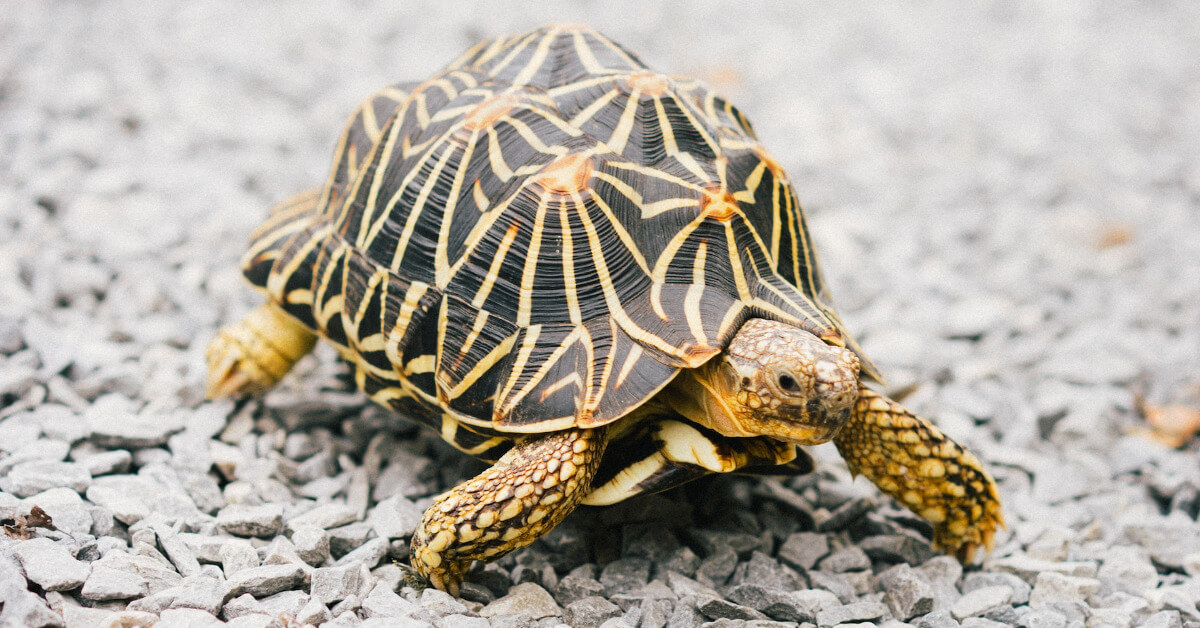
Left image credit: Wexor Tmg; Right image credit: Melissa Keizer
Turtles vs Tortoises: Key Differences
- Size: Turtles are typically smaller, while tortoises are bigger.
- Shell shape: Turtles have a more streamlined, flat shell suited for swimming. Tortoises have more dome-shaped shells to protect themselves from predators.
- Limbs and Feet: Turtles have webbed feet suitable for swimming, while Tortoises have short, stubby feet which are designed for walking on land.
- Behavior: Turtles are solitary creatures, exhibiting little to no social interaction with others of their kind. They are primarily diurnal, spending their days actively searching for food. Similarly, Tortoises lead solitary lives, maintaining distinct territories and avoiding social bonds outside of mating encounters.
- Diet: Turtles can be herbivores, carnivores or omnivores depending on the species. In contrast, tortoises are strict herbivores and consume various types of vegetation.
- Habitat: The habitat of each species is one of the fundamental distinctions between Turtles and Tortoises. Turtles are adapted for life in an aquatic environment. In contrast, Tortoises are designed for life on land.
We’ll explore these differences and exciting facts about these creatures below.
Turtle
The name “turtle” could be linked to the Latin “tortus,” meaning twisted or crooked, possibly referring to the curved shape of the turtle’s body or its bent walking gait.
Appearance
The bone shell of turtles is created of a lower shell called the plastron and an upper shell called the carapace. Their shell is joined to their ribs and spine to protect their body. Unlike terrestrial turtles, they cannot retract their head or limbs into their shells. Some species, like the Leatherback Turtle, have a unique leathery carapace instead of a hard shell.
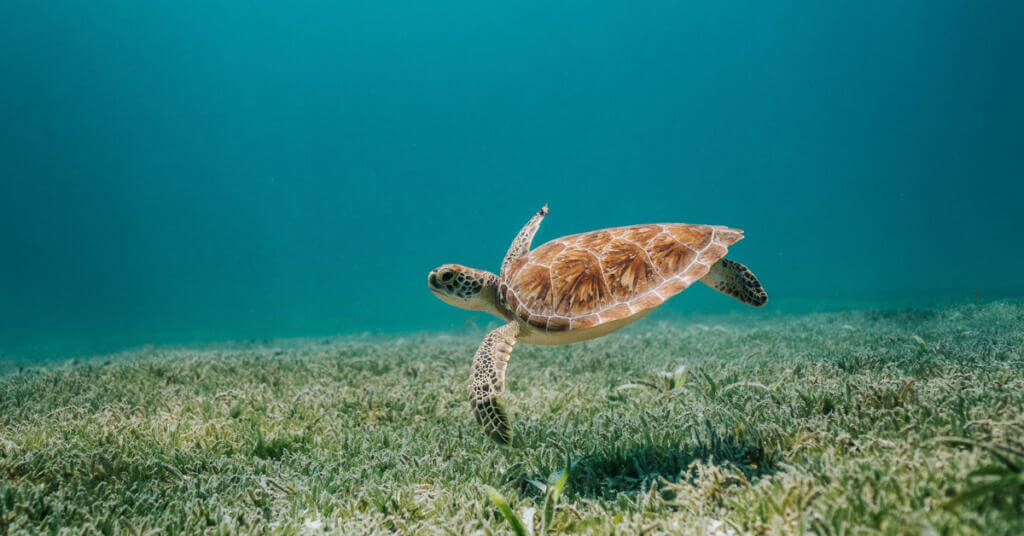
Sea turtles have large, streamlined shells, which are flattened and hydrodynamic to help them swim efficiently through the water. Their front flippers are long and paddle-like to propel them through the water, while their back flippers are used for steering and manoeuvering. They typically have one or two long claws on each front flipper, which can be used to get a good grip of food or for digging nests.
Sea turtles have large eyes which are protected by upper eyelids, and lack external ear openings. Their jaws are modified into beaks, with variations in shape depending on their specific diet.
Diet
The diet of Turtles varies significantly among species, reflecting their diverse adaptations and ecological niches. Some species are primarily carnivorous, while others are herbivorous or omnivorous.
Carnivorous Turtles feed on crustaceans, mollusks, jellyfish and fish. These Turtles have powerful jaws that are adapted for crushing shells and hard-bodied prey.
Herbivorous Turtles feed on a variety of seagrass and algae. They have serrated jaws that help them scrape vegetation off rocks and surfaces.
Omnivorous Turtles have a more varied diet, consuming both animal and plant matter. They feed on a range of prey, including crabs, shrimp, jellyfish, sea cucumbers, fish and seaweed.
Species
Some popular turtle species include:
- Leatherback Sea Turtles: A giant sea turtle, growing to a length of 7 feet and weighing up to 2,000 pounds. They inhabit every ocean on the earth and are distinguished by their soft, leather-like shell.
- Loggerhead Turtles: A large sea turtle that can weigh over 400 pounds and grow up to 3.5 feet long. The Atlantic, Pacific, and Indian Oceans are where they can be found.
- Green Sea Turtles: A medium-sized sea turtle that may be found worldwide in tropical and subtropical waters. They get their name from the greenish hue of their fat, and in certain cultures, they are a primary source of sustenance.

Reproduction
After mating at sea, female Turtles return to the same beaches where they were born to lay eggs. This incredible phenomenon, known as natal homing, ensures that each generation returns to familiar nesting grounds.
Under the cover of darkness, females emerge from the ocean and crawl up the beach. Using their powerful flippers, they dig a nest in the sand, carefully depositing a clutch of anywhere from 50 to 200 eggs.
The sex of a hatchling is determined by the temperature of the sand where it nests. Nests that incubate at lower temperatures generate more male offspring, whereas nests that incubate at higher temperatures produce more females.
After an incubation period of approximately two months, the turtle hatchlings emerge from the nest and instinctively scramble towards the sea, guided by moonlight and wave patterns. This perilous journey is fraught with danger, as they are vulnerable to predation by birds, crabs, and other animals.
Threats
There are several dangers for Turtles. The following are some of the main threats affecting Turtle populations:
- Hunting and poaching
- Pollution
- Climate change
- Entanglement in fishing gear
- Habitat degradation
- Collisions with motorboat propellers
Tortoises
Appearance
Tortoises are protected from predators by a domed shell formed of bone and coated with keratin. They have four robust legs with scaly skin and sturdy feet appropriate for walking on land. Their wrinkled features are characterized by a hooked beak used for biting and shredding plants, small spherical eyes, and a keen sense of smell.
A Tortoise’s skin color differs depending on species and environment, with some having a mottled pattern and others a uniform color. The unique patterns and markings on a Tortoise’s shell serve as a visual fingerprint, helping us to identify different species.
Many tortoises are long-lived and can survive for over 100 years.

Diet
Tortoises are strict herbivores, which means their diet consists exclusively of plant material like leaves and grass. Their diet may change depending on the species and environment they live in. Tortoises need to have a balanced diet that includes sources of calcium and other nutrients to maintain healthy shells and bones.
Species
There are many species in the Tortoise family, each with its unique characteristics and habitat. Some examples of tortoise species include:
- Galápagos Giant Tortoise: One of the oldest and largest tortoises alive today and unique to the Galápagos Islands—some have been known to live for more than 170 years.
- Russian Tortoise: is a small, hardy species native to Central Asia. Known for its distinctive four-toed feet and ability to burrow, this tortoise has adapted to harsh desert and steppe environments.
- Leopard Tortoise: One of the largest tortoise species, it roams the savannas and grasslands of eastern and southern Africa. It sports a striking spotted pattern on its high-domed shell, providing excellent camouflage in its arid habitat.

Reproduction
Most Tortoises reach sexual maturity between 10 and 20 years old, and their mating season often begins in the spring after emerging from a state of dormancy similar to hibernation.
During courtship, male Tortoises may engage in head bobbing, biting or ramming behaviors to attract females. Once a female is receptive, mating occurs, and the female can store sperm for several years, allowing her to fertilize multiple clutches of eggs without needing to mate again.
The female tortoise will dig a nest in the ground using her hind legs. The number of eggs laid varies depending on the species, ranging from a few to several dozen. To deter predators, she defecates on and around the nest.
It typically takes 80 to 120 days for the eggs to hatch, during which time some females protect their nests. Parental care is not provided, and the survival of hatchlings depends on their ability to avoid predators and locate resources.

Threats
Tortoises are subject to several dangers. The following are some of the greatest threats to Tortoises:
- Habitat fragmentation
- Poaching
- Climate change
- Invasive species
- Pollution
- Desertification
Turtle vs Tortoise: Who Would Win?
In a direct confrontation, neither animal is particularly designed for fighting. Their evolutionary adaptations are geared more towards defense and survival rather than aggression. As such, a confrontation would likely involve more display and posturing than actual combat, with each using their best survival strategies—speed and retreat for turtles, and shell defense for tortoises.
Nevertheless, if we were to imagine a hypothetical scenario for a bit of light-hearted fun, we think the following would emerge as a winner:
Bite Strength: Turtle wins
Some aquatic turtles, like snapping turtles, have significant bite strength. For example, the common snapping turtle is renowned for its powerful bite, which is defensive in nature and can be quite dangerous.
Defensive strategy: Tortoise wins
With heavier, more dome-shaped shells, tortoises can completely enclose themselves as a defense against predators and threats. This shell structure provides robust protection, making them less vulnerable to predator attacks compared to many turtles.
Aggressiveness: Turtle wins
Aggressiveness in turtles can vary widely. Some species, like the snapping turtles mentioned earlier, are known for being particularly aggressive when threatened. However, many other turtle species are relatively docile and will opt to escape into the water or withdraw into their shells when threatened.
Speed: Turtle wins
If it were a swimming race, a turtle, being adapted to life in water, would easily outpace a tortoise.
Overall Winner: Turtle
Turtles and tortoises are both adapted to very different environments, making each a “winner” in its own right within its natural habitat; however, turtles do have the upper hand in some of scenarios.
Ocean Insights: Hear From Our Experts

By Dr. Rabiah Ryklief
Principal Scientist and Lecturer of Marine Science, with a PhD in Zoology
The conservation of turtles and tortoises takes on a heightened urgency in the face of climate change. These ancient reptiles are particularly vulnerable to the impacts of a warming planet, with rising temperatures affecting their nesting success, sex ratios, and overall health. This vulnerability, combined with the ongoing demand for their shells, meat, and eggs in the illegal wildlife trade, creates a perfect storm that threatens their survival.
Climate change-induced habitat loss and degradation further exacerbate the problem, pushing these species closer to the brink. As their natural habitats shrink and resources dwindle, turtles and tortoises become more susceptible to poaching and exploitation.
This is where the fight against illegal wildlife crime becomes critical. By disrupting the supply chains and demand for turtle and tortoise products, we can alleviate the pressure on wild populations and give them a fighting chance against climate change.
FAQs
Can a Turtle and a Tortoise mate?
While turtles and tortoises belong to the same order (Testudines), they have diverged significantly in their evolutionary paths. Tortoises are a distinct family (Testudinidae) within the broader group of turtles. This genetic divergence typically prevents successful mating and production of viable offspring between turtles and tortoises.
Are Tortoises endangered?
The conservation status of the Ploughshare Tortoise stands out as a particularly critical case, potentially being the most endangered Tortoise globally. This highlights the broader issue of endangerment among Tortoises due to factors like habitat loss and illegal trade.
Which country has the most Turtles?
Based on the nesting data, Costa Rica likely has the most Olive Ridley Turtles. They have the highest number of nesting females (500,000 to 600,000) compared to Mexico (450,000) and India (135,000). However, it’s important to note that this data only represents nesting females and not the total Turtle population, which includes males and juveniles.
What eats Turtles?
While adult Turtles have few natural predators due to their large size and protective shells, they can fall prey to large sharks, particularly tiger sharks. Killer whales have also been known to prey on Leatherback Turtles. However, Turtle eggs and hatchlings are much more vulnerable and face a wide range of predators, including fish, dogs, seabirds, raccoons, ghost crabs and other opportunistic feeders.
How can a Tortoise protect themselves?
When a Tortoise feels threatened, it can retreat into its thick, strong shell for protection, much like a person seeking shelter in their house during a storm. This shell acts as the Tortoise’s mobile fortress, shielding it from predators and potential harm.


