Lake Malawi is an African Great Lake renowned for its crystal clear waters, diversity of aquatic life, and habitats amongst its shores and islands. Lying between Malawi, Tanzania, and Mozambique, it is the third-largest lake in Africa and the ninth-largest in the world by surface area.
Lake Malawi’s freshwater ecosystem extends its influence far beyond its shores. Its waters contribute to the mighty Zambezi River, eventually reaching the Indian Ocean. This connection highlights the importance of conservation efforts within Lake Malawi, as its health directly impacts the broader aquatic ecosystems and the communities that rely upon them. By protecting this freshwater jewel, we safeguard a vital link in the global water cycle and contribute to the overall health of our planet’s water resources.
Ecological Importance
- Unique and Endemic Fish Fauna: Lake Malawi is renowned for its exceptional fish diversity, particularly its endemic cichlid species. The lake is home to over 800 species of cichlids, many of which are found nowhere else on Earth. This extraordinary diversity is the result of rapid evolutionary processes, making Lake Malawi a natural laboratory for studying speciation and adaptation.
- Evolutionary Hotspot: The diverse array of cichlid species, with their specialized adaptations for feeding, breeding, and habitat use, provide a unique window into the processes that drive the formation of new species.
- Nutrient Cycling and Primary Productivity: As a large, deep lake, Lake Malawi plays a significant role in nutrient cycling and primary productivity. The lake’s clear, nutrient-poor waters are home to a diverse community of phytoplankton and zooplankton, which form the base of the food web.
- Fisheries and Food Security: The lake’s fisheries, particularly those targeting the endemic cichlid species, provide a vital source of protein and income for millions of people in Malawi, Mozambique, and Tanzania.
- Carbon Sequestration and Climate Regulation: As a large, deep lake, Lake Malawi plays a role in carbon sequestration and climate regulation. The lake’s deep waters store significant amounts of carbon, which can help mitigate the impacts of climate change. The lake’s influence on regional climate patterns, such as rainfall and temperature, also has important implications for the surrounding ecosystems and human communities.
Connection to Broader Water Systems
Lake Malawi is not an isolated entity but an integral part of a vast, interconnected water system. Its waters feed into the Zambezi River, which flows through multiple countries before reaching the Indian Ocean. This hydrological connection highlights the interdependence of freshwater and marine ecosystems.
The lake’s outflow regulates water flow, provides nutrients, and supports biodiversity in the Zambezi River system. In turn, the river’s discharge into the ocean influences coastal ecosystems. Any disturbances to Lake Malawi’s ecology can have far-reaching consequences, affecting both freshwater and marine life.
Recognizing this interconnectedness is crucial for effective conservation. By protecting Lake Malawi, we safeguard not only its endemic species but also the diverse organisms that depend on the waters it sustains.
Biodiversity
In addition to its cichlid diversity, Lake Malawi supports a variety of other aquatic life, including catfish, cyprinids, and freshwater crabs. The lake’s waters also provide habitat for the threatened African clawless otter and the endangered spotted-necked otter.

Over 200 bird species, including African Fish Eagles, Kingfishers, Hamerkops, and White-Breasted Cormorants can be seen in and around the lake. The region is also renowned for its woodland and grassland birds and offers the chance to spot unique species like the Livingstone flycatcher and Lilian’s lovebird, egrets.
It is also home to a diverse array of antelope species, including bushbuck, grey duiker, kudu, grysbok, klipspringer, and reedbuck. Additionally, large populations of Elephants thrive in the Malawi bush, while Hippos and Nile Crocodiles can be seen along the Shire River.
Cichlid Diversity
With more fish species than all of Europe’s freshwater bodies combined, Lake Malawi continues to surprise scientists, as many species remain undescribed. This ancient lake showcases at least 850 documented species of Cichlid species alone, 99% of which are found nowhere else on Earth. These Cichlids represent an example of adaptive radiation, having evolved from a common ancestor within a relatively short timeframe.
Unlike the Galápagos finches, which evolved in geographic isolation, many Lake Malawi Cichlids live together in the same populations without environmental barriers to prevent interbreeding. Yet, they have managed to maintain distinct species identities.
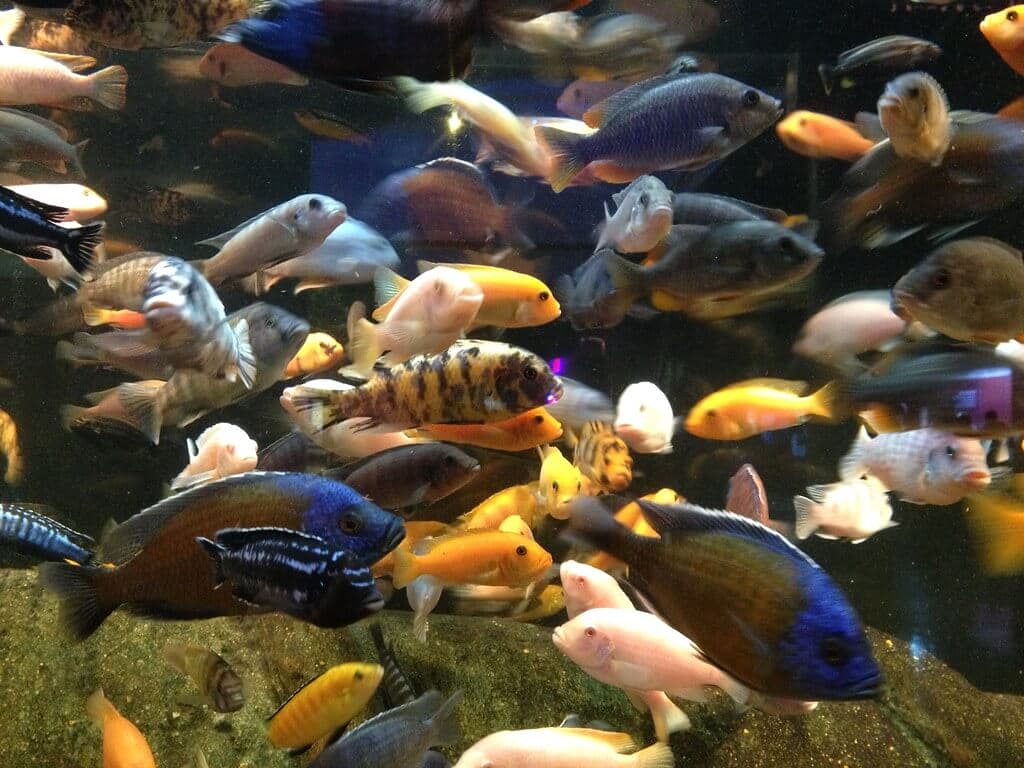
This diversity is evident in the vast ecological niches these fish occupy. Some species, like the Snail Crusher Hap, dwell within empty snail shells, while others, such as the Giant Hap, roam the lake’s depths, collecting periphyton (algae growing on plants). Predators like the Malawi Hawk stalk fish, while the Yellow Crest Nkanda feeds on zooplankton.
Threats
Lake Malawi’s unique ecosystem is under pressure from anthropogenic threats, including overfishing, habitat degradation, pollution, and climate change.
Overfishing
The lake supports a large artisanal fishery, with over 40,000 fishermen using a variety of traditional methods, such as beach seines, gillnets, and traps. The increasing demand for fish, driven by population growth and the export market, has led to the intensification of fishing efforts and the use of unsustainable practices.
The overfishing of certain cichlid species, such as the chamber (Oreochromis karongae), has led to local extinctions and the collapse of once-productive fisheries.
Habitat Degradation
Habitat degradation, caused by shoreline development, deforestation, and agricultural activities, is a growing concern for Lake Malawi’s ecosystem. Culturing crops near the lake and its tributaries also contributes to habitat degradation. Using fertilizers and pesticides can lead to the eutrophication of the lake, promoting the growth of invasive aquatic plants, such as the water hyacinth (Eichhornia crassipes). These invasive plants can form dense mats on the lake’s surface, reducing light penetration, depleting oxygen levels, and altering the structure and function of aquatic communities.
Pollution
Pollution is an emerging threat to Lake Malawi’s ecosystem, particularly in the more densely populated southern region of the lake. Pollutants introduce excess nutrients, pathogens, and toxic substances into the water, with negative impacts on aquatic life and human health.
Agricultural activities contribute through the use of fertilizers and pesticides. The increasing use of motorized boats has led to the discharge of oil, gasoline, and other pollutants on water quality and aquatic life, particularly in shallow, nearshore areas.
Climate Change
Climate changes influence the distribution and abundance of aquatic organisms, particularly those with narrow thermal tolerances, such as many of the lake’s endemic cichlid species. The warming of the lake’s surface waters may also lead to the expansion of oxygen-depleted zones, reducing the availability of suitable habitats for fish and other aquatic life.
Changes in the timing and intensity of rainfall, including more frequent droughts and extreme precipitation events, affect the lake’s water level and the input of nutrients and sediment from the catchment area.

Conservation
Safeguarding Lake Malawi’s unique biodiversity and ensuring the sustainable use of its resources requires a multi-stakeholder approach that engages local communities, government agencies, and international conservation organizations.
- Community-Based Fisheries Management: The Malawi Department of Fisheries, in collaboration with local communities and NGOs, is promoting the adoption of community-based fisheries management (CBFM) approaches to address overfishing and ensure the sustainable use of the lake’s fisheries resources.
- Aquaculture Development: The Malawi Government has developed improved fish farming technologies, the promotion of native species in aquaculture, and the provision of training and extension services to fish farmers. The integration of aquaculture with other agricultural practices, such as rice farming, is also being explored as a means of enhancing food security and reducing the environmental impacts of fish farming.
- Habitat Protection and Restoration: Certain programs have been implemented to safeguard important fish breeding and nursery habitats, as well as the terrestrial ecosystems that regulate water quality and flow. Restoration efforts, such as the replanting of riparian vegetation and the rehabilitation of degraded wetlands, are also being undertaken to enhance the ecological integrity of the lake’s shoreline.
- Climate Change Adaptation: Authorities are developing and implementing climate change adaptation strategies for the lake’s basin. These strategies include the promotion of climate-smart agriculture practices, the diversification of livelihoods, and the strengthening of early warning systems for extreme weather events.
- Transboundary Cooperation: Strengthening transboundary cooperation is essential for addressing the complex, cross-cutting challenges facing Lake Malawi and ensuring the equitable and sustainable use of its resources for the benefit of all riparian communities.
Human Impact and Sustainable Tourism
Tourism is a major human influence on Lake Malawi, with the lake’s clear waters, sandy beaches, and unique biodiversity attracting visitors from around the world. The impact of human activities on Lake Malawi is becoming increasingly apparent. The rapid development of coastal communities has led to the clearing of natural vegetation and the fragmentation of habitats.
The expansion of farming practices in the surrounding areas has resulted in an influx of nutrients into the lake, stimulating the growth of harmful algal blooms that suffocate aquatic life by depleting dissolved oxygen levels. Moreover, the discharge of untreated wastewater from nearby settlements and the release of pollutants from industrial activities further compromise the lake’s water quality, creating a toxic environment for both aquatic organisms and the people who depend on this vital resource.

Sustainable Tourism Practices
Lake’s aquatic and marine life can be safeguarded by promoting responsible tourism. Eco-conscious tour operators are leading the way by offering immersive experiences that educate visitors about Lake Malawi’s unique ecology and the importance of its conservation. From guided snorkeling excursions that showcase the lake’s vibrant fish species to hiking trails that wind through the surrounding forests, these activities encourage a deeper appreciation for the natural environment while minimizing the impact of tourism.
To further support sustainability, local businesses and accommodations are embracing eco-friendly practices. From reducing single-use plastics to implementing water conservation measures and promoting the use of renewable energy, these initiatives demonstrate a commitment to protecting the lake’s health.
Traditional knowledge and cultural practices are celebrated, allowing visitors to gain a deeper understanding of the intricate relationship between the lake and the people who depend on it.
Historical and Cultural Significance
Local residents comprising of Malawians, Tanzanians, and Mozambicans have created a living out of the enormous blessings at the lake. It is deeply intertwined with local traditions, beliefs, and livelihoods. The lake features prominently in folklore and oral histories, often depicted as a sacred and mystical entity.
Lake Malawi has a rich history and cultural significance that spans thousands of years. The lake and its surrounding landscape have been home to diverse ethnic groups, including the Tonga, Yao, and Chewa peoples.
Many traditional beliefs and practices are closely tied to the lake and its resources, such as the veneration of ancestral spirits believed to reside in the waters and the use of fish in ceremonial and religious contexts.

The lake has also played a significant role in the history of the region, serving as a major trade route and cultural crossroads. Arab and Swahili traders began visiting the lake as early as the 9th century, exchanging goods such as cloth, beads, and salt for ivory, gold, and slaves. The arrival of European explorers and missionaries in the 19th century brought further changes to the region, including the establishment of colonial boundaries and the introduction of Christianity.
What Makes Lake Malawi Special
- As the southernmost of the African Great Lakes, Lake Malawi boasts a unique and diverse ecosystem that has earned it global recognition.
- As a UNESCO World Heritage Site, it is as globally important as the Galápagos Islands.
- Lake Malawi’s clear, nutrient-poor waters are characterized by a fascinating phenomenon known as “mbuna,” which refers to the diverse assemblage of rock-dwelling cichlids that inhabit the lake’s rocky shorelines. These colorful and highly specialized fish have adapted to the unique conditions of the lake, exhibiting a wide range of feeding strategies and behaviors.
- It plays a vital role in the livelihoods and well-being of the communities that depend on it. Lake Malawi supports thriving fisheries, providing a crucial source of protein and income for millions of people in the region.
- The lake also serves as a major transportation route, facilitating trade and commerce among the three countries that share its shores: Malawi, Mozambique, and Tanzania.
More Interesting Facts About Lake Malawi
- Lake Malawi is the ninth-largest lake in the world by surface area, covering approximately 11,400 square miles (29,500 square kilometers).
- The lake is the third-largest and second-deepest lake in Africa, with a maximum depth of 2,316 feet (706 meters) and an average depth of 958 feet (292 meters).
- The lake is shared by three countries: Malawi, which claims the largest portion of the lake’s surface area, Mozambique, and Tanzania.
- The lake’s name varies by country: it is known as Lake Malawi in Malawi, Lake Nyasa in Tanzania, and Lago Niassa in Mozambique.
- The lake is home to more species of fish than any other lake in the world, with estimates suggesting that it harbors over 1,000 fish species, the majority of which are endemic cichlids.
- Lake Malawi is part of the East African Rift System, formed by the tectonic activity of the African Rift Valley. The lake’s deep basins and steep shorelines are a result of this geological history.
- The lake’s water levels are influenced by seasonal rainfall patterns, with the rainy season typically occurring between November and April.
- The lake and its surrounding areas are home to several protected areas, including the Lake Malawi National Park, a UNESCO World Heritage Site recognized for its outstanding natural beauty and biodiversity.
FAQs
Is it safe to swim in Lake Malawi?
While generally safe to swim in Lake Malawi, it’s important to be aware of the risk of schistosomiasis (bilharzia), a parasitic infection transmitted through contact with contaminated freshwater. It’s recommended to take precautionary measures, such as a single dose of preventive medication after swimming, even if you don’t experience any symptoms. The disease has unfortunately reemerged and is most prevalent in the southernmost lake region, particularly around Cape Maclear, a town in the Mangochi District, home to many lodges and resorts.
What are the African Great Lakes?
The African Great Lakes are a series of vast and ecologically diverse freshwater bodies located in East Africa, within the vicinity of the Great Rift Valleys. They include, in order of size: Lake Victoria, Lake Tanganyika, Lake Malawi, Lake Turkana, Lake Albert, Lake Kivu, and Lake Edward. These lakes are renowned for their unique biodiversity, stunning natural beauty, and significant role in supporting the livelihoods of millions of people in the region.
What is unique about Lake Malawi?
With nearly all of its hundreds of fish species found nowhere else on Earth, Lake Malawi stands as a living laboratory for the study of evolution, rivalling the Galapagos Islands in its significance. This extraordinary abundance of endemic species and its remarkable contribution to scientific understanding make Lake Malawi truly unique.
Why is Lake Malawi known as the Lake of Stars?
It is known as the “Lake of Stars” due to a captivating sight witnessed by the explorer David Livingstone. At night, the lanterns of fishermen on their boats cast shimmering reflections upon the lake’s vast surface, creating an illusion of stars scattered across the water.