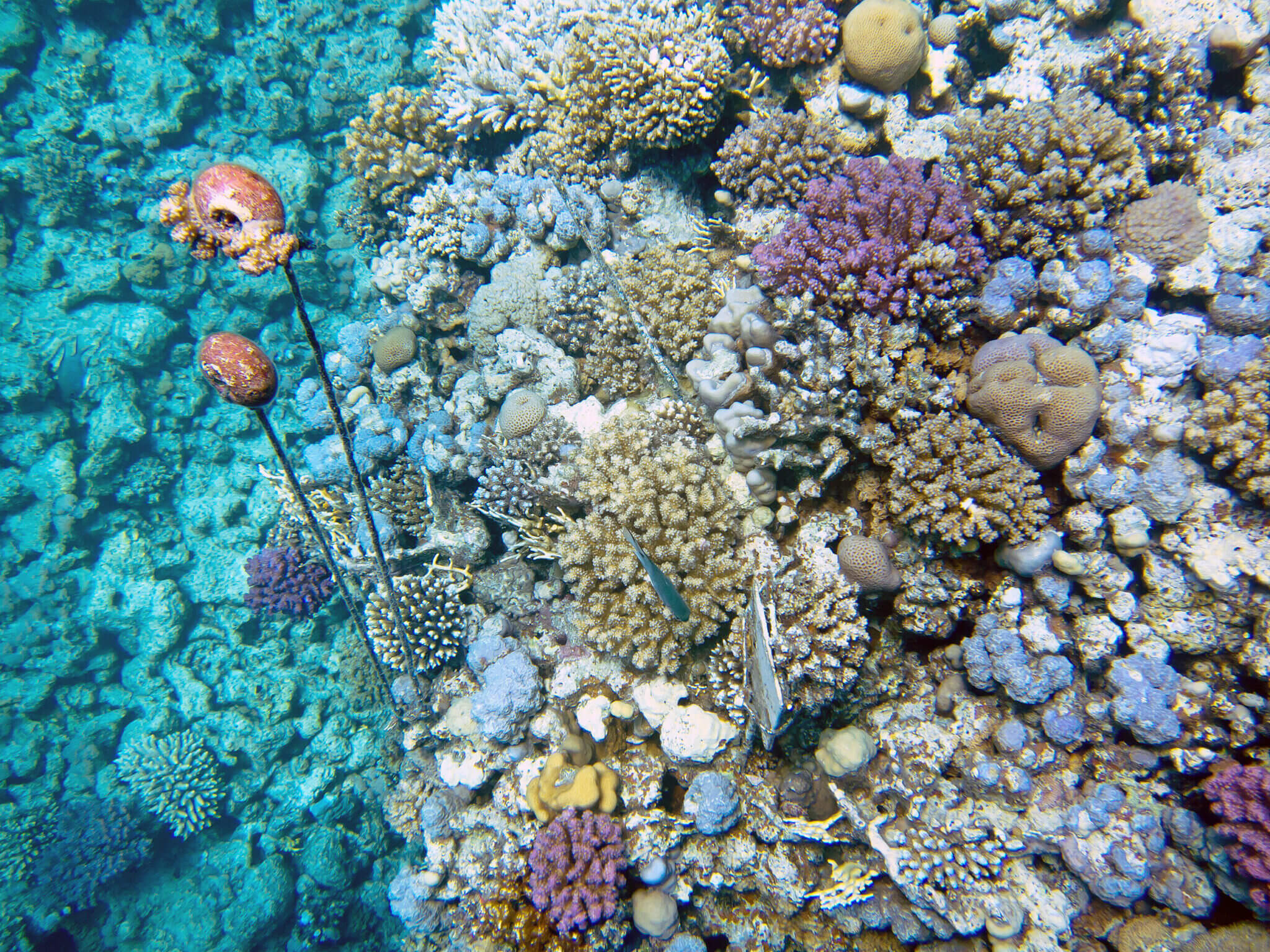

Growing at only 0.3 to 2 cm a year, coral reefs spread extremely slowly, but that has not stopped these life-supporting organisms from spanning large distances.
Although the largest coral reef covers an area of 348,700 km², it did not get there overnight, and in fact, it took thousands of years to reach its impressive size.
That said, although the Great Barrier Reef is the largest reef system in the world, it is still considered young compared to others, such as the Chazy Fossil Reef, which is estimated to be well over 400 million years old.
Come with me as we dive deep below the surface and take a step back to explore some of our planet’s oldest coral reefs.
5. Red Sea Coral Reefs
Age: Estimated to be around 5,000 to 7,000 years
Formation Period: Holocene Epoch
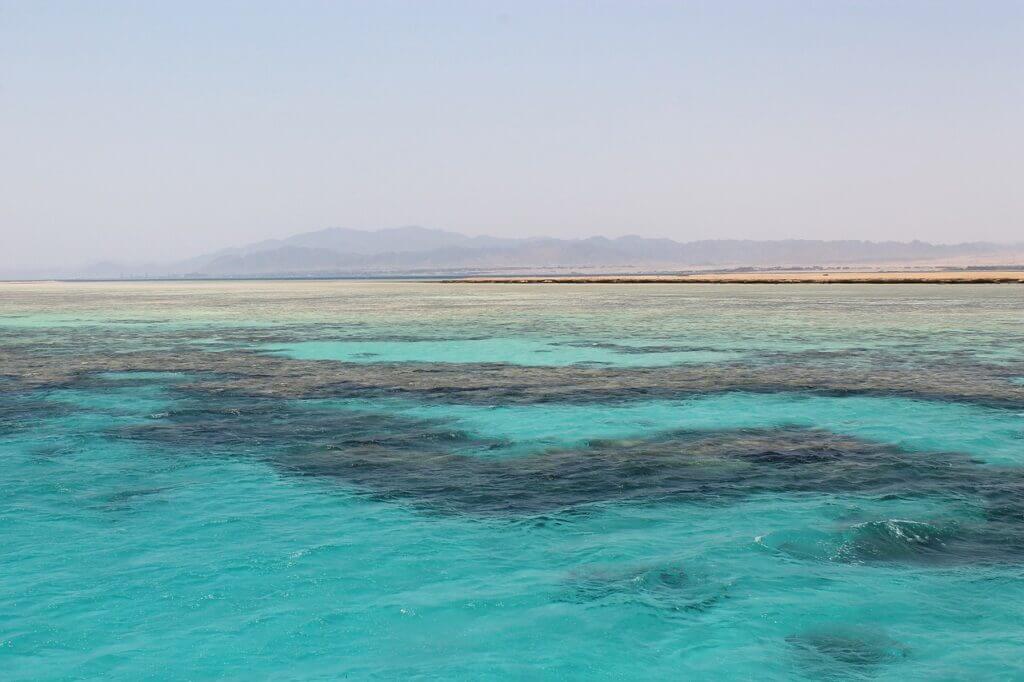
The youngest on our list, but worth a mention as although it is young (as far as coral reefs go), the Red Sea and its reef system has made a name for itself as a go-to site for SCUBA divers, researchers, and other ocean enthusiasts.
The Red Sea consists of approximately 2,000 km of fringing reefs that support a variety of life ranging from reptiles such as sea turtles and snakes, invertebrates like the approximately 175 species of nudibranch, as well as dozens of shark species and an abundance of stony coral.
4. Tubbataha Reefs Natural Park, Philippines
Age: Estimated to be over 100,000 years
Formation period: Pleistocene Epoch

Among one of the most renowned SCUBA and snorkeling locations in the world are the reefs of the Phillippines. With warm water and crystal-clear visibility, the region has more to offer than you may have first thought.
Covering an area of approximately 960 square km, this atoll reef is not only old, but hosts a high density of marine species such as whales, sharks, turtles, Napoleon wrasse, and approximately 700 species of fish.
Not only does the reef hold a wide diversity of vertebrates, but nearly 400 species of coral can be found living on the reef – almost 90% of coral species found in the Philippines.
3. Great Barrier Reef, Australia
Age: Approximately 600,000 years
Formation period: Pleistocene Epoch
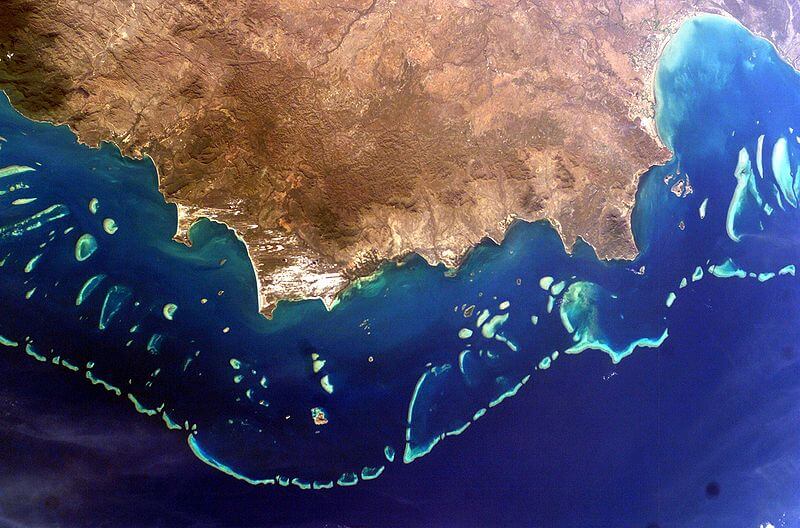
When compiling just about any list of famous reefs, the Great Barrier Reef is likely to find itself mentioned, and this list of the oldest reefs in the world is no different.
Dating back more than half a million years, the GBR is not only one of the oldest coral reefs on Earth but is also the largest.
Thanks to the shallow flooding of low-lying coastal planes at the end of the last ice age, coral was easily able to spread in an abundance of space and ideal conditions.
Now so large that it can be seen from space, the Great Barrier Reef is possibly the most famous reef in the world and one of the most popular SCUBA diving locations to view marine life, such as Australia’s Great 8.
2. Eniwetok Atoll, Marshall Islands
Age: Formed around 12 million years ago
Formation Period: Miocene Epoch
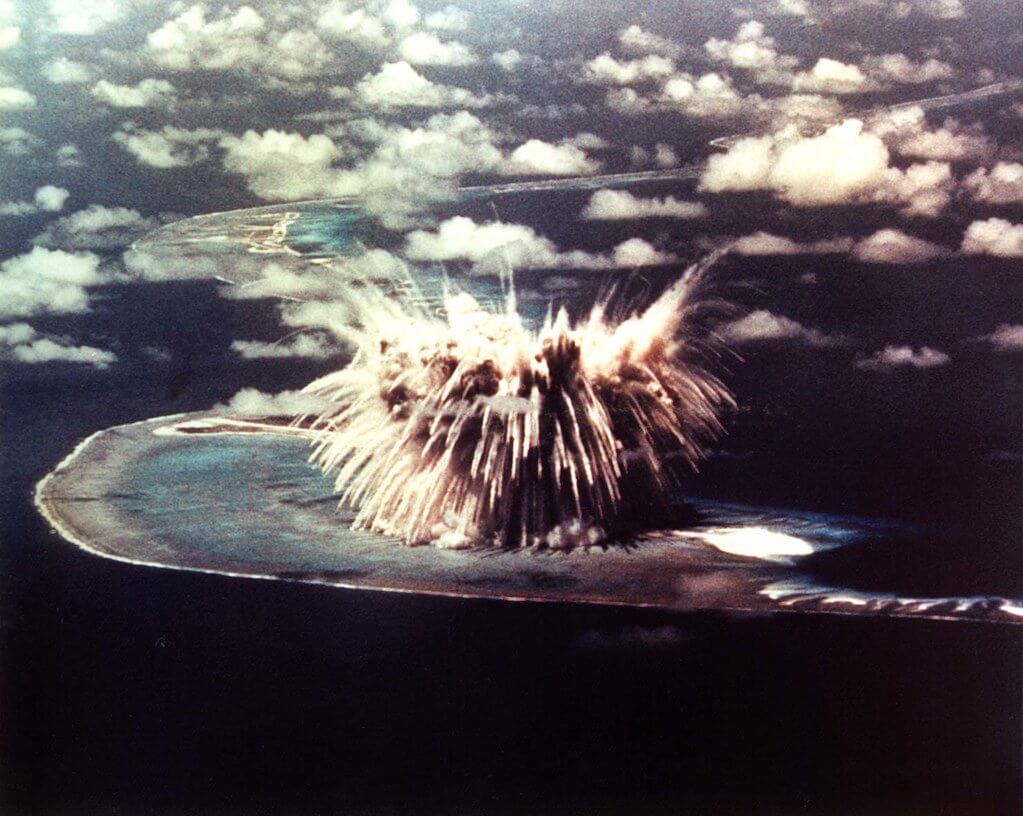
The Eniwetok Atoll is not only one of the oldest coral reefs on the planet but holds deep human history.
Being the second largest of the marshal island atolls, the Eniwewtok Atoll played a major role in the conflict of the Second World War.
This large atoll of 40 islands was taken from the Japanese during the Second World War, and used by the U.S.A. as a nuclear testing site through the Cold War.
Since then, a $200 million nuclear cleanup has been conducted by the U.S. to try and rehabilitate the area.
Despite the harsh conditions created by nuclear waste, marine life has, as it always does, found a way to live on.
Stony coral and a variety of coral reef fish can be found along the banks of the atoll, ranging deeper than 100 meters in sections.
Whales, sharks, and dolphins are also common around the atoll, as well as a variety of crustations, algae, and plankton within the lagoon.
1. Chazy Fossil Reef, New York, USA
Age: Approximately 480 million years
Formation Period: Middle Ordovician Period
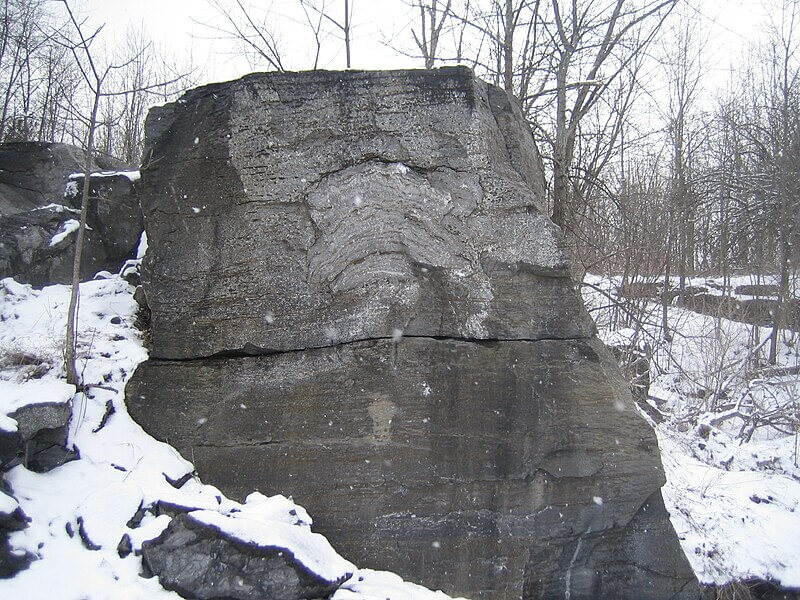
Chazy Reef, found in Lake Champlain, is known as the oldest reef on the planet.
Although the reef is no longer alive and instead holds reef fossils of over 480 million years old, our list would not be complete without it.
According to Roger Cuffee, a paleontology professor at Penn State University, Chazy was not only the first established reef by bryozoa (invertebrates that adapted after sponges but before corals) but was also the most extensive.
The fossilized reef is situated in a natural park that covers an area of 1,567 acres and stretches over three islands in Lake Champlain.
It is unclear exactly why the reef eventually died, but it is likely due to a series of geological changes that took place over millions of years.
As the reef is now situated in a freshwater lake, one possibility is that dropping seawater levels lead to the lake’s formation.
Over the years, the salinity levels and water conditions would have slowly changed, thus no longer providing a habitat that was suited for the reef invertebrates.
FAQs
How do scientists determine the age of ancient coral reefs?
Scientists use various dating methods, including radiometric dating of associated rocks and fossils, to estimate the age of ancient coral reefs.
What factors contribute to the decline of ancient coral reefs?
Ancient coral reefs can decline due to geological and environmental changes, including shifts in sea levels, alterations in water temperature, and changes in sedimentation patterns. These factors act over extended periods, influencing the health and sustainability of the reef ecosystem.
Why do ancient coral reefs become fossils?
Over time, the remains of coral organisms and associated marine life become buried in sediment. Through processes like lithification and mineralization, these organic materials turn into fossils, preserving the structure and composition of the ancient reef.
What is the significance of ancient coral reefs like Chazy?
Ancient coral reefs, such as the Chazy Fossil Reef, are crucial for understanding the evolution of coral ecosystems and marine life over geological timescales. They provide insights into the Earth’s history and past environmental conditions.


