

The Great Barrier Reef is undoubtedly one of the ocean’s most mesmerizing features. Not only does it cover an area of 134633 square miles (348 700 km²) that can be seen from space, but it holds the most incredible biodiversity of any ocean habitat on the planet.
Housing over 9,000 known species over approximately 3,000 individual reefs (with constant new discoveries), the Great Barrier Reef and its animals provide continuous entertainment and awe.
Although you will be familiar with many of the species found on the reef, such as dolphins, sharks, turtles, and a variety of reef fish, this article takes a deeper look into what Great Barrier Reef animals you may discover.
Whether you will be SCUBA diving on the Great Barrier, or simply enjoying a scenic boat trip along the water’s surface, the GBR has an abundance of life to offer.
The Great Eight
No article about the Great Barrier Reef (GBR) animals will be complete without mentioning the Great 8.
Although there are thousands of species to discover in this marine habitat, some stand out more than others.
The Great Eight have made a name for themselves along this barrier reef and attract thousands of tourists each year, many of which have come specifically to spot one, or all of these wonders.

- Giant Clam: The Giant Clam is the largest and heaviest living bivalve mollusk, sometimes weighing up to 200kg and living for as long as 100 years.
- Manta Ray: Manta Rays are a highly intelligent species and the largest of the ray family. Unlike stingrays, these marine animals don’t have barbs, which makes them somewhat like flying underwater-angels.
Growing up to 30 ft (9m) and weighing approximately 6,6000 lb (3,000 kg), these majestic animals can be spotted on the GBR year round, but most commonly during the months of June through September. - Maori Wrasse: Getting their name from their unique facial patterns that closely resemble the traditional war paint of the Maori warriors in New Zealand, the Maori Wrasse is the largest of the wrasse family, with the ability to grow well over 2 meters.
Despite their unique appearance and tourist value, these fish are highly sought out as a food source and are highly susceptible to overfishing. Because of this, they have been under the protection of the Coral Reef Fin Fish Management Plan since 2003. - Sharks: Of the 509 known shark species, approximately 180 of them can be found roaming along the GBR or in close proximity to the reef. Most of these are non-threatening; however, there are larger shark species, such as great whites, tiger sharks, and bull sharks.
That said, there is a huge variety of smaller, placid sharks, such as black-tip sharks and white-tip reef sharks, nurse sharks, and the Lemon shark, that pose no threat but are non-less mesmerizing when spotted. - Clownfish: When it comes to reef fish, none are more popular than the famous clownfish. There are approximately 30 types of anemone fish that inhabit our ocean waters, with 12 of these colorful creatures found on the Great Barrier Reef.
Although they have become popular through ocean-related Hollywood movies such as Finding Nemo, clownfish hold a unique part of the reef’s ecology with their symbiotic relationship with anemones.
Whether you are SCUBA diving or snorkeling, these tiny bright fish can be spotted in abundance in and around their anemone homes. - Sea Turtles: Sea turtles are some of the oldest known marine species, with the oldest found fossils dating back almost 220 million years. Of the seven sea turtle species, six are found on the Great Barrier Reef.
Although they are all considered endangered or threatened, that does not stop the regular sightings of Hawksbill, Green turtles, Loggerheads, and Flatback turtles in the area.
Leatherback turtles and Olive Ridleys are also present along the reef, but due to their decreasing population, their spotting is becoming more and more rare.
- Potato Cod: Large, uniquely colored, and curiously friendly, the potato cod is often spotted in the waters of the GBR by SCUBA divers and snorkelers alike. This giant fish is native to the waters of Australia and is easily spotted by its unique, potato-like markings along its body.
This giant grouper has been heavily overfished over the years, but thanks to mass conservation efforts, it now falls under the “least concern” category of the IUCN. - Whales: If whales are what you want to see, then visiting the GBR from June to November will put you right in the middle of the migration of up to 100,000 whales making their way from the cold Antarctic waters to the warmer subtropical waters of the Great Barrier Reef.
Although you will be able to spot a variety of whale species during this time, the most common, and possibly the most jaw-dropping, are the humpback whale and dwarf minke whale.

Noteworthy and Strange Great Barrier Reef Animals
The Great Barrier Reef (GBR) holds greater biodiversity than any other UNESCO site; therefore, mentioning all of its species is nearly impossible.
That said, apart from the Great 8, this reef ecosystem is home to some unique and wonderfully bizarre creatures that can be sought out if you have the additional time.
Some of these include:
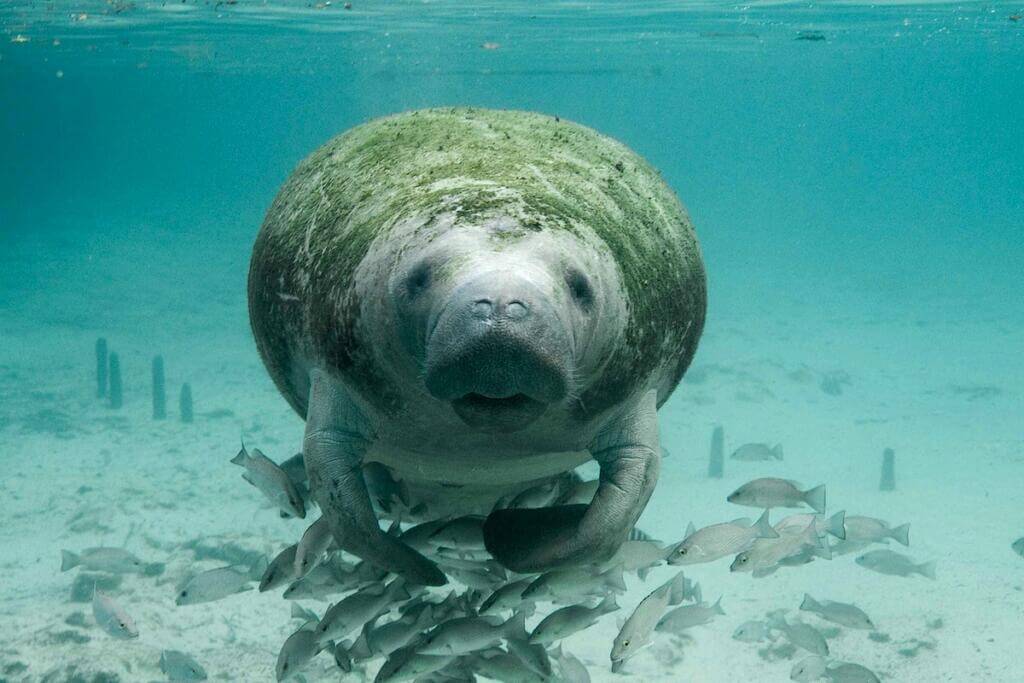
- Dugong: Known as the sea cow, dougongs are unique marine animals that are closer related to elephants than they are to dolphins and whales that their appearance represents. Found mostly grazing on seagrass fields, these marine mammals are highly threatened due to habitat destruction of their feeding areas.
- Crown-of-Thorns: Native to the GBR, the crown-of-thorns starfish is a large marine invertebrate that feeds on coral reefs. Although they are native to the area, large population influxes have been tied to the great destruction of coral reef areas.
That said, these unique sea stars are interesting to see, especially during mass outbreaks.

- Lions mane Jellyfish: The lion’s mane Jellyfish is the largest jellyfish species and one for the books. Growing up to 30 meters long (with their tentacles included), they are a sight to see, but be cautious as getting wrapped in their tentacles can be devastating.
- Box jellyfish: When it comes to creatures of the GBR, the box jellyfish is among the most deadly, and one that you want to avoid. Being stung by these tiny invertebrates can quickly lead to cardiac arrest, and sometimes death; however, as they are native to the area, it is always a prize to spot them (from a distance).
- Reef Stonefish: Another venomous fish living on the GBR, the reef stonefish is a hideous-looking creature that discusses itself as a rock, or part of the reef. The best way to view these is when on SCUBA, which allows you to get close but not so close that you risk injury.
- Spaghetti Worm: Spaghetti Worms are bizarre, to say the least. This species of tube worm gets its name from the abundance of spaghetti-like tentacles that sometimes extend up to 1.5 meters from the worm’s body.
These tentacles are used for feeding and making an absolutely astonishing yet mind-bending appearance.
If anything makes you feel like the underwater world is full of aliens, it will be the spaghetti worm. - Parrotfish: Although parrotfish are common along many of the world’s tropical and sub-tropical reefs, they are worth noting, especially if you plan a night dive or snorkel.
Apart from their vibrant colors and coral-eating tendencies, during the night, many parrot fish species blow a bubble of mucus around themselves.
This protects from parasites and reef sharks while the parrot fish rests.
- Cuttlefish: As far as reef animals go, as far as I’m concerned, no list is complete without the cuttlefish.
Not only are these strange creatures some sort of blend between a squid and octopi, but their ability to change color will have you losing your breath.
One of the best times to view cuttlefish on the GBR is during mating season, when you can see the males flashing an array of electrical colors, doing their best to impress a mate.
Coral of The Great Barrier Reef
No list of marine animals will be complete without the mention of reef-building corals.
Although they are commonly mistaken for plants, these tiny sea creatures are in fact animals that form the basis of the biodiverse communities found on the Great Barrier Reef.
There are approximately 400 species of coral found along the 3,000 individual reefs, all of which provide a food source, safety, and nursing grounds for the larger aquatic life that is drawn to the area.
For more fascinating Great Barrier Reef insights, check out our article on the “16 Fascinating Great Barrier Reef Facts You Should Know.“
FAQs
How many fish species live on the Great Barrier Reef?
There are approximately 1,500 known fish species on the GBR; however, new discoveries continue to be made.
How many Great Barrier Reef Animals are endangered?
There are currently 30 animal species on the GBR that are considered endangered. That said, this number fluctuates due to conservation efforts, and human interaction.
What is the largest Great Barrier Reef animal?
Although there are many large animals that make their home around the GBR, the whale shark is by far the largest.
Are there any extinct Great Barrier Reef animals?
Yes, there are extinct animals that once inhabited the Great Barrier Reef, including certain species of giant clams, sea cows, and coral.


