

Abalone (Haliotis), a marine gastropod mollusk known for its vibrant and beautiful shell, has a history deeply rooted in various cultures worldwide for its ornamental value. As a seafood delicacy, abalone is significant in both ecological and economic spheres.
Other popular names for Abalone include ear shells, sea ears, and, in some regions of Australia, muttonfish or mutton shells.
However, these unique creatures face severe threats due to overfishing and environmental changes. This article aims to shed light on the intriguing life of abalone, its ecological importance, the challenges it faces, and the conservation efforts needed to ensure its survival.
Appearance
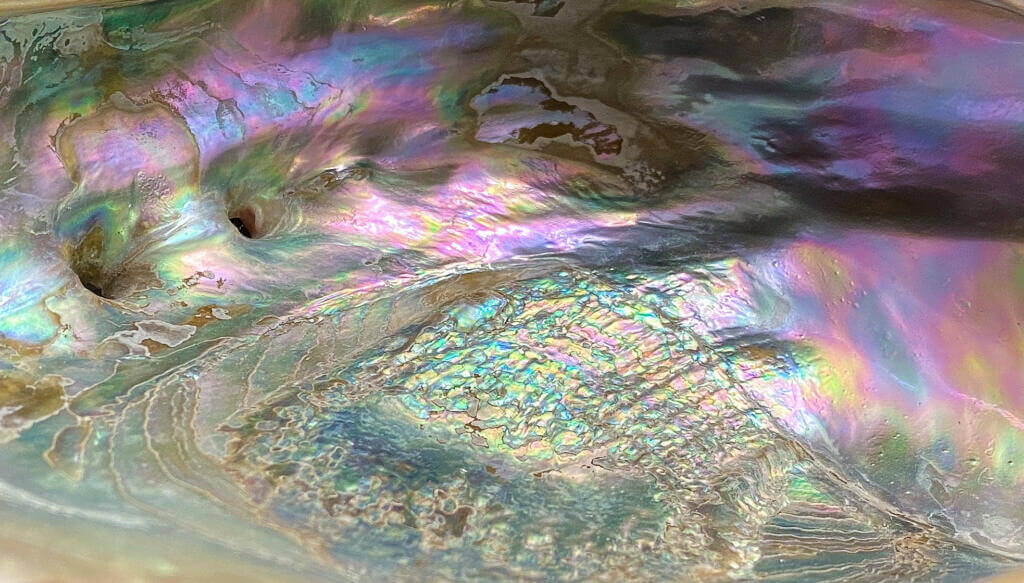
Abalone is a flattened sea snail that has ear-shaped shells. It has a flat and open shape, instead of the spiral shell seen in the majority of sea snails. Their shells are lined with nacre (commonly known as mother-of-pearl), which consists of iridescent layers of the mineral aragonite that strengthen and thicken the abalone shell.
The abalone has a soft body protected by its shell and a large, muscular “foot” that it uses for movement and attachment to surfaces.
The epipodium, a sensory organ that is covered in a plethora of tentacles, is the term for the outside border of the foot. Each species of abalone has a different arrangement of tentacles, colors, and patterns on its epipodium.
Their strong, muscular “foot” allows them to hold tightly to rocks and other hard surfaces while their oval-shaped shells protect them from predators.
Water is vented via the perlemoen’s gills through a series of distinctive pores in the shell. The Abalone expels all of its waste into the sea through its gill chamber, a region of its body close to these openings.
Between 30 and 130 species of abalone have been identified on the global scale.
Habitat
Abalone live in rugged habitats containing vegetation in water depths between 130 and 600 feet. It is found in shallow waters or coastal waters of every continent, except the Arctic, Antarctica, the Atlantic coast of North America, and the Pacific coast of South America.
While other species live elsewhere across the world, there are seven abalone species in California: white abalone, black abalone, red abalone, green abalone, pink abalone, pinto abalone, and flat abalone.

They are uncommon in the low intertidal zone and more prevalent subtidally. The majority of abalone species live in cold seas, such as those off the coasts of New Zealand, South Africa, Australia, Western North America, and Japan.
Diet
Abalone consumes seaweed in their native habitat, preferring certain less common types. Adults eat different types of algae. Although certain seaweeds are more nutrient-dense than others, a varied diet of weeds is generally regarded as ideal.
While certain plentiful weeds, like the kelp (Laminaria digitata), are sometimes a bulky source of food in the case of the European Abalone or former, delicate red and green weeds are favored.
Reproduction
They are broadcast spawners. As a dioecious animal, abalone has individuals of different sexes. They often spawn in the early morning or late afternoon.
Males discharge their sperm first, encouraging females to ovulate.
The start of the abalone breeding season and how long it lasts depend on the species and are also directly tied to the habitat’s environmental parameters, which are often highly associated with water temperature. A single Abalone release of eggs or sperm typically causes a large number of surrounding gravid animals to spawn. In the open water, the eggs are fertilized and hatch into larvae.
Through the second respiratory hole, the gametes are discharged into the saltwater. The female egg-laying process is represented by blue smoke and male ejaculation by a streak of gray smoke. In the first few years of reproduction, young abalone lay a few thousand eggs, but as they get older and bigger, they lay millions of eggs. At one moment, an 8-inch abalone may release 11 million eggs.

Ecological Importance
The abalone’s ecological importance lies in its role as a key species in marine ecosystems, contributing to biodiversity, food webs, and habitat health:
- Grazers of Algae: Abalones feed on algae, which helps control algae growth on rocky surfaces and maintains ecological balance in kelp forests and reef environments. This grazing promotes healthy habitats for other marine species.
- Prey for Predators: Abalones are a critical food source for various predators, including sea otters, starfish, fish, crabs, and humans. They play an essential role in the food web, supporting marine biodiversity.
- Indicator of Ecosystem Health: Abalone populations are sensitive to environmental changes, such as pollution, habitat degradation, and climate change. Their decline often signals broader issues within marine ecosystems.
- Habitat Providers: The shells of dead abalones provide shelter and surfaces for smaller marine organisms, contributing to the diversity of reef and seabed communities.
By supporting balance in kelp forests, contributing to the food chain, and serving as ecosystem indicators, abalones are vital for maintaining healthy and resilient marine environments.
Threats
Abalone’s popularity as a part of Californian culture peaked between the 1950s and 1970s. Fishing for white abalone has been illegal since 1997, the high price of abalone meat makes them a target of poachers. This species is frequently hunted for its valuable shells and food.
Surveys in southern California show a 99 percent decrease in the number of white abalone since the 1970s. While there were once millions, the current population is about 1,600 to 2,500 individuals.
Climate change could exacerbate environmental fluctuations, potentially harming farmed abalone.
White abalone were listed as endangered under the Endangered Species Act in 2001 and were the first marine invertebrate to be listed.
Various illnesses can affect them. The pests are recognized as belonging to the polychaete family Spionidae. Due to overfishing and the acidification of the seas brought on by man-made carbon dioxide, they are one of the many kinds of organisms that are in danger of extinction. This is because a lower pH erodes their shells.
6 More Facts About Abalone
- Today, aquaculture produces more than 95% of the Abalone population.
- Mortality rates with shells smaller than a quarter-inch long range from 60% to 99%.
- The largest and most desired is Red Abalone.
- Their blood is blue-green.
- By secreting a shell over parasites or bothersome particles, this amazing species creates pearls.
FAQs
What is so special about Abalone?
The Abalone is highly appreciated, extraordinarily tasty, and exquisitely rich flesh is regarded as a culinary delicacy. Abalone is frequently offered live in the shell, frozen, or canned, making it one of the priciest seafood species available. Even though it may be eaten raw or added to other meals, it is frequently chopped into thick steaks and pan-fried.
Do Abalones make pearls?
Abalone, the most colorful pearl-producing mollusk, is found worldwide in rocky coastal environments. These rock-clinging snails are quite common, yet they hardly ever produce pearls. When they do, an intestine or inner shell disruption is typically the reason why.
Is Abalone a snail or a clam?
As a mollusk, abalone belongs to the same family as clams, mussels, sea slugs, and octopuses. It is a gastropod, which is defined as a “stomach on a foot,” more particularly. It is an ear-shaped sea snail with flattened shells that lives in coastal areas all around the world.
Is Abalone venomous?
Abalone doesn’t sting or bite. It doesn’t have fangs or sharp teeth. No toxins, venom, or poisons, It is not swift on foot. On a good day, it may travel a few feet. It spends decades sitting peacefully in cracks and crevices, quietly munching on kelp.


