
The ocean is filled with several amazing animals. One of these sea creatures is the Longhorn Cowfish (Lactoria cornuta). They are a type of boxfish and possess the characteristic box shape with a flat underside. As suggested by its name, the Longhorn Cowfish is easily distinguishable by its long horns protruding from the front of its head.
Appearance
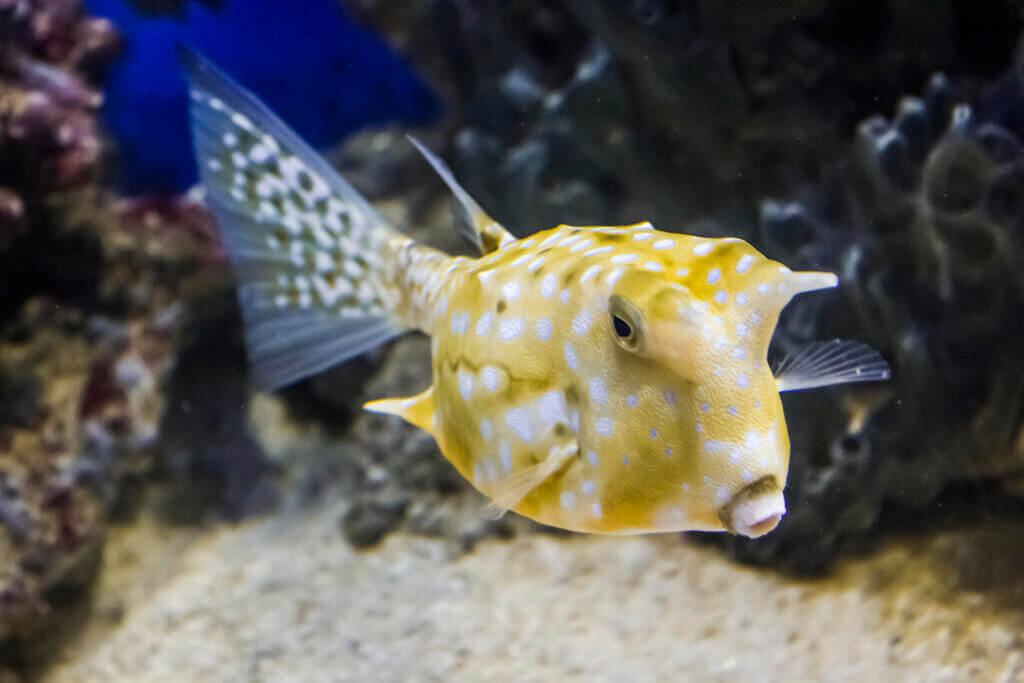
Not to be mistaken for the Yellow Boxfish, Longhorn Cowfish have a characteristic box-shaped body. Its tough, hexagonal bony carapace protects it from predators.
Its most distinctive feature is two pairs of long horns protruding from the front of its head, resembling those of a bull, and beneath its tail. These horns are primarily used for defense against predators.

The coloration of the Longhorn Cowfish can vary, but it often includes shades of yellow, orange, and brown. The skin may have spots, and the edges of the carapace can have bluish spots.
The appeal of the Longhorn Cowfish is further enhanced by their small prominent lip and relatively large eyes. Another distinguishing characteristic is their lack of gill cover; instead, they have a small slit or hole. They also have a small, round dorsal fin with 9 soft rays. Its caudal fin can be as long as its body and plays a crucial role in its hovering-like movement, known as ostraciiform swimming.
Habitat
Longhorn Cowfish are primarily found in the warm waters of the Indo-Pacific region, inhabiting coral reefs, lagoons, reef flats, and protected seaward reefs. They are also found in coastal areas like shallow mudflats or sandy habitats, bays, harbors, and estuaries.

Adults prefer deeper waters, living at depths of up to 100 meters, while juveniles tend to stay in shallower waters, often associating with Acropora corals near river mouths and protected mudflats.
Their range extends from the Red Sea and East Africa to Indonesia and the Marquesas Islands, and northward to southern Japan. Additionally, they have been found off the coasts of Australia, Lord Howe Island, and southern Africa.
Diet
Longhorn Cowfish are omnivores, displaying a diverse diet that includes benthic algae, various microorganisms, and foraminiferans found in sediments. Their diet also extends to mollusks, sponges, polychaete worms, small crustaceans, and even small fish.
This varied diet highlights their adaptability and opportunistic feeding behavior in their coral reef and coastal habitats. They have a unique hunting strategy of blowing jets of water into the sand to expose their prey hiding beneath it.
Reproduction
Longhorn Cowfish do not exhibit significant differences in appearance between males and females. They engage in a unique courtship dance around sunset. During the mating season, which typically runs from February to early October, males form harems consisting of three to four females.
Spawning occurs shortly after sunset or during the day when there is ample cloud cover, with females releasing their oval-shaped eggs near the substrate for protection. The eggs hatch into larvae, which develop the characteristic box-like carapace armor as they mature.
Conservation
Beneath their beautiful looks and environmental importance, the Longhorn Cowfish has faced several conservation issues. Longhorn Cowfish is categorized as “Not Evaluated” by the IUCN, meaning its conservation status has not been thoroughly assessed. However, there are potential threats to their populations.
One major concern is the increasing popularity of Longhorn Cowfish in the aquarium trade, as they are often captured for this purpose. This could potentially lead to overfishing and impact their numbers in the wild. Additionally, like many marine species, Longhorn Cowfish may face threats from habitat degradation and pollution. While not currently considered endangered, it is important to monitor their populations and regulate their trade to ensure their long-term survival in their natural habitats.
Longhorn Cowfish in Aquariums
The appearance and amusing behavior of the Longhorn Cowfish make it popular among home aquarists and one of the most commonly sold species of cowfish. Due to its peculiar outlook and curious character, it serves as an excellent pet for a marine enthusiast.
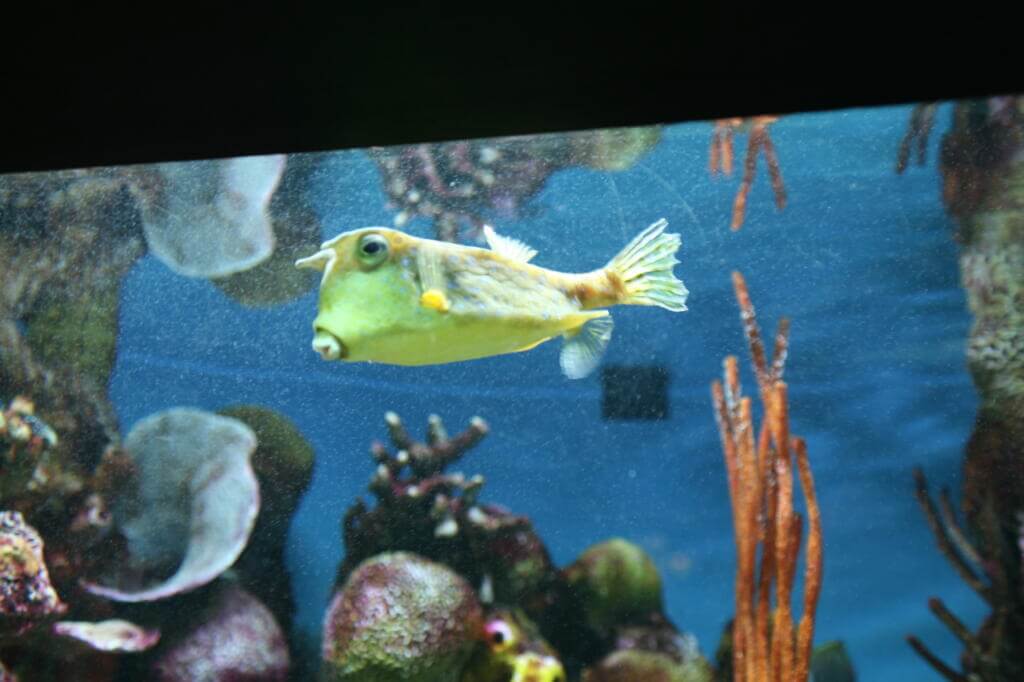
Longhorn Cowfish requires a lot of commitment to take care of it. Therefore, housing Longhorn Cowfish in a tank must be thought through well. Aquarists should do everything they can to mimic their native environment. Suitable water conditions in reef tanks are preferable. It is important to ensure proper pH levels for water and that it gets along with other species kept in tanks.
Facts About Longhorn Cowfish
- Longhorn Cowfish produce hums and clicks using muscles connected to their swim bladder.
- Longhorn Cowfish are the most well-known cowfish species in the aquarium trade.
- Longhorn Cowfish have no pelvic fins due to a lack of a pelvic skeleton.
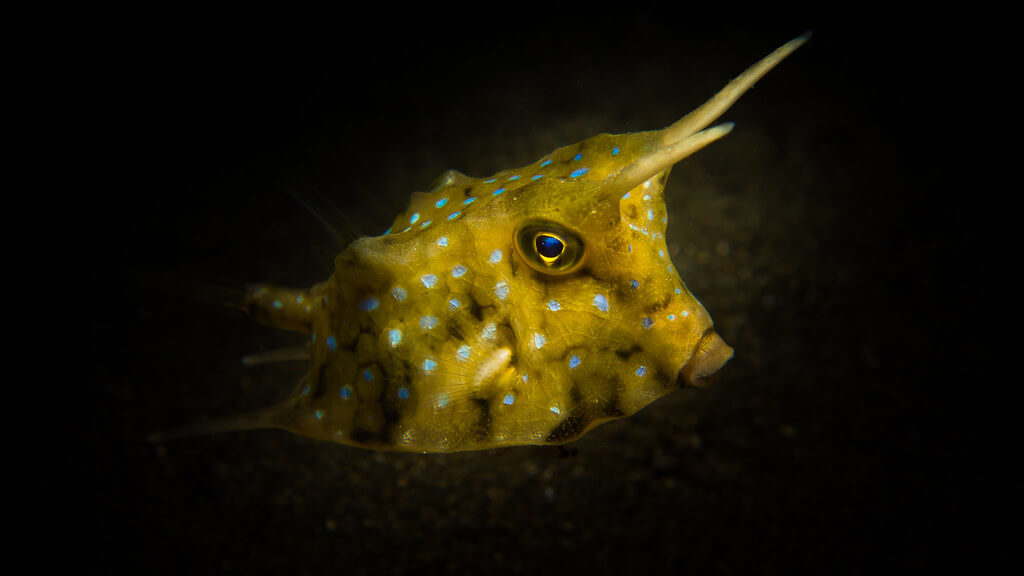
- Longhorn Cowfish’s horns are mostly hollow and made of mineralized collagen fibers.
- Longhorn cowfish move using a unique swimming method called ostraciiform swimming.
FAQs
Are Longhorn Cowfish Poisonous?
Longhorn Cowfish are poisonous. They possess a potent toxin called ostracitoxin within their skin, which they can release into the water when they feel threatened, stressed, or die.
How do Longhorn Cowfish move?
Longhorn cowfish move using a unique swimming method called ostraciiform swimming. This involves moving their caudal fin from side to side, creating a hovering-like appearance. Due to the absence of a pelvic skeleton, they lack pelvic fins, further contributing to their distinctive movement style.
Do Longhorn Cowfish have predators?
Longhorn Cowfish face predation from larger fish like Albacore and Big Eye Tuna. Their eggs are also vulnerable to predators such as Labrids and Pomacentridae. To protect their eggs, Longhorn Cowfish spawn close to the substrate, making them harder for predators to find.
How big of a tank does a cowfish need?
Longhorn Cowfish can grow to be around 20 inches (50 cm) in length, so they require a sufficiently large tank. A tank with a capacity of at least 100 gallons is recommended to provide them with enough space to swim and thrive comfortably.
Is a Cowfish a Pufferfish?
Cowfish and Pufferfish are not the same. While they are both part of the order Tetraodontiformes and share some similarities, such as the ability to produce toxins, they belong to different families. Pufferfish have the ability to inflate their bodies with water or air when threatened, while Cowfish have a rigid, box-like body encased in bony plates.


