
Dolphins and porpoises, often mistaken for one another, are fascinating marine mammals belonging to the order Cetacea (from the Greek “ketos,” meaning “large sea creature”). While sharing similarities, they possess distinct characteristics. As intelligent and social creatures, both face the threats of climate change, pollution, and habitat encroachment.
Read on to learn more about the unique traits and challenges faced by these fascinating marine mammals!
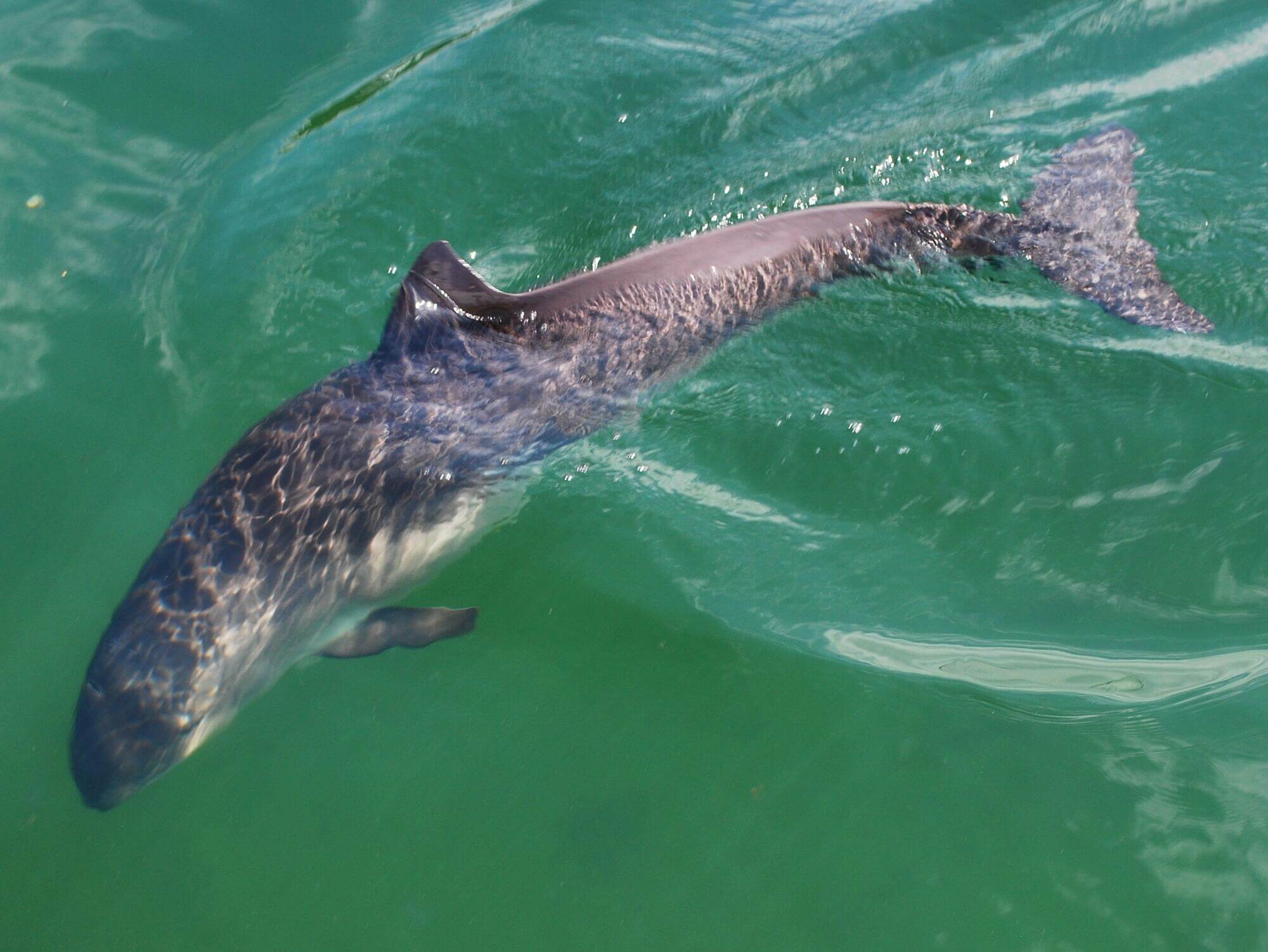
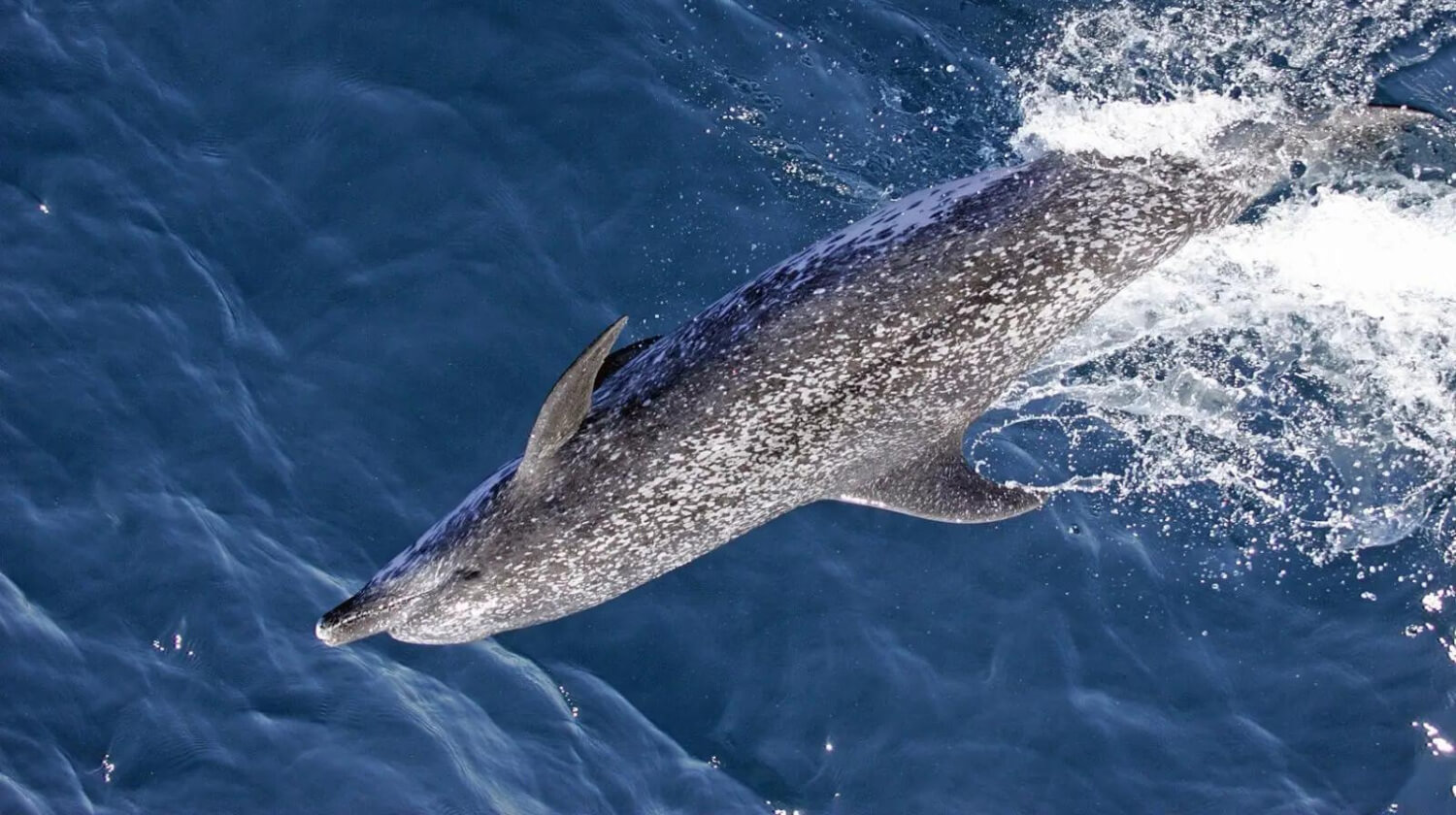
Image Credits: Erik Christensen (left) NOAA Southeast Fisheries Science Center (right)
Porpoise vs Dolphin: Main Differences
Appearance: Dolphins exhibit a streamlined, torpedo-shaped body, whereas porpoises have a stockier, more rounded body shape. The dorsal fin of dolphins is prominent and curved, while porpoises have a smaller, more triangular dorsal fin. Additionally, dolphins have conical teeth, while porpoises have spade-shaped teeth. Finally, dolphins typically have a longer, more pointed snout (rostrum) compared to the blunter, rounded head of porpoises.
Size: Dolphins generally range in size from 4 to 30 feet, depending on the species, making them significantly larger than porpoises, which typically measure between 4 and 7 feet in length.
Habitat: Dolphins inhabit a wide range of marine environments. Porpoises, on the other hand, are more restricted, preferring coastal waters and harbors.
Diet: Dolphins are primarily carnivores, feeding on fish, squid, and other marine animals. Porpoises, while also consuming fish and squid, have a more varied diet that can include crustaceans and other small invertebrates.
Behavior: Dolphins often live in complex social groups called pods, exhibiting cooperative behaviors and strong social bonds. Porpoises tend to form smaller, less structured groups. Additionally, dolphins are known for their diverse vocalizations, including whistles, clicks, and squeaks used for communication and echolocation. Porpoises also vocalize but produce less complex sounds.
Who Would Win?
A definitive “winner” between a dolphin and a porpoise is elusive due to their distinct strengths.
Dolphins excel in speed and agility with their streamlined bodies, making them efficient hunters and adept at predator evasion. Porpoises, however, boast superior maneuverability in tight spaces thanks to their smaller size and stockier build.
Both heavily utilize echolocation, with dolphins potentially holding a slight edge due to their larger brains and more diverse vocalizations. Dolphins are known for their intelligence and complex social behaviors, while porpoises also demonstrate adaptability within their environments.
In terms of physical strength, dolphins generally have the advantage with their larger size. The habitat would significantly influence the outcome, with dolphins’ versatility across open oceans and coastal areas providing advantages, while porpoises might benefit from the maneuverability and potential hiding spots offered by shallower coastal waters.
Porpoise
A porpoise is rounder than a dolphin with a small mouth and teeth resembling spades. Porpoises grow to around 5 to 6.6 feet (1.5 to 2 meters) and weigh 110 to 265 lbs. (50 to 120 kilograms).
The dorsal fin presents a distinct contrast to the dolphin’s prominent, curved fin. This fin is smaller and more triangular, positioned roughly in the middle of its back, providing stability and balance during swimming.
On the sides of its body, just behind the head, lie the pectoral fins. These fins are relatively small and rounded or slightly pointed at the tips, assisting in steering, maneuvering, and braking.
Atop the porpoise’s head, typically slightly forward of the eyes, is the blowhole, a single, crescent-shaped opening. This “nostril” serves as the porpoise’s breathing apparatus.

Species
There are a total of seven species of porpoise, across three genera (Neophocaena, Phocoena, and Phocoenoides).
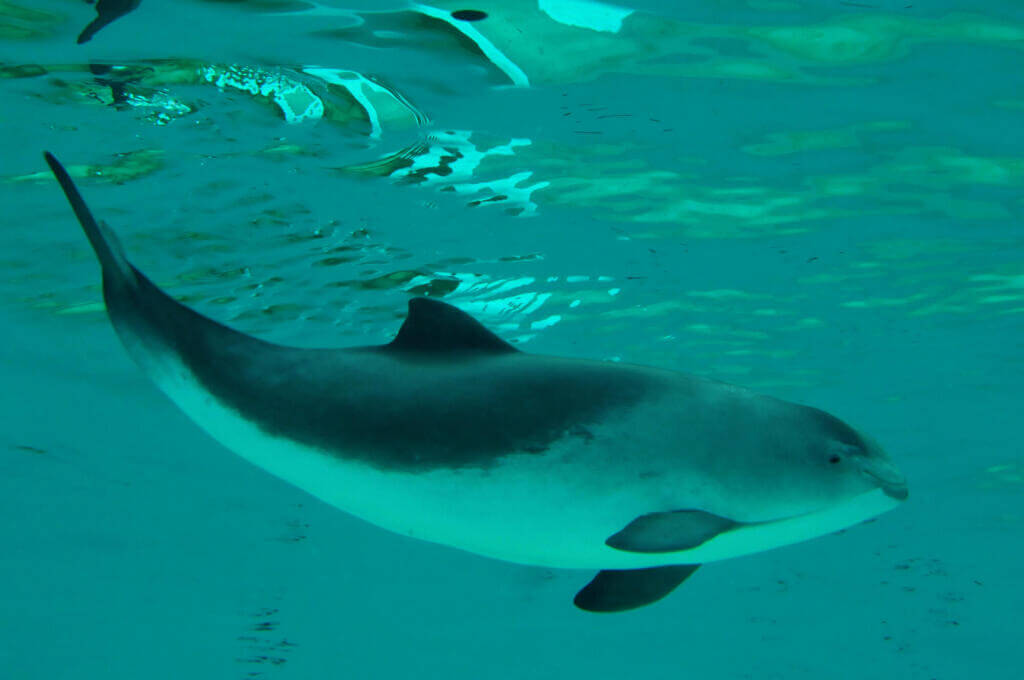
- Harbor porpoise (Phocoena phocoena): One of the most widespread porpoises, inhabiting coastal waters of the Northern Hemisphere. Smallest of the porpoises with a dark gray body and blunt snout.
- Burmeister’s porpoise (Phocoena spinipinnis): Found in coastal waters of South America. Characterized by a dark gray body, a small dorsal fin with numerous tubercles (bumps).
- Vaquita porpoise (Phocoena sinus): Critically endangered species endemic to the northern Gulf of California. Smallest of all cetaceans with a pale gray body and dark eye patches.

- Spectacled porpoise (Australophocaena dioptrica): Inhabits coastal waters around southern South America and sub-Antarctic islands. Distinctive black and white markings around the eyes give it a “spectacled” appearance.
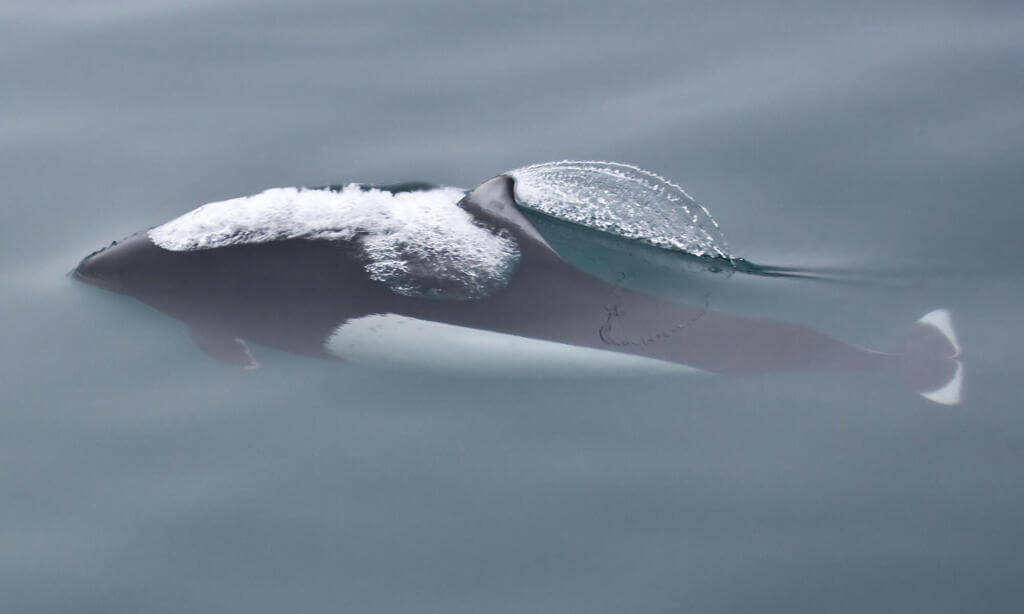
- Dall’s porpoise (Phocoenoides dalli): Found in the North Pacific Ocean. Known for its high-speed swimming, black and white coloration, and a thick, stocky body.
- Indo-Pacific finless porpoise (Neophocaena phocaenoides): As the name suggests, it lacks a dorsal fin. Inhabits coastal waters and estuaries of the Indo-Pacific region, with a gray body and slightly upturned snout.
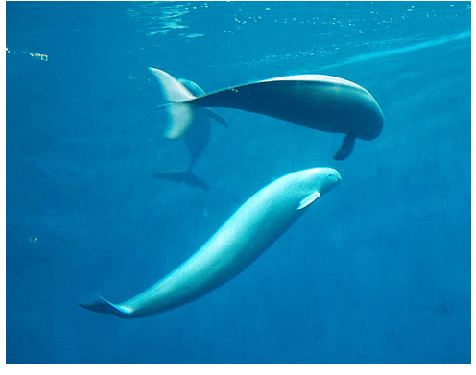
- Narrow-ridged finless porpoise (Neophocaena asiaeorientalis): Found in coastal waters of East Asia, including the Yangtze River. Two recognized subspecies: the East Asian finless porpoise and the Yangtze finless porpoise.
Habitat
Porpoises live in a variety of waters around the world, from the Gulf of California to the eastern and western parts of South America and even north of Antarctica, where researchers have found the spectacled porpoise.
They live in shoals that range from a few members to thousands.
The common porpoises live around the east coast of North America. Dall’s live in the northern rim of the Pacific Ocean, and some live in the Yellow Sea between China and Kora, such as the finless porpoise.
Diet
Porpoises, as omnivores, exhibit a diverse diet that reflects their adaptability to various marine environments. Fish and squid form the cornerstone of their meals, with porpoises actively hunting species like herring, mackerel, cod, hake, and anchovies.
Squid provides essential nutrients and energy, while crustaceans like shrimp, crabs, and krill can supplement their diet, especially for young porpoises.
Occasionally, they may consume other invertebrates like worms, mollusks, and jellyfish. While primarily carnivorous, some species have been observed ingesting small amounts of plant matter like algae or seaweed, potentially for additional nutrients or digestive aid. Their spade-shaped teeth and digestive system are well-suited to process this varied diet.
Reproduction
Not much is known about porpoises’ mating habits, but it’s known that they have live births (since they’re mammals). It appears that the gestation period is around 10-11 months, and they have one baby at a time.
Their children are called pups or sometimes calves. They are sexually mature around 2 to 8 years old, depending on the species, and can live 23 years of age.
Threats
Porpoises face a barrage of threats, primarily driven by human activities. Bycatch, where they’re accidentally caught in fishing gear, poses a major risk of drowning or injury. Habitat loss from coastal development and pollution degrades their living and feeding grounds. Overfishing depletes their crucial fish prey, leading to malnutrition.
Climate change disrupts marine ecosystems through ocean warming, acidification, and extreme weather, impacting their health, reproduction, and prey distribution. Noise pollution from human activities interferes with their vital communication and echolocation.
The only porpoise on the IUCN’s list of critically endangered species is the Vaquita due to a drastic decrease in its population. The finless porpoise and the Indo-Pacific are listed as vulnerable.
Dolphin
Dolphins are grouped into five families, the largest of which is the ocean dolphin, to which thirty-eight species belong.
The remaining four are all river dolphin families with only one species per family. Often categorized as a whale, the orca is, in fact, a dolphin. It is one of the largest, along with the pilot whale and the false killer whale. The smallest is the New Zealand dolphin and tucuxi, according to Whale and Dolphin Conservation.
Most dolphins have an elongated snout, known as a rostrum or beak, varying in length and shape among species. Dolphin coloration exhibits remarkable diversity, from shades of gray to distinctive black-and-white patterns, with some species even displaying pink hues. Their skin is smooth and hairless, further enhancing their hydrodynamic efficiency in the water.
Dolphins are slim, and sleek, and have leaner bodies than porpoises. They also have a more pronounced smile or grin in comparison to porpoises. Their pectoral fins, positioned on the sides behind the head, are relatively long and narrow, assisting in steering, turning, and braking. The tail is composed of two horizontal flukes that act as the primary source of propulsion. The up-and-down motion of these flukes generates powerful thrust.
Dolphins also have a variable number of teeth, ranging from 14 up to 240 in the mouth of the spinner dolphin.
The size of their teeth, as well as their position and shape, depends on the species. The majority of ocean dolphins have cone-shaped teeth used for catching fish.
Dolphins are highly social creatures. They spend time in large groups, hundreds to thousands, and communicate through a series of whistles and squeals. A rounded, fatty organ called the melon, situated on the forehead, is crucial for echolocation. This allows them to hunt via reflected sound or echos.
Species
River Dolphins: The four known river dolphin species, including the Amazon river dolphin (boto), the Ganges river dolphin (susu), the Indus river dolphin (bhulan), and the Yangtze river dolphin (baiji, now likely extinct), are all smaller than their marine counterparts.
They are usually recognizable due to their elongated mouths/ beaks. They range from five feet, or 1.5 meters, to eight feet and 2.4 meters. They are not kept in captivity because they are hard to breed and tragically die, usually within a few months of capture.

Habitat
They are found in oceans worldwide, from tropical to polar waters. While some species, like the bottlenose dolphin, have a broad distribution, others have more restricted ranges.
Coastal dolphins, as the name suggests, prefer nearshore waters, bays, and estuaries, where prey is often abundant. Open ocean dolphins thrive in deeper waters, adept at navigating vast distances and exploiting resources in the open sea. A few unique species, like the Amazon river dolphin, have adapted to freshwater rivers and lakes.

Diet
Dolphins are primarily carnivores, with their diet primarily consisting of fish and squid. The specific prey species consumed vary depending on the dolphin species, habitat, and seasonal availability. They actively hunt using echolocation to locate prey and often employ cooperative hunting strategies within their pods.

Some species, like orcas, also prey on larger marine mammals, including seals, sea lions, and even whales. Dolphins’ conical teeth are well-suited for grasping and tearing their prey. Additionally, some species may supplement their diet with crustaceans or other invertebrates, providing additional nutrients.
Reproduction
Dolphins give birth to one baby at a time. Their pregnancies last between nine and sixteen months.
The babies then stay with their mothers for several years, a time period in which the mother teaches the child everything he or she needs to know to survive.
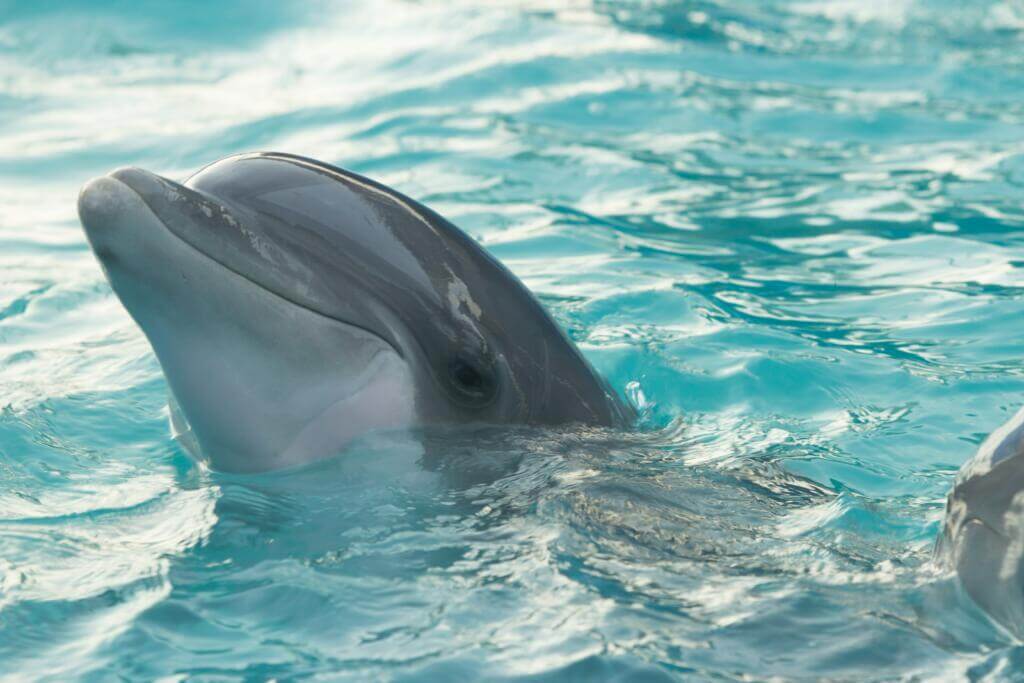
Dolphins can live between twenty and eighty years.
Threats
Dolphins encounter numerous threats stemming from human actions and environmental changes. Bycatch, or accidental entanglement in fishing gear, presents a significant risk of drowning or injury.
Habitat destruction due to coastal development and pollution diminishes their living and feeding areas. Overfishing depletes their essential fish prey, resulting in malnutrition. Climate change alters marine ecosystems through ocean warming, acidification, and extreme weather events, affecting their health, reproduction, and prey availability.
Noise pollution from human activities disrupts their crucial communication and echolocation. Diseases, worsened by pollution and habitat stress, pose additional risks. Vessel strikes can lead to severe injuries or fatalities. Furthermore, direct hunting and capture for meat or live display in marine parks remain persistent threats in some areas.
Ocean Insights: Hear From Our Experts

By Hamna Faizan
Marine Life Researcher and Lecturer, with an MSc in Zoology
As the guardians of our planet's vast oceans, porpoises and dolphins are feeling the brunt of climate change. These marine mammals rely heavily on specific environmental conditions for survival. Changes in water temperature, salinity, and prey availability due to climate change disrupt their feeding, breeding, and migratory patterns. Mitigating these effects requires urgent global action, such as striving to meet the Paris Agreement's goals. Countries like Costa Rica, aiming to be carbon-neutral by 2050, lead by example. Concurrently, the intelligence and social behaviors of porpoises and dolphins highlight marine life's marvels. Understanding these behaviors can guide conservation efforts. Progressive measures, like New Zealand's legal recognition of dolphins and whales as non-human persons, reflect a growing awareness of their complex emotional lives. As custodians of the planet, it is our shared responsibility to safeguard our oceans and the diverse life they support.
FAQs
Can dolphins and porpoises mate?
Yes, these two species can mate. They are similar enough and produce offspring that are fertile and can themselves mate and have young ones.
Do porpoises and dolphins share a habitat?
Porpoises and dolphins can share habitat to some extent, primarily in coastal waters where many dolphin species and porpoises both reside. Overlap is less common in open oceans, as porpoises typically stay closer to shore. Occasional encounters may occur in estuaries and river mouths, as some dolphin species venture into these areas. The degree of overlap depends on factors like prey availability, competition, and environmental preferences of specific species.
Do dolphins have a high IQ?
Yes, dolphins are one of the most intelligent animals in the world. They are second only to humans, some research has suggested. It is hard to determine what IQ dolphins have on average.
How do porpoises and dolphins use echolocation?
Both rely heavily on echolocation for navigation, hunting, and communication. While they are proficient, dolphins might possess a slightly more refined echolocation system due to their larger brains and more diverse vocalizations


