

There are many reasons why a river might be deemed treacherous, and the dangerous rivers on this list demonstrate most of those threats. These rivers are the longest, deepest, and most deadly in the world. They contain numerous threats from animal life, rapids, swift, unpredictable currents, and waterfalls. Some are quite well-known, like the Congo and Amazon Rivers, others, like River Wharfe, are less so, but that doesn’t make them any less dangerous.
River Wharfe
Location: England
Dangerous aspect: Hidden tunnels that can suck people in

The River Wharfe is located in North Yorkshire, England, and has gained a reputation for killing anyone who falls into its waters, swallowing their bodies whole. The most famous section of this dangerous river is very small, only six feet across, and located between Barden Tower and Bolton Abbey. This narrow gap, known as “The Strid,” allows the river to gain immense speed.
Additionally, the visual width is an allusion. The banks are undercut, leading to a series of underwater tunnels and caves through which the rest of the rive flows. There are numerous stories, as recorded by locals and news outlets, of men, women, and children, as recently as 2011, getting sucked under the banks of the dangerous river into these tunnels, never to be seen again.
Congo River
Location: Angola, Burundi, Cameroon, the Central African Republic (CAR), Congo-Brazzaville, the Democratic Republic of Congo (DRC), Tanzania, and Zambia.
Dangerous aspect: Extremely deep, with many rapids and waterfalls
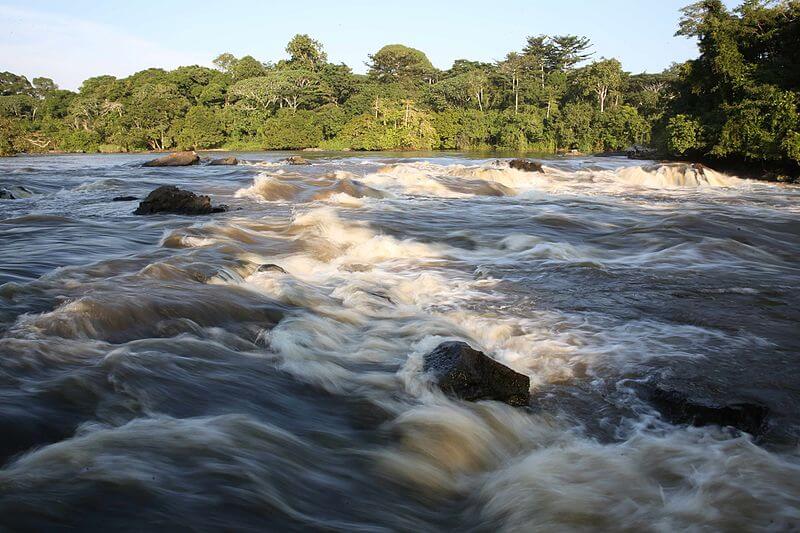
The Congo River is the world’s ninth-longest river system. It is the second-longest in Africa and was formerly known as the Zaire River. It is also the world’s deepest river, reaching a depth of 720 feet (220 meters). The river is too deep for light to penetrate. The Congo River is an incredibly popular means of transportation in Africa, and with more people attempting to navigate it, more accidents occur.
The upper section of this dangerous river is filled with rapids and tributaries, while the lower section contains gorges and waterfalls, obvious dangers to those traveling along with it.
Nile River
Location: Burundi, the Democratic Republic of the Congo, Egypt, Eritrea, Ethiopia, Kenya, Rwanda, South Sudan, Sudan, Tanzania, and Uganda.
Dangerous aspect: Contains many predators and a hot spot for mosquitos with disease

The Nile River is the longest in the world. It flows through eleven countries and drains into the Mediterranean Sea. Throughout history, the Nile has been incredibly important for civilizations throughout Africa, but it also presents numerous threats. These include crocodiles that can move around 30 miles an hour on land and kill around 200 people a year, hippopotamuses that have been known to attack boats, venomous snakes like the Black Mamba and the Egyptian Cobra, and mosquitos.
Surprisingly, the threat of mosquitoes cannot be understated. They are one of the most dangerous features of the Nile River due to their disease-carrying abilities. They are responsible for 500 million people falling ill each year and hundreds of thousands dying from malaria and the West Nile virus.
Amazon River
Location: Bolivia, Brazil, Colombia, Ecuador, French Guiana (an overseas territory of France), Guyana, Peru, Suriname, and Venezuela.
Dangerous aspect: Contains a wide range of extremely dangerous animals

Unsurprisingly, the Amazon River features on this list of the world’s most dangerous rivers. It is usually considered to be the second-largest river in the world after the Nile River, but when one accounts for volume, it is the largest by far. The river is filled with dangerous animals, such as bull sharks, anacondas, and black caiman crocodiles. The latter grows up to 16 feet (4.9 meters) in length and has no known predators.
Other threats include leeches that attach to mammal orifices, piranhas that have razor-sharp teeth, and the longest venomous snake in the western hemisphere, the Bushmaster Pit Viper. That’s not all though; if you evade these threats, you might be faced with electric eels that give off 600 volts of electricity, the botfly, or the Brazilian Wandering Spider that can kill you in 25 minutes without treatment.
Mississippi River
Location: United States
Dangerous aspect: Surprising underwater currents

The Mississippi River is the longest river in North America and one of the longest in the world. It stretches through several states, such as Wisconsin and Iowa. The river is home to pike fish, bull sharks, and a variety of other dangerous creatures. Despite its placid image, this river is incredibly dangerous for swimming. There are numerous undercurrents, many of which are unpredictable, that can easily pull a swimmer down into its depths.
Locals also warn about debris in the water that is hard to navigate and almost impossible to avoid if one is being pulled by the current. These include steamboats, cars, miscellaneous trash, and, unfortunately, the remains of men, women, and children who have fallen in and drowned.
Mekong River
Location: Cambodia, China, Lao PDR, Myanmar, Thailand, and Vietnam
Dangerous aspect: Fast rapids

The Mekong River, the world’s twelfth longest river, flows through Asia and is renowned for its incredible biodiversity. However, the river also presents challenges. Extreme seasonal variations in flow, coupled with rapids and waterfalls, make navigation difficult. The Lower Mekong river basin also harbors Schistosoma mekongi, a parasite responsible for schistosomiasis.
Adding to these natural dangers, the accelerating climate crisis has caused unprecedented drops in water levels, impacting transportation and food security for many communities.
Yangtze River
Location: China
Dangerous aspect: High risk of large floods, rapids, strong currents, and whirlpools

The Yangtze River, the longest in Asia and the third longest in the world, is a vital lifeline for China. Flowing into the East China Sea, it supports over 400 million people and many major cities, including Shanghai and Chongqing, lie along its banks. However, the Yangtze is severely impacted by pollution. Industrial and agricultural runoff has led to dangerously high levels of heavy metals like lead, copper, and cadmium, as well as toxic PFASs and mercury. These contaminants pose serious threats to human health, contaminating drinking water, soil, and the food chain.
Beyond pollution, this dangerous river has a long history of devastating floods. While the Three Gorges Dam has mitigated some risks, seasonal rains and snowmelt from the Tibetan Plateau continue to cause fluctuations in water levels and currents. These fluctuations, combined with the river’s natural features like whirlpools and rapids (especially in the Xiling Gorge), make navigation challenging and dangerous.
Orinoco River
Location: Venezuela and Colombia
Dangerous aspect: Hard to navigate and fast-flowing

The Orinoco River, the third longest in South America, is a deceptively dangerous waterway. While its breathtaking beauty might lure you in, this river presents numerous hazards. Its winding path makes navigation treacherous, and the swift currents increase the danger. Massive waterfalls and turbulent rapids add to the challenges faced by even experienced navigators.
Beyond these natural dangers, the Orinoco faces threats from human activity. Mines and industries discharge pollutants into the river, compromising its health. And if the perilous waters weren’t enough, this dangerous river is also home to a variety of wild creatures, including piranhas, electric eels, giant anacondas, and the Orinoco crocodile.
Zambezi River
Location: Angola, Botswana, Mozambique, Namibia, Zambia, and Zimbabwe
Dangerous aspect: Fast flow and dangerous rapids

The Zambezi River, the fourth-longest river in Africa, has some impressive waterfalls like Victoria Falls, Chavuma Falls, and Ngonye Falls. While these cascading waters attract adventure seekers, they also contribute to the river’s danger. The rushing currents conceal huge stones and trenches in the riverbed, posing risks to navigation. Despite these hazards, an estimated 50,000 people travel along the Zambezi each year.
Adding to the peril, this dangerous river teems with an estimated twelve thousand crocodiles, predominantly found upstream of the falls. When river levels rise, some crocodiles are even washed over Victoria Falls! Beyond natural dangers, the Zambezi River also faces challenges from past conflicts. Demining efforts in contaminated areas are ongoing in Zambia, but progress is slow due to limited funding, awareness, and capacity. Floods further complicate demining operations as they can shift landmines and wash away demarcation signs.
Rio Tinto River
Location: Spain
Dangerous aspect: Heavy metal pollution

The Rio Tinto in Spain earns its place among the world’s most dangerous rivers due to its extreme pollution. Centuries of mining have contaminated the water with heavy metals like copper, silver, and gold, turning the river a distinctive red. This pollution has created a highly acidic environment, supporting only specialized organisms like iron and sulfur-oxidizing bacteria.
The river’s toxic water poses serious health risks to the 25,000 people living nearby, threatening their land, water supplies, and livelihoods. Despite some improvements since the mine closure in 2000, the Rio Tinto remains a harrowing example of the devastating environmental impact of industrial activity.


