
The Octopus is known as one of the most captivating and intelligent creatures in the ocean. They occur in all the world’s oceans, especially in warm, tropical waters. Classified under the phylum Mollusca and class Cephalopoda, these creatures are characterized by a large head, a soft body, and eight long, prehensile arms. Their bulging eyes hint at their sharp vision, and their bodies come in a surprising array of sizes and shapes.
In this article, we will explore some of the largest Octopuses resident in the ocean.
Giant Pacific Octopus
The Giant Pacific Octopus (Enteroctopus dofleini) is the ultimate world champion among all species of octopus. It is distinguished from other species by its tremendous size, among other things.
Size: Adults reach a mantle length of up to 36 inches (90 cm) and an arm span of around 16 feet (4.9 m).
Weight: 132 lbs (59 kg) on average.
Found in the Pacific Ocean from California to Japan, the Giant Pacific Octopus thrives in diverse habitats. Ranging from shallow tide pools to nearly a mile deep, these intelligent creatures are most abundant in shallower waters.
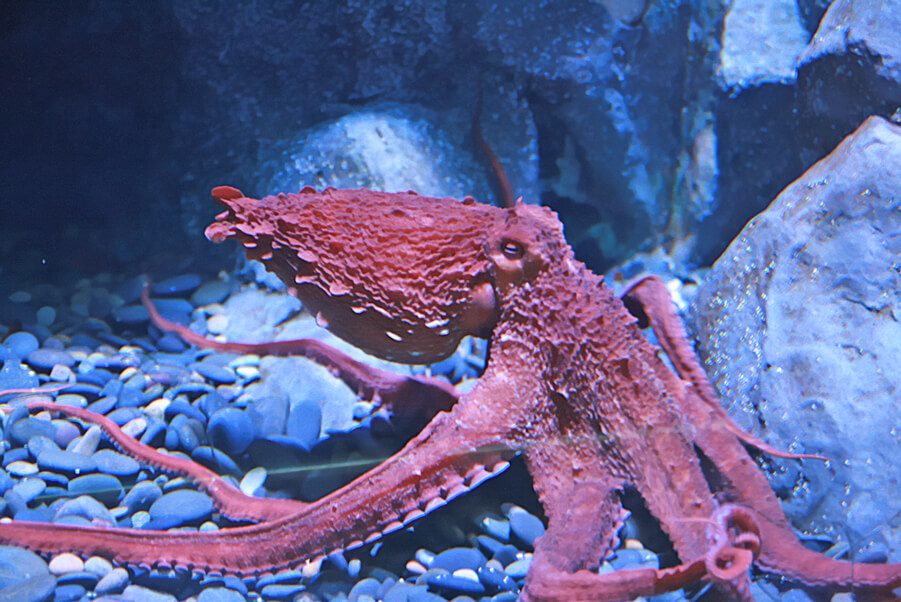
The Giant Pacific Octopus can disguise itself to resemble its surroundings, making it almost impossible to detect. It changes colors (pale grey to dark red) to blend in with its surroundings, thanks to its unique camouflage system involving special pigment cells, known as chromatophores, muscles, and nerves.
They showcase impressive intelligence. They’ve been observed to quickly solve mazes, open jars, and even recognize familiar people. This remarkable ability is likely due to their well-developed brain, allowing them to thrive as resourceful hunters.
Seven-Arm Octopus
Size: Adults reach a mantle length of 27.6 inches (70 cm) and an arm span of around 9.2 feet (2.8 m).
Weight: 165 lbs (75 kg).
The Seven-Arm Octopus has a surprisingly wide range. Confirmed in both the Pacific and Atlantic Oceans, it’s also suspected to inhabit parts of the Indian Ocean. Its preferred habitat is the open ocean’s mid-depths, on continental slopes.
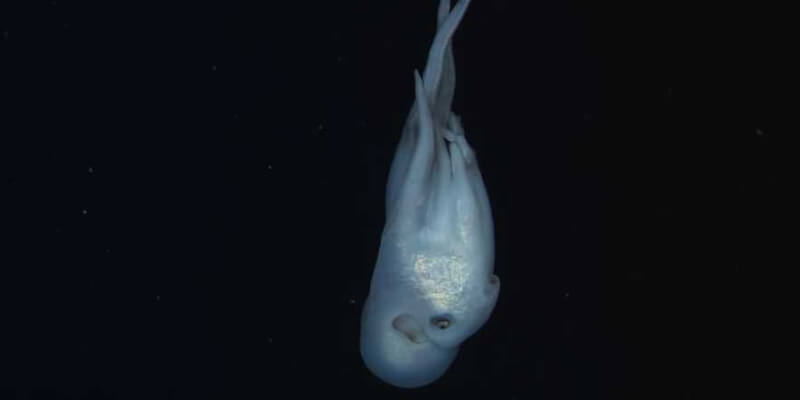
The Seven-Arm Octopus (Haliphron atlanticus) is also commonly known as the Blob Octopus and Septopus. It is another octopus species that lives within the mesopelagic and bathypelagic zones of the Atlantic, Pacific and Indian Oceans.
It is the second largest octopus in the world, after the Giant Pacific Octopus. The largest specimen ever discovered 11 feet (3.5 m) long and weighed 165 pounds (75 kg).
Although it has eight tentacles, as every octopus does, one tentacle is much smaller and easily overlooked compared to all the others. As a result, it seems that it has only seven arms, hence its name.
This large octopus species prefers a diet of jellyfish and other gelatinous creatures found in the deep sea’s darkness. This makes them tricky to study, but research is shedding light on their unique feeding habits.
Common Octopus
Size: Adults reach a mantle length of 9.8 inches (25 cm) and an arm span of around 39.4 inches (1 m).
Weight: 22 lbs (10 kg).
The Common Octopus (Octopus vulgaris) is found in tropical, subtropical, and temperate waters worldwide. These bottom-dwellers thrive in a variety of habitats, from coral reefs to seagrass beds, and are particularly abundant in the Mediterranean Sea, Eastern Atlantic, and Japanese waters.

While not the biggest of its kind, the Common Octopus can still be impressive, reaching up to 4.3 feet (1.3 m) long and weighing around 22 pounds (10 kg). On average, they’re much smaller, typically measuring 1 to 3 feet (30 – 90 cm) in length.
The Common Octopus is a skilled hunter that favors crabs, clams, and other shellfish. However, these opportunistic predators will prey on almost anything they can overpower. Tiny hatchling octopuses feed on plankton before graduating to a wider prey selection.
They have three hearts, one for their body and two smaller ones for their gills. These clever cephalopods come in a mottled brown, red, gray, and beige camouflage, perfectly suited for their ocean environment.
Maori Octopus
Size: Adults reach a mantle length of 11.8 inches (30 cm) and an arm span of around 5.6 feet (1.7 m).
Weight: 22 lbs (10 kg).
The Maori Octopus is only found in New Zealand and southern Australia. It thrives in a variety of habitats, from shallow reefs and kelp forests to sandy seabeds and seagrass meadows, at depths reaching up to 550 meters.

The Maori Octopus (Macroctopus Maorum) reaches up to 6.6 feet (2 m) in length and weighs up to 22 pounds (10 kg). This muscular cephalopod also has an impressive mantle reaching 11.8 inches (30 cm) long.
Also known as “wheke” in Maori, these octopuses have a reddish-brown to orange-brown body flecked with white spots. Its eight arms are long and muscular, with the front pair being the most powerful for grabbing prey. Scattered bumps (papillae) across its skin can even give it a spiky appearance when it contorts its body.
It is the most aggressive and largest octopus in its range. This large predator primarily feasts on crustaceans and fish, but will also cannibalize smaller octopuses and even attack other octopus species, regardless of size.
East Pacific Red Octopus
Size: Adults reach a mantle length of 4 inches (10 cm) and an arm span of around 20 inches (15 cm).
Weight: 14 oz (400 g).
The East Pacific Red Octopus is found along the entire West Coast of North America. From Mexico’s Baja California to Alaska, this octopus thrives in kelp forests, sandy areas, and rocky reefs, at depths up to 200 meters.
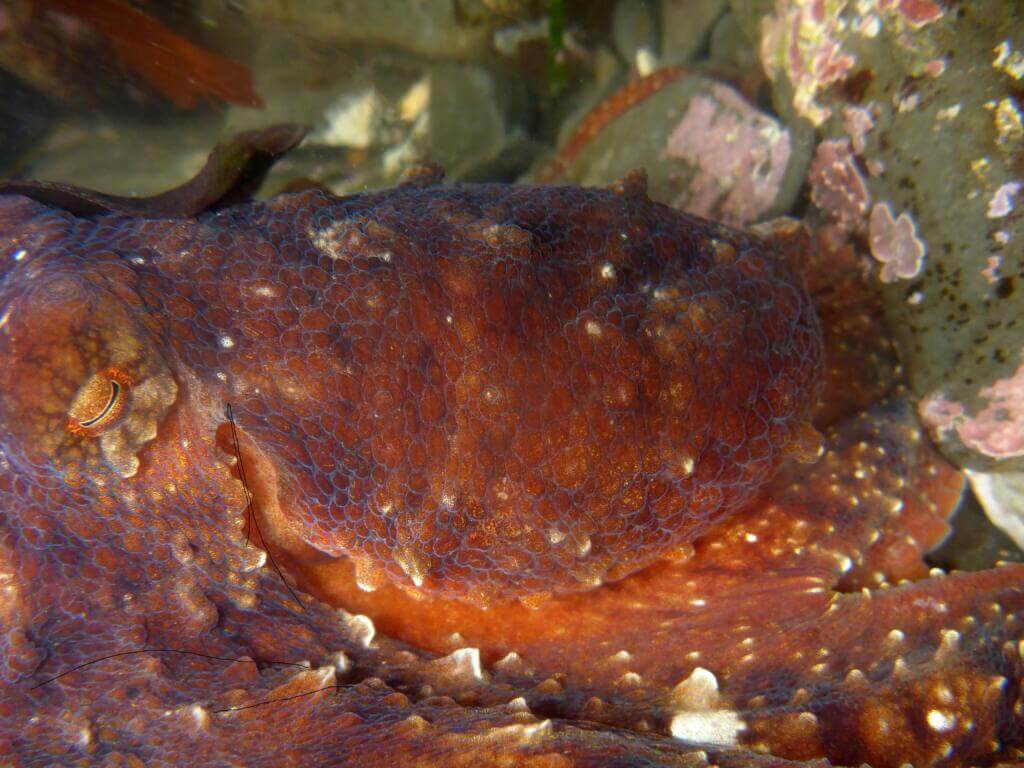
The Eastern Pacific Red Octopus (Octopus rubescens) is on the smaller side, with a stubby body reaching only about 4 inches (10 cm) long. Despite this, their long arms stretch an impressive 4 times their body length, giving them a total reach of around 20 inches (50 cm). Adults typically weigh around 5 ounces (140 g), with some reaching up to 14 ounces (400 grams).
This octopus is primarily brick red but might change colors to brown, white, or mottled to blend in with its environment. Its most distinguishing feature is three tiny flaps under each eye. This helps distinguish it from similar species, especially young Giant Pacific Octopuses in the north of its range.
It is a generalist predator preying on a variety of organisms. It flashes through a sequence of colors as it attacks prey. To access the tasty insides, it drills a hole through the shell with a venomous bite, showcasing its impressive predatory adaptations.
Day Octopus
Size: Adults reach a mantle length of 6 inches (15 cm) and an arm span of around 3 feet (92 cm).
Weight: 13 lbs (6 kg).
Found in tropical waters across the Indo-Pacific, the aptly named Day Octopus hunts by day. Unlike most nocturnal octopuses, this short-lived predator (living just one year) actively stalks crabs, clams, and fish on the reefs from Hawaii to East Africa.

Despite its impressive length, the Day Octopus (Octopus cyanea) has a surprisingly small body. Its mantle is only about 6 inches long. This contrast is made even more striking by its long, muscular arms, reaching up to 3 feet each.
Also known as Cyane’s Octopus or Big Blue Octopuses, this octopus typically has a brown or reddish-brown color. The most distinctive feature is 3 to 7 rows of small white spots on the tips of its arms. These stand out against its darker body, which can range from a uniform white or mottled pattern to a deep brown. In fact, on sandy surfaces, the Day Octopus can even appear almost transparent.
Unlike most nocturnal octopuses, they actively hunt during daylight transforming their skin into bumpy ridges that mimic corals or rocks. These opportunistic predators are most active at dawn and dusk, strategically utilizing their camouflage skills to catch prey.
Dumbo Octopus
Size: Adults reach a mantle length of 4.7 inches (12 cm) and an arm span of around 7.1 inches (18 cm).
Weight: 13 lbs (6 kg).
Nicknamed for its ear-like fins, Dumbo Octopuses dwell in perpetual darkness, between 1,000 and 13,100 feet (4,000 m). They explore the dark, frigid waters of the bathyal and abyssal zones and are found worldwide from New Zealand to California. These remarkable octopuses hold the title of deepest-living octopuses.
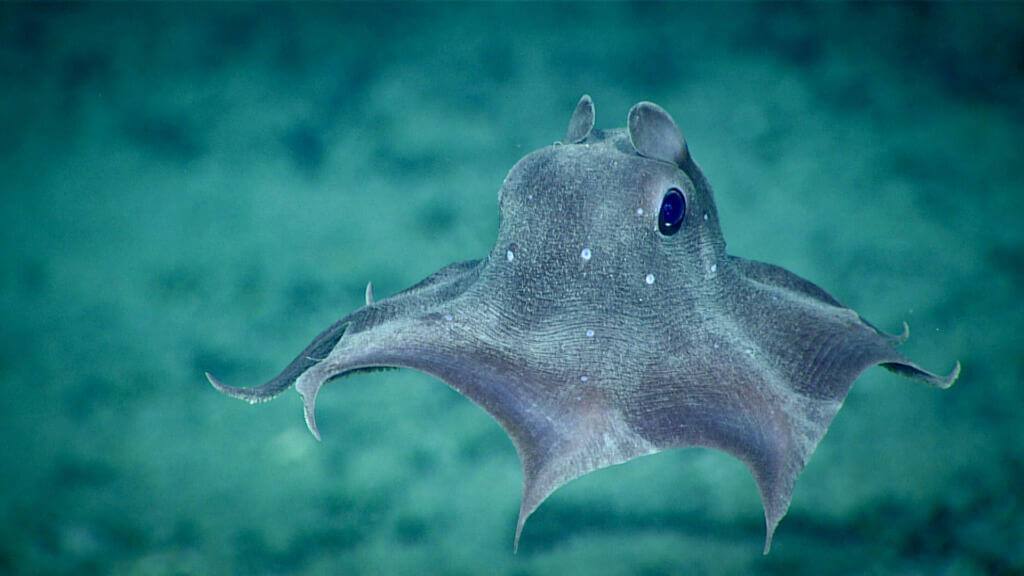
Most Dumbo Octopuses (Grimpoteuthis spp.) are typically quite small, averaging just 8-12 inches (20-30 cm) long. The largest ever recorded, however, was a giant at nearly 6 feet (1.8 m) long. These deep-sea dwellers come in a surprising range of sizes.
Nicknamed for their resemblance to the Disney elephant, Dumbo octopuses are truly unique. These deep-sea dwellers have a gelatinous, umbrella-shaped body with large, ear-like fins that propel them through the darkness. They’re part of the umbrella octopus group, with webbing between their arms that add to their bell-like form.
They prey on a variety of marine organisms from crustaceans and worms to snails and oysters. They actively hunt along the ocean floor, grabbing their prey whole. Some Dumbo Octopuses have even been spotted near hydrothermal vents, where the abundance of life makes for a prime hunting ground.
Ocean Insights: Hear From Our Experts

By Dr. Rabiah Ryklief
Principal Scientist and Lecturer of Marine Science, with a PhD in Zoology
Approximately 330 million years ago, long before dinosaurs roamed the Earth, a fascinating creature thrived beneath the waves – an ancestor of the octopus we know today. This intriguing discovery, unearthed in Montana's Bear Gulch limestone, pushes back the fossil record of octopuses by 34 million years.
Unlike its modern eight-tentacled cousins, this ancient cephalopod had ten limbs. Previously, the oldest known octopus fossil, initially described as a "cow patty—flattened out into a globular splat" by scientist Harmon Courage, was a soft-bodied creature called Pohlsepia mazonensis, dating back 296 million years. Despite its less-than-glamorous description, this fossil revealed crucial features like eight arms, two eyes, and a possible ink sac, solidifying its place as an early octopus relative.
The discovery of this ten-limbed ancestor not only expands our understanding of octopus history but also fuels our curiosity about the fascinating evolution that led to the modern octopus we know and love.
FAQs
How big is a Giant Deep-Sea Octopus?
Giant Deep-Sea Octopuses vary in size, but some of the largest species have a mantle length that measures up to 24 in (61 cm).
Can a Giant Pacific Octopus live out of water?
Giant Pacific octopuses cannot live out of water. Like other octopuses, they are marine animals and, therefore, require a marine environment to survive.
Are Giant Pacific Octopuses dangerous?
Giant Pacific Octopuses are generally not dangerous or aggressive. However, when they are provoked or feel threatened, they can deliver a very painful bite.
What do large octopuses eat?
The typical diet of large octopus includes various marine creatures, such as crabs, abalone, clams, scallops, shrimp, fish, and even small sharks and other young octopus species. As skilled predators, they use their strong parrot-like beak to crack open the shells of prey.
How do octopuses reproduce?
The male octopus drops a spermatophore into the female’s mantle during mating. The female now finds a rocky den where it lays thousands of eggs, which they carefully guarded and aerated until they hatch. After hatching, the young octopus drifts into the ocean as plankton for a period before settling on the seafloor.


