
The Aegean and Mediterranean Seas were once thought to be the domain of powerful deities who controlled the waves, winds and tides. In ancient Greece, these sea gods were not simple figures of myth and legend but forces of nature that could bring about prosperity or destruction.
From the mighty Poseidon, shaker of the earth and ruler of the oceans, to the enchanting Nereids, these deities shaped the Greek understanding of the vast and mysterious underwater world.
Join us as we dive into an odyssey of Greek mythology to explore the divine powers of 7 ancient Greek sea gods and their impact on the mortal and immortal realms.
Poseidon
Family: Second son of the Titans Cronus and Rhea, Brother to Zeus and Hades, and Husband of Amphitrite.
Special Powers: To create storms, earthquakes, floods and droughts with the help of his trident – and teleporting and shape-shifting.

As the most renowned god of the sea, Poseidon held a place of immense power and reverence in ancient Greek mythology. Sailors and fishermen, whose lives depended on the waters, offered daily prayers to Poseidon, seeking safe passage and bountiful catches. Unlike other sea gods, his dominion extended far beyond the waves, encompassing the creatures of the deep and the very earth itself. With the ability to create storms, earthquakes, floods and droughts, Poseidon’s influence was felt across the land and sea.
Poseidon is often depicted as a powerful, bearded figure wielding his iconic trident. His complex personality, prone to mood swings and displays of both benevolence and wrath, mirrored the unpredictable nature of the sea itself. Though second only to Zeus in power, Poseidon’s ambition and desire for recognition sometimes led to conflict with his brother.
Married to the beautiful sea nymph Amphitrite, Poseidon’s family further solidified his connection to the marine world. Their union produced several well-known offspring. Triton, the merman god and messenger of the sea, was a notable son of Poseidon. Rhode, the nymph of the island of Rhodes, and Benthesikyme, the goddess of waves, were both daughters of Poseidon.
Amphitrite
Family: Eldest daughter of Nereus and Doris, wife to Poseidon and sibling to 50 sea nymphs(Nereids).
Special Powers: Control over water and aquatic creatures, superhuman strength and ability to teleport and metamorphose.
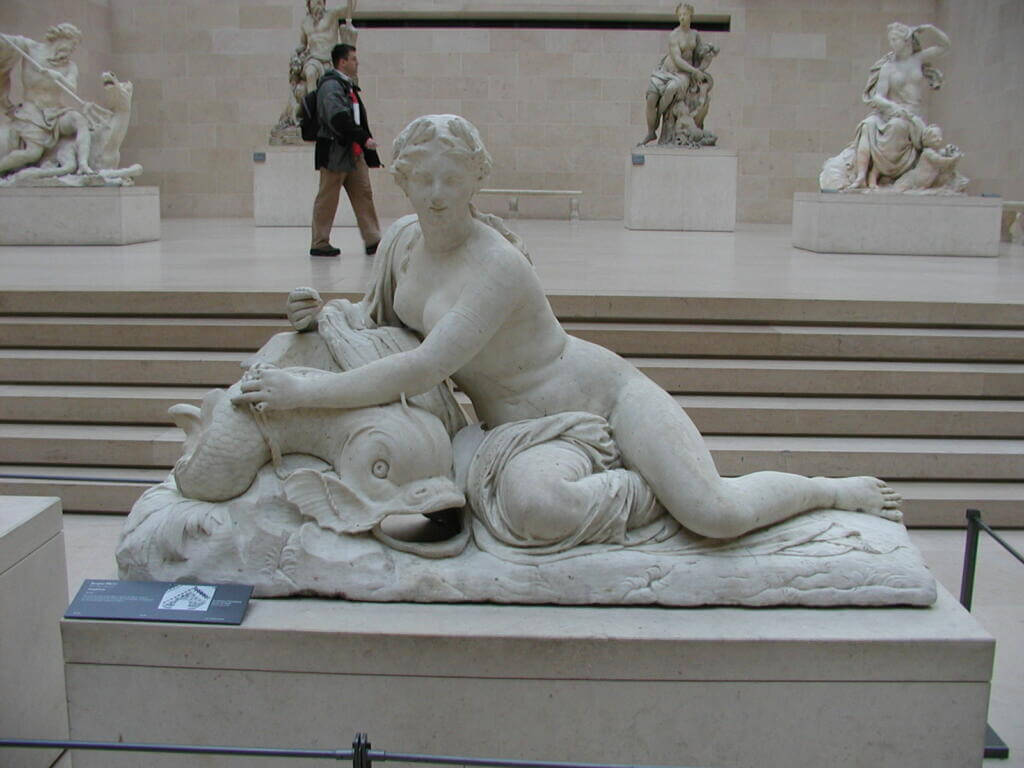
Known as the Goddess of the Seas, Amphitrite’s influence extends throughout the underwater realm. As her name translates “the third one who encircles,” her dominion encompasses the Aegean, Ionian and Adriatic Seas. She is the eldest of the fifty Nereids, sea nymphs renowned for their beauty and connection to the marine world.
Amphitrite’s beauty is legendary. She is often depicted with long, flowing hair with a crown made from seaweed or coral. Her presence, whether riding a chariot pulled by sea creatures or calming sea swells with a gentle touch, embodies the ocean’s tranquil depths and calming influence.
Her union with Poseidon, a grand celestial event, marked the harmonious merging of power and serenity. Amphitrite ensures safe passage for sailors, nurtures marine life and maintains harmony amidst the depths of the sea.
Leucothea
Family: Daughter of Cadmus and Harmonia, sister to Semele and wife of Athamus.
Special Powers: Wet nurse; ability to deliver babies. She had command over the essence of sailors.

Leucothea, the White Goddess, stands out among the Greek pantheon as one who once walked the earth as a mortal. Her journey from a Theban princess named Ino to a powerful sea deity is a tale of tragedy, madness and ultimately, divine transformation.
Ino’s life was deeply intertwined with the god Dionysus, her nephew. When Hera’s jealousy led to the death of her sister Semele, Dionysus’s mother, Ino stepped in to nurture the young god. This act of compassion, however, drew the wrath of Hera, who inflicted Ino and her husband, Athamas, with a terrible madness. Driven to despair, Ino leapt into the sea with her son, Melicertes. But instead of perishing, they were transformed into sea deities – Ino became Leucothea, and Melicertes became Palaimon. Together, they roamed the depths, offering aid and protection to sailors in distress.
As a sea goddess, Leucothea embodies compassion and protection. Her presence in the vast ocean serves as a beacon of hope for those lost at sea and is popularly known as a protector of sailors and fishermen.
Oceanus
Family: Eldest son of Uranus and Gaia, sibling of Titans Cronus, Rhea and Tethys, susband to the Titan Tethys, and father to 3,000 gods of rivers and streams (Potamoi), 3,000 freshwater nymphs (Oceanids), and nymphs of rain clouds (Nephelai).
Special Powers: Absolute control over water, sea creatures and the elements of the weather.

In the realm of ancient Greek sea gods, Oceanus holds a primordial position. Born from the union of Gaia (Earth) and Uranus (Sky), Oceanus predates the Olympian gods, representing an older, more fundamental force of nature. While his nephew Poseidon commanded the seas with his trident, Oceanus was the sea itself – the boundless expanse from which all rivers, streams, and fountains flowed.
Oceanus’s vast domain extended beyond the earthly seas. The sun, moon, and stars were believed to rise from and set into his waters, connecting the earthly realm to the celestial. He and his wife, Tethys, the Goddess of Freshwater, together nurtured all life within their watery embrace.
He embodied a gentler, more passive power, choosing peace over conflict. During the Titanomachy, the epic war between Titans and Olympians, Oceanus remained neutral, refusing to take sides. His peaceful nature allowed him to continue his reign even after Zeus’s victory, ensuring the eternal flow of the world’s waters.
Glaucus
Family: Son of Polybus and husband of Scylla.
Special Powers: He had the gift of prophecy and was a protector and guide to sailors and fishermen.
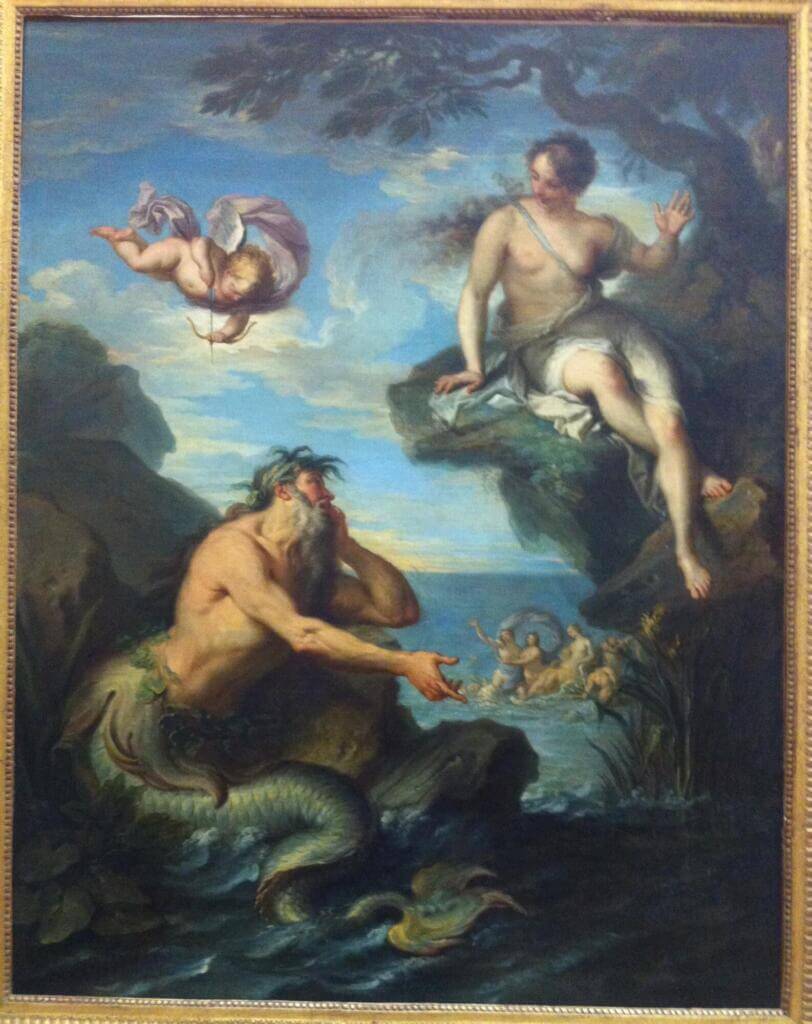
Glaucus was once a mortal fisherman but his life took a dramatic turn when he consumed a magical herb, transforming him into one of the minor sea gods. This metamorphosis, symbolized by his sea-green hair and fish-like tail, granted him extraordinary powers, including prophecy and dominion over marine life.
His tale also intertwines with that of the nymph Scylla, a tragic love story that showcases the complexities of divine relationships. Glaucus’s unrequited love for Scylla, and the subsequent intervention of the sorceress Circe, led to Scylla’s own monstrous transformation, forever entwining their fates.
Glaucus became a bridge between the human and divine worlds. He roamed the seas, offering guidance and protection to sailors and fishermen. His ability to communicate with marine life and foresee the future made him a valuable ally to those who braved violent sea storms.
Pontus
Family: Son of Aether and Gaia, sibling to Uranus and half-sibling to Oceanus and Thalassa, husband to Thalassa, and father of Aphrodite, Halia and Nereus.
Special Powers: Ability to manipulate the sea and create marine life.

Before the rise of the Olympians, the ocean was ruled by the primordial sea gods like Pontus and his half-siblings Thalassa and Oceanus.
Pontus, like his half-brother Oceanus, was born from Gaia herself. He personified the deep, unfathomable ocean. His union with Thalassa, daughter of Aether and Hemera, the gentle embodiment of the sea’s surface. Together, this divine couple filled the waters with an abundance of sea life, from the smallest fish to the most fearsome sea monsters.
Their union also gave birth to Nereus, the wise and prophetic “Old Man of the Sea“, and the Telchines, skilled craftsmen and minor sea gods. Nereus, in turn, fathered the Nereids, the beautiful sea nymphs who played significant roles in many Greek myths and legends. Even the goddess Aphrodite, born from the sea foam, owes her existence to the union of Pontus and Thalassa.
Eurybia
Family: Daughter of Gaia and Pontus, wife to Crius, mother of Astraios, Pallas Perses.
Special Powers: Influence over the seas, summons sea creatures and guides sailors by the stars.
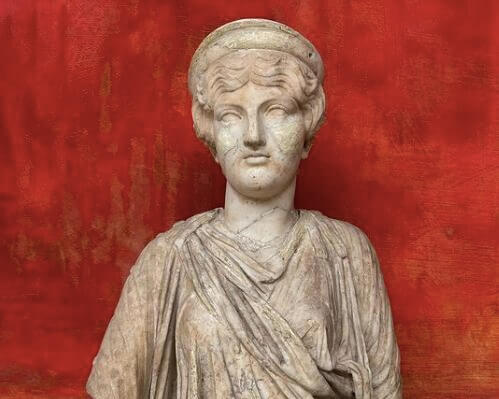
Eurybia is a powerful Titaness born from the union of Gaia and Pontus. As the goddess of the mastery of the sea, she represents not only the sea’s untamed power but also the celestial order that governs the universe.
Eurybia’s union with Crius, the Titan of constellations, symbolizes the harmonious marriage of sea and sky. Their offspring, including Astraios, Pallas, and Perses, each embody aspects of their parents’ domains, further expanding Eurybia’s reach into the Greek mythological landscape. Astraios, the god of the stars and planets, Pallas, associated with warfare and wisdom, and Perses, the Titan of destruction, all reflect the powerful lineage of their parents.
Eurybia’s imagery, adorned with stars and waves, speaks to her dual dominion. She is often depicted as a serene yet powerful figure, reflecting the calm surface of the sea that belies its underlying strength. Her ability to command the ocean’s power and harness the celestial energies places her in a unique position among the ancient Greek sea gods.
Ocean Insights: Hear From Our Experts

By Dr. Rabiah Ryklief
Principal Scientist and Lecturer of Marine Science, with a PhD in Zoology
The Atlantic Ocean owes its name to the legendary Atlas of Greek mythology. This Titan, condemned to bear the weight of the heavens for eternity, was immortalized in the ocean's name, first recorded as "Atlantikôi pelágei" or "Sea of Atlas" by a Greek poet in the sixth century BC. Interestingly, the mythological origins of the Atlantic weave a complex tale. While the ocean's name evokes the Titan Atlas, Plato's writings introduce another Atlas, the first king of the lost city of Atlantis, and a son of Poseidon, god of the sea. Furthering the intrigue, other ancient accounts, like those by Eusebius and Diodorus, present a different lineage for this Atlantean king, claiming him to be the son of Uranus (the sky god) and Gaia (the earth goddess). These intertwined narratives of gods, Titans, and a lost city add a layer of mystery to the Atlantic, linking it to powerful forces and ancient legends.
FAQs
Who is Neptune?
Neptune is the Roman god of the sea. He is the Roman equivalent of the Greek god Poseidon. While originally considered a god of freshwater, he became associated with the sea and its power. Neptune is often depicted with a trident, symbolizing his control over the ocean depths.
Who is Aegaeon in Greek mythology?
Aegaeon, also known as Briareus, was a powerful figure in Greek mythology. He was an ally of the Titans in their war against the gods, and was known as the god of violent sea-storms, particularly those of the Aegean Sea.
Who is the queen of the sea?
Amphitrite was the goddess-queen of the sea, wife of Poseidon, and eldest of the fifty Nereides. She was the female personification of the sea – the mother of seals, dolphins and fish.


