

Holding the title of one of the seven wonders of the world, the largest reef system on the planet, and a UNESCO heritage site, the Great Barrier Reef is nothing if not unique.
Although the reef system holds immense biodiversity and expansive habitats, they are at risk from factors both natural and a result of human interaction.
From coral bleaching to pollution and irresponsible tourism practices, the reef is suffering, so it poses the question, is the Great Barrier Reef dying?
Understanding The Intricacies of The Great Barrier Reef
Coral reefs are extremely fragile ecosystems, and the GBR is no different.
Consisting of countless individual animals known as polyps, corals are not plants which they are often mistaken for.
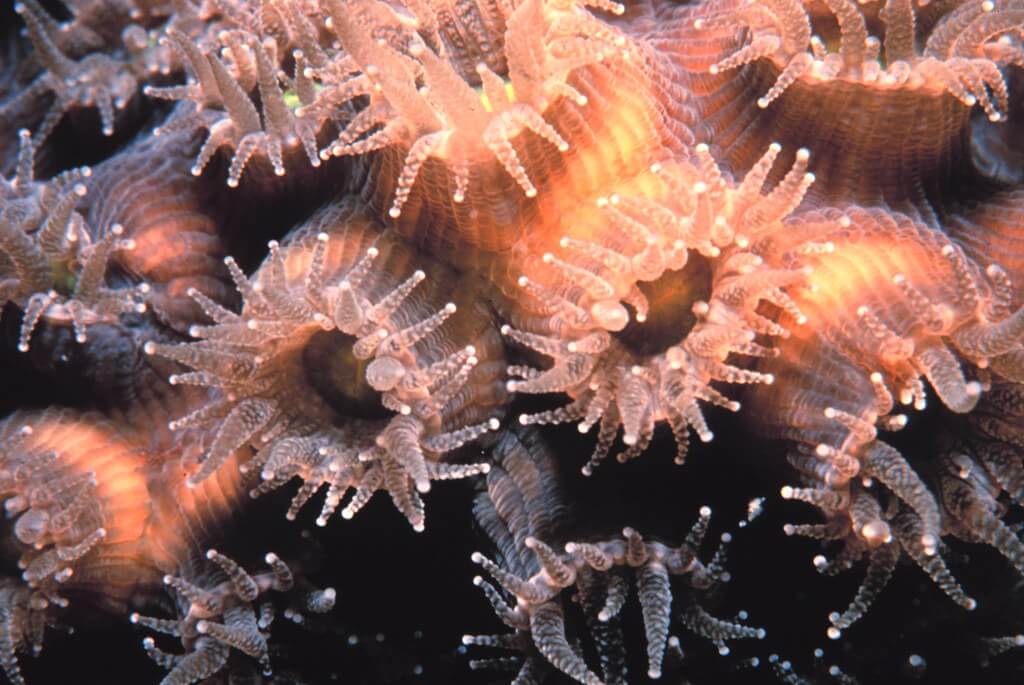
These tiny polyps deposit calcium carbonate skeletons, which create the beautiful structures we know as coral. It’s these skeletal structures that create the foundation for the massive expanse of life that can be found on and around coral reefs.
Corals provide homes for countless species, ranging from tiny nudibranchs and microscopic plankton to reptiles like sea turtles and predators like the black-tip reef shark. The Great Barrier Reef, in particular, is a playground of diversity – hosting the Great Eight animals of the Barrier Reef, including whales, clownfish, turtles, etc.
While corals provide homes and food for an abundance of life, so do their symbiotic zooxanthellae, which provide food and energy to the coral.
The problem is that these are extremely sensitive to environmental changes, and as a missing cog in a system will halt the process, a single misplaced piece in a coral ecosystem can lead to devastating results.
Coral Bleaching Threats and the Great Barrier Reef
Coral relies on their zooxanthellae for up to 90% of their energy. The zooxanthellae photosynthesize and provide the coral polyps with the necessary oxygen and nutrients. Without zooxanthellae, coral cannot survive for long.
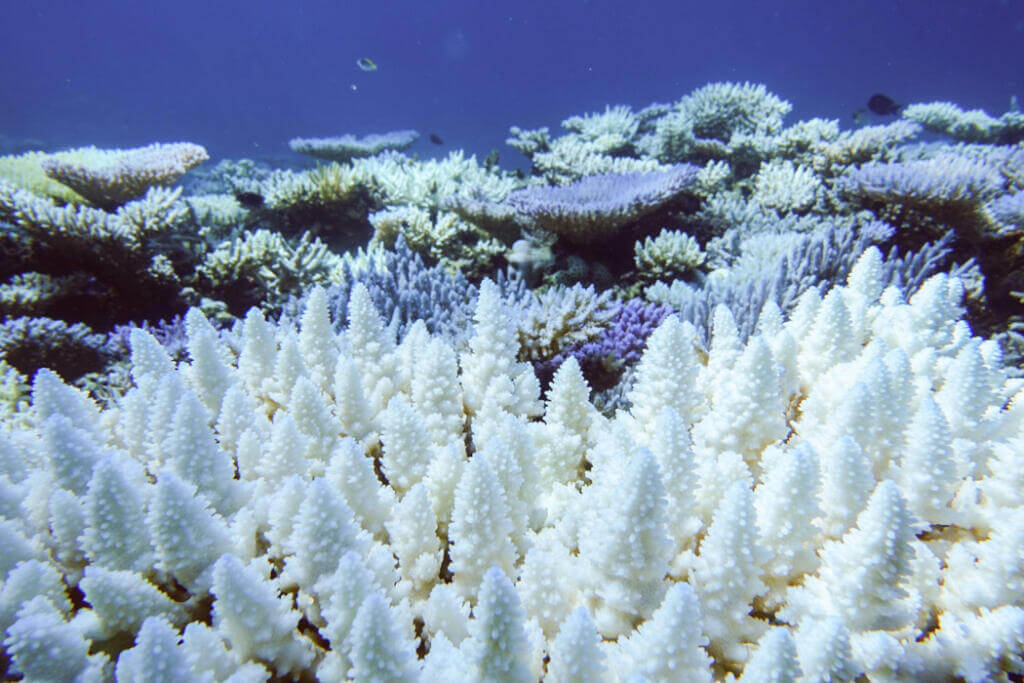
Although the intricate details of why coral expel their zooxanthellae are not entirely understood, it is clear that it occurs when the zooxanthellae become stressed due to environmental changes.
These changes could come in a variety of ways, but most commonly include:
- Changing Water Temperature
- Ocean Acidification
- Solar Radiation
- Salinity Changes
- Natural Weather Phenomenon
- Pollution
It is believed that when these zooxanthellae become stressed, they become overactive and overproduce a reactive oxygen species (ROS).
These ROS are toxic to the coral and are, therefore forced out by the polyps.
As coral gets its color from its symbiotic algae, it loses all pigment and is left only with the white of its calcium carbonate skeleton.
Without its algae, the coral will not receive enough energy. Although they can survive some time in these conditions, in somewhat of a dormant state, corals will eventually need the zooxanthellae to return or face death.
Coral Bleaching On the Great Barrier Reef
Since the AIMS (Australian Institute of Marine Science) began monitoring coral bleaching on the Great Barrie Reef, several major bleaching events have occurred, with the most recent occurring in 2022.
A list of these mass coral bleaching events on the Great Barrier Reef includes:
- 1998: One of the first recorded bleaching events that saw only 11% of surveyed reefs affected by bleaching with almost a full recovery after the event.
- 2002: Of 641 surveyed reefs, 54% were observed to have experienced bleaching with only 10% seeing bleaching to extreme levels. Although this event was slightly more severe than in 1998, it also saw almost a full recovery.
- 2006: A small-scale bleaching occurred between 2005 and 2006. Although it was confined to a small area around the Keppel Islands, almost 98% of the area was bleached and experienced more than a 30% mortality rate.
- 2008-2011: High rainfall and flooding that led to the coastline amounted to a change in salinity in the near-to-shore reefs, leading to a freshwater bleaching event. This was a small and localized event around Queensland.
- 2016: Part of the third global bleaching event, this was the largest bleaching event to affect the GBR thus far. Prolonged water temperature rises between 2015 and 2016 affected up to 90% of reefs in some areas and led to a mortality rate of 22% across the entire Great Barrier Reef.
- 2017: Back to back with the 2016 event, unusually warm water surface temperatures led to bleaching in the central third of the GBR. 20% of reefs surveyed were affected, and continuous surveys showed a decrease in coral coverage in the following years.
- 2020: The region of the GBR saw temperatures higher than recorded in the previous 120 years. Up to 80% of reefs in the GBR were affected by heat stress, with 25% of surveyed reefs facing severe bleaching, although it was noted that this event did not cause a high level of mortality.
- 2022: Caused by heat stress related to La Niña conditions and potentially worsened by climate change, 43% of surveyed reefs were found to be affected, with up to 60% of each community being bleached. This is one of the worst record bleaching events on the Great Barrier Reef but faced a low mortality rate, although the long-term effects of the event are yet to be seen.
Impacts of Human Intervention and Pollution on the Great Barrier Reef
When humans arrive, nature runs.
This has become evident if we stop and look at how human development has changed the natural world to the corners of the Earth.

Coastal development leads to pollution and destruction of coastal regions, to agricultural runoff polluting near-shore reef systems.
From overfishing and poaching to unsustainable tourism practices and poor education, human activities further put the health of the Great Barrier Reef at risk.
FAQs
Can the Great Barrier Reef recover?
The Great Barrier Reef has the potential to recover, but it depends on effective conservation efforts and addressing key threats. That said, research has found resilient species of coral that may be hopeful for the ecosystem’s future.
What is the biggest threat to the Great Barrier Reef?
The primary threat to the GBR is climate change, leading to coral bleaching, pollution, and overfishing.
Is the Great Barrier Reef really dying?
Although large parts of the GBR have seen bleaching in the recent past, the reef remains healthy. That said, organizations and governments are taking urgent measures to conserve its health and aid it from potential future threats.
How can we save the Great Barrier Reef?
Reducing our carbon emissions to combat warming ocean temperatures is essential. Furthermore, practicing responsible tourism, obtaining seafood from a sustainable source, and being generally conscious about the environment and how we impact it are among the most critical steps you can take to save the Great Barrier Reef.


