

Koh Tao is more than just a picturesque diving destination—it’s where my personal scuba journey began. In this article, I’ll share everything you need to know about diving in Koh Tao, from its top-notch dive sites to its vibrant marine life. Whether you’re a beginner or an experienced diver, this guide will help you navigate Koh Tao’s underwater world with practical tips and personal insights.
Key Highlights of Diving in Koh Tao
Koh Tao has earned its reputation as a world-class diving destination. Here’s an overview of what makes this small island a must-visit spot for scuba enthusiasts:
- Affordable Dive Training: Koh Tao is renowned for offering some of the cheapest prices to get scuba certified. Courses will range from 8,490–11,000 THB ($250–$320 USD), including equipment rental and certification fees. Fun dives are equally affordable at 700–1,000 THB ($20–$30 USD). This are some of the cheapest prices I’ve seen for diving in Asia, although places like the Gili Islands are equally affordable.
- Diverse Dive Sites: The island features over 20 dive sites, from beginner-friendly shallow reefs like Japanese Gardens to advanced sites like Chumphon Pinnacle with deeper depths and occasional currents.
- Proximity to Dive Sites: All major dive sites are just a short boat ride away, maximizing underwater time and minimizing transit.
- Thriving Diving Community: The island’s vibrant diving culture fosters a welcoming atmosphere, with plenty of opportunities to connect with fellow divers at dive shops or beachfront bars.
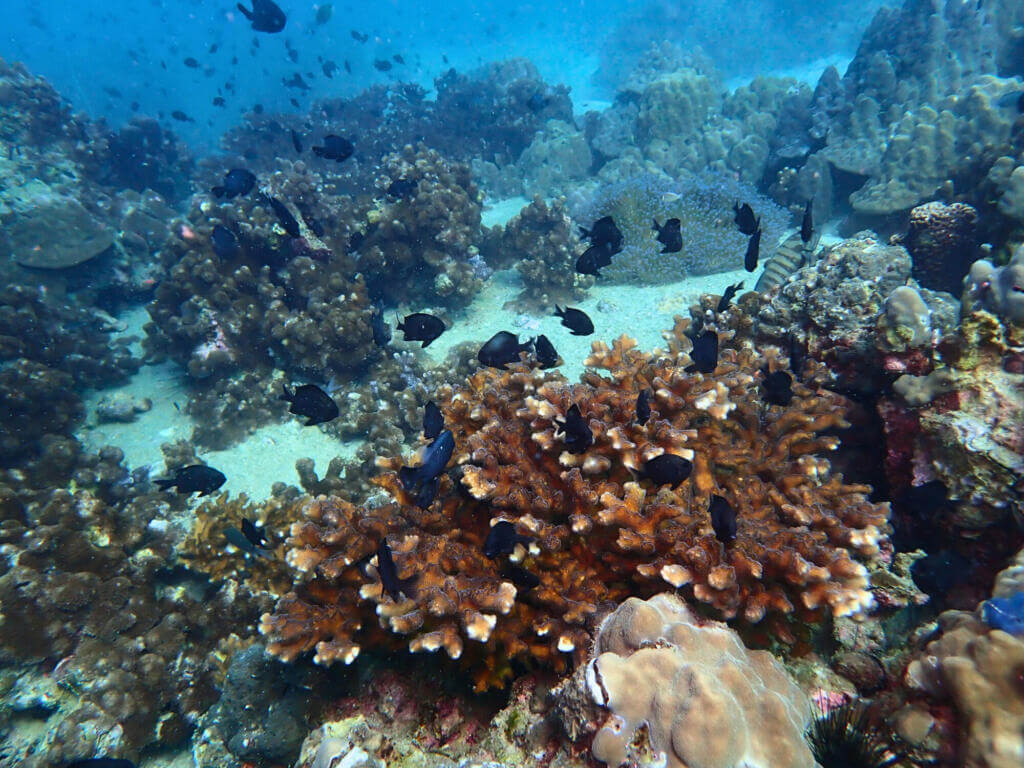
Diving Conditions
Koh Tao offers excellent diving conditions year-round, making it a great choice for divers of all levels.
- Best Season: March to October provides calm seas, warm waters, and the best visibility (up to 30m). This is also when whale shark encounters are more likely.
- Monsoon Season: November to February can bring rougher seas and slightly reduced visibility, but diving is still possible, especially at sheltered sites. Dive centers adjust schedules accordingly.
- Water Temperature: Warm enough year-round ( 27°C – 30°C or 81°F–86°F) for a 3mm wetsuit or shorty—even in January, I was comfortable in a shorty despite usually feeling cold.
- Currents: Generally mild to moderate, making most sites accessible to beginners. However, deeper sites like Chumphon Pinnacle and Southwest Pinnacle may have stronger currents, adding a challenge for advanced divers.
History
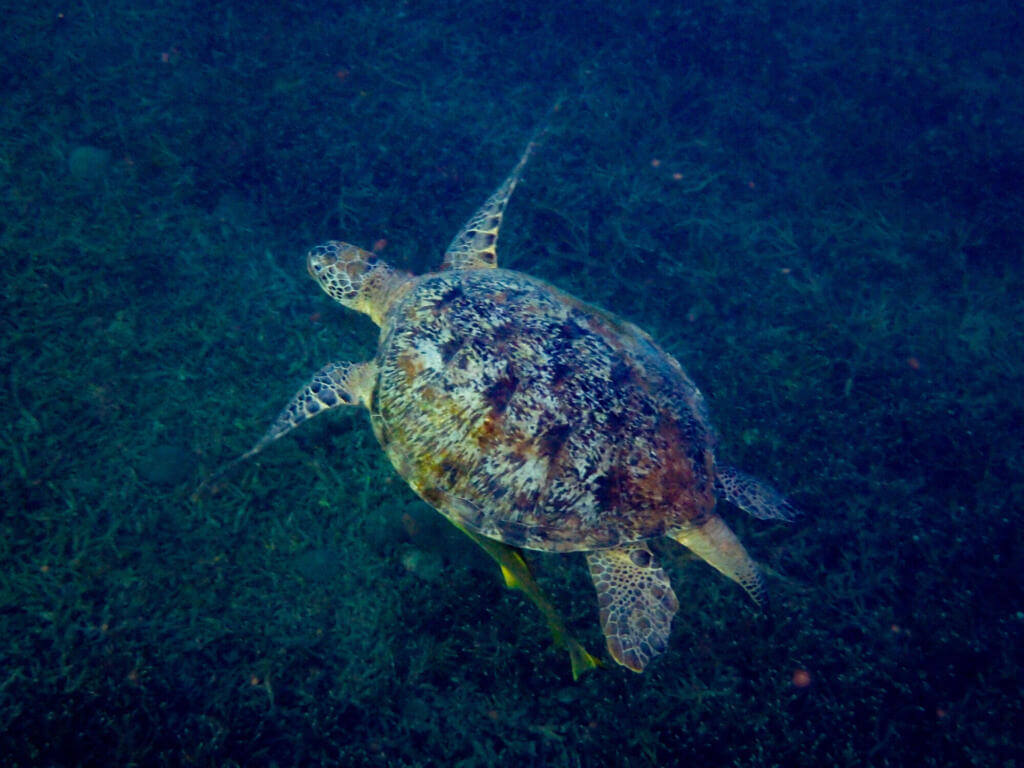
Before we dive further into the types of diving on Koh Tao, it’s worth understanding how the island got its name. Koh Tao, or “Turtle Island,” is named not only for its turtle-like shape but also for its history as a nesting ground for sea turtles, particularly green and hawksbill turtles.
In the past, turtles were abundant around the island, but as tourism grew, coastal development and human activity led to a decline in their numbers. Thankfully, conservation efforts —such as protected nesting sites, marine rehabilitation programs, and coral restoration projects—have helped bring them back. While not as common as before, divers today still have a good chance of spotting turtles, especially at sites like Shark Bay and Ao Leuk.
Dive Sites
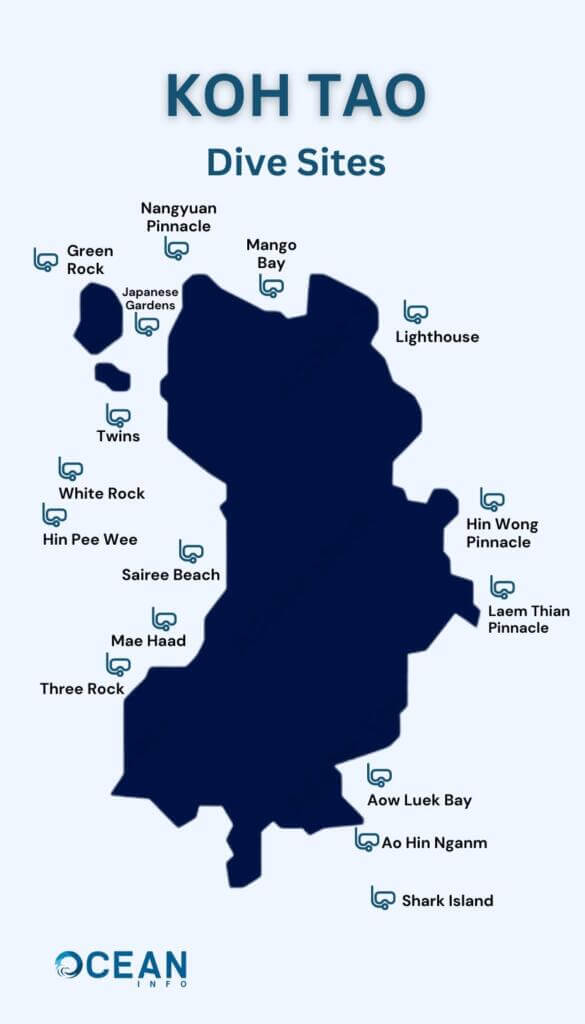
There are currently 26 dive sites listed around Koh Tao, offering a mix of underwater experiences for divers of all skill levels.
These include 21 reef dives, 14 ocean dives, and 6 pinnacle dives—a variety that ensures there’s something for everyone.
Sairee Reef
- Max Depth: 10-12 meters
- Best For: Training dives, beginner-friendly exploration
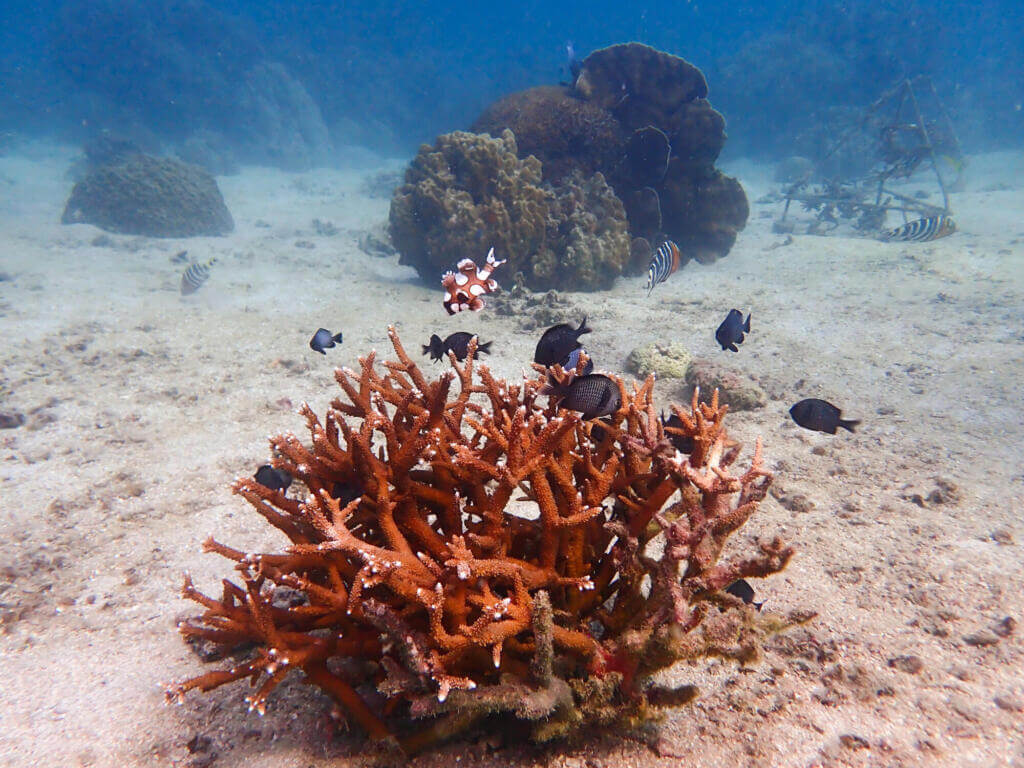
Sairee Reef is a calm, shallow site located just off Koh Tao’s main beach. While it may not be the most visually stunning dive, it’s perfect for training. You’ll find metal structures used for coral restoration, as well as common reef fish like butterflyfish, damselfish, and juvenile barracuda. If you’re taking an Open Water course, chances are you’ll have your first underwater experience here.
Japanese Gardens
- Max Depth: 12 meters
- Best For: Beginners, snorkelling, coral lovers
Situated near Koh Nang Yuan, Japanese Gardens is another beginner-friendly site known for its coral formations in shallow, protected waters. it’s ideal for new divers or those who enjoy relaxed, scenic dives with great chances for underwater photography. Expect to see parrotfish, angelfish, and occasional stingrays gliding along the sandy patches.

The Twins
- Max Depth: 18 meters
- Best For: Open Water courses, easy navigation
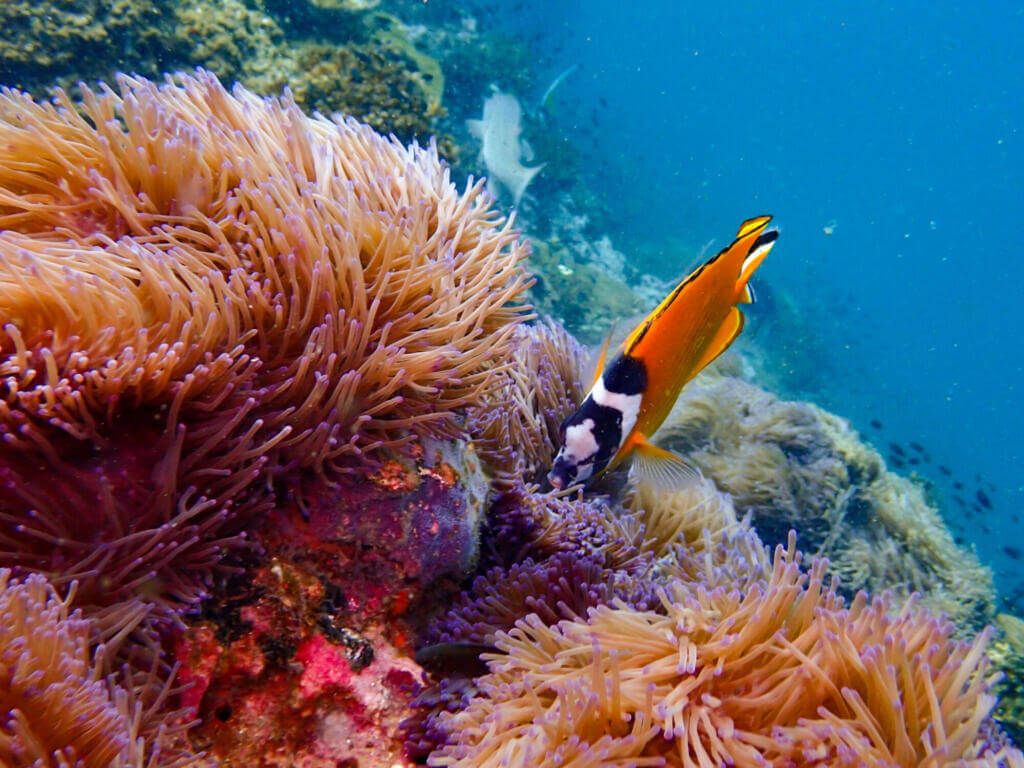
Also located near Koh Nang Yuan, The Twins consists of two coral formations separated by a sandy channel. It’s one of the most popular dive sites for Open Water courses, thanks to its calm conditions and diverse marine life. Here, you’ll find clownfish darting in and out of anemones, playful wrasse, and schools of snapper. We personally loved this site—it’s one of the most visually stunning beginner dives in Koh Tao.
Chumphon Pinnacle
- Max Depth: 35 meters
- Best For: Advanced divers, big fish encounters
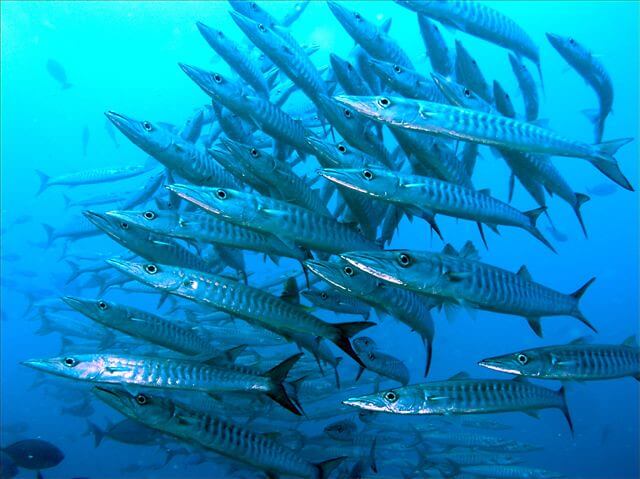
Chumphon Pinnacle is widely regarded as the best dive site in Koh Tao, especially for intermediate and advanced divers. Located 12 kilometers off the coast, this deep dive features granite pinnacles covered in vibrant anemones, attracting schools of barracuda, trevally, giant groupers, and on a rare occasion – whale sharks. Strong currents can sometimes be present, making it better suited for divers with experience.
Southwest Pinnacle
- Max Depth: 30 meters
- Best For: Experienced divers, deep diving
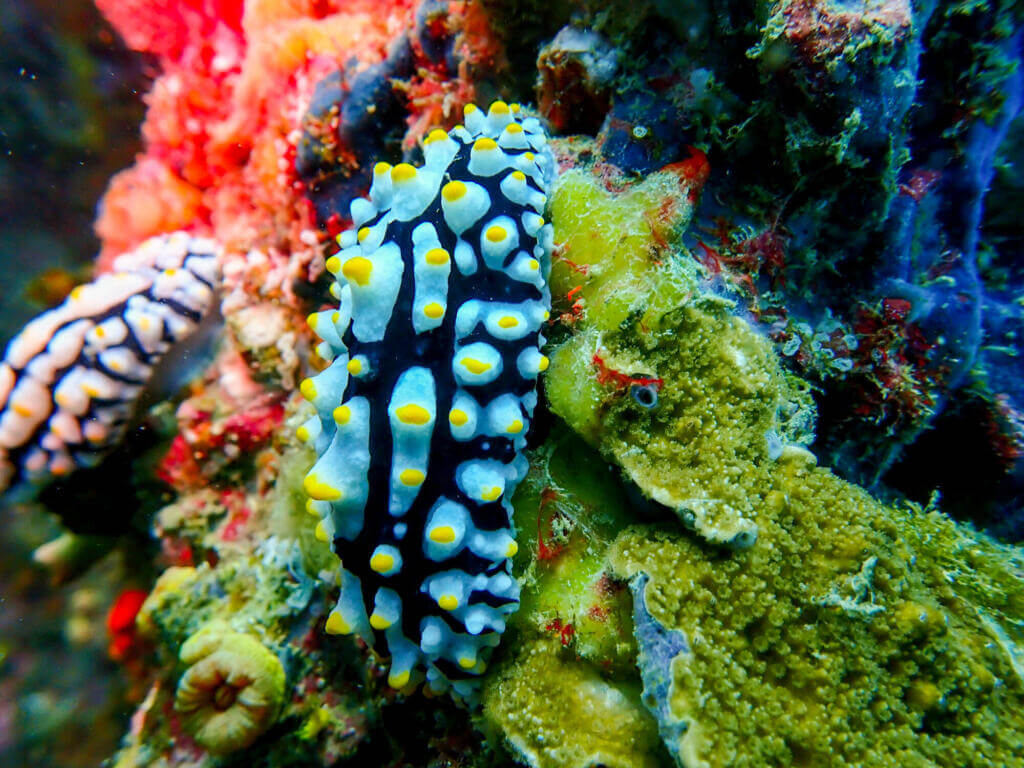
Another site known for strong currents and deep water, Southwest Pinnacle features a series of submerged peaks covered in soft corals. This site is popular with experienced divers for its large schools of trevally, snapper, and barracuda. It also offers excellent macro life, with chances to spot nudibranchs, scorpionfish, and moray eels tucked into the rocky crevices.
Green Rock
- Max Depth: 25 meters
- Best For: Adventure diving, swim-throughs
Green Rock is famous for its underwater caves, tunnels, and swim-throughs, making it an exciting spot for divers who enjoy exploring rock formations. The changing currents here attract triggerfish, pufferfish, and blue-spotted stingrays, but also make buoyancy control important.
Other Notable Sites
- Hin Wong Pinnacle – A granite pinnacle covered in soft corals, attracting schools of fusiliers and barracuda. Great for deep diving and marine life encounters.
- Shark Island – Named for its shark-like shape, this site offers diverse coral landscapes and the chance to spot blacktip reef sharks.
- White Rock – A popular night dive site known for sleeping parrotfish, barracuda, and bioluminescence.
- Ao Leuk – A shallow reef dive perfect for beginners, with coral bommies, stingrays, and occasional turtles.
- Laem Thian Caves – A more adventurous dive featuring swim-throughs, caves, and vibrant soft corals.
- HTMS Sattakut Wreck – A sunken Navy vessel sitting at 30 meters, attracting large groupers, snappers, and moray eels—ideal for wreck diving enthusiasts.
- Mango Bay – A gentle, shallow dive site great for training and snorkeling, featuring coral patches and reef fish.
Marine Life You Can Spot
- Turtles: Green turtles and hawksbill turtles are not uncommon, gliding gracefully along the reef or taking a snack break on seagrass beds.
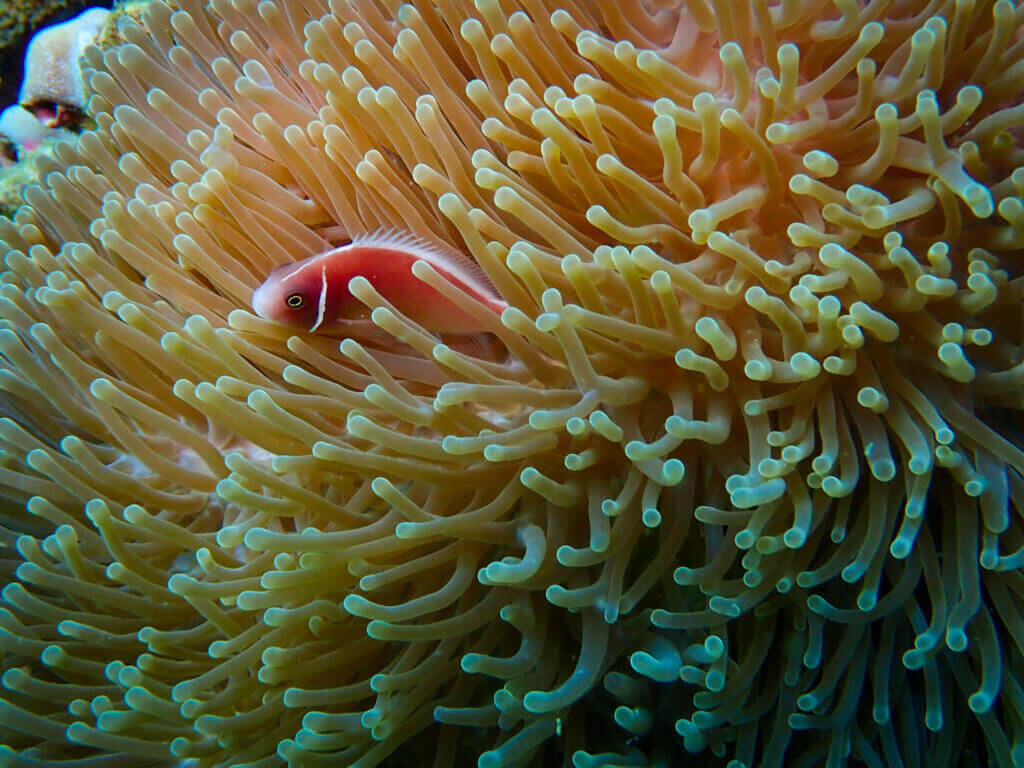
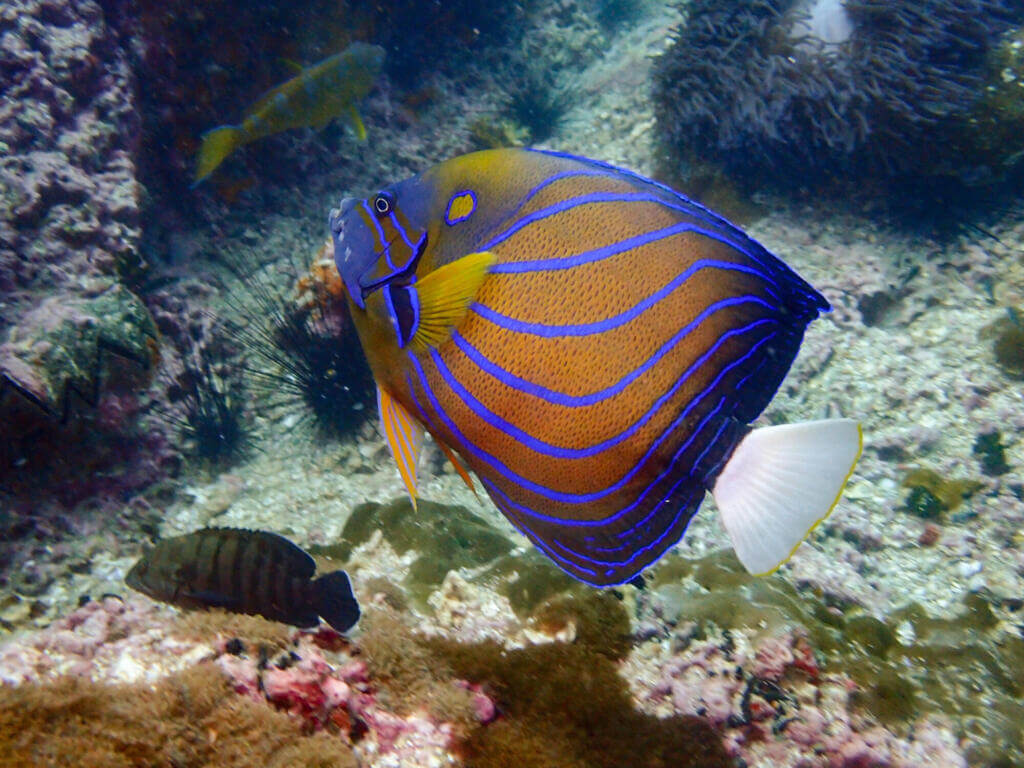
- Reef Fish: Expect to see parrotfish, angelfish, butterflyfish, and playful clownfish nestled in their anemones.
- Macro Life: For macro enthusiasts, Koh Tao is home to tiny treasures like nudibranchs, pipefish, and cleaner shrimp.
- Whale Sharks: The dream sighting! These gentle giants pass through Koh Tao, most often between March and May.
- Triggerfish: Beware of the territorial Titan Triggerfish, especially during mating season (March to April). They can be aggressive if you enter their nesting zone—best to give them space!
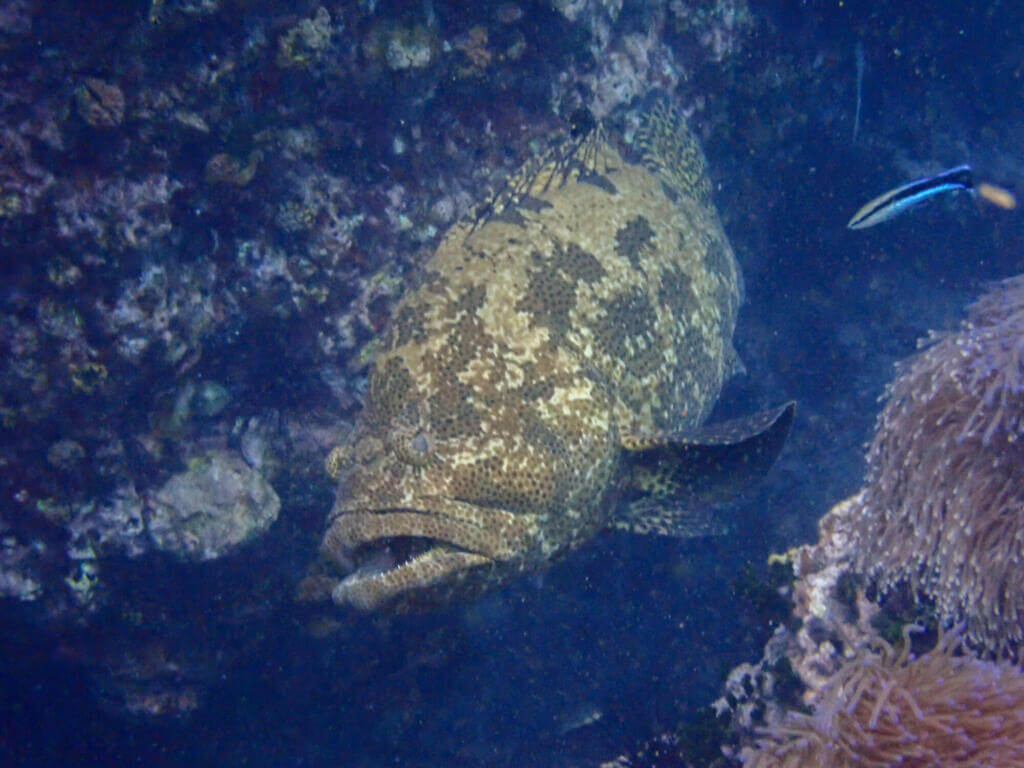
- Groupers: Large grouper species, including giant and peacock groupers, are often spotted lurking near rocky crevices and wrecks like the HTMS Sattakut.
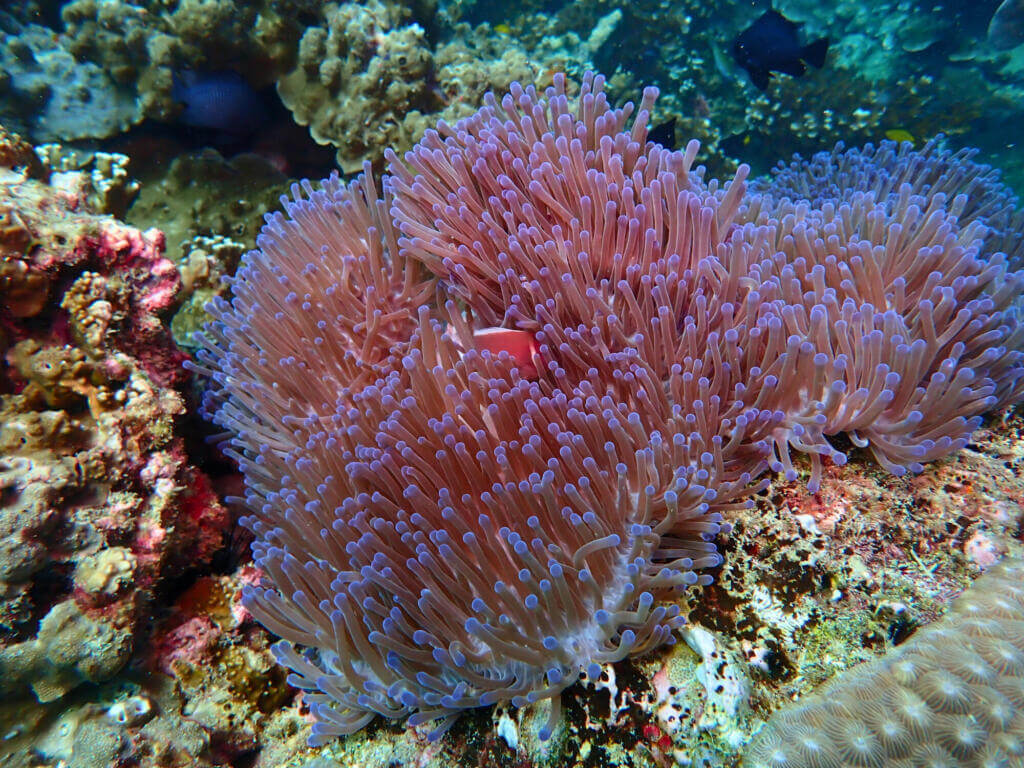
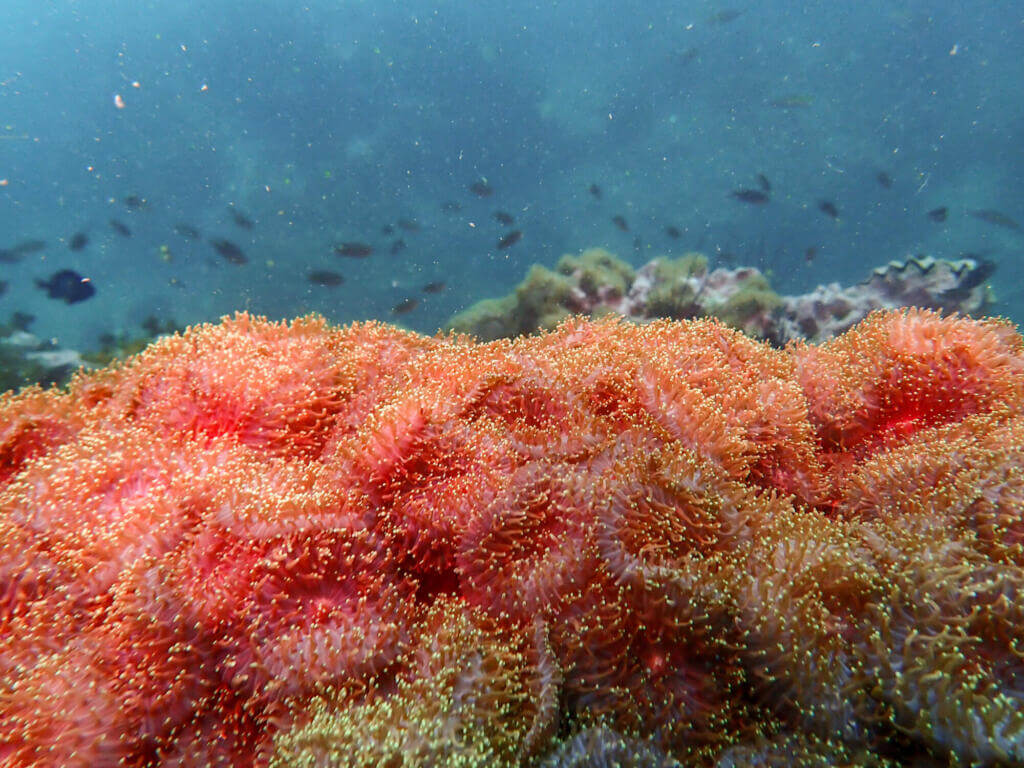
- Coral and Anemones: The reefs of Koh Tao are draped in vibrant coral formations and dazzling anemones in shades of purple, orange, and green. It’s a feast for the eyes and a reminder of just how rich and alive the ocean is here.

Practical Tips for Diving in Koh Tao
Having explored the Koh Tao’s dive sites ourselves, we’ve put together these practical tips based on our own experiences to help you dive safely and stress-free.
1. Choose the Right Dive Center
Your first diving experience sets the tone for your entire journey, and for us, Koh Tao was where it all began. We chose Simple Life Divers, and to this day, we credit their excellent training for our love of diving. Our instructor, Steve, was patient, calm, and shared tips that we still rely on today.

Here’s why it’s so important to pick the right dive center:
- Start with Certified Centers: Look for dive centers certified by recognized agencies like PADI, preferably 5-star rated. Check the PADI website for a list of recommended dive centers on Koh Tao.
- Read Reviews and Trust Recommendations: Personal experiences often speak volumes. Research online or ask fellow travelers for their suggestions.
- The First Steps Matter: Your first diving lessons will shape how you feel about the sport, so invest in a dive center with professional, friendly instructors who make learning enjoyable and safe.
2. Choose the Right Place to Say
Picking the right place to stay in Koh Tao can make a big difference in your diving experience. If you’re here to dive, staying near Sairee Beach is the most convenient option. It’s where most dive shops are located, and you’ll also have plenty of restaurants, cafés, and bars within walking distance.
However, keep in mind that Sairee Beach is the island’s busiest area, popular with backpackers and partygoers—great if you love nightlife, not so much if you prefer quiet evenings. If you’re after a more relaxed atmosphere, consider staying on the other side of the island in areas like Ao Leuk, Chalok Baan Kao, or Hin Wong Bay. These spots offer quieter beaches and more upscale resorts, but you’ll need a scooter or taxi to get to most dive centers.
For diving courses, location matters even more. When we did our certification, we had to be at the dive shop by 7 AM every morning, so being close to your dive center is a huge plus—especially if you’re not a morning person!

3. Respect Local Customs and Dive Etiquette
Diving in Koh Tao also means embracing some unwritten rules of respect and courtesy:
- Take Your Shoes Off: Many dive centers and boats ask you to leave your shoes outside. It’s a small gesture that reflects local customs and helps keep things clean.
- Offer to Help: While staff usually handle the gear, offering to carry or rinse equipment shows respect and appreciation for their hard work.
- Tipping: While not required, tipping your instructor or boat crew is always appreciated and a great way to show gratitude for their efforts.
3. Embrace Island Life
There’s so much more to Koh Tao than diving, and taking time to enjoy the island will make your trip even more special:
- Snorkeling Adventures: Visit Ao Leuk or Shark Bay for a relaxed snorkeling experience, where you might spot turtles or reef sharks.
- Explore by Scooter: Rent a scooter and discover the island’s beautiful viewpoints, hidden beaches, and charming cafes.
- Be Dive-Ready: Skip the late-night drinking if you’re diving the next day—it’s not just unsafe but can also ruin your dive experience.

4. Beware the Triggerfish
In Koh Tao, you might encounter Titan Triggerfish, strikingly colorful but known for their territorial nature—especially during breeding season (March to April). While not dangerous, their bites can hurt if you accidentally wander into their space.

- Stay Outside Their Zone: Triggerfish defend a cone-shaped area above their nests, so avoid swimming directly over them.
- Back Away Calmly: If one charges, maintain eye contact and retreat slowly. Do not attempt to swim up to the surface, as they will just chase you, and besides, you might miss your decompression stops.
- Stay Aware: Spotting their bold colors and unique patterns from a safe distance is the best way to enjoy these feisty reef residents.
For more advice to help you prepare for your dives, including tips on staying safe and eco-conscious underwater, take a look at our full guide to scuba diving in Thailand or our best scuba diving tips.
Gallery: Koh Tao Through Our Eyes
Take a look at our gallery to see what scuba diving in Koh Tao is like —these are images from our dives, giving you a real glimpse of what to expect.

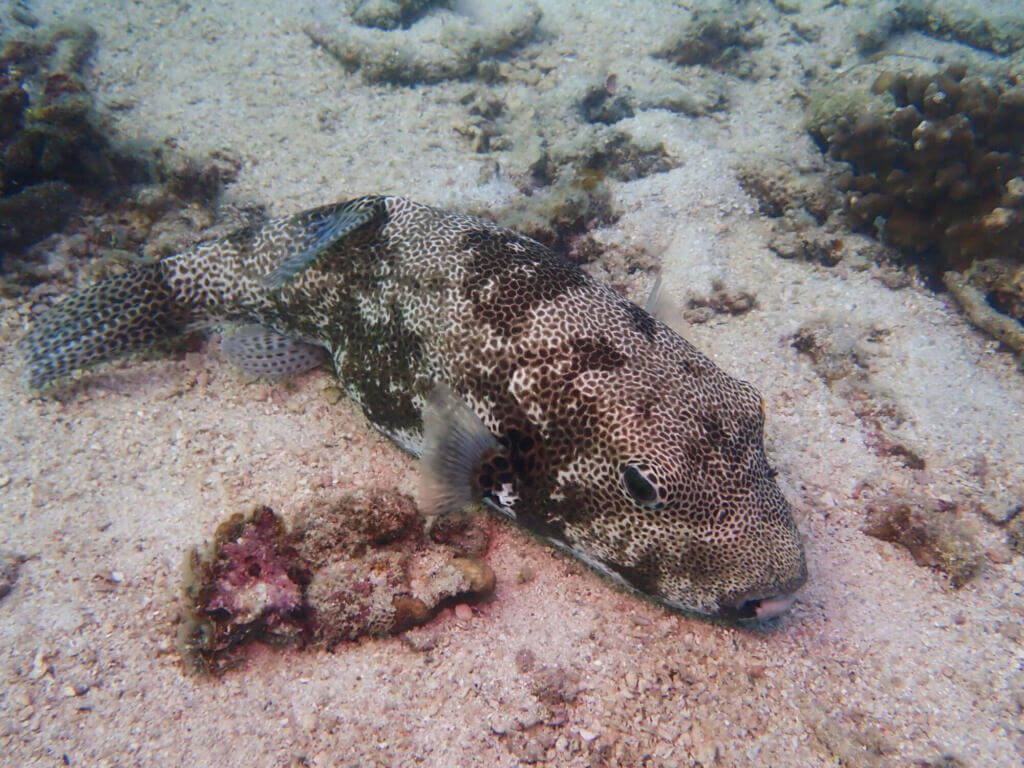
Coral with Pink Growths and Small Fish in Koh Tao Close-Up of Anemone Tentacles Found in Koh Tao Grouper Hovering Over Coral Reef in Koh Tao Wrasse Swimming Near Red Coral, Koh Tao Spotted Pufferfish Resting on Sand, Koh Tao Giant Grouper in Coral Reef in Koh Tao Clustered Anemone with Fish in Koh Tao Koh Tao has rich marine animal and plant variety, making for some unforgettable first dives Elkhorn Coral with Surrounding Marine Life Sergeant Major Fish in Open Blue Water Coral Structure with School of Fish in Koh Tao Butterflyfish Near Coral in Koh Tao Coral Reef with School of Yellow Fish Purple Sea Anemone in Koh Tao Anemone with Clownfish Hiding Inside 
Juvenile Emperor Angelfish in Coral Reef Soft Coral Cluster with Vibrant Red Hues If you have a keen eye, you will be able to spot the tiny and colorful nudibranches in Koh Tao Elkhorn Coral with Surrounding Marine Life Found in Koh Tao During our dives in Koh Tao, we spotted many similar coral reefs, bursting with vibrant marine life The dramatic landscapes of the Twins, filled with clownfish, butterflyfish, and parrotfish are not to miss While it’s not the most visually stunning site, Sairee Reef is a good training ground for beginners, and you will be able to spot lots of metal structures used for breeding coral to restore the natural beauty of the area Regal Angelfish in Vibrant Coral Reef On our Koh Tao dives in January, I wore a shorty swimsuit and felt at a comfortable temperature – and that’s coming from someone who always feels cold normally! Despite diving in January (out-of-peak season for Koh Tao), visibility was still amazing, as you can see in photo Koh Tao is filled with beautiful anemones swaying in the currents It’s not uncommon to see sea turtles swimming among coral in Koh Tao







Our Honest Experience
Diving in Koh Tao was an unforgettable experience for us because it was our first time ever breathing underwater. The clear, warm waters made for an incredible introduction, with colorful anemones and schools of tropical fish surrounding us on every dive. It felt like stepping into a scene from “Finding Nemo,” but better—because it was real.
That said, while Koh Tao is an excellent training ground and offers enjoyable, relaxed dives, it’s not the most spectacular dive destination out there. The marine life is diverse but not as abundant as in some other Thai dive spots, and the reefs in some areas show signs of wear from heavy tourism.
Overall, Koh Tao is a solid diving destination, particularly for beginners, but if you’re looking for thrilling deep dives or big pelagic encounters, you might find other locations in Thailand more exciting.
Rating Koh Tao’s Diving
At the start of this article, I gave Koh Tao’s diving experience a 7/10 overall, and here’s why:
Marine Life Diversity
Koh Tao has so much life underwater that it’s impossible not to be amazed. The reefs are alive with vibrant reef fish, playful turtles, and those mesmerizing anemones swaying in the currents. And let’s not forget the chance of spotting a whale shark—though sadly, we missed ours. While it doesn’t have the sheer variety or big pelagic species of somewhere like Richelieu Rock, the marine life here is diverse enough to keep you coming back for more.
Coral Health and Reef Quality
The coral reefs around Koh Tao are beautiful, especially places like Japanese Gardens with their colorful coral formations. However, I did notice that some areas look a bit tired, likely from the sheer number of divers visiting over the years. That said, the island’s conservation efforts are making a difference, and it’s great to see the community working to protect the reefs for the future.
Accessibility
One of the things I love about Koh Tao is how easy it is to get there and start diving. The island is well-connected by ferries, and most dive sites are a quick boat ride away—some less than 20 minutes! Plus, with so many dive centers to choose from, you’ll never have trouble finding a spot to suit your schedule and skill level.
Affordability
With fun dives typically 700–1,000 THB ($20–30 USD) and Open Water courses around 8,500–11,000 THB ($250–320 USD), Koh Tao is one of the most affordable places in the world to dive.
Beginner-Friendliness
For first-time divers, Koh Tao is perfect. The calm waters, warm temperatures, and clear visibility make learning to dive so much easier. Combine that with patient instructors and a relaxed atmosphere, and it’s no wonder so many people fall in love with diving here.
Adventure Level
Koh Tao is more about chilled-out reef dives than heart-pounding adventures. There are a few deeper sites like Chumphon Pinnacle that offer stronger currents and more excitement, but if you’re craving big pelagic action or dramatic drift dives, other spots in Thailand might be more your speed.
FAQs
How long should I stay in Koh Tao for diving?
Most people spend 3–5 days if they’re taking a course, but you could stay longer to explore more dive sites and enjoy the island’s laid-back vibe. For example, after finishing our Open Water Padi course, we decided to extend our stay by an extra day to get a couple of extra dives in.
Can I snorkel instead of scuba dive in Koh Tao?
You can snorkel and scuba dive, with sites like Shark Bay, Ao Leuk, and Hin Wong that offer chances to see turtles, reef sharks, and colorful corals.
What is the best way to get to Koh Tao?
Ferries run regularly from Koh Samui, Koh Phangan, and mainland hubs like Chumphon and Surat Thani. Most journeys take 1–3 hours.


